Results by title
413 books match the query 'Pictorial works' and 37 start with p
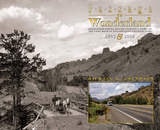
Passage to Wonderland
Rephotographing Joseph Stimson's Views of the Cody Road to Yellowstone National Park, 1903 and 2008Michael A. Amundson
University Press of Colorado, 2012
Amundson examines the physical changes along "the most scenic fifty miles in America" and explores the cultural and natural history behind them. This careful analysis of the paired images make Passage to Wonderland more than a "then and now" photography book--it is a unique exploration of the interconnectedness between the Old West and the New West. It will be a wonderful companion for those touring the Cody Road as well as those armchair tourists who can follow the road on Google Earth using the provided GPS coordinates.
The University Press of Colorado gratefully acknowledges the generous support of the Charles Redd Center for Western Studies at Brigham Young University toward the publication of this book.
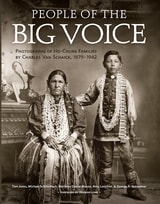
People of the Big Voice
Photographs of Ho-Chunk Families by Charles Van Schaick, 1879-1942Tom Jones
Wisconsin Historical Society Press, 2027
A stunning photographic portrayal of the Ho-Chunk people during a challenging period that presents the resilience of a community whose story continues to this day.
People of the Big Voice tells the visual history of Ho-Chunk families at the turn of the twentieth century and beyond as depicted through the lens of Black River Falls studio photographer Charles Van Schaick. The family relationships among those who sat for the photographer are clearly visible in these images. Sisters, friends, families, and young couples appear and reappear, fleshing out a narrative of the period, from 1879 to 1942, referred to as "the dark ages” in First Nations tribal history.
Following introductory essays from three of the authors are more than three hundred beautifully detailed photographs. Unique to the project are captions that identify over ninety percent of the individuals pictured—made possible by the continuing efforts of tribal members and genealogists—and include both English and Ho-Chunk names.
Also featured are candid shots of Ho-Chunk people on the streets of Black River Falls, outside family dwellings, and at powwows. As author and Ho-Chunk tribal member Amy Lonetree writes, "A significant number of the images were taken just a few short years after the darkest, most devastating period for the Ho-Chunk. Invasion, diseases, warfare, forced assimilation, loss of land, and repeated forced removals from our beloved homelands left the Ho-Chunk people in a fight for their culture and their lives."
A significant contribution to the history of Native peoples, People of the Big Voice is a breathtaking portrayal of a resilient community whose story continues today.

Perimeter
A Contemporary Portrait of Lake MichiganKevin J. Miyazaki
Wisconsin Historical Society Press, 2014
Miyazaki also photographed the water as he went, creating waterscapes of the ever-changing lake affected by weather and time. Perimeter gathers these images together, creating a diverse portrait of both people and a place, encapsulating Lake Michigan’s significance to those who are drawn to it.
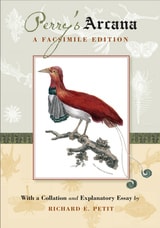
Perry's Arcana
A Facsimile EditionRichard E. Petit
Temple University Press, 2009
Now at last this neglected gem has been revived for scientists, students, and aficionados of natural history. New scholarship is combined with modern digital reproduction techniques to do full justice to the beautiful plates. An up-to-date account of all the species is given, along with a full collation and extensive notes, by the eminent natural historian Richard E. Petit.
The Arcana is technically interesting too, as its glowing plates were printed with variously colored inks to suppress their outlines. Its appeal will extend not only to academic libraries and scholars specializing in various branches of natural history and the history of science, but also to collectors of beautiful natural history books and enthusiasts of Regency Britain.

Phantom Skies and Shifting Ground
Landscape, Culture, and Rephotography in Eadweard Muybridge's Illustrations of Central AmericaByron Wolfe and Scott Brady
Temple University Press, 2017
In 1875, after being acquitted for the murder of his wife’s lover, Eadweard Muybridge spent a year photographing along the Central American Pacific Coast, particularly in Guatemala and Panamá. Upon his return to California in 1876, he published a very limited number of albums of the photographs (11 are known), each of which was unique in size and scope. In 2007, photographer Byron Wolfe (born 1967) tracked down and cataloged every known Muybridge Central American photograph. Then, with cultural geographer Scott Brady, he traveled to many of Muybridge’s sites to rephotograph them. Through photographic collage, interpretive rephotography, illustrations and essays, this book examines an exceptionally rare series by Muybridge. Also included is a catalogue of every known Muybridge Central American picture.
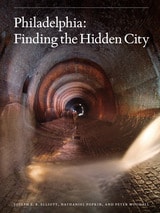
Philadelphia
Finding the Hidden CityJoseph E. B. Elliott
Temple University Press, 2017
Philadelphia possesses an exceptionally large number of places that have almost disappeared—from workshops and factories to sporting clubs and societies, synagogues, churches, theaters, and railroad lines. In Philadelphia: Finding the Hidden City, urban observers Nathaniel Popkin and Peter Woodall uncover the contemporary essence of one of America’s oldest cities. Working with accomplished architectural photographer Joseph Elliott, they explore secret places in familiar locations, such as the Metropolitan Opera House on North Broad Street, the Divine Lorraine Hotel, Reading Railroad, Disston Saw Works in Tacony, and mysterious parts of City Hall.
Much of the real Philadelphia is concealed behind facades. Philadelphia artfully reveals its urban secrets. Rather than a nostalgic elegy to loss and urban decline, Philadelphia exposes the city’s vivid layers and living ruins. The authors connect Philadelphia’s idiosyncratic history, culture, and people to develop an alternative theory of American urbanism, and place the city in American urban history. The journey here is as much visual as it is literary; Joseph Elliott’s sumptuous photographs reveal the city's elemental beauty.
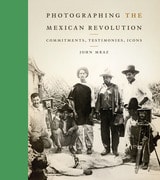
Photographing the Mexican Revolution
Commitments, Testimonies, IconsBy John Mraz
University of Texas Press, 2012
The Mexican Revolution of 1910–1920 is among the world’s most visually documented revolutions. Coinciding with the birth of filmmaking and the increased mobility offered by the reflex camera, it received extraordinary coverage by photographers and cineastes—commercial and amateur, national and international. Many images of the Revolution remain iconic to this day—Francisco Villa galloping toward the camera; Villa lolling in the presidential chair next to Emiliano Zapata; and Zapata standing stolidly in charro raiment with a carbine in one hand and the other hand on a sword, to mention only a few. But the identities of those who created the thousands of extant images of the Mexican Revolution, and what their purposes were, remain a huge puzzle because photographers constantly plagiarized each other’s images.
In this pathfinding book, acclaimed photography historian John Mraz carries out a monumental analysis of photographs produced during the Mexican Revolution, focusing primarily on those made by Mexicans, in order to discover who took the images and why, to what ends, with what intentions, and for whom. He explores how photographers expressed their commitments visually, what aesthetic strategies they employed, and which identifications and identities they forged. Mraz demonstrates that, contrary to the myth that Agustín Víctor Casasola was “the photographer of the Revolution,” there were many who covered the long civil war, including women. He shows that specific photographers can even be linked to the contending forces and reveals a pattern of commitment that has been little commented upon in previous studies (and completely unexplored in the photography of other revolutions).
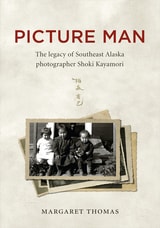
Picture Man
The Legacy of Southeast Alaska Photographer Shoki KayamoriMargaret Thomas
University of Alaska Press, 2015
In Picture Man, Margaret Thomas views Kayamori’s life through multiple lenses. Using Kayamori’s original photos, she explores the economic and political realities that sent Kayamori and thousands like him out of Japan toward opportunity and adventure in the United States, especially the Pacific Northwest. She reveals the tensions around Asian immigrants on the West Coast and the racism that sent many young men north to work in the canneries of Alaska. And she illuminates the intersecting—and at times conflicting—lives of villagers and migrants in a time of enormous change. Part history, part biography, part photographic showcase, Picture Man offers a fascinating new view of Alaska history.
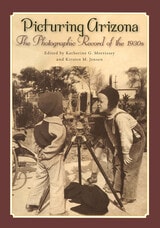
Picturing Arizona
The Photographic Record of the 1930sEdited by Katherine G. Morrissey and Kirsten Jensen
University of Arizona Press, 2005
This book places the work of local Arizonans alongside that of federal photographers both to illuminate the impact of the Depression on the state’s distinctive racial and natural landscapes and to show the influence of differing cultural agendas on the photographic record. The more than one hundred images—by well-known photographers such as Dorothea Lange and Laura Gilpin as well as by an array of less familiar photographers—represent a variety of purposes and perspectives, from public to personal, political to promotional. Six essays and three photo-essays bring together prominent authorities in history, the arts, and other fields who provide diverse perspectives on this period in Arizona and American history. Viewed together, the words and images capture a Depression-era Arizona bustling with activity as federally funded construction projects and seasonal agricultural jobs brought migrants and newcomers to the state. They convey the celebrations and the struggles of commercial photographers, archaeologists, city folks, farmers, tourists, native peoples and others in these hard times.
As the economic strains of the decade reverberated through the state, local photographers documented the lives of Arizona residents—including those frequently overlooked by historians. As this book persuasively shows, photographs can conceal as much as they reveal. A young Mexican American girl stands in front of a backdrop that hides the outhouse behind her, a deeply moving image for what it suggests about the efforts of her family to conceal their economic circumstances. Yet this image is a perfect metaphor for all the photographs in this book: stories remain hidden, but when viewers begin to question what they cannot see, pictures resonate more loudly than ever before.
This book is a history of Arizona written from the photographic record, offering a point of view that may differ from the written record. From the images and the insights of the authors, we can gain a new appreciation of how one state—and its indomitable people—weathered our nation’s toughest times.
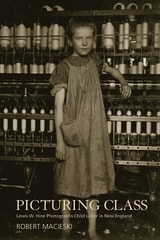
Picturing Class
Lewis W. Hine Photographs Child Labor in New EnglandRobert Macieski
University of Massachusetts Press, 2015
In this richly illustrated book, Robert Macieski examines Lewis W. Hine's art and advocacy on behalf of child laborers as part of the National Child Labor Committee (NCLC) between 1909 and 1917. A “social photographer”—as he called himself—Hine created images that documented children at work throughout New England, revealing their exploitation in the North as he had for rural working children in the South. Hine staged his images, highlighting particular types of labor in specific places: the “newsies” in Connecticut cities; sardine canners in Eastport, Maine; cranberry pickers in Cape Cod bogs; industrial homeworkers in Boston and Providence; and cotton textile workers throughout the region. His association with the NCLC connected him to a network of local and national reformers, social workers, and child welfare professionals, a broad coalition he supported in their fight to end this unethical labor practice. Macieski also chronicles Hine's efforts to mount major exhibitions that would help move public opinion against child labor.
In Picturing Class, Macieski explores the historical context of Hine's photographs and the social worlds of his subjects. He offers a detailed analysis of many of the images, unearthing the stories behind the creation of these photographs and the lives of their subjects. In telling the story of these photographs, their creation, and their reception, Macieski demonstrates how Hine worked to advance an unvarnished picture of a rapidly changing region and the young workers at the center of this important shift.

Picturing Empire
Photography and the Visualization of the British EmpireJames R. Ryan
University of Chicago Press, 1997
But as James R. Ryan argues in Picturing Empire, Victorian photographs reveal as much about the imaginative landscapes of imperial culture as they do about the "real" subjects captured within their frames. Ryan considers the role of photography in the exploration and domestication of foreign landscapes, in imperial warfare, in the survey and classification of "racial types," in "hunting with the camera," and in teaching imperial geography to British schoolchildren.
Ryan's careful exposure of the reciprocal relation between photographic image and imperial imagination will interest all those concerned with the cultural history of the British Empire.
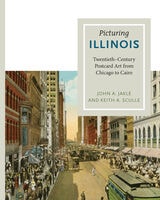
Picturing Illinois
Twentieth-Century Postcard Art from Chicago to CairoJohn A. Jakle and Keith A. Sculle
University of Illinois Press, 2012
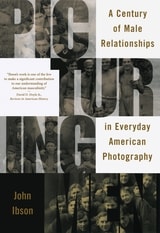
Picturing Men
A Century of Male Relationships in Everyday American PhotographyJohn Ibson
University of Chicago Press, 2006
Such is the time John Ibson evokes in Picturing Men, a striking visual record of changes in attitudes about relationships between gentlemen, soldiers, cowboys, students, lumberjacks, sailors, and practical jokers. Spanning from 1850 to 1950, the 142 everyday photographs that richly illustrate Picturing Men radiate playfulness, humor, and warmth. They portray a lost world for American men: a time when their relationships with each other were more intimate than they commonly are today, regardless of sexual orientation. Picturing Men starkly contrasts the calm affection displayed in earlier photographs with the absence of intimacy in photos from the mid-1950s on. In doing so, this lively, accessible book makes a significant contribution to American history and cultural studies, gender studies, and the history of photography.
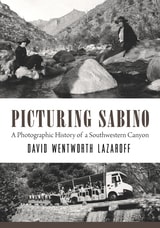
Picturing Sabino
A Photographic History of a Southwestern CanyonDavid Wentworth Lazaroff
University of Arizona Press, 2023
The story is vividly told through numerous historical photographs, lively anecdotes, and an engaging text, informed by decades of research by David Wentworth Lazaroff. Along the way the reader makes the acquaintance of ordinary picnickers as well as influential citizens who helped to reshape the canyon, while witnessing the canyon’s evolving relationship with its growing urban neighbor. The book will fascinate readers who are already familiar with Sabino Canyon, as well as anyone with an interest in local or regional history, or in historical photography.
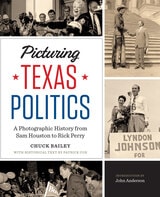
Picturing Texas Politics
A Photographic History from Sam Houston to Rick PerryBy Chuck Bailey; with historical text by Patrick Cox; introduction by John Anderson
University of Texas Press, 2015
With rare, previously unpublished photographs and iconic images of politicians from the state’s founders to Ann Richards, George W. Bush, and Rick Perry, here is the first-ever photographic album of Texas politicians and political campaigns.
The Republic of Texas was founded in 1839, around the time that photography was being invented. So while there were no photographers at the Alamo or San Jacinto, they arrived soon after to immortalize, on film, Sam Houston, David Burnett, Mirabeau Lamar, and many other founding fathers of the Lone Star State. Over the following nearly two centuries, Texas politics and politicians have provided reliable, often dramatic, and sometimes larger-than-life subjects for photographers to capture in the moment and add to the historical record.
Picturing Texas Politics presents the first photographic album of Texas politicians and political campaigns ever assembled. Chuck Bailey has searched archives, museums, libraries, and private collections to find photographs that have never been published, as well as iconic images, such as Russell Lee’s pictures of one of Ralph Yarborough’s campaigns. These photographs are arranged into four chronological sections, each one introduced by historian Patrick Cox, who also provides informative photo captions. The photographs display power and political savvy from the early Republic to Lyndon Johnson and Bob Bullock; unmatched dedication to Texas in the Hobby and Bush families; and the growing influence of women in politics, from Miriam “Ma” Ferguson to Barbara Jordan, Ann Richards, and Kay Bailey Hutchison. With Sam Houston’s jaguar vest, W. Lee “Pappy” O’Daniel’s hillbilly band, a famous governor with an ostrich, and prominent Texans eating watermelons, shooting guns, and riding horses, this is Texas politics at its liveliest and best.

Picturing Utopia
Bertha Shambaugh and the Amana PhotographersAbigail Foerstner
University of Iowa Press, 2005
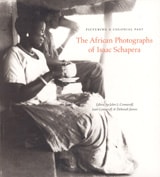
Picturing a Colonial Past
The African Photographs of Isaac SchaperaEdited by John L. Comaroff, Jean Comaroff, and Deborah James
University of Chicago Press, 2007

Picturing the Cosmos
Hubble Space Telescope Images and the Astronomical SublimeElizabeth A. Kessler
University of Minnesota Press, 2012
The vivid, dramatic images of distant stars and galaxies taken by the Hubble Space Telescope have come to define how we visualize the cosmos. In their immediacy and vibrancy, photographs from the Hubble show what future generations of space travelers might see should they venture beyond our solar system. But their brilliant hues and precise details are not simply products of the telescope’s unprecedented orbital location and technologically advanced optical system. Rather, they result from a series of deliberate decisions made by the astronomers who convert raw data from the Hubble into spectacular pictures by assigning colors, adjusting contrast, and actively composing the images, balancing the desire for an aesthetically pleasing representation with the need for a scientifically valid one.
In Picturing the Cosmos, Elizabeth A. Kessler examines the Hubble’s deep space images, highlighting the remarkable resemblance they bear to nineteenth-century paintings and photographs of the American West and their invocation of the visual language of the sublime. Drawing on art history and the history of science, as well as interviews with astronomers who work on the Hubble Heritage Project, Kessler traces the ways that the sublime, with its inherent tension between reason and imagination, not only forms the appearance of the images, but also operates on other levels. The sublime informs the dual expression—numeric and pictorial—of digital data and underpins the relevance of the frontier for a new era of exploration performed by our instruments rather than our bodies. Through their engagement with the sublime the Hubble images are a complex act of translation that encourages an experience of the universe as simultaneously beyond humanity’s grasp and within the reach of our knowledge.
Strikingly illustrated with full-color images, this book reveals the scientific, aesthetic, and cultural significance of the Hubble pictures, offering a nuanced understanding of how they shape our ideas—and dreams—about the cosmos and our places within it.

Plagues and Pencils
A Year of Pandemic SketchesEdward Carey, with a foreword by Max Porter
University of Texas Press, 2022
Honorable Mention, 2022 Nonfiction Prize, Writers' League of Texas
A remarkable collection of words and illustrations documenting the first year of the pandemic.
In March 2020, as lockdowns were imposed around the world, author and illustrator Edward Carey raced home to Austin, Texas. The next day, he published on social media a sketch of “A Very Determined Young Man.” The day after, he posted another drawing. One year and one hundred and fifty Tombow B pencil stubs later, he was still drawing.
Carey’s pencil fills the page with the marvelous and intriguing, picturing people, characters, animals, monsters, and his favorite bird to draw, the grackle. He reaches into history and fiction to escape grim reality through flights of vivid imagination—until events demand the drawings “look straight on.”
Breonna Taylor, the Brontë sisters, John Lewis, King Lear, and even the portraits that mark the progress of the year for the Very Determined Young Man combine into a remarkable document of the pandemic and its politics. For Carey, though, trapped inside a home he loves, these portraits are something more, a way to chart time, an artist’s way of creating connection in isolation. With an introduction by Max Porter, this exceptional collection from the acclaimed author of Little marks a year of a man trapped with his pencil, determined to find solace amid uncertainty.
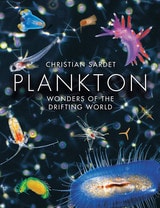
Plankton
Wonders of the Drifting WorldChristian Sardet
University of Chicago Press, 2015
Viewing these creatures up close for the first time can be a thrilling experience—an elaborate but hidden world truly opens up before your eyes. Through hundreds of close-up photographs, Plankton transports readers into the currents, where jeweled chains hang next to phosphorescent chandeliers, spidery claws jut out from sinuous bodies, and gelatinous barrels protect microscopic hearts. The creatures’ vibrant colors pop against the black pages, allowing readers to examine every eye and follow every tentacle. Jellyfish, tadpoles, and bacteria all find a place in the book, representing the broad scope of organisms dependent on drifting currents.
Christian Sardet’s enlightening text explains the biological underpinnings of each species while connecting them to the larger living world. He begins with plankton’s origins and history, then dives into each group, covering ctenophores and cnidarians, crustaceans and mollusks, and worms and tadpoles. He also demonstrates the indisputable impact of plankton in our lives. Plankton drift through our world mostly unseen, yet they are diverse organisms that form ninety-five percent of ocean life. Biologically, they are the foundation of the aquatic food web and consume as much carbon dioxide as land-based plants. Culturally, they have driven new industries and captured artists’ imaginations.
While scientists and entrepreneurs are just starting to tap the potential of this undersea forest, for most people these pages will represent uncharted waters. Plankton is a spectacular journey that will leave readers seeing the ocean in ways they never imagined.
Plants of the World
Maarten J. M. Christenhusz, Michael F. Fay, and Mark W. Chase
Royal Botanic Gardens, Kew, 2017
Plants of the World
An Illustrated Encyclopedia of Vascular PlantsMaarten J. M. Christenhusz, Michael F. Fay, and Mark W. Chase
University of Chicago Press, 2017
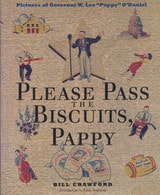
Please Pass the Biscuits, Pappy
Pictures of Governor W. Lee "Pappy" O'DanielBy Bill Crawford
University of Texas Press, 2004
Long before movie stars Ronald Reagan and Arnold Schwarzenegger became governors of California, a popular radio personality with no previous political experience—who wasn't even registered to vote—swept into the governor's office of Texas. W. Lee "Pappy" O'Daniel was a 1930s businessman who discovered the power of radio to sell flour. His musical shows with the Light Crust Doughboys (which launched the career of Bob Wills) and his radio homilies extolling family and Christian values found a vast, enthusiastic audience in Depression-era Texas. When Pappy decided to run for governor in 1938 as a way to sell more flour—a fact he proudly proclaimed throughout the campaign—the people of Texas voted for him in record numbers. And despite the ineptitude for politics he displayed once in office, Texans returned him to the governorship in 1940 and then elected him to the U.S. Senate in 1941 in a special election in which he defeated Lyndon Johnson, as well as to a full term as senator in 1942.
While the hit film O Brother, Where Art Thou? celebrated a fictional "Please Pass the Biscuits, Pappy" O'Daniel, this book captures the essence of the real man through photographs taken by employees of the Texas Department of Public Safety, most of which are previously unpublished. Reminiscent of the work of WPA photographers such as Russell Lee and Dorothea Lange, these photos record the last unscripted era of politics when a charismatic candidate could still address a crowd from an unpainted front porch or a mobile bandstand in the back of a truck. They strikingly confirm that Pappy O'Daniel's ability to connect with people was as great in person as on the radio.
To set the photos in context, Bill Crawford has written an entertaining text that discusses the political landscape in Texas and the United States in the 1930s, as well as the rise of radio as mass medium for advertising and entertainment. He also provides extensive captions for each picture. John Anderson, Photo Archivist of the Texas State Archives, discusses the work of Joel Tisdale and the other DPS photographers who left this extraordinary record of the greatest vote-getter in Texas history, who became one of America's first celebrities to cross the line from entertainment to political office.
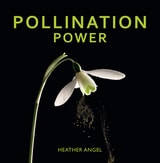
Pollination Power
Heather Angel
University of Chicago Press, 2016
In stunning full-color images, employing the latest photographic techniques, esteemed photographer Heather Angel has captures the intimate interactions of plants with their floral pollinators. The plants come not only from Angel’s Surrey backyard and the Royal Botanic Garden at Kew, but from twenty countries where Angel has travelled—from the rich floral kingdoms of the Cape of South Africa to the diversity of China and the Americas. The photos illustrate the varied techniques that flowers use to communicate with their pollinators. Some, for example, change color when the flower no longer has rewards to offer. Others control precisely when pollinators enter or leave by timing when they open and close their petals or when they emit a scent. This fascinating array of pollination repertoires crossfertilizes Angel’s photos with a descriptive text.
Featuring both common and exotic plants and temperate and tropical floral, Pollination Power will entice anyone with a passion for botanicals, from gardeners to botanists alike.

Polypores and Similar Fungi of Eastern and Central North America
Alan E. Bessette, Dianna Smith, and Arleen R. Bessette
University of Texas Press, 2021
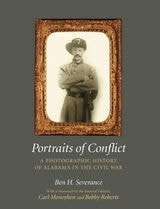
Portraits of Conflict
A Photographic History of Alabama in the Civil WarBen H. Severance
University of Arkansas Press, 2012

Portraits of Conflict
A Photographic History of Louisiana in the Civil WarCarl H. Moneyhon
University of Arkansas Press, 1990
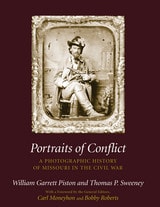
Portraits of Conflict
A Photographic History of Missouri in the Civil WarWilliam Garrett Piston
University of Arkansas Press, 2009
Portraits of Conflict
Tennessee: A Photographic History of Tennessee in the Civil WarRichard B. McCaslin
University of Arkansas Press, 2007
Postcards from the Baja California Border
Portraying Townscape and Place, 1900s–1950sDaniel D. Arreola
University of Arizona Press, 2021
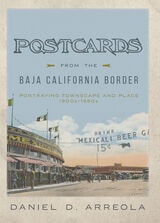
This form of place study calls attention to how we can see a past through a serial view of places, by the nature of repetition, and the photographing of the same place over and over again. Arreola draws our focus to townscapes, or built landscapes, of four border towns—Tijuana, Mexicali, Tecate, and Algodones—during the first half of the twentieth century. With an emphasis on the tourist’s view of these places, this book creates a vivid picture of what life was like for tourists and residents of these towns in the early and mid-twentieth century. Postcards from the Baja California Border is a rich and fascinating experience, one that takes you on a time-travel journey through border town histories and geographies while celebrating the visual intrigue of postcards.
Postcards from the Chihuahua Border
Revisiting a Pictorial Past, 1900s–1950sDaniel D. Arreola
University of Arizona Press, 2019
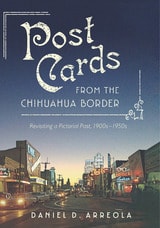
In Postcards from the Chihuahua Border Daniel D. Arreola captures the exhilaration of places in time, taking us back to Mexico’s northern border towns of Cuidad Juárez, Ojinaga, and Palomas in the early twentieth century. Drawing on more than three decades of archival work, Arreola uses postcards and maps to unveil the history of these towns along west Texas’s and New Mexico’s southern borders.
Postcards offer a special kind of visual evidence. Arreola’s collection of imagery and commentary about them shows us singular places, enriching our understandings of history and the history of change in Chihuahua. No one postcard tells the entire story. But image after image offers a collected view and insight into changing perceptions. Arreola’s geography of place looks both inward and outward. We see what tourists see, while at the same time gaining insight about what postcard photographers and postcard publishers wanted to be seen and perceived about these border communities.
Postcards from the Chihuahua Border is a colorful and dynamic visual history. It invites the reader to time travel, to revisit another era—the first half of the last century—when these border towns were framed and made popular through picture postcards.
Postcards from the Río Bravo Border
Picturing the Place, Placing the Picture, 1900s–1950sBy Daniel D. Arreola
University of Texas Press, 2013
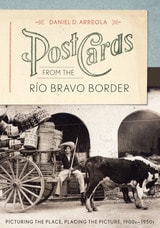
Between 1900 and the late 1950s, Mexican border towns came of age both as tourist destinations and as emerging cities. Commercial photographers produced thousands of images of their streets, plazas, historic architecture, and tourist attractions, which were reproduced as photo postcards. Daniel Arreola has amassed one of the largest collections of these border town postcards, and in this book, he uses this amazing visual archive to offer a new way of understanding how the border towns grew and transformed themselves in the first half of the twentieth century, as well as how they were pictured to attract American tourists.
Postcards from the Río Bravo Border presents nearly two hundred images of five significant towns on the lower Río Bravo—Matamoros, Reynosa, Nuevo Laredo, Piedras Negras, and Villa Acuña. Using multiple images of sites within each city, Arreola tracks changes both within the cities as places and in the ways in which the cities have been pictured for tourist consumption. He makes a strong case that visual imagery has a shaping influence on how we negotiate and think about places, creating a serial scripting or narrating of the place. Arreola also shows how postcard images, when systematically and chronologically arranged, can tell us a great deal about how Mexican border towns have been viewed over time. This innovative visual approach demonstrates that historical imagery, no less than text or maps, can be assembled to tell a compelling geographical story about place and time.

Postcards from the Sonora Border
Visualizing Place Through a Popular Lens, 1900s–1950sDaniel D. Arreola
University of Arizona Press, 2017
Young men ride horses on a dusty main road through town. Cars and gas stations gradually intrude on the land, and, years later, curiosity shops and cantinas change the face of Mexican border towns south of Arizona. Between 1900 and the late 1950s, Mexican border towns came of age both as centers of commerce and as tourist destinations. Postcards from the Sonora Border reveals how images—in this case the iconic postcard—shape the way we experience and think about place.
Making use of his personal collection of historic images, Daniel D. Arreola captures the evolution of Sonoran border towns, creating a sense of visual “time travel” for the reader. Supported by maps and visual imagery, the author shares the geographical and historical story of five unique border towns—Agua Prieta, Naco, Nogales, Sonoyta, and San Luis Río Colorado.
Postcards from the Sonora Border introduces us to these important towns and provides individual stories about each, using the postcards as markers. No one postcard view tells the complete story—rather, the sense of place emerges image by image as the author pulls readers through the collection as an assembled view. Arreola reveals how often the same locations and landmarks of a town were photographed as postcard images generation after generation, giving a long and dynamic view of the inhabitants through time. Arranged chronologically, Arreola’s postcards allow us to discover the changing perceptions of place in the borderlands of Sonora, Mexico.
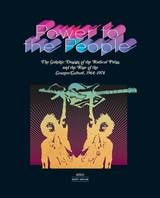
Power to the People
The Graphic Design of the Radical Press and the Rise of the Counter-Culture, 1964-1974Geoff Kaplan
University of Chicago Press, 2013
Proof
Photographs from Four Generations of a Texas FamilyByrd M. Williams IV
University of North Texas Press, 2016
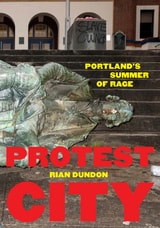
Protest City
Portland's Summer of RageRian Dundon
Oregon State University Press, 2023
In the months leading up to the 2020 presidential election, Portland made national news with nightly social justice protests, often met with violent response by counter protestors and law enforcement. Though frequently regarded as a progressive hub, Portland has a long history of racial inequality and oppression, and the city’s entrenched divisions gained new attention during the Trump years. The photos in Protest City present a visceral visual record of this significant moment in Portland’s history.
Rian Dundon, who has been photographing the rise of extreme politics on the West Coast since 2016, lived only a short walk from the protests that erupted after the murder of George Floyd. For one hundred days, Dundon enmeshed himself in the demonstrations with an unobtrusive point-and-shoot camera. The result is a graphic portrayal of how social movements become politicized, how spectacle serves as a subtext to change in the digital age, and how modern protests blur distinctions among performance, ritual, and surveillance. As he follows the progress of Portland’s conflicts, Dundon draws connections to Oregon’s legacy as a stronghold of white supremacist extremism and interrogates the role of whiteness in racial justice movements.
Most of the photographs in the book were taken between May and October 2020, but the collection also includes photos from protests in late 2020 and 2021 around various related issues, including the Red House eviction blockade, rightwing demonstrations on January 6 and 17, and the one-year anniversary of George Floyd’s murder. Dundon’s striking photos recreate the immediacy and impact of the protests, while essays by historian Carmen Thompson and journalist Donnell Alexander contextualize the uprising’s sociopolitical background. A chronology and author’s note are also featured.
The publisher and author would like to thank the Magnum Foundation, Documentary Arts, and the Economic Hardship Reporting Project for their generous support of this publication. Additional funding has been provided by Furthermore: a program of the J. M. Kaplan Fund.

Puffballs, Earthstars, Stinkhorns, and Other Gasteroid Fungi of Eastern North America
Alan E. Bessette, Arleen R. Bessette, William C. Roody, Dianna G. Smith
University of Texas Press, 2025
The first fully illustrated reference guide to gasteroid mushrooms in North America.
Gasteroid fungi are one of the most diverse groups of mushrooms. Unlike the majority of mushrooms that produce spores externally, these unusual fungi produce spores within their fruitbodies. Puffballs, Earthstars, Stinkhorns, and Other Gasteroid Fungi of Eastern North America is the first color-illustrated reference guide for this unique group of fungi in North America.
Providing information for the identification of more than one hundred species, it includes keys based on macroscopic features, detailed species descriptions with both common and scientific names, accurate and beautiful color images, and key identification features. Additionally, the book contains a plethora of useful information about the biology of gasteroid fungi, current taxonomy, mechanisms of spore dispersal, as well as fun facts. A much-needed volume from well-known mycologists Alan and Arleen Bessette, William Roody, and Dianna Smith, this comprehensive book is a must-have for all fungi enthusiasts, from mushroom hunting hobbyists to professional mycologists.