Results by title
314 books match the query 'Plants' and 33 start with p
Passion for Peonies
Celebrating the Culture and Conservation of Nichols Arboretum's Beloved FlowerDavid Michener and Robert Grese, Editors
University of Michigan Press, 2020
Originally planted in 1922, the Nichols Arboretum Peony Garden now boasts North America’s largest public collection of heirloom herbaceous peonies. The Peony Garden has become a sacred space for the Ann Arbor community, a not-to-be-missed sensation when it erupts each season, as the Ann Arbor Observer once wrote, in “a riot of color, of crimson, rose and shell pink intermingled with fluffy pompoms of creamy white.” The rather short period of peak bloom—about two fleeting weeks each year—only seems to intensify the garden’s appeal, drawing thousands of visitors annually to this spectacular “living museum” on campus that showcases upwards of 10,000 blossoms.
Richly illustrated with hundreds of striking color photos, Passion for Peonies collects twenty short essays that celebrate the story of the Nichols Arboretum Peony Garden as well as the rich social history of peony gardening that it is an integral part of. Together these pieces comprise a love letter both to a magical public space at the University of Michigan and to the broader history and culture of peony gardening. The book will appeal to readers interested in the University of Michigan, the history of public gardens, and of course peonies!
Pecan
America's Native Nut TreeLenny Wells
University of Alabama Press, 2017
From the first written record of it made by the Spaniard Cabeza de Vaca in 1528 to its nineteenth-century domestication and its current development into a multimillion dollar crop, the pecan tree has been broadly appreciated for its nutritious nuts and its beautiful wood. In Pecan: America’s Native Nut Tree, Lenny Wells explores the rich and fascinating story of one of North America’s few native crops, long an iconic staple of southern foods and landscapes.
Fueled largely by a booming international interest in the pecan, new discoveries about the remarkable health benefits of the nut, and a renewed enthusiasm for the crop in the United States, the pecan is currently experiencing a renaissance with the revitalization of America’s pecan industry. The crop’s transformation into a vital component of the US agricultural economy has taken many surprising and serendipitous twists along the way. Following the ravages of cotton farming, the pecan tree and its orchard ecosystem helped to heal the rural southern landscape. Today, pecan production offers a unique form of agriculture that can enhance biodiversity and protect the soil in a sustainable and productive manner.
Among the many colorful anecdotes that make the book fascinating reading are the story of André Pénicaut’s introduction of the pecan to Europe, the development of a Latin name based on historical descriptions of the same plant over time, the use of explosives in planting orchard trees, the accidental discovery of zinc as an important micronutrient, and the birth of “kudzu clubs” in the 1940s promoting the weed as a cover crop in pecan orchards.
**Published in cooperation with the Samuel Roberts Noble Foundation, Ellis Brothers Pecan, Inc., and The Mason Pecans Group**
Peonies of the World
Part III Phylogeny and EvolutionDe-Yuan Hong
Royal Botanic Gardens, Kew, 2021
De-Yuan Hong’s three-volume monograph of the popular genus Paeonia—more popularly known as peonies—is a comprehensive taxonomic revision based on extensive field observations, population sampling, and a thorough multidisciplinary examination of more than 5,000 specimens. This third and final volume is a rich source of information on the phylogeny and evolution of peonies, illustrated with photographs, line drawings, and maps, making it an essential reference for trained botanists and amateur gardening hobbyists alike.
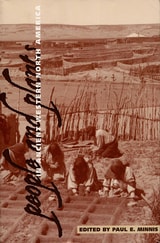
People and Plants in Ancient Eastern North America
Edited by Paul E. Minnis
University of Arizona Press, 2003
The most comprehensive overview in more than half a century about the interconnectedness of prehistoric Native Americans and their botanical world, this book and its forthcoming companion volume, People and Plants in Ancient Western North America, present the latest information on three major topics: the use of native plants, the history of crops and their uses, and how humans affected their environment. In this volume, expert scholars summarize the prehistoric ethnobotany of four regions: the Eastern Woodlands (W. Cowan, K. Gremillion, M. Scarry, B. Smith, and G. Wagner), Northeast (G. Crawford and D. Smith), Plains (M. Adair), and Caribbean (L. Newsom and D. Pearsall).
This volume contributes significantly to our understanding of the lives of prehistoric people as well as the forces that influenced their communities, their ingenuity, and their ecological impact. It also serves as a guide for designing environmentally sustainable lives today.
People and Plants in Ancient Western North America
Edited by Paul E. Minnis
University of Arizona Press, 2004
The most comprehensive overview in more than half a century on the interconnectedness of people and plants, this book and its companion volume, People and Plants in Ancient Eastern North America, present the latest information on three major topics: the uses of native plants, the history of crops and their uses, and the impact of humans on their environment. They not only contribute to our understanding of the lives of prehistoric people but also serve as guides for designing sustainable living today.
People, Plants, and Landscapes
Studies in PaleoethnobotanyKristen J. Gremillion
University of Alabama Press, 1997
Discover how ancient peoples and plants shaped one another across generations and landscapes.
People, Plants, and Landscapes showcases the potential of modern paleoethnobotany, an interdisciplinary field that explores the interactions between human beings and plants by examining archaeological evidence. Using different methods and theoretical approaches, the essays in this work apply botanical knowledge to studies of archaeological plant remains and apply paleoethnobotany to nonarchaeological sources of evidence. The resulting techniques often lie beyond the traditional boundaries of either archaeology or botany.
With this ground-breaking work, the technically and methodologically enhanced paleoethnobotany of the 1990s has joined forces with ecological and evolutionary theory to forge explanations of changing relationships between human and plant populations.
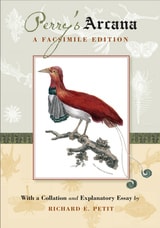
Perry's Arcana
A Facsimile EditionRichard E. Petit
Temple University Press, 2009
Now at last this neglected gem has been revived for scientists, students, and aficionados of natural history. New scholarship is combined with modern digital reproduction techniques to do full justice to the beautiful plates. An up-to-date account of all the species is given, along with a full collation and extensive notes, by the eminent natural historian Richard E. Petit.
The Arcana is technically interesting too, as its glowing plates were printed with variously colored inks to suppress their outlines. Its appeal will extend not only to academic libraries and scholars specializing in various branches of natural history and the history of science, but also to collectors of beautiful natural history books and enthusiasts of Regency Britain.
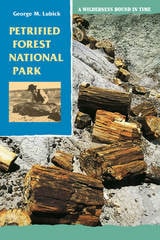
Petrified Forest National Park
A Wilderness Bound in TimeGeorge M. Lubick
University of Arizona Press, 1996
Petrified Forest National Park: A Wilderness Bound in Time speeds the reader on an ancient ecological journey, from the time of dinosaurs to the discovery of their Triassic fossils and on through a century of political maneuvering to create a place for the forest in American history. George Lubick describes how a dedicated few understood the environmental importance as well as the unique beauty of the park's Triassic Chinle Formation and the Painted Desert. Nearly a million people "visit the Triassic" annually; this environmental history of the ancient forest is important for those who know the park as well as those interested in natural America. Petrified Forest National Park is one of the few complete histories of any national park, a well-told, balanced treatment of the environmental, political, and historical factors that shape America's natural history.
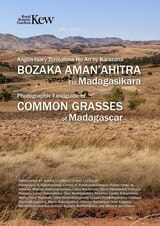
Photographic Field Guide of Common Grasses of Madagascar
Nantenaina Rakotomalala, Fenrita Randrianarimanana, and Rafael Felipe de Almeida
Royal Botanic Gardens, Kew, 2025
An easy-to-use bilingual field guide in English and Malagasy on the grasses of Madagascar.
Field Guide to the Grasses of Madagascar is the first photographic compilation of information on Madagascar’s Poaceae, featuring around half of the known grass species on the island. Compiled by a team of Malagasy and international botanists led by the Royal Botanic Gardens, Kew, Kew Madagascar, and partner institutions, it consolidates expert-generated and expert-verified information in Malagasy and English.
This book contains information on 269 species of grasses, with a general introduction and an index to Malagasy common names in addition to Latin names. The book also provides a critical foundation to the ongoing work of assessing the current biodiversity, distribution, uses, and evolution of the island’s grass flora.
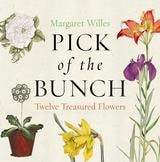
Pick of the Bunch
Twelve Treasured FlowersMargaret Willes
Bodleian Library Publishing, 2009
In the dark, bitter days of winter, when the ground lies frozen and snow-covered, it can be hard to believe that mere months before, gardens and window boxes were bursting forth with fragrant, colorful blossoms. Today on the frosty walk home, at least we can pick up cut flowers at the store to remind us of the spring to come. But before the technological miracles of hothouses and refrigeration, flowers could only be captured for the winter months by artists and painters. Some of the finest flower-pieces ever painted were by Dutch and Flemish artists in the seventeenth century, which depict flowers in vases of metal and porcelain, sometimes with insects and butterflies nestling in petals or clinging to stalks. From these flower-pieces we can see what Europeans of the time considered desirable flowers: the rose, iris, carnation, lily, snowdrop, violet, fritillary, narcissus, tulip, daffodil, and hyacinth—many of which are still our favorites today.
Alongside lush color botanical illustrations, Pick of the Bunch presents the social history of these flora—how they arrived in our gardens; how they were bought, acquired and displayed; and who were their devotees and cultivators. The book delves into their symbolic associations in classical and Christian traditions and examines the complex language of flowers employed by the Victorians. Beautiful to behold and engagingly written, Pick of the Bunch is a wonderful gift for any garden lover and will be a warm, much needed glimpse of spring and summer throughout the cold, barren months.
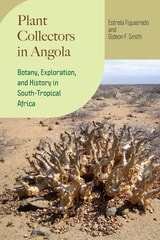
Plant Collectors in Angola
Botany, Exploration, and History in South-Tropical AfricaEstrela Figueiredo and Gideon F. Smith
University of Chicago Press, 2024
For any region, cataloging, interpreting, and understanding the history of botanical exploration and plant collecting, and the preserved specimens that were amassed as a result, are critically important for research and conservation. In this book, published in cooperation with the International Association for Plant Taxonomy, Estrela Figueiredo and Gideon F. Smith, both botanists with expertise in the taxonomy of African plants, provide the first comprehensive, contextualized account of plant collecting in Angola, a large country in south-tropical Africa. An essential book for anyone concerned with the biodiversity and history of Africa, this authoritative work offers insights into the lives, times, and endeavors of 358 collectors. In addition, the authors present analyses of the records that accompanied the collectors’ preserved specimens. Illustrated in color throughout, the book fills a large gap in the current knowledge of the botanical and exploration history of Africa.

Plant Communities of Southern Illinois
Robert H. Mohlenbrock and John C. Voigt
Southern Illinois University Press, 1964
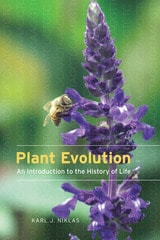
Plant Evolution
An Introduction to the History of LifeKarl J. Niklas
University of Chicago Press, 2016
Tapping such wide-ranging topics as genetics, gene regulatory networks, phenotype mapping, and multicellularity, as well as paleobotany, Karl J. Niklas’s Plant Evolution offers fresh insight into these differences. Following up on his landmark book The Evolutionary Biology of Plants—in which he drew on cutting-edge computer simulations that used plants as models to illuminate key evolutionary theories—Niklas incorporates data from more than a decade of new research in the flourishing field of molecular biology, conveying not only why the study of evolution is so important, but also why the study of plants is essential to our understanding of evolutionary processes. Niklas shows us that investigating the intricacies of plant development, the diversification of early vascular land plants, and larger patterns in plant evolution is not just a botanical pursuit: it is vital to our comprehension of the history of all life on this green planet.
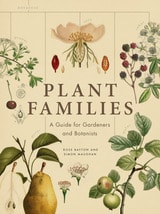
Plant Families
A Guide for Gardeners and BotanistsRoss Bayton and Simon Maughan
University of Chicago Press, 2017
Plant Families is an easy-to-use, beautifully illustrated guide to the more than one hundred core plant families every horticulturist, gardener, or budding botanist needs to know. It introduces the basics of plant genealogy and teaches readers how to identify and understand the different structures of flowers, trees, herbs, shrubs, and bulbs. It then walks through each family, explaining its origins and range, and describing characteristics such as size, flowers, and seeds. Each family is accompanied by full-color botanical illustrations and diagrams. “Uses For” boxes planted throughout the book provide practical gardening tips related to each family.
We have much to gain by learning about the relationships between plant families. By understanding how botanists create these groupings, we can become more apt at spotting the unique characteristics of a plant and identify them faster and more accurately. Understanding plant families also helps us to make sense of—and better appreciate—the enormous biological diversity of the plant kingdom.
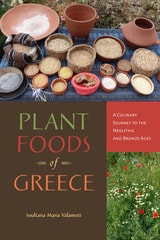
Plant Foods of Greece
A Culinary Journey to the Neolithic and Bronze AgesSoultana Maria Valamoti
University of Alabama Press, 2023
2024 INAUGURAL MARY BEAUDRY BOOK AWARD FOR THE ARCHAEOLOGY OF FOOD
A synthesis of culinary practices of prehistoric Greece based on plant food ingredients
In Plant Foods of Greece, Greek archaeologist Soultana Maria Valamoti takes readers on a culinary journey, reconstructing the plant foods and culinary practices of Neolithic and Bronze Age Greece. For more than thirty years, she has been analyzing a large body of archaeobotanical data that was retrieved from nearly twenty sites in mainland Greece and the Greek islands, with an additional analysis of other sites as referenced by published colleagues. Plant foods were the main ingredients of daily meals in prehistoric Greece and most likely of special dishes prepared for feasts and rituals.
Valamoti’s approach allows an exploration of culinary variability through time. The thousands of charred seeds identified from occupation debris correspond to minuscule time capsules. She is able to document changes from the cooking of the first farmers to the sophisticated cuisines of the elites who inhabited palaces in the first cities of Europe in the south of Greece during the Late Bronze Age. Along the way, she explains the complex processes for the addition of new ingredients (such as millet and olives), condiments, sweet tastes, and complex recipes. Valamoti also addresses regional variability and diversity as well as detailing experimentation and research using occasional input from ancient written sources.
Comprehensive and synthetic coverage encompasses bread/cereals, pulses, oils, fruit and nuts, fermented brews, healing foods, cooking, and identity. In addition, Valamoti offers insight into engaging in public archaeology and provides recipes that incorporate ancient plant ingredients and connect prehistory to the present in a critical way. A definitive source for a range of food scientists and scholars, it will also appeal to foodies.
Plant Life
The Entangled Politics of AfforestationRosetta S. Elkin
University of Minnesota Press, 2022
How afforestation reveals the often-concealed politics between humans and plants
In Plant Life, Rosetta S. Elkin explores the procedures of afforestation, the large-scale planting of trees in otherwise treeless environments, including grasslands, prairies, and drylands. Elkin reveals that planting a tree can either be one of the ultimate offerings to thriving on this planet, or one of the most extreme perversions of human agency over it.
Using three supracontinental case studies—scientific forestry in the American prairies, colonial control in Africa’s Sahelian grasslands, and Chinese efforts to control and administer territory—Elkin explores the political implications of plant life as a tool of environmentalism. By exposing the human tendency to fix or solve environmental matters by exploiting other organisms, this work exposes the relationship between human and plant life, revealing that afforestation is not an ecological act: rather, it is deliberately political and distressingly social.
Plant Life ultimately reveals that afforestation cannot offset deforestation, an important distinction that sheds light on current environmental trends that suggest we can plant our way out of climate change. By radicalizing what conservation protects and by framing plants in their total aliveness, Elkin shows that there are many kinds of life—not just our own—to consider when advancing environmental policy.
Plant Resistance to Herbivores and Pathogens
Ecology, Evolution, and GeneticsEdited by Robert S. Fritz and Ellen L. Simms
University of Chicago Press, 1992
Plant Resistance to Herbivores and Pathogens not only reviews the literature pertaining to plant resistance from a number of traditionally separate fields but also examines significant questions that will drive future research. Among the topics explored are selection for resistance in plants and for virulence in phytophages; methods for studying natural variation in plant resistance; the factors that maintain intraspecific variation in resistance; and the ecological consequences of within-population genetic variation for herbivorous insects and fungal pathogens.
"A comprehensive review of the theory and information on a large, rapidly growing, and important subject."—Douglas J. Futuyma, State University of New York, Stony Brook
Plants and Animals in the Life of the Kuna
By Jorge Ventocilla, Heraclio Herrera, & Valerio Núñez
University of Texas Press, 1995
"The earth is the mother of all things"; thus begins this original and accessible book on how the Kuna of Panama relate to the natural world. An integrative project involving Kuna traditional leaders and trained scholars, and fully illustrated by a Kuna artist, this translation of Plantas y animales en la vida del pueblo Kuna focuses on Kuna plant and animal life, social life, and social change as a means of saving traditional ecological knowledge and "returning" it to the community.
The authors hope to preserve the Kuna environment not only by reviving traditional technologies but also by educating the Kuna as to what needs protection. While the Kuna have a tradition of living in harmony with the land, the intrusion of the market economy is eroding the very basis of their sustainable way of life.
As a response to this crisis, this book seeks to develop native self-awareness and provide a model for collaboration. It will appeal to Latin Americanists, anthropologists, and ethnobotanists, as well as to a general readership in environmental issues.

Plants for Desperate Times
The Diversity of Life-Saving Famine FoodsPaul E. Minnis and Robert L. Freedman
University of Arizona Press, 2024
Plants for Desperate Times is an introduction to the diversity of plant foods that have saved millions of lives during lethal food shortages. While not a field guide, it addresses questions about what famine foods are and why they are important. The work highlights one hundred plants. Each entry includes the common and scientific names, botanical family, distribution, use as a famine food and other uses, and nutritional information. The species come from across the botanical kingdom, demonstrating the diversity of life-saving plants and the human ingenuity of making what might seem to be inedible plants edible. Unexpectedly, important famine foods include alternative uses of important crops as well as native plants.
Beyond a study of famine foods, the authors share why keeping an inventory of plant foods of last resort is so important. They help to build an understanding of little-known and underappreciated foods that may have a greater role in provisioning humanity in the future. As much as we may hope that severe food scarcity will never occur again, history suggests otherwise, and Plants for Desperate Times provides invaluable documentation of these vital foods.
Plants for Houston and the Gulf Coast
By Howard Garrett
University of Texas Press, 2008
Whether you're a first-time homeowner, dedicated gardener, or landscape professional, if you're gardening on the Gulf Coast, you need Howard Garrett's Plants for Houston and the Gulf Coast. Garrett is one of Texas's top organic gardening experts, and gardeners rely on him for accurate, sensible advice about what to plant and how to maintain healthy yards and landscapes without synthetic fertilizers and toxic pesticides. In Plants for Houston and the Gulf Coast, Garrett presents nearly 400 plants, both native and adapted, that grow well in Southeast Texas.
Like all of Howard Garrett's books, Plants for Houston and the Gulf Coast is loaded with indispensable gardening information:
- Nearly 400 trees, shrubs, groundcovers and vines, annuals and perennials, and grasses
- 400 full-color, close-up photos of the plants
- Expert information about each plant's appearance, growing requirements, landscape uses, potential problems, and other interesting facts
- Precise, easy-to-follow instructions about how to design a garden, prepare the soil, install trees and other plants, grow grass and control weeds, and maintain the landscape and control pests
- A detailed gardening calendar for Southeast Texas that lists specific plants to plant and maintenance tasks to perform each month
No other book currently available provides such extensive and reliable information for Texas Gulf Coast gardeners.
Plants from the Past
Works Of Leonard W. Blake & Hugh C. CutlerLeonard W. Blake and Hugh C. Cutler; With an Introduction by Gayle J. Fritz and Patty Jo Watson
University of Alabama Press, 2001
Plants from the Past is a fascinating, comprehensive record of the work of two dedicated plant scientists who were instrumental in the establishment of archaeobotany and paleoethnobotany as vigorous subdisciplines within American archaeology. Hugh Carson Cutler and Leonard Watson Blake worked together for many decades at the Missouri Botanical Garden in St. Louis, identifying and interpreting plant remains from archaeological sites all over North America.
Covering a period of 30 years and tracing the development of the study of plant remains from archaeological sites, the volume will give archaeologists access to previously unavailable data and interpretations. It features the much-sought-after extensive inventory "Plants from Archaeological Sites East of the Rockies," which serves as a reference to archaeobotanical collections curated at the Illinois State Museum. The chapters dealing with protohistory and early historic foodways and trade in the upper Midwest are especially relevant at this time of increasing attention to early Indian-white interactions.
The editors' introduction provides coherence and historical context for the papers and points to the book's potential as a resource for future research. Graced by Dr. Blake's brief introductions to each chapter, Plants from the Past neatly compiles the earliest research in archaeobotany by two originators of the science.
Plants of Life, Plants of Death
Frederick J. Simoons
University of Wisconsin Press, 1998
Pythagoras, the ancient Greek mathematician, did not himself eat fava beans in any form; in fact, he banned his followers from eating them. Cultural geographer Frederick Simoons disputes the contention that Pythagoras established that ban because he recognized the danger of favism, a disease that afflicts genetically-predisposed individuals who consume fava beans. Contradicting more deterministic explanations of history, Simoons argues that ritual considerations led to the Pythagorean ban.
In his fascinating and thorough new study, Simoons examines plants associated with ritual purity, fertility, prosperity, and life, on the one hand, or with ritual impurity, sickness, ill fate, and death, on the other. Plants of Life, Plants of Death offers a wealth of detail from not only history, ethnography, religious studies, classics, and folklore, but also from ethnobotany and medicine. Simoons surveys a vast geographical region extending from Europe through the Near East to India and China. He tells the story of India's giant sacred fig trees, the pipal and the banyan, and their changing role in ritual, religion, and as objects of pilgrimage from antiquity to the present day; the history of mandrake and ginseng, “man roots” whose uses from Europe to China have been shaped by the perception that they are human in form; and the story of garlic and onions as impure foods of bad odor in that same broad region.
Simoons also identifies and discusses physical characteristics of plants that have contributed to their contrasting ritual roles, and he emphasizes the point that the ritual roles of plants are also shaped by basic human concerns—desire for good health and prosperity, hopes for fertility and offspring, fear of violence, evil and death—that were as important in antiquity as they are today.
“It dazzles as a piece of scholarship.”—Daniel W. Gade, University of Vermont
Plants of the Petén Itza’ Maya
Plantas de los maya itza’ del PeténScott Atran, Ximena Lois and Edilberto Ucan Ek'
University of Michigan Press, 2004
Plants of the Rio Grande Delta
By Alfred Richardson
University of Texas Press, 1995
The Rio Grande Delta is fabulously rich in wildflowers and other plant life. Lying in the geographically and environmentally diverse region common to southern Texas and northern Mexico, it supports plants that also grow in Central America and throughout Mexico, the Gulf Coastal plains, the South Texas Plains, and the Chihuahuan Desert.
Plants of the Rio Grande Delta provides an accessible and reliable identification guide to all of the plants, excluding grasses, of the region—some 823 species. In clear, nontechnical language, Alfred Richardson gives a brief description of each species, along with its range, habitat, and general blooming time. Over two hundred superb color photographs offer quick and easy field identification, while line drawings illustrate notable characteristics of the plants.
This volume expands and updates Alfred Richardson's previous book, Plants of Southernmost Texas, published in 1990 by the Gorgas Science Foundation. It will be an essential field guide for everyone interested in South Texas flora, from winter visitors and Valley residents to professional botanists.
Plants of the World
Maarten J. M. Christenhusz, Michael F. Fay, and Mark W. Chase
Royal Botanic Gardens, Kew, 2017
Plants of the World
An Illustrated Encyclopedia of Vascular PlantsMaarten J. M. Christenhusz, Michael F. Fay, and Mark W. Chase
University of Chicago Press, 2017
Plants, Animals, People, Aliens
An Aristotelian-Thomist Perspective on Life in the UniverseMarie I. George
Catholic University of America Press, 2026
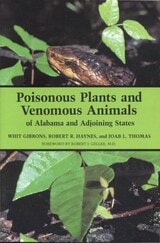
Poisonous Plants and Venomous Animals of Alabama and Adjoining States
Whit Gibbons, Robert R. Haynes, and Joab L. Thomas
University of Alabama Press, 1989
The essential guide to identifying and understanding the Southeast's toxic plants and venomous wildlife.
Wisteria, mistletoe, oleander, milkweed, narcissus, yellow Jessamine, wild hydrangea, trillium, all are plants easily recognized by most people. But these and more that 200 other plants in Alabama and the Southeast can cause systemic poisoning if ingested by human beings and livestock. This book describes these poisonous plants, including various mushrooms, and discusses the toxic properties, symptoms of poisoning, habitat occurrence, and geographic distribution. One chapter describes plants that cause dermatitis or other allergic reactions-plants including poison ivy, poison sumac, ragweed, clematis, and red maple.
Other chapters of the book discuss venous animals-not only the six venomous snakes of the Southeast but also certain jellyfishes, centipedes, spiders, scorpions, stinging caterpillars, wasps, hornets, bees, catfishes, stingrays, and others- that might be encountered by people during recreation or work. The authors describe habitat occurrence, geographic distribution, and general life history and behavior for these animals. Numerous color photographs and drawings of both plants and animals are included for identification, as well as hundreds of range maps.
The authors encourage an appreciation for the protective mechanisms hat help plants and animals defend themselves against predators or other threats. Although people must be able to recognize a poisonous plant or venomous animal in order to avoid suffering unwary contact, the book reassures the reader that Alabama’s flora and fauna gives us little cause to worry on a relative scale. The information provided increases our understanding of and admiration for these species and their environments.
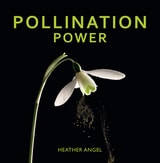
Pollination Power
Heather Angel
University of Chicago Press, 2016
In stunning full-color images, employing the latest photographic techniques, esteemed photographer Heather Angel has captures the intimate interactions of plants with their floral pollinators. The plants come not only from Angel’s Surrey backyard and the Royal Botanic Garden at Kew, but from twenty countries where Angel has travelled—from the rich floral kingdoms of the Cape of South Africa to the diversity of China and the Americas. The photos illustrate the varied techniques that flowers use to communicate with their pollinators. Some, for example, change color when the flower no longer has rewards to offer. Others control precisely when pollinators enter or leave by timing when they open and close their petals or when they emit a scent. This fascinating array of pollination repertoires crossfertilizes Angel’s photos with a descriptive text.
Featuring both common and exotic plants and temperate and tropical floral, Pollination Power will entice anyone with a passion for botanicals, from gardeners to botanists alike.
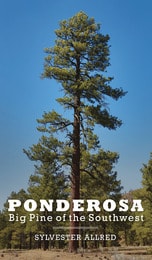
Ponderosa
Big Pine of the SouthwestSylvester Allred
University of Arizona Press, 2015
Ponderosa is the first of its kind to provide an introduction to the natural and human histories of the ponderosa pine forests of the Southwest that is accessible to all who wish to enjoy the forests. The book offers knowledge on elemental aspects of the forests, such as the structure of the trees, as well as theoretical perspectives on issues such as climate change. Included are discussions of biogeography, ecology, and human and natural history, illustrated by over fifty color photographs throughout.
Allred presents his observations as if he is recalling his thoughts over the course of a walk in a ponderosa pine forest. His imagery-saturated prose provides an informal and enjoyable approach to discovering the history and environment of the ponderosa pine. Using a concise, straightforward writing style, Allred invites readers to explore the forests with him.
Ponderosa includes:
- More than 50 color photos
- Learn how to estimate the age of a tree
- See the reptiles, birds, and mammals that make their home in ponderosa pine forests
- Much more!
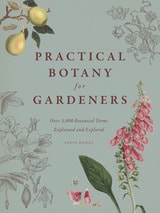
Practical Botany for Gardeners
Over 3,000 Botanical Terms Explained and ExploredGeoff Hodge
University of Chicago Press, 2013
Practical Botany for Gardeners provides an elegant and accessible introduction to the world of botany. It presents the essentials that every gardener needs to know, connecting explanations of scientific facts with useful gardening tips. Flip to the roots section and you’ll not only learn how different types of roots support a plant but also find that adding fungi to soil aids growth. The pruning section both defines “lateral buds” and explains how far back on a shoot to cut in order to propagate them.
The book breaks down key areas and terminology with easy-to-navigate chapters arranged by theme, such as plant types, plant parts, inner workings, and external factors. “Great Botanists” and “Botany in Action” boxes delve deeper into the fascinating byways of plant science. This multifaceted book also includes two hundred botanical illustrations and basic diagrams that hearken to the classic roots of botany.
Part handbook, part reference, Practical Botany for Gardeners is a beautifully captivating read. It’s a must for garden lovers and backyard botanists who want to grow and nurture their own plant knowledge.
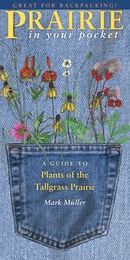
Prairie in Your Pocket
A Guide to Plants of the Tallgrass PrairieMark Muller
University of Iowa Press, 2000
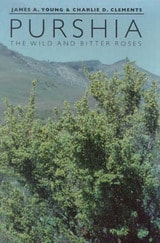
Purshia
The Wild And Bitter RosesJames A. Young
University of Nevada Press, 2002
A useful and complete summary of all the scientific information available on one of the most significant plant species in the western and intermountain regions. Among the plant species of the great Basin rangeland, the Purshia—ancient members of the rose family evolved to survive the aridity and temperature extremes of this harsh region—are one of the most important. This book-length study of this key plant species provides a comprehensive examination of the biology and ecology of the species and region.