Results by title
50 books match the query 'Plants & Animals' and 2 start with p
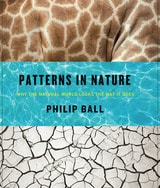
Patterns in Nature
Why the Natural World Looks the Way It DoesPhilip Ball
University of Chicago Press, 2016
Though at first glance the natural world may appear overwhelming in its diversity and complexity, there are regularities running through it, from the hexagons of a honeycomb to the spirals of a seashell and the branching veins of a leaf. Revealing the order at the foundation of the seemingly chaotic natural world, Patterns in Nature explores not only the math and science but also the beauty and artistry behind nature’s awe-inspiring designs.
Unlike the patterns we create in technology, architecture, and art, natural patterns are formed spontaneously from the forces that act in the physical world. Very often the same types of pattern and form – spirals, stripes, branches, and fractals, say—recur in places that seem to have nothing in common, as when the markings of a zebra mimic the ripples in windblown sand. That’s because, as Patterns in Nature shows, at the most basic level these patterns can often be described using the same mathematical and physical principles: there is a surprising underlying unity in the kaleidoscope of the natural world. Richly illustrated with 250 color photographs and anchored by accessible and insightful chapters by esteemed science writer Philip Ball, Patterns in Nature reveals the organization at work in vast and ancient forests, powerful rivers, massing clouds, and coastlines carved out by the sea.
By exploring similarities such as those between a snail shell and the swirling stars of a galaxy, or the branches of a tree and those of a river network, this spectacular visual tour conveys the wonder, beauty, and richness of natural pattern formation.
[more]
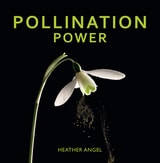
Pollination Power
Heather Angel
University of Chicago Press, 2016
From the wings of moths to the feet of hoverflies and the head feathers of nectar-seeking birds, the process of pollination is a natural marvel. How do the many annuals and perennials and shrubs and trees that populate the globe manage to lure the aid of bees and butterflies and other creatures at exactly the appropriate time? Pollination Power offers a unique, truly bird’s-eye view of the wonders of pollination at work.
In stunning full-color images, employing the latest photographic techniques, esteemed photographer Heather Angel has captures the intimate interactions of plants with their floral pollinators. The plants come not only from Angel’s Surrey backyard and the Royal Botanic Garden at Kew, but from twenty countries where Angel has travelled—from the rich floral kingdoms of the Cape of South Africa to the diversity of China and the Americas. The photos illustrate the varied techniques that flowers use to communicate with their pollinators. Some, for example, change color when the flower no longer has rewards to offer. Others control precisely when pollinators enter or leave by timing when they open and close their petals or when they emit a scent. This fascinating array of pollination repertoires crossfertilizes Angel’s photos with a descriptive text.
Featuring both common and exotic plants and temperate and tropical floral, Pollination Power will entice anyone with a passion for botanicals, from gardeners to botanists alike.
[more]