Results by title
108 books match the query 'Play' and 14 start with p
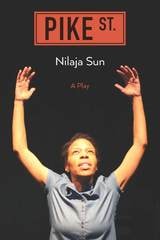
Pike St.
A PlayNilaja Sun
Northwestern University Press, 2017

Pinter In Play
Critical Strategies and the Plays of Harold PinterSusan Hollis Merritt
Duke University Press, 1990
Play Reconsidered
Sociological Perspectives on Human ExpressionThomas S. Henricks
University of Illinois Press, 2006
Understanding the significance of adult play in the life of modern societies
Within the social sciences, few matters are as significant as the study of human play--or as neglected. In Play Reconsidered, rather than viewing play simply as a preoccupation of the young and a vehicle for skill development, Thomas S. Henricks argues that it’s a social and cultural phenomenon of adult life, enveloped by wider structures and processes of society. In that context, he argues that a truly sociological approach to play should begin with a consideration of the largely overlooked writings on play and play-related topics by some of the classic sociological thinkers of the twentieth century.
Henricks explores Karl Marx’s analysis of creativity in human labor, examines Emile Durkheim’s observations on the role of ritual and the formation of collective consciousness, extends Max Weber’s ideas about the process of rationalization to the realm of expressive culture and play, surveys Georg Simmel’s distinctive approach to sociology and sociability, and discusses Erving Goffman’s focus on human conduct as process and play as “encounter.” These and other discussions of the contributions of more recent sociologists are framed by an initial consideration of Johan Huizinga’s famous challenge to understand the nature and significance of play. In a closing synthesis, Henricks distinguishes play from other forms of human social expression, particularly ritual, communitas, and work.

Play Redux
The Form of Computer GamesDavid Myers
University of Michigan Press, 2010
"Play Redux excels in tying together intellectual traditions that are rooted in literary studies, cognitive science, play studies and several other fields, thereby creating a logical whole. Through this, the book makes service to several academic communities by pointing out their points of contact. This is clearly an important contribution to a growing academic field, and will no doubt become important in many future discussions about digital games and play."
---Frans Mäyrä, University of Tampere, Finland
"David Myers has researched video games longer than anyone else. Play Redux shows him continually relevant, never afraid of courting controversy."
---Jesper Juul, IT University of Copenhagen, Denmark
Play Redux is an ambitious description and critical analysis of the aesthetic pleasures of video game play, drawing on early twentieth-century formalist theory and models of literature. Employing a concept of biological naturalism grounded in cognitive theory, Myers argues for a clear delineation between the aesthetics of play and the aesthetics of texts. In the course of this study, Myers asks a number of interesting questions: What are the mechanics of human play as exhibited in computer games? Can these mechanisms be modeled? What is the evolutionary function of cognitive play, and is it, on the whole, a good thing? Intended as a provocative corrective to the currently ascendant, if not dominant, cultural and ethnographic approach to game studies and play, Play Redux will generate interest among scholars of communications, new media, and film.
David Myers is Reverend Aloysius B. Goodspeed Distinguished Professor at the School of Mass Communication, Loyola University New Orleans.
Play and the Human Condition
Thomas S. Henricks
University of Illinois Press, 2015
Imaginative and stimulating, Play and the Human Condition shows how play allows us to learn about our qualities and those of the world around us--and in so doing make sense of ourselves.

Play in the Age of Goethe
Theories, Narratives, and Practices of Play around 1800Edgar Landgraf
Bucknell University Press, 2020
Published by Bucknell University Press. Distributed worldwide by Rutgers University Press.
Play to Submission
Gaming Capitalism in a Tech FirmTongyu Wu
Temple University Press, 2024
Play to Submission shows how Behemoth’s games undermined and manipulated workers. They lost their work-life balance and the constant competition made labor organizing difficult. Nonetheless, many workers embraced management’s games as a chance to show off their “gamer” identities and create a workplace culture with privileged insiders and exiled outsiders, with female and migrant workers usually in the latter group. Moreover, Wu indicates this may be the future of work for high- and low-skilled and, creative workers in an environment where capitalists have heightened demands for technology and creativity.
Drawing from 13 months of ethnographic work, Wu presents a persistent reality in which the company reaps the reward of surplus productivity, leaving employees themselves in a highly competitive and sometimes precarious work position.
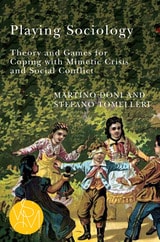
Playing Sociology
Theory and Games for Coping with Mimetic Crisis and Social ConflictMartino Doni
Michigan State University Press, 2024

Playthings and Playtimes
Play, Affect and Material Culture in the Ludic worldEdited by Hannah Field, Seth Giddings, and Ben Highmore
University College London, 2025
There is an inherent contradiction in play: it is universal, a basic part of human nature, but it also takes radically different forms, shaped by the design sense, technology, and values of its particular time and place. This volume explores this contradiction through a wealth of engaging examples that bring play, emotions, and the ludic into dialogue with material culture, affect theory, psychoanalysis, childhood studies, and other fields. Topics range from playground architecture, plastic toys, and children’s magazines to the complexities of children’s play in a post-digital world.
Poet's Work, Poet's Play
Essays on the Practice and the ArtEdited by Daniel Tobin and Pimone Triplett
University of Michigan Press, 2008
A follow-up to the highly praised Poets Teaching Poets, Daniel Tobin and Pimone Triplett's Poet's Work, Poet's Play gathers together essays by some of the most important voices in contemporary poetry: Carl Dennis, Stephen Dobyns, Tony Hoagland, Heather McHugh, Ellen Bryant Voigt, Eleanor Wilner, Dean Young, and the late Larry Levis and Agha Shahid Ali.
Lively, accessible, and erudite, the pieces range from discussions on syntax and the syllable to an exploration of the complexities of canon formation under the shadow of imperialism, race, and history. Exploring the work of John Donne, William Butler Yeats, Robert Frost, Philip Larkin, Charles Olsen, Ezra Pound, Anne Carson, Robert Herrick, Harryette Mullen, and many others, Poet's Work, Poet's Play---like its predecessor volume---will be an invaluable tool for teachers, students, and poets at every level.
"Much more than a set of essays on poetic craft or aesthetic understandings, this collection takes on two of the most prevalent anxieties about writing poetry in our time: the place of subjectivity in poetry, and how to make a significant shape in language while both affirming and interrogating the poetic I's authority. This is a book for anyone who wants to write better poems, who wants to read with greater passion, and who believes that poetry is an independent category of human consciousness that can be as capaciousness as the world, and as nuanced."
---Tom Sleigh, author of Space Walk and Far Side of the Earth
"Gathering together essays by unquestionably important poets, Poet's Work, Poet's Play has immense pedagogical value in the way it demonstrates how to discover in poetry resources of language and structure often overlooked in first, and ensuing, readings of complex texts."
---Laurence Goldstein, Professor of English, University of Michigan, and Editor, Michigan Quarterly Review
"A valuable document illuminating critical aspects of the contemporary American poetry scene."
---John Koethe, Distinguished Professor of Philosophy at the University of Wisconsin, Milwaukee, and author of Sally's Hair: Poems

Pony
A PlaySylvan Oswald
Northwestern University Press, 2025
When Pony, a formerly incarcerated trans guy, moves to a small rural town to start a new life, he quickly becomes entangled with its isolated community. He starts to fall for a waitress who is obsessed with a local murder; he must comply with a butch social worker who doesn’t understand him; and he is pursued by a young trans man who thinks Pony could be the father he always wanted. Amid this whirlwind of fear and desire, Pony must find the strength to confront the stories he's been told about masculinity, violence, and self-worth. With a new preface by the author on searching for queer and trans community in the theater, and an afterword by critic Miriam Felton-Dansky contextualizing its place in contemporary theater, Pony is a seminal work of trans theater exploring questions of generational difference, class, and gender on an epic scale.
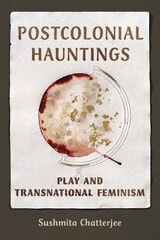
Postcolonial Hauntings
Play and Transnational FeminismSushmita Chatterjee
University of Illinois Press, 2024
Often examined separately, play and hauntings in fact act together to frame postcolonial issues. Sushmita Chatterjee showcases their braided workings in social and political fabrics. Drawing on this intertwined idea of play and hauntings, Chatterjee goes to the heart of conundrums within transnational postcolonial feminisms by examining the impossible echoes of translations, differing renditions of queer, and the possibilities of solidarity beyond the fraternal friendships that cement nation-states. Meaning-plays, or slippages through language systems as we move from one language to another, play a pivotal role in a global world. As Chatterjee shows, an attentiveness to meaning-plays discerns the past and present, here and there, and moves us toward responsive ethics in our theories and activisms.
Insightful and stimulating, Postcolonial Hauntings centers the inextricable work of play and hauntings as a braided ethics for postcolonial transnational struggles.
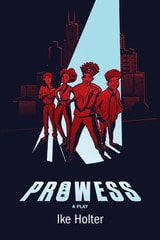
Prowess
A PlayIke Holter
Northwestern University Press, 2019
Avenging Chicagoans form a league for justice in Ike Holter’s superhero-inspired play, Prowess. In this heartfelt yet fantastical homage to Chicago, award-winning playwright Ike Holter introduces us to a quartet of “average” citizens who have been the victims of violence and felt powerless because of it.
In the face of the city’s seemingly intractable ills, the play’s characters join forces to rescue Chicago—and themselves. But how? With heart, wit, and wisdom, Holter explores how one responds to violence. Does a person focus on self-defense and personal survival? Or fight back—with more violence? Pulsating and physical, Prowess is about vulnerability, vigilantism, heroism, and self-knowledge.
Prowess is one of seven plays in Holter’s Rightlynd Saga, all to be published by Northwestern University Press. The other plays in the cycle are Rightlynd, Exit Strategy, Sender, The Wolf at the End of the Block, Red Rex, and Lottery Day.
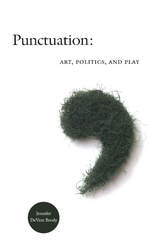
Punctuation
Art, Politics, and PlayJennifer DeVere Brody
Duke University Press, 2008
Brody provides a playful, erudite meditation on punctuation’s power to direct discourse and, consequently, to shape human subjectivity. Her analysis ranges from a consideration of typography as a mode for representing black subjectivity in Ralph Ellison’s Invisible Man to a reflection on hyphenation and identity politics in light of Strunk and White’s prediction that the hyphen would disappear from written English. Ultimately, Brody takes punctuation off the “stage of the page” to examine visual and performance artists’ experimentation with non-grammatical punctuation. She looks at different ways that punctuation performs as gesture in dances choreographed by Bill T. Jones, in the hybrid sculpture of Richard Artschwager, in the multimedia works of the Japanese artist Yayoi Kusama, and in Miranda July’s film Me and You and Everyone We Know. Brody concludes with a reflection on the future of punctuation in the digital era.