102 books match the query 'Poor' and 16 start with p
cover of Patients of the State: The Politics of Waiting in Argentina

Patients of the State

The Politics of Waiting in Argentina

Javier Auyero

Duke University Press, 2012
Patients of the State is a sociological account of the extended waiting that poor people seeking state social and administrative services must endure. It is based on ethnographic research in the waiting area of the main welfare office in Buenos Aires, in the line leading into the Argentine registration office where legal aliens apply for identification cards, and among people who live in a polluted shantytown on the capital’s outskirts, while waiting to be allocated better housing. Scrutinizing the mundane interactions between the poor and the state, as well as underprivileged people’s confusion and uncertainty about the administrative processes that affect them, Javier Auyero argues that while waiting, the poor learn the opposite of citizenship. They learn to be patients of the state. They absorb the message that they should be patient and keep waiting, because there is nothing else that they can do. Drawing attention to a significant everyday dynamic that has received little scholarly attention until now, Auyero considers not only how the poor experience these lengthy waits but also how making poor people wait works as a strategy of state control.
[more]
cover of Poor People's Medicine: Medicaid and American Charity Care since 1965

Poor People's Medicine

Medicaid and American Charity Care since 1965

Jonathan Engel

Duke University Press, 2006

Poor People’s Medicine is a detailed history of Medicaid since its beginning in 1965. Federally aided and state-operated, Medicaid is the single most important source of medical care for the poorest citizens of the United States. From acute hospitalization to long-term nursing-home care, the nation’s Medicaid programs pay virtually the entire cost of physician treatment, medical equipment, and prescription pharmaceuticals for the millions of Americans who fall within government-mandated eligibility guidelines. The product of four decades of contention over the role of government in the provision of health care, some of today’s Medicaid programs are equal to private health plans in offering coordinated, high-quality medical care, while others offer little more than bare-bones coverage to their impoverished beneficiaries.

Starting with a brief overview of the history of charity medical care, Jonathan Engel presents the debates surrounding Medicaid’s creation and the compromises struck to allow federal funding of the nascent programs. He traces the development of Medicaid through the decades, as various states attempted to both enlarge the programs and more finely tailor them to their intended targets. At the same time, he describes how these new programs affected existing institutions and initiatives such as public hospitals, community clinics, and private pro bono clinical efforts. Along the way, Engel recounts the many political battles waged over Medicaid, particularly in relation to larger discussions about comprehensive health care and social welfare reform. Poor People’s Medicine is an invaluable resource for understanding the evolution and present state of programs to deliver health care to America’s poor.
[more]
cover of Poor People's Politics: Peronist Survival Networks and the Legacy of Evita

Poor People's Politics

Peronist Survival Networks and the Legacy of Evita

Javier Auyero

Duke University Press, 2000

“Political clientelism” is a term used to characterize the contemporary relationships between political elites and the poor in Latin America in which goods and services are traded for political favors. Javier Auyero critically deploys the notion in Poor People’s Politics to analyze the political practices of the Peronist Party among shantytown dwellers in contemporary Argentina.
Looking closely at the slum-dwellers’ informal problem-solving networks, which are necessary for material survival, and the different meanings of Peronism within these networks, Auyero presents the first ethnography of urban clientelism ever carried out in Argentina. Revealing a deep familiarity with the lives of the urban poor in Villa Paraíso, a stigmatized and destitute shantytown of Buenos Aires, Auyero demonstrates the ways in which local politicians present their vital favors to the poor and how the poor perceive and evaluate these favors. Having penetrated the networks, he describes how they are structured, what is traded, and the particular way in which women facilitate these transactions. Moreover, Auyero proposes that the act of granting favors or giving food in return for votes gives the politicians’ acts a performative and symbolic meaning that flavors the relation between problem-solver and problem-holder, while also creating quite different versions of contemporary Peronism. Along the way, Auyero is careful to situate the emergence and consolidation of clientelism in historic, cultural, and economic contexts.
Poor People’s Politics reexamines the relationship between politics and the destitute in Latin America, showing how deeply embedded politics are in the lives of those who do not mobilize in the usual sense of the word but who are far from passive. It will appeal to a wide range of students and scholars of Latin American studies, sociology, anthropology, political science, history, and cultural studies.
[more]
cover of Poor and Pregnant in Paris: Strategies for Survival in the Nineteenth Century

Poor and Pregnant in Paris

Strategies for Survival in the Nineteenth Century

Rachel G Fuchs

Rutgers University Press, 1992

Rachel Fuchs shows how poor urban women in Paris negotiated their environment, and in some respects helped shape it, in their attempt to cope with their problems of poverty and pregnancy. She reveals who the women were and provides insight into the nature of their work and living arrangements. With dramatic detail, and drawing on actual court testimonies, Fuchs portrays poor women's childbirth experiences, their use of charity and welfare, and their recourse to abortion and infanticide as desperate alternatives to motherhood.

Fuchs also provides a comprehensive description of philanthropic and welfare institutions and outlines the relationship between the developing welfare state and official conceptions of womanhood. She traces the evolution of a new morality among policymakers in which secular views, medical hygiene, and a new focus on the protection of children replaced religious morality as a driving force in policy formation.

Combining social, intellectual, and medical history, this study of poor mothers in nineteenth-century society illuminates both class and gender relations in Paris, and illustrates the connection between social policy and the way ordinary women lived their lives.

[more]
cover of Poverty and Leadership in the Later Roman Empire

Poverty and Leadership in the Later Roman Empire

Peter Brown

Brandeis University Press, 2001
In three magisterial essays, Peter Brown, one of the world's foremost scholars of the society and culture of late antiquity, explores the emergence in late Roman society of "the poor" as a distinct social class, one for which the Christian church claimed a special responsibility. It is the story of how a society came to see itself as responsible for the care of a particular class of people -- a class that had not previously been cared for -- and of who benefited from that shift in interests. In his characteristically elegant and lucid prose, Brown seeks to recover the pre-Christian status of poor people, the actual nature of the relations between the Christian church and the poor, and the true motivations -- sometimes sincere, sometimes self-serving -- behind Christian rhetoric of love for the poor. He draws not only on the standard Greek and Latin sources for the later Roman Empire, but also on Jewish sources to document the interactions between Middle Eastern provincial societies and classical Roman traditions. Brown gracefully illuminates a crucial transition from classical to Christian culture: the emergence of a new understanding of what society -- and the Church -- owes to the poor that continues to resonate.
[more]
cover of Poverty and Problem-Solving under Military Rule: The Urban Poor in Lima, Peru

Poverty and Problem-Solving under Military Rule

The Urban Poor in Lima, Peru

By Henry A. Dietz

University of Texas Press, 1980
Many countries in Latin America have experienced both rapid urbanization and military involvement in politics. Yet few studies examine how military regimes react to the political pressures that wide-spread urban poverty creates or how the poor operate under authoritative rule. Henry Dietz investigates Lima’s poor during the “revolution” of General Juan Velasco (1968–1975). His study examines both the structural conditions promoting poverty and the individual consequences of being poor. The poor join together in several ways to resolve politicized communal needs; Dietz’s data indicate that the local neighborhood plays a crucial role in determining modes of involvement. Considerable attention is given to government attempts to encourage and control political activities by the poor. Dietz analyzes the failure of SINAMOS, the regime’s mobilization agency, and in so doing raises general questions about corporatist solutions to social problems. The wide range of original survey, informant, and ethnographic data provides much new information on elite-mass relationships in contemporary Latin America. Dietz’s research illuminates much that is of concern to scholars and planners dealing with urbanization, poverty, and social policy formation.
[more]
cover of Poverty in the Pandemic: Policy Lessons from COVID-19

Poverty in the Pandemic

Policy Lessons from COVID-19

Zachary Parolin

Russell Sage Foundation, 2023

At the close of 2019, the United States saw a record-low poverty rate. At the start of 2020, the COVID-19 pandemic threatened to upend that trend and plunge millions of Americans into poverty. However, despite the highest unemployment rate since the Great Depression, the poverty rate declined to the lowest in modern U.S. history. In Poverty in the Pandemic social policy scholar Zachary Parolin provides a data-driven account of how poverty influenced the economic, social, and health consequences of the COVID-19 pandemic in the U.S., as well as how the country’s policy response led to historically low poverty rates.
 
Drawing on dozens of data sources ranging from debit and credit card spending, the first national databases of school and childcare center closures in the U.S., and bi-weekly Census-run surveys on well-being, Parolin finds that entering the pandemic in poverty substantially increased a person’s likelihood of experiencing negative health outcomes due to the pandemic, such as contracting and dying from COVID, as well as losing their job. Additionally, he found that students from poor families suffered the greatest learning losses as a result of school closures and the shift to distance learning during the pandemic. 
 
However, unprecedented legislative action by the U.S. government, including the passage of the Families First Coronavirus Response Act (FFCRA), the Coronavirus Aid, Relief, and Economic Security (CARES) Act, and the American Rescue Plan (ARP) helped mitigate the economic consequences of the pandemic and lifted around 18 million Americans out of poverty. Based on the success of these policies, Parolin concludes with policy suggestions that the U.S. can implement in more ‘normal’ times to improve the living conditions of low-income households after the pandemic subsides, including expanding access to Unemployment Insurance, permanently expanding the Child Tax Credit, promoting greater access to affordable, high-quality healthcare coverage, and investing more resources into the Census Bureau’s data-collection capabilities. He also details a method of producing a monthly measurement of poverty, to be used in conjunction with the traditional annual measurement, in order to better understand the intra-year volatility of poverty that many Americans experience.
 
Poverty in the Pandemic provides the most complete account to date of the unique challenges that low-income households in the U.S. faced during the COVID-19 pandemic.
 
 
[more]
cover of Poverty, Charity, and Motherhood: Maternal Societies in Nineteenth-Century France

Poverty, Charity, and Motherhood

Maternal Societies in Nineteenth-Century France

Christine Adams

University of Illinois Press, 2010
This far-reaching study of maternal societies in post-revolutionary France focuses on the philanthropic work of the Society for Maternal Charity, the most prominent organization of its kind. Administered by middle-class and elite women and financed by powerful families and the government, the Society offered support to poor mothers, helping them to nurse and encouraging them not to abandon their children. In Poverty, Charity, and Motherhood, Christine Adams traces the Society's key role in shaping notions of maternity and in shifting the care of poor families from the hands of charitable volunteers with religious-tinged social visions to paid welfare workers with secular goals such as population growth and patriotism.
 
Adams plumbs the origin and ideology of the Society and its branches, showing how elite women in Paris, Lyon, Bordeaux, Rouen, Marseille, Dijon, and Limoges tried to influence the maternal behavior of women and families with lesser financial means and social status. A deft analysis of the philosophy and goals of the Society details the members' own notions of good mothering, family solidarity, and legitimate marriages that structured official, elite, and popular attitudes concerning gender and poverty in France. These personal attitudes, Adams argues, greatly influenced public policy and shaped the country's burgeoning social welfare system.
[more]
cover of Poverty, Inequality, and the Future of Social Policy: Western States in the New World Order

Poverty, Inequality, and the Future of Social Policy

Western States in the New World Order

Katherine McFate

Russell Sage Foundation, 1995
"Extremely coherent and useful, this much needed volume is concerned with the current status of the poor in Western industrial states. Its closely linked essays allow comparisons between case studies and are often themselves cross-national comparisons....The essays also comment on the meaning of globalization for social policy." —Choice "Excellent and tightly integrated articles by a group of prominent international scholars....A timely and important book, which will surely become the basic reference point for all future research on inequality and social policy." —Contemporary Sociology The social safety net is under strain in all Western nations, as social and economic change has created problems that traditional welfare systems were not designed to handle. Poverty, Inequality, and the Future of Social Policy provides a definitive analysis of the conditions that are fraying the social fabric and the reasons why some countries have been more successful than others in addressing these trends. In the United States, where the poverty rate in the 1980s was twice that of any advanced nation in Europe, the social protection system—and public support for it—has eroded alarmingly. In Europe, the welfare system more effectively buffered the disadvantaged, but social expenditures have been indicted by many as the principal cause of high unemployment. Concluding chapters review the progress and goals of social welfare programs, assess their viability in the face of creeping economic, racial, and social fragmentation, and define the challenges that face those concerned with social cohesion and economic prosperity in the new global economy. This volume illuminates the disparate effects of government intervention on the incidence and duration of poverty in Western countries. Poverty, Inequality, and the Future of Social Policy is full of lessons for anyone who would look beyond the limitations of the welfare debate in the United States.
[more]
cover of Poverty, Law, and Divine Justice in Persian and Hellenistic Judah

Poverty, Law, and Divine Justice in Persian and Hellenistic Judah

Johannes Unsok Ro

SBL Press, 2018

A view of Persian and Hellenistic Judean communities through theological and socioeconomic lenses

Johannes Unsok Ro employs philological, historical, and sociological approaches to investigate the close connections between socioeconomic structures, social inequality, and theological developments in the Judean communities in Persian- and Hellenistic-era Palestine. Ro contends that competing points of view from communities of lay returnees, priestly returnees, and communities of resident Judeans and Samaritans were juxtaposed within the Hebrew Bible, which took shape during the postexilic period. By exploring issues such as the relationship between the shaping of the canon and literacy in the Judean community, the term strangers in the biblical law codes, the socioeconomic structures of Judean communities reflected in the biblical law codes, the development of the theological concept of divine punitive justice, the piety of the poor in certain psalms, and the concept of poverty in the Dead Sea Scrolls, Ro illustrates that the communities behind each text and its redactions can be ascertained through sociological and theological lenses.

Features

  • Demonstration that a theology of the poor materialized orally among the poor but found written expression among Levites
  • Insight into the socioeconomic and theological concerns of the authorial groups behind various biblical law codes
  • A case that biblical “poverty” sometimes refers to humility and a theologically reflected consciousness of lowliness toward God
[more]
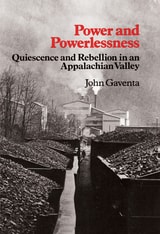
cover of Power and Powerlessness: Quiescence and Rebellion in an Appalachian Valley

Power and Powerlessness

Quiescence and Rebellion in an Appalachian Valley

John Gaventa

University of Illinois Press, 1980

Using Clear Fork Valley in central Appalachia as an empirical example, Gaventa attempts to discern the "hidden faces of power" - those forces which shape actions and consciousness in ways not readily apparent in formal American political processes. He seeks to clarify and expand upon past theories (by such writers as Bachrach and Lukes) on the nature and maintenance of power.

The region studied here is characterized by stark incongruity - the co-existence of massive natural wealth (coal and land) with pervasive human poverty attended by high unemployment, limited education, malnutrition, and the prevalent hazards of mining coal: black lung, dismemberment, death, and ecological ruin. This has been the region's status quo under the decades of domination by a British company and its absentee owners. Despite these departure conditions and frequently violent union struggles, culminating in the 1969 murder of UMW reformist Jock Yablonski, acquiescence to this status quo has been maintained. Gaventa searches out the answers to how and why wealth and poverty continue to coexist and the powerless continue to accede to the powerful. His astute analysis poses broader questions about the politics of poverty, working-class consciousness, and corporate power in America.
[more]
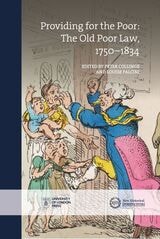
cover of Providing for the Poor: The Old Poor Law, 1750-1834

Providing for the Poor

The Old Poor Law, 1750-1834

Edited by Peter Collinge and Louise Falcini

University of London Press, 2022

A history of the Old Poor Law, which was the primary support for the poor in England and Wales from 1601 to 1834.
 
The Old Poor Law, which was established in 1601 in England and Wales and was in force until 1834, was administered by the local parish and dispensed goods and services to paupers, providing a uniquely comprehensive, premodern system of support for the poor. Providing for the Poor brings together academics and practitioners from across disciplines to reexamine the micropolitics of poverty in the long eighteenth century through the eyes of the poor, their providers, and enablers. Covering such topics as the providence of the parochial sixpence, which was given in order to get a beggar to move along to another parish, to coercive marriages, plebeian clothing, and the much broader implications of vagrancy toward the end of the long eighteenth century, this volume aims to bridge the gaps in our understanding of the experiences of people across the social spectrum whose lives were touched by the Old Poor Law. It brings together some of the wider arguments concerning the nature of welfare during economically difficult times and documents the rising bureaucracy inherent in the system to produce a radical new history of the Old Poor Law in astonishing detail.
[more]
cover of Public Library Services for the Poor: Doing All We Can

Public Library Services for the Poor

Doing All We Can

Glen E. Holt

American Library Association, 2010
[more]
cover of Public Policy and Community: Activism and Governance in Texas

Public Policy and Community

Activism and Governance in Texas

Edited by Robert H. Wilson

University of Texas Press, 1997

The decentralization of public policy from the federal government to state and local governments offers increased opportunities for ordinary citizens to participate directly in public policymaking. Yet these opportunities may not be equally shared. Due to a variety of factors, low-income citizens have long been denied a meaningful role in the public life and governance of our country.

By contrast, the essays in this volume explore how low-income citizens have successfully affected public policy. The book is built around six case studies, all from Texas, that cover education finance and reform, local infrastructure provision, environmental protection, and indigent health care.

This research illuminates several issues of national importance, including how communities gain standing and recognition for themselves and their issues, how policy agendas are defined, how communities mobilize technical and institutional resources, and how they form coalitions and alliances to accomplish their goals.
[more]
cover of Punishing the Poor: The Neoliberal Government of Social Insecurity

Punishing the Poor

The Neoliberal Government of Social Insecurity

Loïc Wacquant

Duke University Press, 2009
The punitive turn of penal policy in the United States after the acme of the Civil Rights movement responds not to rising criminal insecurity but to the social insecurity spawned by the fragmentation of wage labor and the shakeup of the ethnoracial hierarchy. It partakes of a broader reconstruction of the state wedding restrictive “workfare” and expansive “prisonfare” under a philosophy of moral behaviorism. This paternalist program of penalization of poverty aims to curb the urban disorders wrought by economic deregulation and to impose precarious employment on the postindustrial proletariat. It also erects a garish theater of civic morality on whose stage political elites can orchestrate the public vituperation of deviant figures—the teenage “welfare mother,” the ghetto “street thug,” and the roaming “sex predator”—and close the legitimacy deficit they suffer when they discard the established government mission of social and economic protection. By bringing developments in welfare and criminal justice into a single analytic framework attentive to both the instrumental and communicative moments of public policy, Punishing the Poor shows that the prison is not a mere technical implement for law enforcement but a core political institution. And it reveals that the capitalist revolution from above called neoliberalism entails not the advent of “small government” but the building of an overgrown and intrusive penal state deeply injurious to the ideals of democratic citizenship.
[more]
cover of Putting Poor People to Work: How the Work-First Idea Eroded College Access for the Poor

Putting Poor People to Work

How the Work-First Idea Eroded College Access for the Poor

Kathleen M. Shaw

Russell Sage Foundation, 2006

Today, a college education is increasingly viewed as the gateway to the American Dream—a necessary prerequisite for social mobility. Yet recent policy reforms in the United States effectively steer former welfare recipients away from an education that could further their career prospects, forcing them directly into the workforce where they often find only low-paying jobs with little opportunity for growth. In Putting Poor People to Work, Kathleen Shaw, Sara Goldrick-Rab, Christopher Mazzeo, and Jerry A. Jacobs explore this troubling disconnect between the principles of "work-first" and "college for all." Using comprehensive interviews with government officials and sophisticated data from six states over a four year period, Putting Poor People to Work shows how recent changes in public policy have reduced the quantity and quality of education and training available to adults with low incomes. The authors analyze how two policies encouraging work—the federal welfare reform law of 1996 and the Workforce Investment Act of 1998—have made moving people off of public assistance as soon as possible, with little regard to their long-term career prospects, a government priority. Putting Poor People to Work shows that since the passage of these "work-first" laws, not only are fewer low-income individuals pursuing postsecondary education, but when they do, they are increasingly directed towards the most ineffective, short-term forms of training, rather than higher-quality college-level education. Moreover, the schools most able and ready to serve poor adults—the community colleges—are deterred by these policies from doing so. Having a competitive, agile workforce that can compete with any in the world is a national priority. In a global economy where skills are paramount, that goal requires broad popular access to education and training. Putting Poor People to Work shows how current U.S. policy discourages poor Americans from seeking out a college education, stranding them in jobs with little potential for growth. This important new book makes a powerful argument for a shift in national priorities that would encourage the poor to embrace both work and education, rather than having to choose between the two. Institute for Research on Poverty Affiliated Books on Poverty and Public Policy">An Institute for Research on Poverty Affiliated Book on Poverty and Public Policy
[more]