138 books match the query 'Postcolonialism' and 15 start with p
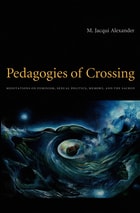
cover of Pedagogies of Crossing: Meditations on Feminism, Sexual Politics, Memory, and the Sacred

Pedagogies of Crossing

Meditations on Feminism, Sexual Politics, Memory, and the Sacred

M. Jacqui Alexander

Duke University Press, 2005

M. Jacqui Alexander is one of the most important theorists of transnational feminism working today. Pedagogies of Crossing brings together essays she has written over the past decade, uniting her incisive critiques, which have had such a profound impact on feminist, queer, and critical race theories, with some of her more recent work. In this landmark interdisciplinary volume, Alexander points to a number of critical imperatives made all the more urgent by contemporary manifestations of neoimperialism and neocolonialism. Among these are the need for North American feminism and queer studies to take up transnational frameworks that foreground questions of colonialism, political economy, and racial formation; for a thorough re-conceptualization of modernity to account for the heteronormative regulatory practices of modern state formations; and for feminists to wrestle with the spiritual dimensions of experience and the meaning of sacred subjectivity.

In these meditations, Alexander deftly unites large, often contradictory, historical processes across time and space. She focuses on the criminalization of queer communities in both the United States and the Caribbean in ways that prompt us to rethink how modernity invents its own traditions; she juxtaposes the political organizing and consciousness of women workers in global factories in Mexico, the Caribbean, and Canada with the pressing need for those in the academic factory to teach for social justice; she reflects on the limits and failures of liberal pluralism; and she presents original and compelling arguments that show how and why transgenerational memory is an indispensable spiritual practice within differently constituted women-of-color communities as it operates as a powerful antidote to oppression. In this multifaceted, visionary book, Alexander maps the terrain of alternative histories and offers new forms of knowledge with which to mold alternative futures.
[more]
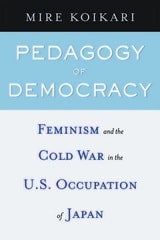
cover of Pedagogy of Democracy: Feminism and the Cold War in the U.S. Occupation of Japan

Pedagogy of Democracy

Feminism and the Cold War in the U.S. Occupation of Japan

Mire Koikari

Temple University Press, 2009

Pedagogy of Democracy re-interprets the U.S. occupation of Japan from 1945 to 1952 as a problematic instance of Cold War feminist mobilization rather than a successful democratization of Japanese women as previously argued. By combining three fields of research—occupation, Cold War, and postcolonial feminist studies—and examining occupation records and other archival sources, Koikari argues that postwar gender reform was one of the Cold War containment strategies that undermined rather than promoted women’s political and economic rights.
[more]
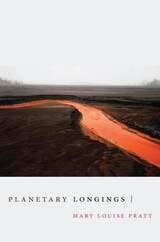
cover of Planetary Longings

Planetary Longings

Mary Louise Pratt

Duke University Press, 2022

In Planetary Longings eminent cultural theorist Mary Louise Pratt posits that the last decade of the twentieth century and the first decades of the twenty-first mark a turning point in the human and planetary condition. Examining the forces of modernity, neoliberalism, coloniality, and indigeneity in their pre- and postmillennial forms, Pratt reflects on the crisis of futurity that accompanies the millennial turn in relation to environmental disaster and to the new forms of thinking it has catalyzed. She turns to 1990s Latin American vernacular culture, literary fiction, and social movements, which simultaneously registered neoliberalism’s devastating effects and pursued alternate ways of knowing and living. Tracing the workings of colonialism alongside the history of anticolonial struggles and Indigenous mobilizations in the Americas, Pratt analyzes indigeneity both as a key index of coloniality, neoliberal extraction, and ecological destruction, and as a source for alternative modes of thought and being. Ultimately, Pratt demonstrates that the changes on either side of the millennium have catalyzed new forms of world-making and knowledge-making in the face of an unknowable and catastrophic future.
[more]
cover of Postcolonial America

Postcolonial America

Edited by C. Richard King

University of Illinois Press, 2000

Scholars from a wide array of disciplines describe and debate postcolonialism as it applies to America in this authoritative and timely collection. Investigating topics such as law and public policy, immigration and tourism, narratives and discourses, race relations, and virtual communities, Postcolonial America clarifies and challenges prevailing conceptualizations of postcolonialism and accepted understandings of American culture.
 
Advancing multiple, even conflicted visions of postcolonial America, this important volume interrogates postcolonial theory and traces the emergence and significance of postcolonial practices and precepts in the United States. Contributors discuss how the unique status of the United States as the colony that became a superpower has shaped its sense of itself. They assess the global networks of inequality that have displaced neocolonial systems of conquest, exploitation, and occupation. They also examine how individuals and groups use music, the Internet, and other media to reconfigure, reinvent, and resist postcoloniality in American culture.
 
Candidly facing the inherent contradictions of "the American experience," this collection demonstrates the patterns, connections, and histories characteristic of postcoloniality in America and initiates important discussions about how these conditions might be changed.
 
[more]
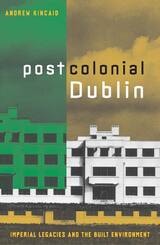
cover of Postcolonial Dublin: Imperial Legacies And The Built Environment

Postcolonial Dublin

Imperial Legacies And The Built Environment

Andrew Kincaid

University of Minnesota Press, 2006
For hundreds of years, Ireland has been a testing ground for colonizing techniques. Postcolonial Dublin shows how perpetrators of colonialism have made use of urban planning and architecture to underscore and legitimate ideologies. From suburban development to building facades, the conflict between nationalists and colonialists has inscribed itself on Dublin’s landscape. Andrew Kincaid illustrates how the architecture and urban planning of Dublin have been integral to debates about nationalism, modernism, and Ireland’s relationship to the rest of the world. Looking at objects such as Londonderry’s Market House, Patrick Abercrombie’s Dublin of the Future, and the urban renewal project of today’s Temple Bar, Kincaid highlights Ireland’s colonial history and the significance of architecture in the evolution of national identity. In doing so, he demonstrates how ideology “spatializes” itself. Postcolonial Dublin engages the prevailing historical representations of Irish nationalism, arguing that the evolving city reflected a debate over who would hold the reins of power. Bringing the tools of literary criticism and postcolonial theory to bear on the field of urban studies, Kincaid places Dublin at the forefront of debates over modernism, modernity, and globalization.Andrew Kincaid is assistant professor of English at the University of Wisconsin, Milwaukee.
[more]
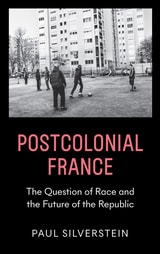
cover of Postcolonial France: The Question of Race and the Future of the Republic

Postcolonial France

The Question of Race and the Future of the Republic

Paul Silverstein

Pluto Press, 2018

France has in recent years emerged as a bellwether for worldwide anxieties around postcolonialism and multiculturalism, and the rise of right-wing populism. This book offers a detailed exploration of the dynamics and dilemmas of the present moment of crisis and hope in France through an exploration of a number of recent moral panics. Paul Silverstein here examines urban racial violence, female Islamic dress and male public prayer, anti-system gangster rap, and sports—all of which have triggered major national debates over France’s multicultural future. Silverstein shows convincingly that these conflicts can be traced back to unresolved tensions around France's imperial project, the present-day effects of which are still being felt.
 
[more]
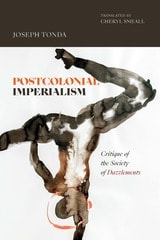
cover of Postcolonial Imperialism: Critique of the Society of Dazzlements

Postcolonial Imperialism

Critique of the Society of Dazzlements

Joseph Tonda. Translated by Cheryl Smeall

Duke University Press, 2026
Postcolonial Imperialism considers the inability to distinguish between reality and fiction as a key condition of contemporary life. If postcolonial theory has highlighted how white colonizers created images of racialized Others which project their own self-hatred or disavowal, Joseph Tonda here shows how these images have in turn colonized Western imaginaries. He argues that the Global North’s obsession with its own phantoms takes a newly powerful form in the dazzling images of postcolonial screens. With examples ranging from Nicki Minaj to Osama Bin Laden and child soldier Johnny Mad Dog, Tonda reflects on power by analyzing the dazzlements of both Central Africa and the West, showing how African life prefigures Western experiences. Translated from its original French, Postcolonial Imperialism is a prescient critique of authoritarian attempts to enforce alternate realities, and of the many ways screens can distort our vision.
[more]
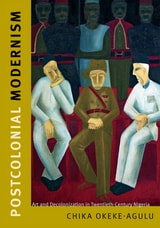
cover of Postcolonial Modernism: Art and Decolonization in Twentieth-Century Nigeria

Postcolonial Modernism

Art and Decolonization in Twentieth-Century Nigeria

Chika Okeke-Agulu

Duke University Press, 2015
Written by one of the foremost scholars of African art and featuring 129 color images, Postcolonial Modernism chronicles the emergence of artistic modernism in Nigeria in the heady years surrounding political independence in 1960, before the outbreak of civil war in 1967. Chika Okeke-Agulu traces the artistic, intellectual, and critical networks in several Nigerian cities. Zaria is particularly important, because it was there, at the Nigerian College of Arts, Science and Technology, that a group of students formed the Art Society and inaugurated postcolonial modernism in Nigeria. As Okeke-Agulu explains, their works show both a deep connection with local artistic traditions and the stylistic sophistication that we have come to associate with twentieth-century modernist practices. He explores how these young Nigerian artists were inspired by the rhetoric and ideologies of decolonization and nationalism in the early- and mid-twentieth century and, later, by advocates of negritude and pan-Africanism. They translated the experiences of decolonization into a distinctive "postcolonial modernism" that has continued to inform the work of major Nigerian artists.
[more]
cover of Postcolonial Studies and Beyond

Postcolonial Studies and Beyond

Ania Loomba, Suvir Kaul, Matti Bunzl, Antoinette Burton, and Jed Esty, eds.

Duke University Press, 2005

An interdisciplinary collection of essays designed to map out a wide-ranging and productive future for postcolonial studies, this volume assesses the current state of the field and points toward its most promising new developments. In addressing questions about the definition and relevance of postcolonial scholarship, many of the essays consider its relation to the study of globalization. While some contributors offer broad reflections on the existing two-way influence between postcolonial theory and established university disciplines such as literary criticism and history, others forge ahead into some vital, if nascent, areas for postcolonial research such as media studies, environmental studies, religious studies, and linguistic and semantic analysis.

The contributors represent many of the fields altered by postcolonial studies over the past two decades, including literary studies, history, anthropology, Asian and African studies, and political science. They model diverse applications of postcolonial theory to Latin America, East Asia, the Middle East, and the United States. Postcolonial Studies and Beyond propels the field forward. It showcases scholars coming from intellectual precincts usually considered outside the purview of the postcolonial finding new ways to deploy classic techniques of postcolonial analysis, and scholars strongly associated with postcolonial studies offering substantial critiques designed to challenge the field’s most fundamental assumptions.

Contributors. Tani E. Barlow, Ali Behdad, Daniel Boyarin, Timothy Brennan, Matti Bunzl, Antoinette Burton, Laura Chrisman, Jean Comaroff, Frederick Cooper, Vilashini Cooppan, Jed Esty, James Ferguson, Peter Hulme, Suvir Kaul, Neil Lazarus, Ania Loomba, Florencia E. Mallon, Nivedita Menon, Rob Nixon, Elizabeth A. Povinelli, David Scott, Ella Shohat, Kelwyn Sole, Robert Stam, Rebecca L. Stein
[more]
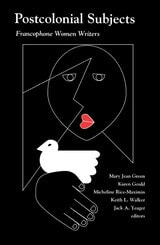
cover of Postcolonial Subjects: Francophone Women Writers

Postcolonial Subjects

Francophone Women Writers

Mary Green

University of Minnesota Press, 1996

Explores French-language writing by women outside France.

This groundbreaking volume highlights the work of contemporary women writing in French whose cultural links, ethnic identities, and historical roots lie outside France. The writings of these women emanate from the cultures of Africa and the Indian Ocean, the Middle East, the Caribbean, Southeast Asia, and Quebec and other French-speaking regions of Canada.

By writing in French, the writers discussed in Postcolonial Subjects both acknowledge and write against the cultural heritage of France. In doing so, they participate in the subversion of European literary traditions and take part in various forms of cultural and linguistic blending, generating new artistic currents. Each of these essays articulates contemporary debates about the politics and cultural effects of sexism, homophobia, racism, and essentialism, as well as pointing out connections and points of resistance among such diverse strains as feminism, nationalism, and ethnicity. Contributors: Eloise A. Brière, U of Albany; Miriam Cooke, Duke U; Irène Assiba d’Almeida, U of Arizona; Joan Dayan, U of Arizona; John D. Erickson, U of Kentucky; Françoise Lionnet, Northwestern U; Christiane Makward, Pennsylvania State U; Kitzie McKinney, Bentley College; Christopher L. Miller, Yale U; Mary-Kay Miller, Vanderbilt U; Jane Moss, Colby College; Elisabeth Mudimbe-Boyi, Stanford U; Lori Saint-Martin, U du Québec à Montréal; Ronnie Scharfman, Purchase College, SUNY.
[more]
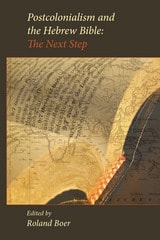
cover of Postcolonialism and the Hebrew Bible:The Next Step

Postcolonialism and the Hebrew Bible

The Next Step

Roland Boer

SBL Press, 2013

This volume returns to where initial interest in postcolonial biblical criticism began: the Hebrew Bible. It does so not to celebrate the significant achievements of postcolonial analysis over the last few decades but to ask what the next step might be. In these essays, established and newer scholars, many from the interstices of global scholarship, discuss specific texts, neo/post/colonial situations, and theoretical issues. Moving from the Caribbean to Greenland, from Ezra-Nehemiah to the Gibeonites, this collection seeks out new territory, new questions, and possibly some new answers. The contributors are Roland Boer, Steed Davidson, Richard Horsley, Uriah Y. Kim, Judith McKinlay, Johnny Miles, Althea Spencer-Miller, Leo Perdue, Christina Petterson, Joerg Rieger, and Gerald West.
[more]
cover of Postcolonialism and the Past, Volume 65

Postcolonialism and the Past, Volume 65

Barbara Fuchs and David J. Baker

Duke University Press, 0

[more]
cover of Postcolonialisms: An Anthology of Cultural Theory and Criticism

Postcolonialisms

An Anthology of Cultural Theory and Criticism

Desai, Gaurav

Rutgers University Press, 2005

Bringing together thirty-seven essays that have helped define the study of colonial and postcolonial cultures, this expansive and thoughtfully organized anthology offers an up-to-date and in-depth overview of this rapidly developing field.

Canonical articles, most unexcerpted, explore postcolonialism’s key themes—power and knowledge—while articles by contemporary scholars expand the discipline to include discussions of the discovery of the New World, Native American and indigenous identities in Latin America and the Pacific, settler colonies in Africa and Australia, English colonialism in Ireland, and feminism in Nigeria and Egypt. The inclusion of a broad sampling of histories and theories attests to multiple, even competing postcolonialisms, while the skillful organization of the volume provides a useful map of the field in terms of recognizable patterns, shared family resemblances, and common genealogies.

The book is divided into nine sections: Ideologies of Imperialism, The Critique of Colonial Discourse, The Politics of Language and Literary Studies, Nationalisms and Nativisms, Hybrid Identities, Gender and Sexualities, Reading the Subaltern, Comparative (Post)colonialisms, and Globalization and Postcoloniality. Detailed introductions to each section serve to develop key themes, encourage debate, and contextualize the wide-ranging voices that contribute to the topic.

The most cogent and teachable collection of postcolonial texts yet compiled, this anthology is equally suitable for undergraduate students and seasoned scholars.
 

[more]
cover of Postcoloniality-Decoloniality-Black Critique: Joints and Fissures

Postcoloniality-Decoloniality-Black Critique

Joints and Fissures

Edited by Sabine Broeck and Carsten Junker

Campus Verlag, 2014
Can Western modernity be analyzed and critiqued through the lens of enslavement and colonial history? As this volume reveals, such analysis is not only possible, it is essential to our understanding of contemporary race relations and society generally. Drawing from the fields of  postcolonial, decolonial, and black studies, this book assembles contributions from renowned scholars that offer timely and critical perspectives from a variety of disciplines, including history, sociology, political science, gender studies, cultural and literary studies, and philosophy.
[more]
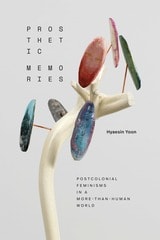
cover of Prosthetic Memories: Postcolonial Feminisms in a More-Than-Human World

Prosthetic Memories

Postcolonial Feminisms in a More-Than-Human World

Hyaesin Yoon

Duke University Press, 2025

In Prosthetic Memories, Hyaesin Yoon examines the entanglements of humans, animals, and technologies across South Korea and the United States at the turn of the twenty-first century. Interrogating a variety of body-technology interfaces, Yoon outlines an emergent mode of prosthetic memory in which human memory is extended into both machines and animals. Prosthetic memory overflows and provides an alternative to familiar human perception, Western scientific reason, and other senses of knowledge in ways that can foster networks of solidarity, care, and empathy between human and nonhuman subjects. Among other sites and subjects, Yoon examines tongue surgery to correct English pronunciation in Korea, Asian American poetry that engages the human-machine divide, transnational dog cloning, and stem cell research, each of which activates potent postcolonial feminist mnemonics and alliances. In so doing, Yoon narrates the countermemories of racialized, gendered, diasporic, queer, and marginalized human and nonhuman others that work against the violent and isolating biopolitical and neoliberal forces in contemporary society.
[more]