Results by title
83 books match the query 'Pragmatism' and 6 start with p

Pragmatic Liberalism
Charles W. Anderson
University of Chicago Press, 1990
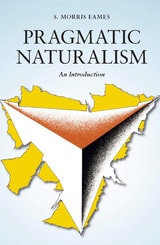
Pragmatic Naturalism
An IntroductionS. Morris Eames
Southern Illinois University Press, 1977
It is said that America came of age intellectually with the appearance of the pragmatic movement in philosophy. Pragmatic Naturalism presents a selective and interpretative overview of this philosophy as developed in the writings of its intellectual founders and chief exponents—Charles Sanders Peirce, William James, George Herbert Mead, and John Dewey. Mr. Eames groups the leading ideas of these pragmatic naturalists around the general fields of “Nature and Human Life,” “Knowledge,” “Value,” and “Education,” treating the primary concerns and special emphasis of each philosopher to these issues.
Philosophy students, teachers of philosophy, and general readers will find this book a comprehensive overview of American philosophy.
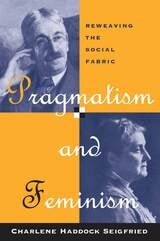
Pragmatism and Feminism
Reweaving the Social FabricCharlene Haddock Seigfried
University of Chicago Press, 1996
With careful attention to their interwoven histories and contemporary concerns, Pragmatism and Feminism effectively invigorates both traditions, opening them to new interpretations and appropriations and asserting their timely philosophical relevance. This foundational work in feminist theory simultaneously invites and guides future scholarship in an area of rapidly emerging significance.
Pragmatism and Political Theory
From Dewey to RortyMatthew Festenstein
University of Chicago Press, 1997
The book's second part traces how Dewey's approach has been differently developed, especially in the work of three contemporary pragmatic thinkers: Richard Rorty, Jurgen Habermas, and Hilary Putnam. This first full-length critical study of the relationship between the pragmatist tradition and political philosophy fills a significant gap in contemporary thought.
Pragmatism and Social Theory
Hans Joas
University of Chicago Press, 1993
Along with pragmatism's impact on American sociology and social research from 1895 to the 1940s, Joas traces its reception by French and German traditions during this century. He explores the influences of pragmatism—often misunderstood—on Emile Durkheim's sociology of knowledge, and on German thought, with particularly enlightening references to its appropriation by Nazism and its rejection by neo-Marxism. He also explores new currents of social theory in the work of Habermas, Castoriadis, Giddens, and Alexander, fashioning a bridge between Continental thought, American philosophy, and contemporary sociology; he shows how the misapprehension and neglect of pragmatism has led to systematic deficiencies in contemporary social theory.
From this skillful historical and theoretical analysis, Joas creates a powerful case for the enduring legacy of Peirce, James, Dewey, and Mead for social theorists today.
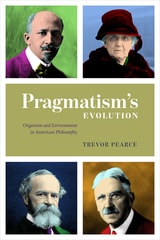
Pragmatism's Evolution
Organism and Environment in American PhilosophyTrevor Pearce
University of Chicago Press, 2020
Although the various thinkers associated with pragmatism—from Charles Sanders Peirce to Jane Addams and beyond—were towering figures in American intellectual life, few realize the full extent of their engagement with the life sciences. In his analysis, Pearce focuses on a series of debates in biology from 1860 to 1910—from the instincts of honeybees to the inheritance of acquired characteristics—in which the pragmatists were active participants. If we want to understand the pragmatists and their influence, Pearce argues, we need to understand the relationship between pragmatism and biology.