214 books match the query 'Presidents & Heads of State' and 9 start with p
cover of Pasic & Trumbic: The Kingdom of Serbs, Croats and Slovenes

Pasic & Trumbic

The Kingdom of Serbs, Croats and Slovenes

Dejan Djokic

Haus Publishing, 2010

Nicola Pasic and Ante Trumbic: The book will provide the first parallel biographies of two key Yugoslav politicians of the early 20th century: Nikola Pasic, a Serb, and Ante Trumbic, a Croat. It will also offer a brief history of the creation of Yugoslavia (initially known as the Kingdom of Serbs, Croats, and Slovenes), internationally accepted at the Paris Peace Conference of 1919-20 (at the Treaty of Versailles). Such an approach will fill two major gaps in the literature - scholarly biographies of Pasic and Trumbic are lacking, while Yugoslavia's formation is due a reassessment - and to introduce the reader to the central question of South Slav politics: Serb-Croat relations. Pasic and Trumbic's political careers and their often troubled relationship in many ways perfectly epitomize the wider Serb-Croat question.
[more]
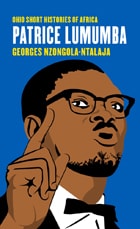
cover of Patrice Lumumba

Patrice Lumumba

Georges Nzongola-Ntalaja

Ohio University Press, 2014

Patrice Lumumba was a leader of the independence struggle in what is today the Democratic Republic of the Congo, as well as the country’s first democratically elected prime minister. After a meteoric rise in the colonial civil service and the African political elite, he became a major figure in the decolonization movement of the 1950s. Lumumba’s short tenure as prime minister (1960–1961) was marked by an uncompromising defense of Congolese national interests against pressure from international mining companies and the Western governments that orchestrated his eventual demise.

Cold war geopolitical maneuvering and well-coordinated efforts by Lumumba’s domestic adversaries culminated in his assassination at the age of thirty-five, with the support or at least the tacit complicity of the U.S. and Belgian governments, the CIA, and the UN Secretariat. Even decades after Lumumba’s death, his personal integrity and unyielding dedication to the ideals of self-determination, self-reliance, and pan-African solidarity assure him a prominent place among the heroes of the twentieth-century African independence movement and the worldwide African diaspora.

Georges Nzongola-Ntalaja’s short and concise book provides a contemporary analysis of Lumumba’s life and work, examining both his strengths and his weaknesses as a political leader. It also surveys the national, continental, and international contexts of Lumumba’s political ascent and his swift elimination by the interests threatened by his ideas and practical reforms.
[more]
cover of Paul Hymans: Belgium

Paul Hymans

Belgium

Sally Marks

Haus Publishing, 2010

Paul Hymans was the champion of the small states in the League of Nations Commission at the Paris Peace Conference and was rewarded by becoming the League's first president. He thereby brought about Belgium's transition from the status of sheltered child to full participation in much great-power diplomacy.
[more]
cover of Piip, Meierovics & Voldemaras: The Baltic States

Piip, Meierovics & Voldemaras

The Baltic States

Charlotte Alston

Haus Publishing, 2010

Conflict on the borders of the Russian 'Empire', whatever the complexion of the government controlling it, has been a constant feature of the past 90 years, most recently with Russia's brief war with Georgia in August 2008. In 1919, as the smaller nations on Russia's borders sought self-determination while the Civil War raged between the Whites and the Bolsheviks, the Paris Peace Conference struggled with a situation complicated by mutually exclusive aims. The Baltic States of Latvia, Lithuania and Estonia were seen by both the Russians and the Western Allies as a protective buffer for their own territory, which led to the curious situation that the Peace Conference requested German troops to remain temporarily in the Baltic territory they had occupied during the First World War to block the westward spread of the Bolshevik Revolution. The ongoing civil war in Russia further complicated the issue, because if the Whites should win and restore the 'legitimate' Russian government, the Peace Conference could not divide up the territory of a power that had been one of the original members of the Entente. The US politician Herbert Hoover described Russia as 'Banquo's ghost' at the Paris Peace Conference, an invisible but influential presence, and nowhere can this be more clearly seen than in the deliberations over the Baltic States.
[more]
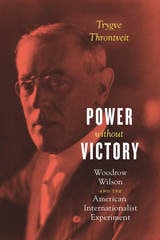
cover of Power without Victory: Woodrow Wilson and the American Internationalist Experiment

Power without Victory

Woodrow Wilson and the American Internationalist Experiment

Trygve Throntveit

University of Chicago Press, 2017

For decades, Woodrow Wilson has been remembered as either a paternalistic liberal or reactionary conservative at home and as a naïve idealist or cynical imperialist abroad. Historians’ harsh judgments of Wilson are understandable. He won two elections by promising a deliberative democratic process that would ensure justice and political empowerment for all. Yet under Wilson, Jim Crow persisted, interventions in Latin America increased, and a humiliating peace settlement was forced upon Germany. A generation after Wilson, stark inequalities and injustices still plagued the nation, myopic nationalism hindered its responsible engagement in world affairs, and a second vastly destructive global conflict threatened the survival of democracy worldwide—leaving some Americans today to wonder what, exactly, the buildings and programs bearing his name are commemorating.

In Power without Victory, Trygve Throntveit argues that there is more to the story of Wilson than these sad truths. Throntveit makes the case that Wilson was not a “Wilsonian,” as that term has come to be understood, but a principled pragmatist in the tradition of William James. He did not seek to stamp American-style democracy on other peoples, but to enable the gradual development of a genuinely global system of governance that would maintain justice and facilitate peaceful change—a goal that, contrary to historical tradition, the American people embraced. In this brilliant intellectual, cultural, and political history, Throntveit gives us a new vision of Wilson, as well as a model of how to think about the complex relationship between the world of ideas and the worlds of policy and diplomacy.
[more]
cover of Prairie Defender: The Murder Trials of Abraham Lincoln

Prairie Defender

The Murder Trials of Abraham Lincoln

George R. Dekle, Sr.

Southern Illinois University Press, 2017

2018 FAPA President’s book award medalist in the non-fiction adult, biography, and political/current events categories
2018 ISHS Annual Award Winner for a Scholarly Publication

According to conventional wisdom, Abraham Lincoln spent most of his law career collecting debt and representing railroads, and this focus made him inept at defending clients in homicide cases. In this unprecedented study of Lincoln’s criminal cases, George Dekle disproves these popular notions, showing that Lincoln was first and foremost a trial lawyer. Through careful examination of Lincoln’s homicide cases and evaluation of his legal skills, Dekle demonstrates that criminal law was an important part of Lincoln's practice, and that he was quite capable of defending people accused of murder, trying approximately one such case per year.

Dekle begins by presenting the viewpoints of not only those who see Lincoln as a perfect lawyer whose only flaw was his inability to represent the wrong side of a case but also those who believe Lincoln was a less-than-honest legal hack. The author invites readers to compare these wildly different stereotypes with the flesh-and-blood Lincoln revealed in each case described in the book, including an axe murder suit in which Lincoln assisted the prosecution, a poisoning case he refused to prosecute for $200 but defended for $75, and a case he won by proving that a supposed murder victim was actually still alive.

For each case Dekle covers, he first tells the stories of the feuds, arguments, and insults that led to murder and other criminal activity, giving a gripping view of the seamy side of life in nineteenth-century Illinois. Then he traces the course of the pretrial litigation, describes the trials and the various tactics employed in the prosecution and defense, and critiques the performance of both Lincoln and his adversaries.

Dekle concludes that Lincoln was a competent, diligent criminal trial lawyer who knew the law, could argue it effectively to both judge and jury, and would use all lawful means to defend clients whether he believed them to be innocent or guilty. His trial record shows Lincoln to have been a formidable defense lawyer who won many seemingly hopeless cases through his skill as a courtroom tactician, cross-examiner, and orator. Criminal defendants who could retain Lincoln as a defense attorney were well represented, and criminal defense attorneys who sought him as co-counsel were well served. Providing insight into both Lincoln’s legal career and the culture in which he practiced law, Prairie Defender resolves a major misconception concerning one of our most important historical figures.
[more]
cover of Presidential Responsiveness and Public Policy-Making: The Publics and the Policies that Presidents Choose

Presidential Responsiveness and Public Policy-Making

The Publics and the Policies that Presidents Choose

Jeffrey E. Cohen

University of Michigan Press, 1999

We expect a president to respond to public opinion as an elected official in a democracy. Indeed, the president needs public support to overcome opposition to his policies in Congress and the bureaucracy. At the same time the president may want to pursue policies that do not have widespread support. How does public opinion affect presidential policy making? Jeffrey Cohen finds that presidents are responsive to the public in selecting issues to focus on. If an issue has captured the interest of the people, then the president will focus on that issue. Cohen finds that having chosen to work on an issue, presidents pay less attention to public opinion when making a policy. The president will try to maintain control over the details of the policy so that the outcome fits his policy agenda. Cohen examines the way presidents from Eisenhower through Clinton have dealt with public opinion in policy making. He uses case studies of issues such as Clinton and gays in the military, Bush and the extension of unemployment benefits, and Kennedy and cutting the income tax, to explore the relationship between presidents and public opinion. In addition Cohen uses a quantitative analysis of State of the Union addresses and positions on roll call votes of presidents from Eisenhower through George Bush to test his theories. This book should appeal to political scientists and historians interested in the presidency and in public opinion, as well as general readers interested in the history of the American presidency. 
[more]
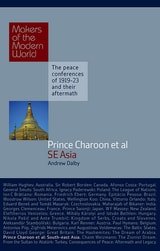
cover of Prince Charoon et al: South East Asia

Prince Charoon et al

South East Asia

Andrew Dalby

Haus Publishing, 2010

Southeast Asia needs to be dealt with as a whole, because, although the one national delegation from the region (Siam) took a minor part, nationalist movements in several Southeast Asian countries reached an early climax - significant though inconclusive - in the years 1919-1920. The planned Peace Conference, Wilson's Fourteen Points, and the victory of Communism in Russia, all contributed to this activity, and in spite of national differences it needs to be seen as a whole. The focus of the book will be on developments around 1919; thus it will bring out for the first time the unexpected significance for South-east Asia of the 1919 milestone. It will also have a biographical bias - taking a special interest in the personalities of major figures in this important period, in order to show the influences and the patterns of thought that underlie their activities at the time of the Peace Conference. Following a brief introduction making the link between world events in 1919 and South-east Asia, the book sets the scene in the region. Succeeding chapters deal with the five countries - Siam, Vietnam, Burma, Indonesia, Philippines - in which the years 1919-21 were of special significance, as well as the impact of the peace conferences in relationships with their neighbours, the growth of international Communism and global politics in later years.
[more]
cover of Prince Saionji: Japan

Prince Saionji

Japan

Jonathan Clements

Haus Publishing, 2010

Prince Saionji Kinmochi (1849-1940). The Japanese delegation at the Paris Peace Conference did not have the Japanese prime or foreign ministers with them as they had only just been elected and had plenty to do back home. The delegation was instead led by Prince Saionji, the dashing 'kingmaker' of early 20th-century Japanese politics whose life spanned the arrival of Commodore Perry and his 'black ships', the Japanese civil war, the Meiji Restoration, the Sino-Japanese War, the Russo-Japanese War, the First World War, the Paris Peace Conference and the Treaty of Versailles, and the rise of Japanese militarism. Unlike many of the conservatives of his day, Saionji was a man with experience of international diplomacy and admiration for European culture. Brought up in the days of the last Shogun, he became an active supporter of Japan's new ruling regime, after the Shogun was overthrown in a civil war, and a leading figure in the post-Restoration reform movement. In 1869 he founded the institution that would become the Ritsumeikan University - literally, 'The place to establish one's destiny'. He was sent to France for nine years to investigate Western technology and philosophy, and served for a decade as a Japanese ambassador in Europe. Returning to Japan, he served twice as Minister of Education and later became prime minister before resigning to become a revered elder statesman. Japan entered the First World War on the Allied side, seizing German possessions in China and the Pacific. In the closing days of the war, Japanese military forces participated in the Siberian Intervention - an American-led invasion of eastern Russia against Communist insurgents. At the Conference Saionji's presence was initially regarded by the Japanese as a sign that Japan had become a fully-fledged member of the international community and accepted on an equal footing with the Western Powers. His delegation introduced a controversial proposal to legally enshrine racial equality as one of the tenets of the League of Nations. The Japanese were also keen to grab colonies of their own, and went head-to-head with the Chinese delegation over the fate of the former German possession of Shandong. When Shandong was 'returned' not to China but to its Japanese occupiers, riots broke out in China. Despite Saionji's statesmanship and diplomacy, the Treaty of Versailles was regarded by many Japanese as a slap in the face. Saionji's influence weakened in his last years, while his party was dissolved and amalgamated with others.
[more]