117 books match the query 'Production and direction' and 2 start with p
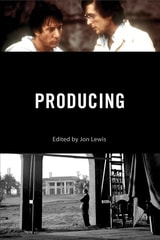
cover of Producing

Producing

Lewis, Jon

Rutgers University Press, 2015
Of all the job titles listed in the opening and closing screen credits, producer is certainly the most amorphous. There are businessmen (and women)-producers, writer-director- and movie-star-producers; producers who work for the studio; executive producers whose reputation and industry clout alone gets a project financed (though their day-to-day participation in the project may be negligible). The job title, regardless of the actual work involved, warrants a great deal of prestige in the film business; it is the credited producers, after all, who collect the Oscar for Best Picture. But what producers do and what they don’t or won’t do varies from project to project.
 
Producing is the first book to provide a comprehensive overview of the roles that producers have played in Hollywood, from the dawn of the twentieth century to the present day. It introduces readers to the colorful figures who helped to define and reimagine the producer’s role, including inventors like Thomas Edison, moguls like Darryl F. Zanuck, entrepreneurs like Walt Disney, and mavericks like Roger Corman. Readers also get an inside look at the less glamorous jobs producers have often performed: shepherding projects through many years of development, securing financial backers, and supervising movie shoots.  
 
The latest book in the acclaimed Behind the Silver Screen series, Producing includes essays written by seven film scholars, each an expert in a different period of cinema history. Together, they give readers a full picture of how the art and business of producing films has changed over time—and how the producer’s myriad job duties continue to evolve in the digital era. 
 
[more]
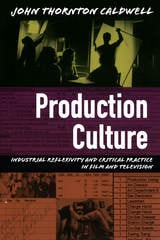
cover of Production Culture: Industrial Reflexivity and Critical Practice in Film and Television

Production Culture

Industrial Reflexivity and Critical Practice in Film and Television

John Thornton Caldwell

Duke University Press, 2008

In Production Culture, John Thornton Caldwell investigates the cultural practices and belief systems of Los Angeles–based film and video production workers: not only those in prestigious positions such as producers and directors but also many “below-the-line” laborers, including gaffers, editors, and camera operators. Caldwell analyzes the narratives and rituals through which workers make sense of their labor and critique the film and TV industry as well as the culture writ large. As a self-reflexive industry, Hollywood constantly exposes itself and its production processes to the public; workers’ ideas about the industry are embedded in their daily practices and the media they create. Caldwell suggests ways that scholars might learn from the industry’s habitual self-scrutiny.

Drawing on interviews, observations of sets and workplaces, and analyses of TV shows, industry documents, economic data, and promotional materials, Caldwell shows how film and video workers function in a transformed, post-network industry. He chronicles how workers have responded to changes including media convergence, labor outsourcing, increasingly unstable labor and business relations, new production technologies, corporate conglomeration, and the proliferation of user-generated content. He explores new struggles over “authorship” within collective creative endeavors, the way that branding and syndication have become central business strategies for networks, and the “viral” use of industrial self-reflexivity to motivate consumers through DVD bonus tracks, behind-the-scenes documentaries, and “making-ofs.” A significant, on-the-ground analysis of an industry in flux, Production Culture offers new ways of thinking about media production as a cultural activity.

[more]