Results by title
262 books match the query 'Public health' and 17 start with p

PCBs
Human and Environmental Disposition and ToxicologyEdited by Larry G. Hansen and Larry W. Robertson
University of Illinois Press, 2007
Though polychlorinated biphenyls (PCBs) have been banned in the United States for more than thirty years, the toxic effects of their presence in local environments continue to be a significant public health concern. PCBs: Human and Environmental Disposition and Toxicology brings together more than fifty established specialists on PCB toxicity to discuss recent trends and specialized investigations of PCB influences on the environment and on humans. Renowned scientists including Paul S. Cooke, Takeshi Nakano, Tomas Trnovec, Deborah C. Rice, Linda S. Birnbaum, and Charles S. Wong present cutting-edge research on Hudson River PCBs, human contamination, homologue profiles, high PCB exposure in Slovakia, and PCB effects on the thyroid hormone, nutrition, and estrogen levels in humans and animals. Focusing on the detection, movement, metabolism, toxicity, remediation, and risk assessment of PCB contamination, this multi-disciplinary study is a valuable resource for regulatory agencies and scientists working with PCBs.
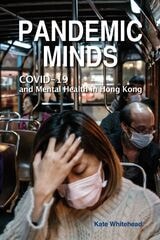
Pandemic Minds
COVID-19 and Mental Health in Hong KongKate Whitehead
Hong Kong University Press, 2024
The COVID-19 pandemic was a global crisis that affected millions of lives and brought mental health challenges to the forefront. In Hong Kong, the situation was worsened by uniquely strict COVID-19 regulations, quarantine measures, and travel restrictions. The mental health issues associated with the pandemic did not end with the lifting of the mask mandate. On the contrary, the repercussions are only just beginning to surface and their impact will be felt for years to come.
This eye-opening book shares the stories of ordinary Hongkongers who faced extraordinary challenges during the pandemic. Through a blend of first-person accounts, psychological insights, and hard data, it offers a compelling and accessible exploration of the toll that the COVID-19 pandemic has taken on mental health in Hong Kong.
However, Pandemic Minds is not only a chronicle of suffering—it is also a guide to healing and hope. It offers practical advice on how to overcome the mental health issues caused by the pandemic, and how to build resilience and well-being. It reveals the lessons that can be learned from Hong Kong’s experience, and how they can help individuals and policymakers around the world.
Para-States and Medical Science
Making African Global HealthP. Wenzel Geissler, editor
Duke University Press, 2015
Contributors. Uli Beisel, Didier Fassin, P. Wenzel Geissler, Rene Gerrets, Ann Kelly, Guillaume Lachenal, John Manton, Lotte Meinert, Vinh-Kim Nguyen, Branwyn Poleykett, Susan Reynolds Whyte

Partial Stories
Maternal Death from Six AnglesClaire L. Wendland
University of Chicago Press, 2022
By the early twenty-first century, about one woman in twelve could expect to die of a pregnancy or childbirth complication in Malawi. Specific deaths became object lessons. Explanatory stories circulated through hospitals and villages, proliferating among a range of practitioners: nurse-midwives, traditional birth attendants, doctors, epidemiologists, herbalists. Was biology to blame? Economic underdevelopment? Immoral behavior? Tradition? Were the dead themselves at fault?
In Partial Stories, Claire L. Wendland considers these explanations for maternal death, showing how they reflect competing visions of the past and shared concerns about social change. Drawing on extended fieldwork, Wendland reveals how efforts to legitimate a single story as the authoritative version can render care more dangerous than it might otherwise be. Historical, biological, technological, ethical, statistical, and political perspectives on death usually circulate in different expert communities and different bodies of literature. Here, Wendland considers them together, illuminating dilemmas of maternity care in contexts of acute change, chronic scarcity, and endemic inequity within Malawi and beyond.
Pathogenic Policing
Immigration Enforcement and Health in the U.S. SouthNolan Kline
Rutgers University Press, 2019
Peripheral Nerve
Health and Medicine in Cold War Latin AmericaAnne-Emanuelle Birn and Raúl Necochea López
Duke University Press, 2020
Contributors. Cheasty Anderson, Anne-Emanuelle Birn, Katherine E. Bliss, Gilberto Hochman, Jennifer L. Lambe, Nicole Pacino, Carlos Henrique Assunção Paiva, Jadwiga E. Pieper Mooney, Raúl Necochea López, Marco A. Ramos, Gabriela Soto Laveaga
Persisting Pandemics
Syphilis, AIDS, and COVIDPowel H. Kazanjian
Rutgers University Press, 2025
Planning Families in Nepal
Global and Local Projects of ReproductionBrunson, Jan
Rutgers University Press, 2016
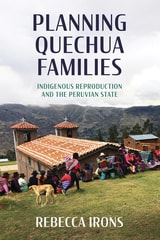
Planning Quechua Families
Indigenous Reproduction and the Peruvian StateRebecca Irons
University of Arizona Press, 2027
Planning Quechua Families: Indigenous Reproduction and the Peruvian State examines how reproductive health is shaped by a history of colonial power, state intervention, and social upheaval. This ethnography is centered on the experiences of Indigenous women in the Andes. The book situates contemporary family planning within the legacy of forced sterilizations and political violence during the era of Shining Path terrorism. Drawing on extensive fieldwork, Rebecca Irons brings together the perspectives of both Quechua women and the health-care workers who serve them, offering a nuanced account of how reproductive services are experienced, negotiated, and contested in rural clinics.
The book explores how reproductive health is embedded within broader processes of social change, including “Incanization,” shifting ideas of citizenship, and efforts to integrate marginalized communities into the Peruvian nation. Irons demonstrates how Indigenous understandings of kinship, health, and identity intersect with state policies and biomedical practices, revealing forms of violence that are often less visible but deeply consequential.
By placing Indigenous reproductive experiences within a wider cultural and political context, Planning Quechua Families provides a critical perspective on how power operates through intimate aspects of life in the contemporary Andes.
Pleasure Consuming Medicine
The Queer Politics of DrugsKane Race
Duke University Press, 2009
Race does not suggest that drug use is risk-free, good, or bad, but rather that the regulation of drugs has become a site where ideological lessons about the propriety of consumption are propounded. He argues that official discourses about drug use conjure a space where the neoliberal state can be seen to be policing the “excesses” of the amoral market. He explores this normative investment in drug regimes and some “counterpublic health” measures that have emerged in response. These measures, which Race finds in certain pragmatic gay men’s health and HIV prevention practices, are not cloaked in moralistic language, and they do not cast health as antithetical to pleasure.
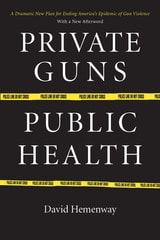
Private Guns, Public Health
David Hemenway
University of Michigan Press, 2004
-Richard F. Corlin, Past President, American Medical Association
"This lucid and penetrating study is essential reading for anyone who wishes to understand the tragedy of gun violence in America and-even more important-what we can do to stop it. David Hemenway cuts through the cant and rhetoric in a way that no fair-minded person can dismiss, and no sane society can afford to ignore."
-Richard North Patterson, novelist
"The rate of gun-related homicide, suicide, and accidental injury has reached epidemic proportions in American society. Diagnosing and treating the gun violence epidemic demands the development of public health solutions in conjunction with legislative and law enforcement strategies."
-Kweisi Mfume, President and CEO of NAACP
"In scholarly, sober analytic assessments, including rigorous critiques of NRA-popularized pseudoscience, David Hemenway constructs a convincing case that firearm availability is a critical and proximal cause of unparalleled carnage. By formulating such violence as a public health issue, he proposes workable policies analogous to ones that reduced injuries from tobacco, alcohol, and automobiles."
-Jerome P. Kassirer, Editor-in-Chief Emeritus, New England Journal of Medicine, and Distinguished Professor, Tufts University School of Medicine
"As a former District Attorney and Attorney General, I know the urgency of providing safe homes, schools and neighborhoods for all. This remarkable tour-de-force is a powerful study of one promising solution: a data-rich, eminently readable demonstration of why we should treat gun violence as an American epidemic."
-Scott Harshbarger, Former Attorney General of Massachusetts, President and CEO of Common Cause
On an average day in the United States, guns are used to kill almost eighty people, and to wound nearly three hundred more. If any other consumer product had this sort of disastrous effect, the public outcry would be deafening; yet when it comes to guns such facts are accepted as a natural consequence of supposedly high American rates of violence.
Private Guns, Public Health explodes that myth and many more, revealing the advantages of treating gun violence as a consumer safety and public health problem. David Hemenway fair-mindedly and authoritatively demonstrates how a public-health approach-which emphasizes prevention over punishment, and which has been so successful in reducing the rates of injury and death from infectious disease, car accidents, and tobacco consumption-can be applied to gun violence.
Hemenway uncovers the complex connections between guns and self-defense, gun violence and schools, gun prevalence and homicide, and more. Finally, he outlines a policy course that would significantly reduce gun-related injury and death.
With its bold new public-health approach to guns, Private Guns, Public Health marks a shift in our understanding of guns that will-finally-point us toward a solution.

Progressive Mothers, Better Babies
Race, Public Health, and the State in Brazil, 1850-1945By Okezi T. Otovo
University of Texas Press, 2016
In Bahia, Brazil, the decades following emancipation saw the rise of reformers who sought to reshape the citizenry by educating Bahian women in methods for raising “better babies.” The idealized Brazilian would be better equipped to contribute to the labor and organizational needs of a modern nation. Backed by many physicians, politicians, and intellectuals, the resulting welfare programs for mothers and children mirrored complex debates about Brazilian nationality. Examining the local and national contours of this movement, Progressive Mothers, Better Babies investigates families, medical institutions, state-building, and social stratification to trace the resulting policies, which gathered momentum in the aftermath of abolition (1888) and the declaration of the First Republic (1889), culminating during the administration of President Getúlio Vargas (1930–1945).
Exploring the cultural discourses on race, gender, and poverty that permeated medical knowledge and the public health system for almost a century, Okezi T. Otovo draws on extensive archival research to reconstruct the implications for Bahia, where family patronage politics governed poor women’s labor as the mothers who were the focus of medical interventions were often the nannies and nursemaids of society’s wealthier families. The book reveals key transition points as the state of Bahia transformed from being a place where poor families could expect few social services to becoming the home of numerous programs targeting the poorest mothers and their children. Negotiating crucial questions of identity, this history sheds new light on larger debates about Brazil’s past and future.
Promoting Individual and Community Health at the Library
Mary Grace Flaherty
American Library Association, 2018
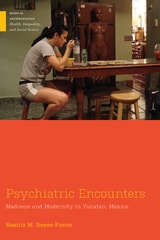
Psychiatric Encounters
Madness and Modernity in Yucatan, MexicoReyes-Foster, Beatriz M.
Rutgers University Press, 2019
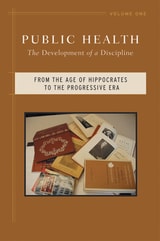
Public Health
The Development of a Discipline, From the Age of Hippocrates to the Progressive EraSchneider, Dona
Rutgers University Press, 2008
The editors provide annotated readings and biographical details to punctuate the historical timeline and to provide students with insights into the progression of ideas, initiatives, and reforms in the field. From Hippocrates and John Graunt in the early period, to John Snow and Florence Nightingale during the nineteenth-century sanitary reform movement, to Upton Sinclair and Margaret Sanger in the Progressive Era, readers follow the identification, evolution, and implementation of public health concepts as they came together under one discipline.
Public Health
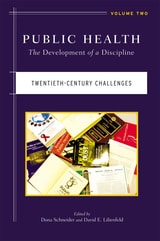
The Development of a Discipline, Twentieth-Century ChallengesSchneider, Dona
Rutgers University Press, 2011

Pyrrhic Progress
The History of Antibiotics in Anglo-American Food ProductionClaas Kirchhelle
Rutgers University Press, 2020
2020 Choice Outstanding Academic Title
Winner of the 2020 Turriano Prize from ICOHTEC
Short-listed and highly commended for the Antibiotic Guardian Award from Public Health England
Long-listed for the Michel Déon Prize from the Royal Irish Academy
Pyrrhic Progress analyses over half a century of antibiotic use, regulation, and resistance in US and British food production. Mass-introduced after 1945, antibiotics helped revolutionize post-war agriculture. Food producers used antibiotics to prevent and treat disease, protect plants, preserve food, and promote animals’ growth. Many soon became dependent on routine antibiotic use to sustain and increase production. The resulting growth of antibiotic infrastructures came at a price. Critics blamed antibiotics for leaving dangerous residues in food, enabling bad animal welfare, and selecting for antimicrobial resistance (AMR) in bacteria, which could no longer be treated with antibiotics. Pyrrhic Progress reconstructs the complicated negotiations that accompanied this process of risk prioritization between consumers, farmers, and regulators on both sides of the Atlantic. Unsurprisingly, solutions differed: while Europeans implemented precautionary antibiotic restrictions to curb AMR, consumer concerns and cost-benefit assessments made US regulators focus on curbing drug residues in food. The result was a growing divergence of antibiotic stewardship and a rise of AMR. Kirchhelle’s comprehensive analysis of evolving non-human antibiotic use and the historical complexities of antibiotic stewardship provides important insights for current debates on the global burden of AMR. This Open Access ebook is available under a CC-BY-NC-ND license, and is supported by a generous grant from Wellcome Trust.