Results by title
56 books match the query 'Public schools' and 3 start with p
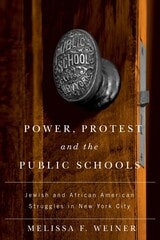
Power, Protest, and the Public Schools
Jewish and African American Struggles in New York CityMelissa F. Weiner
Rutgers University Press, 2012
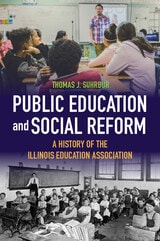
Public Education and Social Reform
A History of the Illinois Education AssociationThomas J. Suhrbur
University of Illinois Press, 2025
Suhrbur pays particular attention to the impact of race, gender, religion, and tax policy on the IEA and public schools. He also examines the IEA’s evolution from a professional organization controlled by administrations and officials through its radical transformation into a teacher-led independent labor union. As a workers’ organization, the IEA successfully fought for collective bargaining and organized K–12 and higher education while continually standing against right-wing efforts to privatize education and undermine public schools with vouchers, for-profit institutions, and tax credits.
Multifaceted and up to date, Public Education and Social Reform tells the story of the organization and figures dedicated to sustaining and advancing Illinois public education.
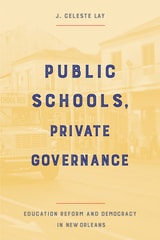
Public Schools, Private Governance
Education Reform and Democracy in New OrleansJ. Celeste Lay
Temple University Press, 2022
Two months after Hurricane Katrina, Louisiana took control of nearly all the public schools in New Orleans. Today, all of the city’s public schools are charter schools. Although many analyses mark the beginning of education reform in New Orleans with Katrina, in Public Schools, Private Governance, J. Celeste Layargues that the storm merely accelerated the timeline for reforms that had inched along incrementally over the previous decade. Both before and after Katrina, white reformers purposely excluded Black educators, community members, and parents.
Public Schools, Private Governance traces the slow, deliberate dismantling of New Orleans’ public schools, and the processes that have maintained the reforms made in Katrina’s immediate aftermath, showing how Black parents and residents were left without a voice and the officials charged with school governance, most of whom are white, with little accountability. Lay cogently explains how political minorities disrupted systems to create change and keep reforms in place, and the predictable political effects—exclusion, frustration, and resignation—on the part of those most directly affected.