Results by title
74 books match the query 'Puerto Rico' and 6 start with p
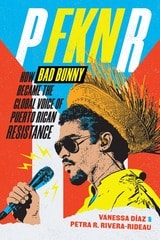
P FKN R
How Bad Bunny Became the Global Voice of Puerto Rican ResistanceVanessa Díaz and Petra R. Rivera-Rideau
Duke University Press, 2026
Global superstar Bad Bunny, born Benito Antonio Martínez Ocasio, like many other Puerto Ricans, has lived a life marked by public crises—blackouts, hurricanes, political corruption and oppression, among others—that have exposed the ongoing impacts of colonialism in Puerto Rico. Offering a portrait of the past and future of Puerto Rican resistance through one of its loudest and proudest voices, P FKN R draws on interviews with musicians, politicians, and journalists as well as ethnographic research to set Bad Bunny and Puerto Rican resistance in a historical, political, and cultural context. Authors Vanessa Díaz and Petra Rivera-Rideau—creators of the “Bad Bunny Syllabus”—demonstrate Bad Bunny’s place in a long tradition of infusing both joy and protest into music and honor the many evolving forms of daily resistance to oppression and colonialism that are part of Puerto Rican life.
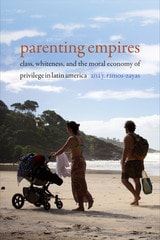
Parenting Empires
Class, Whiteness, and the Moral Economy of Privilege in Latin AmericaAna Yolanda Ramos-Zayas
Duke University Press, 2020

Puerto Rican Jam
Rethinking Colonialism and NationalismNegron-Muntaner, Frances
University of Minnesota Press, 1997
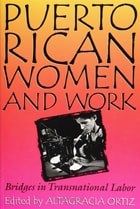
Puerto Rican Women and Work
Bridges in Transnational Laboredited by Altagracia Ortiz
Temple University Press, 1996
Puerto Rican Women and Work: Bridges in Transnational Labor is the only comprehensive study of the role of Puerto Rican women workers in the evolution of a transnational labor force in the twentieth century.
This book examines Puerto Rican women workers, both in Puerto Rico and on the U.S. mainland. It contains a range of information--historical, ethnographic, and statistical. The contributors provide insights into the effects of migration and unionization on women's work, taking into account U.S. colonialism and globalization of capitalism throughout the century as well as the impact of Operation Bootstrap. The essays are arranged in chronological order to reveal the evolutionary nature of women's work and the fluctuations in migration, technology, and the economy. This one-of-a-kind collection will be a valuable resource for those interested in women's studies, ethnic studies, and Puerto Rican and Latino studies, as well as labor studies.
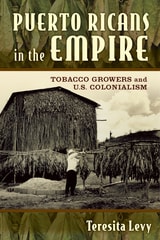
Puerto Ricans in the Empire
Tobacco Growers and U.S. ColonialismTeresita A. Levy
Rutgers University Press, 2015
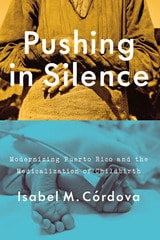
Pushing in Silence
Modernizing Puerto Rico and the Medicalization of ChildbirthBy Isabel M. Córdova
University of Texas Press, 2017
As Puerto Rico rapidly industrialized from the late 1940s until the 1970s, the social, political, and economic landscape changed profoundly. In the realm of heath care, the development of medical education, new medical technologies, and a new faith in science radically redefined childbirth and its practice. What had traditionally been a home-based, family-oriented process, assisted by women and midwives and “accomplished” by mothers, became a medicalized, hospital-based procedure, “accomplished” and directed by biomedical, predominantly male, practitioners, and, ultimately reconfigured, after the 1980s, into a technocratic model of childbirth, driven by doctors’ fears of malpractice suits and hospitals’ corporate concerns.
Pushing in Silence charts the medicalization of childbirth in Puerto Rico and demonstrates how biomedicine is culturally constructed within regional and historical contexts. Prior to 1950, registered midwives on the island outnumbered registered doctors by two to one, and they attended well over half of all deliveries. Isabel M. Córdova traces how, over the next quarter-century, midwifery almost completely disappeared as state programs led by scientifically trained experts and organized by bureaucratic institutions restructured and formalized birthing practices. Only after cesarean rates skyrocketed in the 1980s and 1990s did midwifery make a modest return through the practices of five newly trained midwives. This history, which mirrors similar patterns in the United States and elsewhere, adds an important new chapter to the development of medicine and technology in Latin America.