Results by title
325 books match the query 'Race identity' and 25 start with p
Panama in Black
Afro-Caribbean World Making in the Twentieth CenturyKaysha Corinealdi
Duke University Press, 2022

Pan–African American Literature
Signifyin(g) Immigrants in the Twenty-First CenturyLi, Stephanie
Rutgers University Press, 2018
The twenty-first century is witnessing a dynamic broadening of how blackness signifies both in the U.S. and abroad. Literary writers of the new African diaspora are at the forefront of exploring these exciting approaches to what black subjectivity means. Pan-African American Literature is dedicated to charting the contours of literature by African born or identified authors centered around life in the United States. The texts examined here deliberately signify on the African American literary canon to encompass new experiences of immigration, assimilation and identification that challenge how blackness has been previously conceived. Though race often alienates and frustrates immigrants who are accustomed to living in all-black environments, Stephanie Li holds that it can also be a powerful form of community and political mobilization.
Paper Families
Identity, Immigration Administration, and Chinese ExclusionEstelle T. Lau
Duke University Press, 2006
Drawing on these documents as well as immigration case files, legislative materials, and transcripts of interviews and court proceedings, Lau reveals immigration as an interactive process. Chinese immigrants and their U.S. families were subject to regulation and surveillance, but they also manipulated and thwarted those regulations, forcing the U.S. government to adapt its practices and policies. Lau points out that the Exclusion Acts and the pseudo-familial structures that emerged in response have had lasting effects on Chinese American identity. She concludes with a look at exclusion’s legacy, including the Confession Program of the 1960s that coerced people into divulging the names of paper family members and efforts made by Chinese American communities to recover their lost family histories.

Parenting Empires
Class, Whiteness, and the Moral Economy of Privilege in Latin AmericaAna Yolanda Ramos-Zayas
Duke University Press, 2020
Passing and the Fictions of Identity
Elaine K. Ginsberg
Duke University Press, 1996
These essays consider a wide range of texts and moments from colonial times to the present that raise significant questions about the political motivations inherent in the origins and maintenance of identity categories and boundaries. Through discussions of such literary works as Running a Thousand Miles for Freedom, The Autobiography of an Ex–Coloured Man, Uncle Tom’s Cabin, The Hidden Hand, Black Like Me, and Giovanni’s Room, the authors examine issues of power and privilege and ways in which passing might challenge the often rigid structures of identity politics. Their interrogation of the semiotics of behavior, dress, language, and the body itself contributes significantly to an understanding of national, racial, gender, and sexual identity in American literature and culture.
Contextualizing and building on the theoretical work of such scholars as Judith Butler, Diana Fuss, Marjorie Garber, and Henry Louis Gates Jr., Passing and the Fictions of Identity will be of value to students and scholars working in the areas of race, gender, and identity theory, as well as U.S. history and literature.
Contributors. Martha Cutter, Katharine Nicholson Ings, Samira Kawash, Adrian Piper, Valerie Rohy, Marion Rust, Julia Stern, Gayle Wald, Ellen M. Weinauer, Elizabeth Young
Passing for Perfect
College Impostors and Other Model Minoritieserin Khuê Ninh
Temple University Press, 2021
In her engaging study, Passing for Perfect,erin Khuê Ninh considers the factors that drove college imposters such as Azia Kim—who pretended to be a Stanford freshman—and Jennifer Pan—who hired a hitman to kill her parents before they found out she had never received her high school diploma—to extreme lengths to appear successful. Why would someone make such an illogical choice? And how do they stage these lies so convincingly, and for so long?
These outlier examples prompt Ninh to address the larger issue of the pressures and difficulties of striving to be model minority, where failure is too ruinous to admit. Passing for Perfect insists that being a “model minority” is not a “myth,” but coded into one’s programming as an identity—a set of convictions and aspirations, regardless of present socioeconomic status or future attainability—and that the true cost of turning children into high-achieving professionals may be higher than anyone can bear.
Ninh’s book codifies for readers the difference between imposters who are con artists or shysters and those who don’t know how to stop passing for perfect.
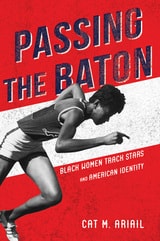
Passing the Baton
Black Women Track Stars and American IdentityCat M. Ariail
University of Illinois Press, 2020
A rare exploration of African American women athletes and national identity, Passing the Baton reveals young Black women as active agents in the remaking of what it means to be American.
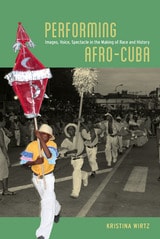
Performing Afro-Cuba
Image, Voice, Spectacle in the Making of Race and HistoryKristina Wirtz
University of Chicago Press, 2014
Wirtz analyzes a variety of performances and the ways they construct Cuban racial and historical imaginations. She offers a sophisticated view of performance as enacting diverse revolutionary ideals, religious notions, and racial identity politics, and she outlines how these concepts play out in the ongoing institutionalization of folklore as an official, even state-sponsored, category. Employing Bakhtin’s concept of “chronotopes”—the semiotic construction of space-time—she examines the roles of voice, temporality, embodiment, imagery, and memory in the racializing process. The result is a deftly balanced study that marries racial studies, performance studies, anthropology, and semiotics to explore the nature of race as a cultural sign, one that is always in process, always shifting.
Performing Whitely in the Postcolony
Afrikaners in South African Theatrical and Public LifeMegan Lewis
University of Iowa Press, 2016
Performing Whitely examines the multiple speech acts, political acts, and theatrical acts of the Afrikaner volk or nation in theatrical and public life, including pageants, museum sites, film, and popular music as well as theatrical productions. Lewis explores the diverse ways in which Afrikaners perform whitely, and the tactics they use, including nostalgia, melodrama, queering, abjection, and kitsch. She first investigates the way that apartheid’s architects leveraged whiteness in support of their nation-building efforts in the early twentieth century. In addition to re-enacting national pilgrimages of colonial-era migrations and building massive monuments at home, Afrikaner nationalists took their show to the United States, staging critical events of the Boer War at the 1904 St. Louis Exposition. A case study of the South African experience, Performing Whitely also offers parables for global whitenesses in the postcolonial era.
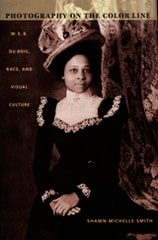
Photography on the Color Line
W. E. B. Du Bois, Race, and Visual CultureShawn Michelle Smith
Duke University Press, 2004
Smith reads Du Bois’s photographs in relation to other turn-of-the-century images such as scientific typologies, criminal mugshots, racist caricatures, and lynching photographs. By juxtaposing these images with reproductions from Du Bois’s exhibition archive, Smith shows how Du Bois deliberately challenged racist representations of African Americans. Emphasizing the importance of comparing multiple visual archives, Photography on the Color Line reinvigorates understandings of the stakes of representation and the fundamental connections between race and visual culture in the United States.
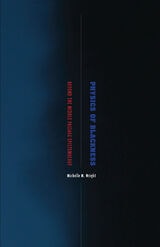
Physics of Blackness
Beyond the Middle Passage EpistemologyMichelle M. Wright
University of Minnesota Press, 2015
What does it mean to be Black? If Blackness is not biological in origin but socially and discursively constructed, does the meaning of Blackness change over time and space? In Physics of Blackness: Beyond the Middle Passage Epistemology, Michelle M. Wright argues that although we often explicitly define Blackness as a “what,” it in fact always operates as a “when” and a “where.”
By putting lay discourses on spacetime from physics into conversation with works on identity from the African Diaspora, Physics of Blackness explores how Middle Passage epistemology subverts racist assumptions about Blackness, yet its linear structure inhibits the kind of inclusive epistemology of Blackness needed in the twenty-first century. Wright then engages with bodies frequently excluded from contemporary mainstream consideration: Black feminists, Black queers, recent Black African immigrants to the West, and Blacks whose histories may weave in and out of the Middle Passage epistemology but do not cohere to it.
Physics of Blackness takes the reader on a journey both known and unfamiliar—from Isaac Newton’s laws of motion and gravity to the contemporary politics of diasporic Blackness in the academy, from James Baldwin’s postwar trope of the Eiffel Tower as the site for diasporic encounters to theoretical particle physics’ theory of multiverses and superpositioning, to the almost erased lives of Black African women during World War II. Accessible in its style, global in its perspective, and rigorous in its logic, Physics of Blackness will change the way you look at Blackness.
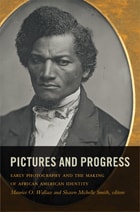
Pictures and Progress
Early Photography and the Making of African American IdentityMaurice O. Wallace and Shawn Michelle Smith, eds.
Duke University Press, 2012
Contributors. Michael A. Chaney, Cheryl Finley, P. Gabrielle Foreman, Ginger Hill, Leigh Raiford, Augusta Rohrbach, Ray Sapirstein, Suzanne N. Schneider, Shawn Michelle Smith, Laura Wexler, Maurice O. Wallace

Played Out
The Race Man in Twenty-First-Century SatireBrandon J. Manning
Rutgers University Press, 2022
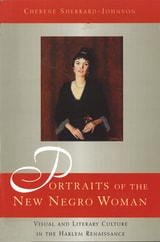
Portraits of the New Negro Woman
Visual and Literary Culture in the Harlem RenaissanceCherene M. Sherrard-Johnson
Rutgers University Press, 2007
Of all the images to arise from the Harlem Renaissance, the most thought-provoking were those of the mulatta. For some writers, artists, and filmmakers, these images provided an alternative to the stereotypes of black womanhood and a challenge to the color line. For others, they represented key aspects of modernity and race coding central to the New Negro Movement. Due to the mulatta’s frequent ability to pass for white, she represented a variety of contradictory meanings that often transcended racial, class, and gender boundaries.
In this engaging narrative, Cherene Sherrard-Johnson uses the writings of Nella Larsen and Jessie Fauset as well as the work of artists like Archibald Motley and William H. Johnson to illuminate the centrality of the mulatta by examining a variety of competing arguments about race in the Harlem Renaissance and beyond.
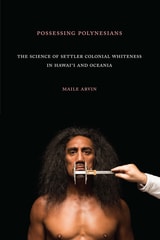
Possessing Polynesians
The Science of Settler Colonial Whiteness in Hawai`i and OceaniaMaile Arvin
Duke University Press, 2019
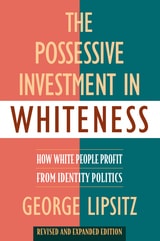
Possessive Investment In Whiteness
George Lipsitz
Temple University Press, 1998
Lipsitz's ultimate point is not to condemn all white people as racists but to challenge everyone to begin a principled examination of personal actions and political commitments. Exposing the system of unfairness is not enough. People of all groups -- but especially white people because they benefit from that system -- have to work toward eradicating the rewards of whiteness.
Postcoloniality-Decoloniality-Black Critique
Joints and FissuresEdited by Sabine Broeck and Carsten Junker
Campus Verlag, 2014
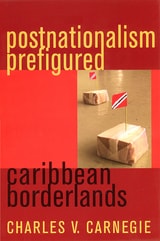
Postnationalism Prefigured
Caribbean BorderlandsCarnegie, Charles V
Rutgers University Press, 2002
Carnegie shows not only that the nation-state is an exhausted form of political organization, but that in the Caribbean the ideological and political reach of the nation-state has always been tenuous at best. Caribbean peoples, he suggests, live continually in breach of the nation-state configuration. Drawing both on his own experiences as a Jamaican-born anthropologist and on the examples provided by those who have always considered national borders as little more than artificial administrative nuisances, Carnegie investigates a fascinating spectrum of individuals, including Marcus Garvey, traders, black albinos, and Caribbean Ba’hais. If these people have not themselves developed a scholarly doctrine of transnationalism, they have, nevertheless, effectively lived its demand and prefigured a postnational life.
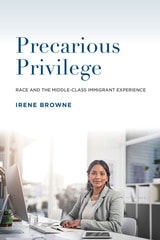
Precarious Privilege
Race and the Middle-Class Immigrant ExperienceIrene Browne
Russell Sage Foundation, 2024
Browne finds that when asked to identify themselves by race, these immigrants either reject racial identities entirely or draw on belief systems from Mexico and the Dominican Republic that emphasize European-indigenous mixed race identities. When branded as typical Latines in the U.S., Mexican middle-class immigrants emphasize their social class or explain that a typical Latine can be middle-class, while Dominicans simply indicate that they are not Mexican. Rather than blame systemic racism, both Mexican and Dominican middle-class immigrants often attribute misperceptions of their identity to non-Latines’ ignorance or to individual Latines’ lack of effort in trying to assimilate.
But these middle-class Latine immigrants do not simply seek to position themselves on par with the U.S.-born white middle class. Instead, they leverage their cosmopolitanism—for example, their multilingualism or their children’s experiences traveling abroad—to engage in what Browne calls “one-up assimilation,” a strategy that aims to position them above the white middle class, who are often monolingual and unaware of the world outside the United States. Middle-class Latines’ cosmopolitanism and valuing of diversity also lead them to have cordial relations with African Americans, but these immigrants do not see themselves as sharing African Americans’ status as oppressed minorities.
Although the stereotype of the typical Latine has made middle-class Latine immigrants susceptible to stigma, they insist that this stigma does not play a significant role in their lives. In many cases, they view the stereotype as a minor issue, feel that opportunities for upward mobility outweigh any negative experiences, or downplay racism by emphasizing their class privilege. Browne observes that while downplaying racism may help middle-class Latine immigrants maintain their dignity, it also perpetuates inequality by reinforcing the lower status of working-class undocumented immigrants. It is thus imperative, Browne argues, to repeal harsh anti-immigration policies, a move that will not only ease the lives of the undocumented but also send a message about who belongs in the country.
Offering a nuanced exploration of how race, social class, and immigration status intersect, Precarious Privilege provides a complex portrait of middle-class Latine immigrants in the United States today.
Prisons, Race, and Masculinity in Twentieth-Century U.S. Literature and Film
Peter Caster
The Ohio State University Press, 2008
In Prisons, Race, and Masculinity, Peter Caster demonstrates the centrality of imprisonment in American culture, illustrating how incarceration, an institution inseparable from race, has shaped and continues to shape U.S. history and literature in the starkest expression of what W. E. B. DuBois famously termed “the problem of the color line.”
A prison official in 1888 declared that it was the freeing of slaves that actually created prisons: “we had to establish means for their control. Hence came the penitentiary.” Such rampant racism co ntributed to the criminalization of black masculinity in the cultural imagination, shaping not only the identity of prisoners (collectively and individually) but also America’s national character. Caster analyzes the representations of imprisonment in books, films, and performances, alternating between history and fiction to describe how racism influenced imprisonment during the decline of lynching in the 1930s, the political radicalism in the late 1960s, and the unprecedented prison expansion through the 1980s and 1990s. Offering new interpretations of familiar works by William Faulkner, Eldridge Cleaver, and Norman Mailer, Caster also engages recent films such as American History X, The Hurricane, and The Farm: Life Inside Angola Prison alongside prison history chronicled in the transcripts of the American Correctional Association. This book offers a compelling account of how imprisonment has functioned as racial containment, a matter critical to U.S. history and literary study.
Privileged Spectatorship
Theatrical Interventions in White SupremacyDani Snyder-Young
Northwestern University Press, 2021
Many professional theater artists attempt to use live performances in formal theater spaces to disrupt racism and create a more equitable society. Privileged Spectatorship: Theatrical Interventions in White Supremacy examines the impact of such projects, looking at how and why they do and do not intervene in white supremacy. In this incisive study, Dani Snyder-Young examines audience responses to a range of theatrical events that focus on race‑related conflict or racial identity in the contemporary United States. The audiences for these performances, produced at mainstream not‑for‑profit professional theaters in major American cities in 2013–18, reflect dominant patterns of theater attendance: the majority of spectators are older, affluent, white, and describe themselves as politically progressive. Snyder-Young studies the ways these audience members consume the stories of racialized others and analyzes how different artistic, organizational, and programmatic strategies can (or cannot) mitigate white privilege.
This book is essential reading for scholars and students of theater, performance studies, and critical ethnic studies and for theater practitioners interested in equity and inclusion.
Problematic Paradigms and the Contours of US Latinidad
Essays by Silvio Torres-SaillantEdited by Nancy Kang and Michael Nieto Garcia
University of Texas Press, 2026
Silvio Torres-Saillant’s collected writings examine political contradictions within Latinx identity in the United States.
Since the 1990s Silvio Torres-Saillant’s work has questioned the notion of Latinidad, challenging presumptions of panethnic unity within the US Hispanic population and assessing dominant modes of Latinx representation. The essays in Problematic Paradigms and the Contours of US Latinidad examine the dynamics of a diverse collective of over 65 million people whose cultural heritage, ancestral origins, and belief systems arguably differ as much as they resemble one another. The volume dissects prevailing assumptions, namely the essentializing sense of homogeneity in the Latinx “community,” which mask important nuances and fascinating contradictions. Torres-Saillant also targets the role of marketing and mass communications in shaping popular perceptions of ethnic groups, thereby tracing connections between media rhetoric and the language of scholarship.
Newly revised by editors Nancy Kang and Michael Nieto Garcia, this collection curates Torres-Saillant’s core contributions to Latinx studies over the last two decades and underscores the veteran scholar’s evolving thoughts on key conversations in the field. The epilogue narrates his beginnings in Caribbean studies, acknowledges his ongoing analysis of Dominican blackness, and discourages uncritical views of cultural heritage.
Producing American Races
Henry James, William Faulkner, Toni MorrisonPatricia McKee
Duke University Press, 1999
McKee provides close readings of six novels—James’s The Wings of the Dove and The Golden Bowl, Faulkner’s The Sound and the Fury and Light in August, and Morrison’s Sula and Jazz—interspersed with excursions into Lacanian and Freudian theory, critical race theory, epistemology, and theories of visuality. In James and Faulkner, she finds, race is represented visually through media that highlight ways of seeing and being seen. Written in the early twentieth century, the novels of James and Faulkner reveal how whiteness depended on visual culture even before film and television became its predominant media. In Morrison, the culture is aural and oral—and often about the absence of the visual. Because Morrison’s African American communities produce identity in nonvisual, even anti-visual terms, McKee argues, they refute not just white representations of black persons as objects but also visual orders of representation that have constructed whites as subjects and blacks as objects.
With a theoretical approach that both complements and transcends current scholarship about race—and especially whiteness—Producing American Races will engage scholars in American literature, critical race theory, African American studies, and cultural studies. It will also be of value to those interested in the novel as a political and aesthetic form.
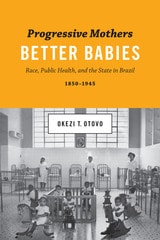
Progressive Mothers, Better Babies
Race, Public Health, and the State in Brazil, 1850-1945By Okezi T. Otovo
University of Texas Press, 2016
In Bahia, Brazil, the decades following emancipation saw the rise of reformers who sought to reshape the citizenry by educating Bahian women in methods for raising “better babies.” The idealized Brazilian would be better equipped to contribute to the labor and organizational needs of a modern nation. Backed by many physicians, politicians, and intellectuals, the resulting welfare programs for mothers and children mirrored complex debates about Brazilian nationality. Examining the local and national contours of this movement, Progressive Mothers, Better Babies investigates families, medical institutions, state-building, and social stratification to trace the resulting policies, which gathered momentum in the aftermath of abolition (1888) and the declaration of the First Republic (1889), culminating during the administration of President Getúlio Vargas (1930–1945).
Exploring the cultural discourses on race, gender, and poverty that permeated medical knowledge and the public health system for almost a century, Okezi T. Otovo draws on extensive archival research to reconstruct the implications for Bahia, where family patronage politics governed poor women’s labor as the mothers who were the focus of medical interventions were often the nannies and nursemaids of society’s wealthier families. The book reveals key transition points as the state of Bahia transformed from being a place where poor families could expect few social services to becoming the home of numerous programs targeting the poorest mothers and their children. Negotiating crucial questions of identity, this history sheds new light on larger debates about Brazil’s past and future.
Psychedelic White
Goa Trance and the Viscosity of RaceArun Saldanha
University of Minnesota Press, 2007
A bold new approach to racial difference conceived through rave tourism
The village of Anjuna, located in the coastal Indian state of Goa, has been one of the premier destinations on the global rave scene for nearly two decades. The birthplace of Goa trance, the most psychedelic variety of electronic dance music, Anjuna first attracted adventurous Westerners in the 1970s who were drawn there by its tropical beaches, tolerant locals, and readily available drugs. Today, rave tourists travel to Goa to take part in round-the-clock dance parties and lose themselves in the crowds, the music, and the drugs. But do they really escape where they come from and who they are?
A rich and theoretically sophisticated ethnography, Psychedelic White explains how race plays out in Goa’s white counterculture and grapples with how to make sense of racism when it is not supposed to be there. Goa is a site of particularly revealing forms of interracial collision, and contrary to author Arun Saldanha’s expectations that the nature of rave would create an inclusive atmosphere, he repeatedly witnessed stark segregation between white and Indian tourists. He came to understand race in its creative dimension as a shifting and fuzzy assemblage of practices, environments, sounds, and substances—dance skills, sunlight, conversation, cannabis, and tea. In doing so, his work shows how the rave scene in Goa harbors conflicting tendencies regarding race. The complicated intersection of cultures and phenotypes, Saldanha asserts, helps to consolidate whiteness. Race emerges not through rigid boundaries but rather through what he terms viscosity, the degree to which bodies gather together for pleasure and self-transformation.
Challenging the prevailing conception of racial difference as a purely social construction and offering building on the works of Gilles Deleuze and Félix Guattari, Psychedelic White presents nothing less than a new materialist approach to race.