Results by title
376 books match the query 'Racism' and 12 start with p
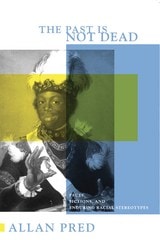
Past Is Not Dead
Facts, Fictions, and Enduring Racial StereotypesAllan Pred
University of Minnesota Press, 2004
A study of the genealogy and perpetuation of stereotyping
Through one figure—Badin, an eighteenth-century Afro-Caribbean slave given to the Swedish royal court—Allan Pred shows how stereotypes endure through the repeated confusion of facts and fiction, providing a highly original perspective on the perpetuation of racializing stereotypes in the West.
In the first of two interlocking montages inspired by Walter Benjamin, the book focuses on Badin, who died in Stockholm in 1822, and representations of his life that appeared from the 1840s through the 1990s. In the second montage, Pred brings the late nineteenth century and the present into play, shifting to urban sites where racialized stereotyping is on public display, including a museum that has exhibited the bodily remains of the African male.Intriguing for its insight into the workings of race and immigration on the national imagination of a European nation—but with implications and ramifications far beyond that specific example—The Past Is Not Dead is a bold inquiry into both the collective memory and the amnesia of those who stereotype versus the personal remembering and forgetting of the stereotyped.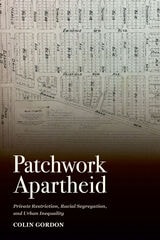
Patchwork Apartheid
Private Restriction, Racial Segregation, and Urban InequalityColin Gordon
Russell Sage Foundation, 2023
Gordon also explores the role of other policies and practices in sustaining segregation. Enforcement of private racial restrictions was held unconstitutional in 1948, and such agreements were prohibited outright in 1968. But their premises and assumptions, and the segregation they had accomplished, were accommodated by local zoning and federal housing policies. Explicit racial restrictions were replaced by the deceptive business practices of real estate agents and developers, who characterized certain neighborhoods as white and desirable and others as black and undesirable, thereby hiding segregation behind the promotion of sound property investments, safe neighborhoods, and good schools. These practices were in turn replaced by local zoning, which systematically protected white neighborhoods while targeting “blighted” black neighborhoods for commercial and industrial redevelopment, and by a tangle of federal policies that reliably deferred to local and private interests with deep investments in local segregation. Private race restriction was thus a key element in the original segregation of American cities and a source of durable inequalities in housing wealth, housing opportunity, and economic mobility.
Patchwork Apartheid exhaustively documents the history of private restriction in urban settings and demonstrates its crucial role in the ideas and assumptions that have sustained racial segregation in the United States into the twenty-first century.
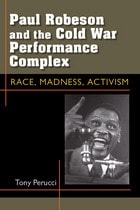
Paul Robeson and the Cold War Performance Complex
Race, Madness, ActivismTony Perucci
University of Michigan Press, 2012
Actor and singer Paul Robeson's performances in Othello, Show Boat, and The Emperor Jones made him famous, but his midcentury appearances in support of causes ranging from labor and civil rights to antilynching and American warmongering made him notorious. When Robeson announced at the 1949 Paris Peace Conference that it was "unthinkable" for blacks to go to war against the Soviet Union, the mainstream American press declared him insane.
Notions of Communism, blackness, and insanity were interchangeably deployed during the Cold War to discount activism such as Robeson's, just a part of an array of social and cultural practices that author Tony Perucci calls the Cold War performance complex. Focusing on two key Robeson performances---the concerts in Peekskill, New York, in 1949 and his appearance before the House Committee on Un-American Activities in 1956---Perucci demonstrates how these performances and the government's response to them are central to understanding the history of Cold War culture in the United States. His book provides a transformative new perspective on how the struggle over the politics of performance in the 1950s was also a domestic struggle over freedom and equality. The book closely examines both of these performance events as well as artifacts from Cold War culture---including congressional documents, FBI files, foreign policy papers, the popular literature on mental illness, and government propaganda films---to study the operation of power and activism in American Cold War culture.

Pedagogies of Crossing
Meditations on Feminism, Sexual Politics, Memory, and the SacredM. Jacqui Alexander
Duke University Press, 2005
In these meditations, Alexander deftly unites large, often contradictory, historical processes across time and space. She focuses on the criminalization of queer communities in both the United States and the Caribbean in ways that prompt us to rethink how modernity invents its own traditions; she juxtaposes the political organizing and consciousness of women workers in global factories in Mexico, the Caribbean, and Canada with the pressing need for those in the academic factory to teach for social justice; she reflects on the limits and failures of liberal pluralism; and she presents original and compelling arguments that show how and why transgenerational memory is an indispensable spiritual practice within differently constituted women-of-color communities as it operates as a powerful antidote to oppression. In this multifaceted, visionary book, Alexander maps the terrain of alternative histories and offers new forms of knowledge with which to mold alternative futures.
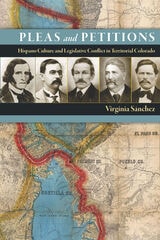
Pleas and Petitions
Hispano Culture and Legislative Conflict in Territorial ColoradoVirginia Sánchez
University Press of Colorado, 2021
Sánchez highlights the struggles experienced by Hispano territorial assemblymen trying to create opportunity and a better life in the face of cultural conflict and the institutional racism used to effectively shut them out of the process of establishing new laws and social order. For example, the federal and Colorado territorial governments did not provide an interpreter for the Hispano assemblymen or translations of the laws passed by the legislature, and they taxed Hispano constituents without representation and denied them due process in court.
The first in-depth history of Hispano sociopolitical life during Colorado’s territorial period, Pleas and Petitions provides fundamental insight into Hispano settlers’ interactions with their Anglo neighbors, acknowledges the struggles and efforts of those Hispano assemblymen who represented southern Colorado during the territorial period, and augments the growing historical record of Hispanos who have influenced the course of Colorado’s history.
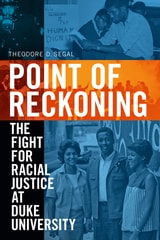
Point of Reckoning
The Fight for Racial Justice at Duke UniversityTheodore D. Segal
Duke University Press, 2021
Positively No Filipinos Allowed
Building Communities and Discourseedited by Antonio T. Tiongson, Jr., Edgardo V. Gutierrez and Ricardo V. Gutierrez, foreword by Lisa Lowe
Temple University Press, 2006
Possessive Investment In Whiteness
George Lipsitz
Temple University Press, 1998
Lipsitz's ultimate point is not to condemn all white people as racists but to challenge everyone to begin a principled examination of personal actions and political commitments. Exposing the system of unfairness is not enough. People of all groups -- but especially white people because they benefit from that system -- have to work toward eradicating the rewards of whiteness.
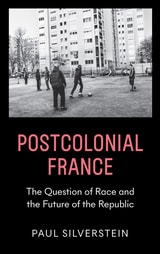
Postcolonial France
The Question of Race and the Future of the RepublicPaul Silverstein
Pluto Press, 2018
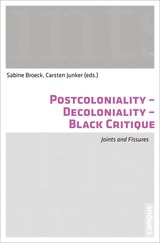
Postcoloniality-Decoloniality-Black Critique
Joints and FissuresEdited by Sabine Broeck and Carsten Junker
Campus Verlag, 2014

Precarious Privilege
Race and the Middle-Class Immigrant ExperienceIrene Browne
Russell Sage Foundation, 2024
Browne finds that when asked to identify themselves by race, these immigrants either reject racial identities entirely or draw on belief systems from Mexico and the Dominican Republic that emphasize European-indigenous mixed race identities. When branded as typical Latines in the U.S., Mexican middle-class immigrants emphasize their social class or explain that a typical Latine can be middle-class, while Dominicans simply indicate that they are not Mexican. Rather than blame systemic racism, both Mexican and Dominican middle-class immigrants often attribute misperceptions of their identity to non-Latines’ ignorance or to individual Latines’ lack of effort in trying to assimilate.
But these middle-class Latine immigrants do not simply seek to position themselves on par with the U.S.-born white middle class. Instead, they leverage their cosmopolitanism—for example, their multilingualism or their children’s experiences traveling abroad—to engage in what Browne calls “one-up assimilation,” a strategy that aims to position them above the white middle class, who are often monolingual and unaware of the world outside the United States. Middle-class Latines’ cosmopolitanism and valuing of diversity also lead them to have cordial relations with African Americans, but these immigrants do not see themselves as sharing African Americans’ status as oppressed minorities.
Although the stereotype of the typical Latine has made middle-class Latine immigrants susceptible to stigma, they insist that this stigma does not play a significant role in their lives. In many cases, they view the stereotype as a minor issue, feel that opportunities for upward mobility outweigh any negative experiences, or downplay racism by emphasizing their class privilege. Browne observes that while downplaying racism may help middle-class Latine immigrants maintain their dignity, it also perpetuates inequality by reinforcing the lower status of working-class undocumented immigrants. It is thus imperative, Browne argues, to repeal harsh anti-immigration policies, a move that will not only ease the lives of the undocumented but also send a message about who belongs in the country.
Offering a nuanced exploration of how race, social class, and immigration status intersect, Precarious Privilege provides a complex portrait of middle-class Latine immigrants in the United States today.

Pretty/Funny
Women Comedians and Body PoliticsBy Linda Mizejewski
University of Texas Press, 2014
Women in comedy have traditionally been pegged as either “pretty” or “funny.” Attractive actresses with good comic timing such as Katherine Hepburn, Lucille Ball, and Julia Roberts have always gotten plum roles as the heroines of romantic comedies and television sitcoms. But fewer women who write and perform their own comedy have become stars, and, most often, they’ve been successful because they were willing to be funny-looking, from Fanny Brice and Phyllis Diller to Lily Tomlin and Carol Burnett. In this pretty-versus-funny history, women writer-comedians—no matter what they look like—have ended up on the other side of “pretty,” enabling them to make it the topic and butt of the joke, the ideal that is exposed as funny.
Pretty/Funny focuses on Kathy Griffin, Tina Fey, Sarah Silverman, Margaret Cho, Wanda Sykes, and Ellen DeGeneres, the groundbreaking women comics who flout the pretty-versus-funny dynamic by targeting glamour, postfeminist girliness, the Hollywood A-list, and feminine whiteness with their wit and biting satire. Linda Mizejewski demonstrates that while these comics don’t all identify as feminists or take politically correct positions, their work on gender, sexuality, and race has a political impact. The first major study of women and humor in twenty years, Pretty/Funny makes a convincing case that women’s comedy has become a prime site for feminism to speak, talk back, and be contested in the twenty-first century.