Results by title
1017 books match the query 'Reference' and 52 start with p
PLOTINUS Ennead II.9
Against the Gnostics: Translation, with an Introduction and CommentarySebastian Gertz
Parmenides Publishing, 2017
How was the universe created, and what is our place within it? These are the questions at the heart of Plotinus’ Against the Gnostics. For the Gnostics, the universe came into being as a result of the soul’s fall from intelligible reality—it is the evil outcome of a botched creation. Plotinus challenges this, and insists that the soul’s creation of the world is the necessary consequence of its contemplation of the ideal forms. While the Gnostics claim to despise the visible universe, Plotinus argues that such contempt displays their ignorance of the higher realities of which the cosmos is a beautiful image.
Against the Gnostics is a polemical text. It aims to show the superiority of Plotinus’ philosophy over that of his Gnostic rivals, and poses unique challenges: Plotinus nowhere identifies his opponents by name, he does not set out their doctrines in any great detail, and his arguments are frequently elliptical. The detailed commentary provides a guide through these difficulties, making Plotinus’ meandering train of thought in this important treatise accessible to the reader.
PLOTINUS Ennead IV.4.30-45 & IV.5
Problems Concerning the Soul: Translation, with an Introduction and CommentaryGary M. Gurtler, SJ
Parmenides Publishing, 2015
PLOTINUS Ennead IV.9
On Whether All Souls are One: Translation | Introduction | CommentaryEyjólfur K. Emilsson
Parmenides Publishing, 2026
This short, early treatise undertakes to explain the controversial thesis that all souls—this includes individual human souls and the world-soul—are in some sense just one soul. Plotinus considers a number of objections that can be raised against the thesis. For instance, if the thesis is true, it may seem to follow that that everything that holds for one soul also holds for every other soul. Plotinus seeks to explain that such objections are off the mark, which also shows that the thesis about the unity of soul is not a claim about strict identity of all souls. He then (chapter 5) considers and rejects two materialistic hypotheses about the relationship between individual souls and the world-soul. In the final chapter he presents his own solution: the individual souls and the world-soul are all the soul hypostasis. He likens the relationship between the hypostatic soul and the individual souls with that between a science and the theorems of the science: each theorem potentially contains the whole science and can in a sense be said to be it.
PLOTINUS Ennead IVI.3-4.29
Problems Concerning the Soul: Translation, with an Introduction and CommentaryJohn M. Dillon
Parmenides Publishing, 2015
The treatise is an excellent example of Plotinus’ distinctive method of enquiry: not dogmatic (though he is no sceptic), but worrying away at questions until he has uncovered their complexities to the best of his ability. Such a work requires detailed commentary, such as is provided here, to tease out fully the fascinating convolutions of his thought.
PLOTINUS Ennead V.1
On the Three Primary Levels of Reality: Translation, with an Introduction and CommentaryEric D. Perl
Parmenides Publishing, 2015
PLOTINUS
Ennead I.6: On Beauty: Translation, with an Introduction and CommentaryAndrew Smith
Parmenides Publishing, 2016

PROCEEDINGS OF AN INTERNATIONAL CONFERENCE ON HISTORIC BRIDGES
EMORY L. KEMP
West Virginia University Press, 1999
In 1849, the new Wheeling Suspension Bridge was a triumph of engineering, the world's longest clear span bridge. The Wheeling bridge was also a landmark in the development of the American frontier, spanning the Ohio River to speed settlement and commerce in the Midwest and beyond. In 1999, historians, engineers, and industrial archaeologists from around the world met in Wheeling to celebrate the still-busy bridge's 150th anniversary. This book presents highlights of the conference, and points out the far-reaching effects of bridge-building.
Papers of the Michigan Academy of Science, Arts and Letters
containing papers submitted at the annual meeting in 1926Edited by Eugene S. McCartney and Peter Okkelberg
University of Michigan Press, 1927
Papers of the Michigan Academy of Science, Arts and Letters
containing papers submitted at the annual meeting in 1926Edited by Eugene S. McCartney and Peter Okkelberg
University of Michigan Press, 1927
Paradigms and Sand Castles
Theory Building and Research Design in Comparative PoliticsBarbara Geddes
University of Michigan Press, 2003
Barbara Geddes is Professor of Political Science at the University of California, Los Angeles.
Paris in Quotations
Compiled by Jaqueline Mitchell
Bodleian Library Publishing, 2016
Paris in Quotations takes readers on a one-of-a-kind tour of the City of Lights, in which we hear from the likes of Molière and Thomas Gold Appleton, who thought that, “When good Americans die, they go to Paris.” For centuries, Paris has reigned over the popular imagination. For those planning a visit, this collection will be warmly welcomed.
Pattern and Loom
A Practical Study of the Development of Weaving Techniques in China, Western Asia and EuropeJohn Becker
National University of Singapore Press, 2014
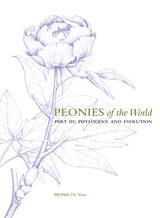
Peonies of the World
Part III Phylogeny and EvolutionDe-Yuan Hong
Royal Botanic Gardens, Kew, 2021
De-Yuan Hong’s three-volume monograph of the popular genus Paeonia—more popularly known as peonies—is a comprehensive taxonomic revision based on extensive field observations, population sampling, and a thorough multidisciplinary examination of more than 5,000 specimens. This third and final volume is a rich source of information on the phylogeny and evolution of peonies, illustrated with photographs, line drawings, and maps, making it an essential reference for trained botanists and amateur gardening hobbyists alike.
Permissions, A Survival Guide
Blunt Talk about Art as Intellectual PropertySusan M. Bielstein
University of Chicago Press, 2006
Organized as a series of “takes” that range from short sidebars to extended discussions, Permissions, A Survival Guide explores intellectual property law as it pertains to visual imagery. How can you determine whether an artwork is copyrighted? How do you procure a high-quality reproduction of an image? What does “fair use” really mean? Is it ever legitimate to use the work of an artist without permission? Bielstein discusses the many uncertainties that plague writers who work with images in this highly visual age, and she does so based on her years navigating precisely these issues. As an editor who has hired a photographer to shoot an incredibly obscure work in the Italian mountains (a plan that backfired hilariously), who has tried to reason with artists' estates in languages she doesn't speak, and who has spent her time in the archival trenches, she offers a snappy and humane guide to this difficult terrain.
Filled with anecdotes, asides, and real courage, Permissions, A Survival Guide is a unique handbook that anyone working in the visual arts will find invaluable, if not indispensable.
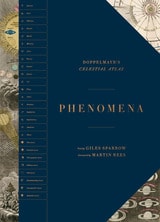
Phenomena
Doppelmayr's Celestial AtlasGiles Sparrow
University of Chicago Press, 2022
The expansive and intricate Atlas Coelestis, created by Johann Doppelmayr in 1742, set out to record everything known about astronomy at the time, covering constellations, planets, moons, comets, and more, all rendered in exquisite detail. Through stunning illustrations, historical notes, and scientific explanations, Phenomena contextualizes Doppelmayr’s atlas and creates a spectacular handbook to the heavens.
Phenomena begins by introducing Doppelmayr’s life and work, placing his extraordinary cosmic atlas in the context of discoveries made in the Renaissance and Enlightenment and highlighting the significance of its publication. This oversized book presents thirty beautifully illustrated and richly annotated plates, covering all the fundamentals of astronomy—from the dimensions of the solar system to the phases of the moon and the courses of comets. Each plate is accompanied by expert analysis from astronomer Giles Sparrow, who deftly presents Doppelmayr’s references and cosmological work to a modern audience. Each plate is carefully deconstructed, isolating key stars, planets, orbits, and moons for in-depth exploration. A conclusion reflects on the development of astronomy since the publication of the Atlas and traces the course of the science up to the present day. Following the conclusion is a timeline of key discoveries from ancient times onward along with short biographies of the key players in this history.

Phenomenology
Responses and DevelopmentsEdited by Leonard Lawlor
University of Chicago Press, 2010
From Kant to Kierkegaard, from Hegel to Heidegger, continental philosophers have indelibly shaped the trajectory of Western thought since the eighteenth century. Although much has been written about these monumental thinkers, students and scholars lack a definitive guide to the entire scope of the continental tradition. The most comprehensive reference work to date, this eight-volume History of Continental Philosophy will both encapsulate the subject and reorient our understanding of it. Beginning with an overview of Kant’s philosophy and its initial reception, the History traces the evolution of continental philosophy through major figures as well as movements such as existentialism, phenomenology, hermeneutics, and poststructuralism. The final volume outlines the current state of the field, bringing the work of both historical and modern thinkers to bear on such contemporary topics as feminism, globalization, and the environment. Throughout, the volumes examine important philosophical figures and developments in their historical, political, and cultural contexts.
The first reference of its kind, A History of Continental Philosophy has been written and edited by internationally recognized experts with a commitment to explaining complex thinkers, texts, and movements in rigorous yet jargon-free essays suitable for both undergraduates and seasoned specialists. These volumes also elucidate ongoing debates about the nature of continental and analytic philosophy, surveying the distinctive, sometimes overlapping characteristics and approaches of each tradition. Featuring helpful overviews of major topics and plotting road maps to their underlying contexts, A History of Continental Philosophy is destined to be the resource of first and last resort for students and scholars alike.
Phonetic Symbol Guide
Geoffrey K. Pullum and William A. Ladusaw
University of Chicago Press, 1996
This fully revised second edition incorporates the major revisions to the International Phonetic Alphabet made in 1989 and 1993. Also covered are the American tradition of transcription stemming from the anthropological school of Franz Boas; the Bloch/Smith/Trager style of transcription; the symbols used by dialectologists of the English language; usages of specialists such as Slavicists, Indologists, Sinologists, and Africanists; and the transcription proposals found in all major textbooks of phonetics.
With sixty-one new entries, an expanded glossary of phonetic terms, added symbol charts, and a full index, this book will be an indispensable reference guide for students and professionals in linguistics, phonetics, anthropology, philology, modern language study, and speech science.
Phonology in the Twentieth Century
Theories of Rules and Theories of RepresentationsStephen R. Anderson
University of Chicago Press, 1985
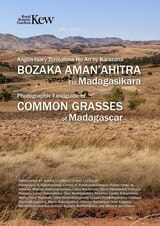
Photographic Field Guide of Common Grasses of Madagascar
Nantenaina Rakotomalala, Fenrita Randrianarimanana, and Rafael Felipe de Almeida
Royal Botanic Gardens, Kew, 2025
An easy-to-use bilingual field guide in English and Malagasy on the grasses of Madagascar.
Field Guide to the Grasses of Madagascar is the first photographic compilation of information on Madagascar’s Poaceae, featuring around half of the known grass species on the island. Compiled by a team of Malagasy and international botanists led by the Royal Botanic Gardens, Kew, Kew Madagascar, and partner institutions, it consolidates expert-generated and expert-verified information in Malagasy and English.
This book contains information on 269 species of grasses, with a general introduction and an index to Malagasy common names in addition to Latin names. The book also provides a critical foundation to the ongoing work of assessing the current biodiversity, distribution, uses, and evolution of the island’s grass flora.
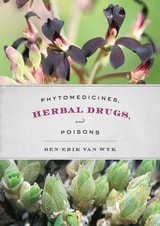
Phytomedicines, Herbal Drugs, and Poisons
Edited by Ben-Erik van Wyk and Michael Wink
University of Chicago Press, 2015
In Phytomedicines, Herbal Drugs, and Poisons, Ben-Erik van Wyk offers a richly illustrated, scientific guide to medicinal and poisonous plants, including those used for their mind-altering effects. Van Wyk covers approximately 350 species—from Aloe vera and Ephedra sinica to Cannabis sativa and Coffea arabica—detailing their botanical, geographical, pharmacological, and toxicological data as well as the chemical structures of the active compounds in each. Readers learn, for example, that Acacia senegal, or gum acacia, is used primarily in Sudan and Ethiopia as a topical ointment to protect the skin and mucosa from bacterial and fungal infections, and that Aconitum napellus, more commonly known as aconite, is used in cough syrups but can be psychedelic when smoked or absorbed through the skin.
With 350 full-color photographs featuring the plants and some of their derivative products, Phytomedicines, Herbal Drugs, and Poisons will be an invaluable reference not only for those in the health care field but also for those growing their own medicinal herb gardens, as well as anyone who needs a quick answer to whether a plant is a panacea or a poison.
Place Names in Alabama
Virginia O. Foscue
University of Alabama Press, 1988
Discover the stories, people, and histories behind the names on Alabama's map.
Place Names in Alabama is the first comprehensive and systematic study of the names that define Alabama's geographic landscape. In this indispensable reference work, Virginia O. Foscue examines more than 2,600 place names drawn from across the state, including counties, cities, towns, rivers, lakes, streams, mountains, and other significant geographic features. Each entry provides detailed information on location, historical development, etymology, naming history, and documented sources, creating a rich portrait of the people, cultures, and events that have shaped Alabama over time.
Drawing upon archival records, historical documents, maps, and interviews with local informants, Foscue uncovers the stories behind the names that appear on Alabama's maps. The volume reveals the influence of Native American languages, European settlement, transportation networks, natural features, political leaders, local families, and regional traditions on the state's evolving identity. By tracing how communities and landmarks acquired their names, the book illuminates broader patterns of migration, settlement, economic development, and cultural exchange throughout Alabama's history.
More than a dictionary of place names, this work offers a unique window into Alabama's social and cultural heritage. Readers discover not only the origins of familiar names but also the histories of the individuals and communities that helped build the state. Whether used as a scholarly resource, a genealogical tool, or a source of fascinating historical insights, Place Names in Alabama remains an essential guide to understanding the connections between geography, language, and history in the American South.
Valuable for historians, genealogists, geographers, librarians, educators, students, journalists, and local history enthusiasts, this landmark volume continues to serve as the definitive reference on Alabama's geographic names and the stories they preserve.
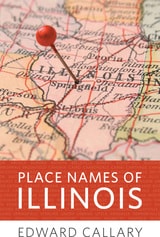
Place Names of Illinois
Edward Callary
University of Illinois Press, 2007

Plant Communities of Southern Illinois
Robert H. Mohlenbrock and John C. Voigt
Southern Illinois University Press, 1964
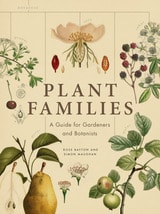
Plant Families
A Guide for Gardeners and BotanistsRoss Bayton and Simon Maughan
University of Chicago Press, 2017
Plant Families is an easy-to-use, beautifully illustrated guide to the more than one hundred core plant families every horticulturist, gardener, or budding botanist needs to know. It introduces the basics of plant genealogy and teaches readers how to identify and understand the different structures of flowers, trees, herbs, shrubs, and bulbs. It then walks through each family, explaining its origins and range, and describing characteristics such as size, flowers, and seeds. Each family is accompanied by full-color botanical illustrations and diagrams. “Uses For” boxes planted throughout the book provide practical gardening tips related to each family.
We have much to gain by learning about the relationships between plant families. By understanding how botanists create these groupings, we can become more apt at spotting the unique characteristics of a plant and identify them faster and more accurately. Understanding plant families also helps us to make sense of—and better appreciate—the enormous biological diversity of the plant kingdom.
Plants of the World
Maarten J. M. Christenhusz, Michael F. Fay, and Mark W. Chase
Royal Botanic Gardens, Kew, 2017
Plants of the World
An Illustrated Encyclopedia of Vascular PlantsMaarten J. M. Christenhusz, Michael F. Fay, and Mark W. Chase
University of Chicago Press, 2017

Platte River Road Narratives
A Descriptive Bibliography of Travel Over the Great Central Overland Route to Oregon, California, Utah, Colorado, Montana, and Other Western States and Territories, 1812-1866Merrill J. Mattes
University of Illinois Press, 1988
This massive annotated bibliography of all known significant eyewitness accounts of nineteenth-century central overland travel fills a conspicuous gap in historical literature, and will greatly accelerate research, writing, and collecting.
Platte River Road Narratives includes not only all identifiable overland accounts, but also a number of those identifiable in manuscript form only. Over 2,000 entries identify the author, the form of the passage, overland trip, and give Matte's authoritative commentary and evaluation, as well as identification of the repository of the source material.
Plotinus Ennead I.5
On Whether Well-Being Increases with Time: Translation with an Introduction and CommentaryDanielle A. Layne
Parmenides Publishing, 2023
Plotinus Ennead I.8
On the Nature and Source of Evil: Translation with an Introduction and CommentaryAnne Sheppard
Parmenides Publishing, 2025
Plotinus Ennead II.4
On Matter: Translation with an Introduction and CommentaryA.A. Long
Parmenides Publishing, 2022
Poets on Teaching
A SourcebookJoshua Marie Wilkinson
University of Iowa Press, 2010
In response to a lack of source works for wide-ranging approaches to teaching poetry, award-winning poet Joshua Marie Wilkinson has gathered ninety-nine micro-essays for poets, critics, and scholars who teach and for students who wish to learn about the many ways poets think about how a poem comes alive from within—and beyond—a classroom. Not narrowly concerned with how to read poetry or how to write poetry, by virtue of their central concern with teaching poetry, the essays in this fresh and innovative volume address both reading and writing and give teachers and students useful tools for the classroom and beyond.
Divided into four sections—“Reflections / Poetics,” “Exercises / Praxis,” “New Approaches to Poetry Courses and Methodology,” and “Talks / Directives”—Poets on Teaching provides practical, intelligent advice. “Reflections / Poetics” encompasses the most expansive approaches to teaching poetry, where poets reflect variously on what teachers can cultivate in their classrooms. “Exercises / Praxis” consists of hands-on approaches to reading and, especially, writing poems. “New Approaches to Poetry Courses and Methodology” features essays on rethinking specific courses, offering new ideas for course design and pedagogy. “Talks / Directives” contains a series of more informal and conversational discussions geared toward becoming a stronger reader, writer, teacher, and student of poetry. Poets on Teaching will be required reading for new and experienced teachers alike.
Kazim Ali, Rae Armantrout, Hadara Bar-Nadav, Dan Beachy-Quick, Bruce Beasley, Claire Becker, Jaswinder Bolina, Jenny Boully, Joel Brouwer, Lily Brown, Laynie Browne, Stephen Burt, Julie Carr, Joshua Clover, Matthew Cooperman, Oliver de la Paz, Linh Dinh, Ben Doller, Sandra Doller, Julie Doxsee, Lisa Fishman, Graham Foust, John Gallaher, Forrest Gander, C. S. Giscombe, Peter Gizzi, Lara Glenum, Kenneth Goldsmith, Johannes Göransson, Noah Eli Gordon, Arielle Greenberg, Richard Greenfield, Sarah Gridley, Anthony Hawley, Terrance Hayes, Eric Hayot, Brian Henry, Brenda Hillman, Jen Hofer, Paul Hoover, Christine Hume, Brenda Iijima, Lisa Jarnot, Kent Johnson, Bhanu Kapil, Karla Kelsey, Aaron Kunin, Quraysh Ali Lansana, Dorothea Lasky, Sueyeun Juliette Lee, Ada Limón, Timothy Liu, Sabrina Orah Mark, Dawn Lundy Martin, Kristi Maxwell, Joyelle McSweeney, Christina Mengert, Albert Mobilio, K. Silem Mohammad, Fred Moten, Jennifer Moxley, Laura Mullen, Sawako Nakayasu, Aimee Nezhukumatathil, Hoa Nguyen, Jena Osman, D. A. Powell, Kristin Prevallet, Bin Ramke, Jed Rasula, Srikanth Reddy, Barbara Jane Reyes, Boyer Rickel, Elizabeth Robinson, Martha Ronk, Emily Rosko, Prageeta Sharma, Evie Shockley, Eleni Sikelianos, Richard Siken, Ron Silliman, Tracy K. Smith, Juliana Spahr, Sasha Steensen, Peter Streckfus, Cole Swensen, Michael Theune, Tony Trigilio, Spring Ulmer, Karen Volkman, Catherine Wagner, G. C. Waldrep, Mark Wallace, Tyrone Williams, Mark Yakich, Jake Adam York, Stephanie Young, Timothy Yu, Matthew Zapruder, Andrew Zawacki, and Rachel Zucker
Politics of Legitimacy
State-Society Relations and Patterns of Chinese PoliticsDingxin Zhao
University of Chicago Press, 2026
The Chinese communist state has survived massive social changes, including the introduction of capitalist markets, an ongoing explosion of technological innovation, and an unprecedented jump in wealth and education, accompanied by a major cultural transformation. How has China managed to maintain its power even as the ground has so profoundly shifted? In Politics of Legitimacy, Dingxin Zhao argues that state power can be legitimized in three ideal-typical ways: a set of values upheld by the state (ideological legitimacy), recognized political processes such as regular competitive elections (procedural legitimacy), and the state’s capacity to provide public goods (performance legitimacy).
Building on this theoretical framework, Zhao analyzes different aspects of Chinese politics, including the tragic ending of the 1989 pro-democracy movement, the weak development of mass-based nationalism in post-Mao China, the reasons behind China’s economic success, the anti-establishment tendency of the Chinese mass media and social media, and the sources of political tension in China, despite a superb economy. Moreover, Zhao’s innovative framework is widely applicable beyond China, shifting our attention from regime-type categories to the tools and relationships that determine their survival or collapse, and illuminating the current global emergence of conservatism and religious nationalism.
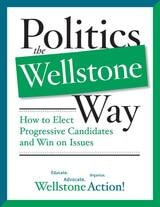
Politics the Wellstone Way
How to Elect Progressive Candidates and Win on IssuesWellstone Action Wellstone Action Wellstone Action
University of Minnesota Press, 2005
Wellstone Action is a nonprofit organization dedicated to continuing Paul and Sheila Wellstone’s fight for progressive change and economic justice by teaching effective political action skills to people across the country. Politics the Wellstone Way is a workshop in book form, providing the detailed framework needed to jump-start a new generation of activists plus plenty of helpful tools for old pros, including articulating a strong message, base building, field organizing, budgeting, fundraising, scheduling, getting out the vote, and grassroots advocacy and lobbying, illustrated by practical and inspirational examples.
From the school board all the way to the White House, Politics the Wellstone Way instructs people on becoming better organizers, candidates, campaign workers, and citizen activists, empowering them to make their voices heard.
Wellstone Action was established by the Wellstones’ two surviving sons, David and Mark. The main vehicle for this ongoing work is Camp Wellstone, a weekend training program that Wellstone Action leads regularly in locations across the country. Jeff Blodgett, Paul Wellstone’s longtime campaign manager, is the executive director of Wellstone Action. For more information visit www.wellstoneaction.org.
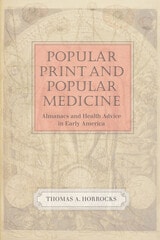
Popular Print and Popular Medicine
Almanacs and Health Advice in Early AmericaThomas A. Horrocks
University of Massachusetts Press, 2008
In this innovative study of the relationship between popular print and popular attitudes toward the body, health, and disease in antebellum America, Thomas A. Horrocks focuses our attention on a publication long neglected by scholars—the almanac.
Approaching his subject as both a historian of the book and a historian of medicine, Horrocks contends that the almanac, the most popular secular publication in America from the late eighteenth century to the first quarter of the nineteenth, both shaped and was shaped by early Americans' beliefs and practices pertaining to health and medicine. Analyzing the astrological, therapeutic, and regimen advice offered in American almanacs over two centuries, and comparing it with similar advice offered in other genres of popular print of the period, Horrocks effectively demonstrates that the almanac was a leading source of health information in America prior to the Civil War. He contends that the almanac was an integral component of a complicated, fragmented, semi-vernacular health literature of the period, and that the genre played a leading role in disseminating astrological health advice as well as shaping contemporary and future perceptions of astrology.
In terms of therapeutic and regimen advice, Horrocks asserts that the almanac performed a complementary role, confirming and reinforcing traditional beliefs and practices. By analyzing the almanac as a cultural artifact that represents a time, a place, and a certain set of assumptions and beliefs, he demonstrates that the genre can provide a lens through which scholars may examine early American attitudes and practices concerning their health in particular and American popular culture in general.
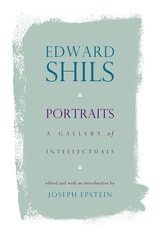
Portraits
A Gallery of IntellectualsEdward Shils
University of Chicago Press, 1997
Highlights include an affectionate treatment of Leo Szilard, the physicist whose involvement with the development of the atomic bomb led him to work ceaselessly to address its social consequences; a discussion of the educational philosophy of Robert Maynard Hutchins, the University of Chicago's fifth and most controversial president; an appreciative account of the Polish emigré Leopold Labedz's well-informed and outspoken resistance to Communism; and an essay about the extraordinary Indian writer Nirad Chaudhuri.
Many of these essays have appeared in The American Scholar, edited by Joseph Epstein, who introduces this volume with his own portrait of Edward Shils.
"Though professionally a sociologist, Edward Shils was a man of wide cosmopolitan culture and experience, greatly concerned with the public problems of his time: in particular with those created by the rise of new and dangerous ideologies, the frightening possibilities of science, and the apparent abrogation of public responsibility by many Western intellectuals."—Hugh Trevor-Roper
The late Edward Shils was a member of the University of Chicago's Committee on Social Thought for forty-five years and a fellow of Peterhouse, Cambridge University. His many books include The Calling of Sociology and The Intellectuals and the Powers, both published by the University of Chicago Press.
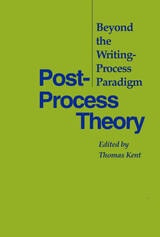
Post-Process Theory
Beyond the Writing-Process ParadigmEdited by Thomas Kent
Southern Illinois University Press, 1999
Breaking with the still-dominant process tradition in composition studies, post-process theory—or at least the different incarnations of post-process theory discussed by the contributors represented in this collection of original essays—endorses the fundamental idea that no codifiable or generalizable writing process exists or could exist. Post-process theorists hold that the practice of writing cannot be captured by a generalized process or a "big" theory.
Most post-process theorists hold three assumptions about the act of writing: writing is public; writing is interpretive; and writing is situated. The first assumption is the commonsensical claim that writing constitutes a public interchange. By "interpretive act," post-process theorists generally mean something as broad as "making sense of" and not exclusively the ability to move from one code to another. To interpret means more than merely to paraphrase; it means to enter into a relationship of understanding with other language users. And finally, because writing is a public act that requires interpretive interaction with others, writers always write from some position or some place. Writers are never nowhere; they are "situated."
Leading theorists and widely published scholars in the field, contributors are Nancy Blyler, John Clifford, Barbara Couture, Nancy C. DeJoy, Sidney I. Dobrin, Elizabeth Ervin, Helen Ewald, David Foster, Debra Journet, Thomas Kent, Gary A. Olson, Joseph Petraglia, George Pullman, David Russell, and John Schilb.
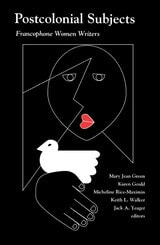
Postcolonial Subjects
Francophone Women WritersMary Green
University of Minnesota Press, 1996
Explores French-language writing by women outside France.
This groundbreaking volume highlights the work of contemporary women writing in French whose cultural links, ethnic identities, and historical roots lie outside France. The writings of these women emanate from the cultures of Africa and the Indian Ocean, the Middle East, the Caribbean, Southeast Asia, and Quebec and other French-speaking regions of Canada.
By writing in French, the writers discussed in Postcolonial Subjects both acknowledge and write against the cultural heritage of France. In doing so, they participate in the subversion of European literary traditions and take part in various forms of cultural and linguistic blending, generating new artistic currents. Each of these essays articulates contemporary debates about the politics and cultural effects of sexism, homophobia, racism, and essentialism, as well as pointing out connections and points of resistance among such diverse strains as feminism, nationalism, and ethnicity. Contributors: Eloise A. Brière, U of Albany; Miriam Cooke, Duke U; Irène Assiba d’Almeida, U of Arizona; Joan Dayan, U of Arizona; John D. Erickson, U of Kentucky; Françoise Lionnet, Northwestern U; Christiane Makward, Pennsylvania State U; Kitzie McKinney, Bentley College; Christopher L. Miller, Yale U; Mary-Kay Miller, Vanderbilt U; Jane Moss, Colby College; Elisabeth Mudimbe-Boyi, Stanford U; Lori Saint-Martin, U du Québec à Montréal; Ronnie Scharfman, Purchase College, SUNY.Postmodern Sophistications
Philosophy, Architecture, and TraditionDavid Kolb
University of Chicago Press, 1990
Poststructuralism and Critical Theory's Second Generation
Edited by Alan D. Schrift
University of Chicago Press, 2010
From Kant to Kierkegaard, from Hegel to Heidegger, continental philosophers have indelibly shaped the trajectory of Western thought since the eighteenth century. Although much has been written about these monumental thinkers, students and scholars lack a definitive guide to the entire scope of the continental tradition. The most comprehensive reference work to date, this eight-volume History of Continental Philosophy will both encapsulate the subject and reorient our understanding of it. Beginning with an overview of Kant’s philosophy and its initial reception, the History traces the evolution of continental philosophy through major figures as well as movements such as existentialism, phenomenology, hermeneutics, and poststructuralism. The final volume outlines the current state of the field, bringing the work of both historical and modern thinkers to bear on such contemporary topics as feminism, globalization, and the environment. Throughout, the volumes examine important philosophical figures and developments in their historical, political, and cultural contexts.
The first reference of its kind, A History of Continental Philosophy has been written and edited by internationally recognized experts with a commitment to explaining complex thinkers, texts, and movements in rigorous yet jargon-free essays suitable for both undergraduates and seasoned specialists. These volumes also elucidate ongoing debates about the nature of continental and analytic philosophy, surveying the distinctive, sometimes overlapping characteristics and approaches of each tradition. Featuring helpful overviews of major topics and plotting road maps to their underlying contexts, A History of Continental Philosophy is destined to be the resource of first and last resort for students and scholars alike.
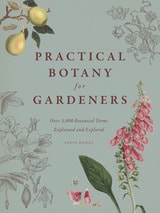
Practical Botany for Gardeners
Over 3,000 Botanical Terms Explained and ExploredGeoff Hodge
University of Chicago Press, 2013
Practical Botany for Gardeners provides an elegant and accessible introduction to the world of botany. It presents the essentials that every gardener needs to know, connecting explanations of scientific facts with useful gardening tips. Flip to the roots section and you’ll not only learn how different types of roots support a plant but also find that adding fungi to soil aids growth. The pruning section both defines “lateral buds” and explains how far back on a shoot to cut in order to propagate them.
The book breaks down key areas and terminology with easy-to-navigate chapters arranged by theme, such as plant types, plant parts, inner workings, and external factors. “Great Botanists” and “Botany in Action” boxes delve deeper into the fascinating byways of plant science. This multifaceted book also includes two hundred botanical illustrations and basic diagrams that hearken to the classic roots of botany.
Part handbook, part reference, Practical Botany for Gardeners is a beautifully captivating read. It’s a must for garden lovers and backyard botanists who want to grow and nurture their own plant knowledge.
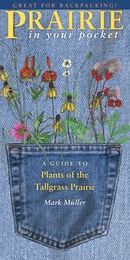
Prairie in Your Pocket
A Guide to Plants of the Tallgrass PrairieMark Muller
University of Iowa Press, 2000
Presentation of Self in Academic Support Genres
Job Application StatementsMohammed Albakry & Clint Bryan
University of Michigan Press, 2025
This theoretically grounded but practice-oriented book will be a valuable guide for recent graduates and newly minted PhD holders about to start their careers in higher education and beyond. Readers will gain awareness of job application expectations and best practices, and job seekers interested in pursuing careers beyond the classroom will also learn how to leverage their skills and qualifications for industry jobs. The book will be a great resource in advanced courses on genre-based writing instruction, English for Academic Purposes, and professional communication. In addition, it can be used in graduate professionalization courses, professional seminars, faculty development workshops, or by individuals working independently.
Printed Writings by George W. Russell
A BibliographyGeorge W. Russell; Compiled by Alan Denson
Northwestern University Press, 2019

Prisma’s English-Swedish Dictionary
University of Minnesota Press, 1997
Newly revised single-volume edition!
Prisma's Abridged English-Swedish and Swedish-English Dictionary contains more than 85,000 of the most commonly used English and Swedish words and phrases. This long-awaited revision combines Prisma's best selling dictionaries of Swedish to English and English to Swedish in an easy-to-handle, abridged, single-volume edition.
Notes for the use of the dictionary are provided in both English and Swedish. It includes phonetic transcriptions of Swedish entries as well as codes for the inflection of Swedish nouns, adjectives, and verbs. This text is the standard dictionary for English and Swedish, the best selling dictionary of its kind in the world.
Fully revised and updated, this durable and compact dictionary is ideal for people who in the course of their studies, work, or travel need a concise dictionary of English and Swedish. The single-volume abridged dictionary will be an important addition to every bookstore's foreign language section.
Project Management for Researchers
A Practical, Stress-Free Guide to Getting OrganizedShiri Noy
University of Michigan Press, 2024
Project Management for Researchers tackles the how, what, and why of project management. It offers step-by-step guidance on choosing tools and developing a personalized system that will help the reader manage and organize their research so that steps and decisions are documented for accountability and reproducibility. Readers will find worksheets they can adapt to their own needs, priorities, and research as well as practical tips on issues ranging from emails to scheduling. Suitable for work across methods, experience levels, and disciplines and adaptable for those working alone, with others, or as team managers, this book will guide readers between various research stages–from planning, to execution, to adjustment of research projects big and small.
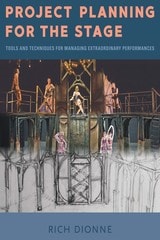
Project Planning for the Stage
Tools and Techniques for Managing Extraordinary PerformancesRich Dionne
Southern Illinois University Press, 2018
Project Planning for the Stage is organized into four sections corresponding to the life cycle of a theatre production: defining the goals and scope of the production and assembling the crew; planning, estimating, and scheduling; executing and managing; and closing and strike. Each section focuses on relevant concepts and skills and outlines the application of effective project-planning procedures and techniques—including critical path analysis and Gantt charts.
This book will be a valuable addition to the libraries of technical managers in live entertainment. Technical directors, costume shop managers, master electricians, properties masters, and video supervisors—anyone managing even part of a production—need to understand project-planning concepts such as the boundaries of authority and responsibility, parametric and bottom-up estimates, and precedence diagrams. The incredibly useful and powerful tools outlined in this book allow any technical manager to deliver the best possible outcome for a production.

Propaganda and Promotional Activities
An Annotated BibliographyHarold Lasswell
University of Minnesota Press, 1935
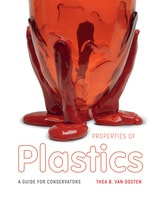
Properties of Plastics
A Guide for ConservatorsThea B. van Oosten
J. Paul Getty Trust, The, 2022
Almost every museum in the world is confronted with plastics in their collections. Research initiatives and knowledge concerning the conservation of heritage objects made of plastics have proliferated over the last twenty-five years, necessitating this up-to-date, comprehensive resource. Intended as a highly practical guide for the conservation community, this authoritative book offers information essential to understanding plastics, polymers, and rubber/elastomers and their behaviors in the cultural heritage context. Numerous graphs, diagrams, and illustrations allow readers to compare the mechanical, physical, thermal, and optical properties of these substances during conservation. Aimed at the hands-on museum practitioner, this book will assist professionals in choosing the appropriate methods and materials for preserving and treating plastic objects.
Complementing the main chapters, fifty-six illustrated “fact sheets” summarize, at a glance, the properties of those plastics most commonly found in museum collections. Six informative case studies present real-world examples of current conservation approaches to works of art and design made of plastics and rubber/elastomers. Under the expert authorship of Thea B. van Oosten, conservation scientist, educator, and internationally regarded authority on the behavior and properties of plastics, this instructive volume is destined to become an invaluable resource for the field.
Provenance Research for Mediterranean Antiquities
Methods and ResourcesJudith Barr
J. Paul Getty Trust, The, 2026
The first of its kind, this book is an accessible, comprehensive primer of methods and resources for researching the provenance of Mediterranean (Greek, Roman, and Etruscan) antiquities. In addition to outlining effective strategies for documentation and investigation, the volume features an annotated guide to key archives, databases, and twentieth-century dealers to facilitate a broad spectrum of research endeavors. Building upon a decade-long review of the Getty Museum’s antiquities collection, it draws together instructive case studies, legal perspectives, and practical experience to provide an efficient reference for museum professionals, scholars, collectors, and students. The authors aim to emphasize the need for diligent provenance research and to shorten the learning curve for such projects.
The free online edition of this open-access publication is available at getty.edu/publications/provenance-research and includes zoomable illustrations. Also available are free PDF and EPUB downloads of the book.

Psychiatry and Behavioral Science
An Introduction and Study Guide for Medical Studentsedited by David A. Baron and Ellen H. Sholevar
Temple University Press, 2008