Results by title
192 books match the query 'Regional & Cultural' and 5 start with p
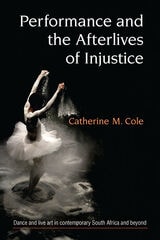
Performance and the Afterlives of Injustice
Catherine M. Cole
University of Michigan Press, 2020
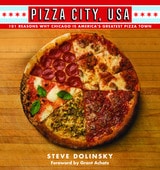
Pizza City, USA
101 Reasons Why Chicago Is America's Greatest Pizza TownSteve Dolinsky, Foreword by Grant Achatz
Northwestern University Press, 2018
There are few things that Chicagoans feel more passionately about than pizza. Most have strong opinions about whether thin crust or deep-dish takes the crown, which ingredients are essential, and who makes the best pie in town.
And in Chicago, there are as many destinations for pizza as there are individual preferences. Each of the city's seventy-seven neighborhoods is home to numerous go-to spots, featuring many styles and specialties. With so many pizzerias, it would seem impossible to determine the best of the best.
Enter renowned Chicago-based food journalist Steve Dolinsky! In Pizza City, USA: 101 Reasons Why Chicago Is America's Greatest Pizza Town, Dolinsky embarks on a pizza quest, methodically testing more than a hundred different pizzas in Chicagoland. Zestfully written and thoroughly researched, Pizza City, USA is a hunger–inducing testament to Dolinsky's passion for great, unpretentious food.
This user-friendly guide is smartly organized by location, and by the varieties served by the city's proud pizzaioli–including thin, artisan, Neapolitan, deep-dish and pan, stuffed, Sicilian, Roman, and Detroit-style, as well as by-the-slice. Pizza City also includes Dolinsky's "Top 5 Pizzas" in several categories, a glossary of Chicago pizza terms, and maps and photos to steer devoted foodies and newcomers alike.
Pot Roast, Politics, and Ants in the Pantry
Missouri's Cookbook HeritageCarol Fisher & John Fisher
University of Missouri Press, 2008
When is a cookbook more than just a cookbook? When it’s a gateway to our culinary heritage. For well over a hundred years, Missouri’s cookbooks have helped readers serve up tasty dishes to the state’s tables, but these publications also document the evolution of our kitchens and households.
Pot Roast,Politics, and Ants in the Pantry, a treasure trove of anecdotes and nuggets of historical information about cookery in the Show-Me State, draws from more than 150 publications to reveal Missouri’s cookbook heritage and to deliver a generous sampling of recipes. Carol Fisher and John Fisher look back to manuscript cookbooks from 1821 St. Louis, then progress through the years and around Missouri before arriving at today’s online recipes. Along the way, they dish out servings of kitchen medicine, household hints, and cookbook literature gleaned from the state’s cache of culinary gems.
From handwritten family recipe collections and mimeographed publications to glossy color editions, the texts the Fishers have obtained from libraries and historical societies as well as their own extensive cookbook collection include such curiosities as the Julia Clark Household Memoranda Book from the William Clark papers, an 1880 production by the Ladies of St. Louis called My Mother’s Cookbook, Mary Foote Henderson’s Practical Cooking and Dinner Giving, and Albert E. Brumley’s All-Day Singin’ and Dinner on the Ground. They tell how various ethnic communities raised money by creating cookbooks, how the state’s Beef Council and Pork Association put recipes on the Internet, and how restaurants like the Blue Owl in Kimmswick and Stephenson’s Apple Farm Restaurant near Kansas City enhanced their reputations with their own cookbooks. Festival cookbooks, company cookbooks, even cookbooks tied to world events—they’re all here in one delightful book.
In this vastly entertaining review, readers will learn where to find recipes for dandelion wine, mock turtle soup (requiring a large calf’s head split open by the butcher), and vinegar pie—as well as the curative properties of potato water, tips for raising chickens in the basement, and even “how to cook a husband.” An extensive bibliography includes information to help readers track down the books discussed and also those on their own wish lists.
Pot Roast, Politics, and Ants in the Pantry: Missouri’s Cookbook Heritage shows how, instead of being just collections of recipes, cookbooks provide history lessons, document changing food ways, and demonstrate the cultural diversity of the state. From Julia Clark’s simple frontier recipes for puddings and preserves to Irma Rombauer’s encyclopedic Joy of Cooking—originally self-published in Missouri—Carol Fisher and John Fisher have laid out a smorgasbord of reading pleasure for cookbook collectors, nostalgia buffs, and gourmands alike.
Prairie Cooks
Glorified Rice Three-Day BunsCarrie Young
University of Iowa Press, 1993
Growing up in a Norwegian American community imbued with the customs and foods of the Old Country, Carrie Young recalls how her mother and her neighbors skillfully blended Scandinavian with what they always called the American style of cooking. Young recounts how her mother, Carrine Gafkjen—after homesteading as a single woman in 1904—cooked for a large threshing crew during harvest season. Living and cooking around the clock in a cook car the size of a Pullman kitchen, she delighted the crew with her soda pancakes and her sour cream doughnuts, her fattigman (Poor Man's Cookies) and her fabulous North Dakota Lemon Meringue Pie.
During holidays lutefisk and lefse reigned supreme, but when the Glorified Rice fad swept the country in the thirties women broke new ground with inventive variations. And the short-lived but intensely experienced Three-Day Bun Era (when the buns became so ethereal they were in danger of floating off the plate) kept the Ladies Aid luncheons competitive. Whatever the times, in good years or bad, there was always the solace ofKaffe Tid, the forenoon and afternoon coffee time, when the table was set with smor og brod (butter and bread) and something sweet, like a Whipped Cream Cake or Devil's Food Cake with Rhubarb Sauce.
This book will appeal to those who feel nostalgia for a parent's or grandparent's cooking, to those who have a longing for the heartier fare of times past. The author's daughter, Felicia Young, who has "cooked Scandinavian since she was old enough to hold a lefse stick," has compiled and tested the seventy-two recipes accompanying this joyful memoir.
Putting Down Roots
Gardening Insights from Wisconsin’s Early SettlersMarcia C. Carmichael
Wisconsin Historical Society Press, 2013