Results by title
89 books match the query 'Religion & Science' and 3 start with p
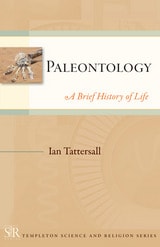
Paleontology
A Brief History of LifeIan Tattersall
Templeton Press, 2010
"Endlessly absorbing and informative. It would be hard to imagine a better introduction to this most important and fascinating field.”—Bill Bryson, author of A Short History of Nearly Everything
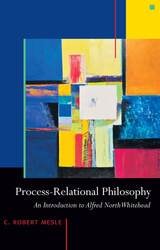
Process-Relational Philosophy
An Introduction to Alfred North WhiteheadC. Robert Mesle
Templeton Press, 2008
Process thought is the foundation for studies in many areas of contemporary philosophy, theology, political theory, educational theory, and the religion-science dialogue. It is derived from Alfred North Whitehead's philosophy, known as process theology, which lays a groundwork for integrating evolutionary biology, physics, philosophy of mind, theology, environmental ethics, religious pluralism, education, economics, and more.
In Process-Relational Philosophy, C. Robert Mesle breaks down Whitehead's complex writings, providing a simple but accurate introduction to the vision that underlies much of contemporary process philosophy and theology. In doing so, he points to a "way beyond both reductive materialism and the traps of Cartesian dualism by showing reality as a relational process in which minds arise from bodies, in which freedom and creativity are foundational to process, in which the relational power of persuasion is more basic than the unilateral power of coercion."
Because process-relational philosophy addresses the deep intuitions of a relational world basic to environmental and global thinking, it is being incorporated into undergraduate and graduate courses in philosophy, educational theory and practice, environmental ethics, and science and values, among others. Process-Relational Philosophy: A Basic Introduction makes Whitehead's creative vision accessible to all students and general readers.
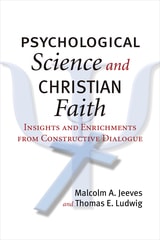
Psychological Science and Christian Faith
Insights and Enrichments from Constructive DialogueMalcolm A. Jeeves
Templeton Press, 2018
Because Christianity and psychology deal with different levels of truth and speak vastly different languages, efforts to unify them often create more problems than they solve. What is needed is a better way to think about the relationship—an approach that does justice to the emerging insights from psychological science and biblical scholarship and that can enrich our understanding of both. In this volume, two accomplished psychologists show how this complementary dialogue can unfold, giving us a broader, deeper understanding of ourselves, our relationships, and our place in the cosmos.
.