Results by title
598 books match the query 'Religious' and 27 start with p
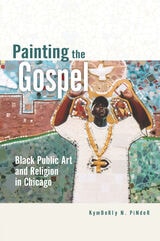
Painting the Gospel
Black Public Art and Religion in ChicagoKymberly Pinder
University of Illinois Press, 2016
Painting the Gospel includes maps and tour itineraries that allow readers to make conceptual, historical, and geographical connections among the works.
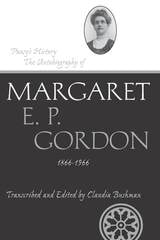
Pansy's History
The Autobiography of Margaret E. P. Gordon, 1866-1966Claudia L. Bushman
Utah State University Press, 2011
Margaret "Pansy" Gordon's life covered a remarkable span of years and territory. She lived one century, and the years took her from England to residences in British Columbia, Salt Lake City, and an Ojibway village on Georgian Bay; back to Utah and then Canada to homes at the shore of Bear Lake, on an Alberta farm, and in a prairie town; and to Los Angeles for the last decades of her life. She had gone to British Columbia as the daughter of an Anglican missionary to the Tsimshian Indians. She lived in Los Angeles as a Mormon missionary assigned to work as a genealogist. Her personal journey through repeated frontier adventures, religious service, and economic challenges is as worth noting as where she went, but it would be far less engaging if she did not write about it so well. Her memory for detail and her felicity in putting it to paper will reward those who delve into her "Family History," as she titled her memoir. Claudia L. Bushman, descendant of Pansy Gordon, author of numerous books, taught American studies at Columbia University for many years and taught Mormon studies at Claremont Graduate University from 2008 to 2011. She has included letters and other documents that complement this memoir.
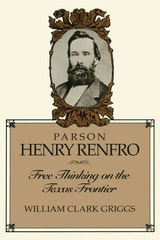
Parson Henry Renfro
Free Thinking on the Texas FrontierBy William C. Griggs
University of Texas Press, 1994
The years following the Texas Revolution held even more turbulent events as diverse droves of pioneers crossed the Sabine and Red Rivers to start new lives in Texas. Early Texas society contended with religious issues, family life in a rugged environment, and the Civil War. This cultural history was clearly reflected in the life of frontier preacher Henry C. Renfro.
Migrating to Texas in 1851, Renfro enrolled in the fledgling Baylor University and became a Baptist preacher. Eventually disillusioned with Baptist orthodoxy, Renfro was disenfranchised on charges of infidelity as he embraced the ideals of the Free Thought Movement, inspired by the writings of men such as Thomas Paine, Spinoza, and Robert Ingersoll.
Renfro's Civil War experience was no less unusual. Serving as both soldier and chaplain, Renfro left a valuable legacy of insight into the conflict, captured in a wealth of correspondence that is in itself significant.
Drawing on a vast body of letters, speeches, sermons, and oral histories that had never before been available, this chronological narrative of "The Parson's" life describes significant changes in Texas from 1850 to 1900, especially the volatile formation and growth of Baptist churches in North Central Texas. William Griggs' study yields numerous new details about the Free Thought Movement and depicts public reaction to sectarian leaders in nineteenth-century Texas.
The author also describes the developing Central Texas region known as the Cross Timbers, including the personal dynamics between a frontier family and its patriarch and encompassing such issues as property conflicts, divorce, and family reconciliation. This work unlocks an enlightening, engaging scene from Texas history.
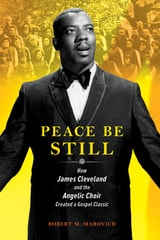
Peace Be Still
How James Cleveland and the Angelic Choir Created a Gospel ClassicRobert M. Marovich
University of Illinois Press, 2021
In September of 1963, Reverend Lawrence Roberts and the Angelic Choir of the First Baptist Church of Nutley, New Jersey, teamed with rising gospel star James Cleveland to record Peace Be Still. The LP and its haunting title track became a phenomenon. Robert M. Marovich draws on extensive oral interviews and archival research to chart the history of Peace Be Still and the people who created it. Emerging from an established gospel music milieu, Peace Be Still spent several years as the bestselling gospel album of all time. As such, it forged a template for live recordings of services that transformed the gospel music business and Black worship. Marovich also delves into the music's connection to fans and churchgoers, its enormous popularity then and now, and the influence of the Civil Rights Movement on the music's message and reception.
The first in-depth history of a foundational recording, Peace Be Still shines a spotlight on the people and times that created a gospel music touchstone.
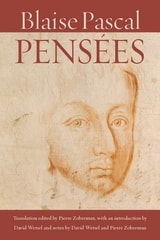
Pensees
Blaise Pascal
Catholic University of America Press, 2021
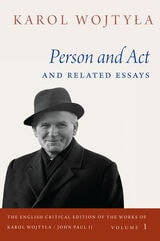
Person and Act and Related Essays
Karol Wojtyla
Catholic University of America Press, 2021
Philodemus, On Death
W. Benjamin Henry
SBL Press, 2009
Philodemus, On Property Management
Voula Tsouna
SBL Press, 2013

Phyla of Joy
Karen An-hwei Lee
Tupelo Press, 2012
There’s an undeniable audacity in a poet using the word “joy” in our beleaguered world. In her new book, Karen An-hwei Lee combines scientific precision and an appetite for far-flung vocabularies with a fascination for the sources of rapturous emotion.
In poems that roam from the intimacy of prayer to the art of brewing tea, from bamboo-related famine to quasars, the globe’s minor seas, and the nuptial flight of ants, Phyla of Joy reaches toward ecstasy.
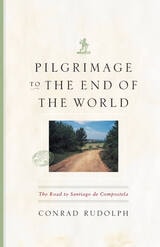
Pilgrimage to the End of the World
The Road to Santiago de CompostelaConrad Rudolph
University of Chicago Press, 2004
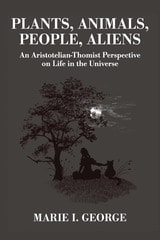
Plants, Animals, People, Aliens
An Aristotelian-Thomist Perspective on Life in the UniverseMarie I. George
Catholic University of America Press, 2026
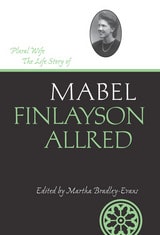
Plural Wife
The Life Story of Mabel Finlayson AllredMabel Finlayson Allred, author, and Martha Sonntag Bradley, editor
Utah State University Press, 2012
Mabel Finlayson Allred was a wife of Rulon Allred, leader of the Apostolic United Brethren, one of the major groups of fundamentalist Mormons who, since about the 1930s, have practiced plural marriage as separatists from the mainstream Latter-day Saints Church.
Mabel’s autobiography maintains a mood of everyday normalcy strikingly in contrast with the stress of the ostracized life she was living. Her cheerful tone, expressive of her wish to live simply and gracefully in this world, is tempered by more somber descriptions of her personal struggle with clinical depression, of Rulon Allred’s inner struggles, of tensions with the law and with Allred’s fundamentalist colleagues, and ultimately by her forthright account of his assassination.
Emerging from this unique narrative is the portrait of a woman buoyed by faith in both her religion and her husband, a window into the interior life of a woman seeking a resilient simplicity in an uncommonly challenging life.
Plural Wife, conntextualized by Martha Bradley’s introduction, gives us insight into Mabel’s experience of history during an important period of the 20th century and advances our understanding of life ways of 20th century polygamy and the growth of the fundamentalist movement.
Poems, Volume 1
Catholic University of America Press, 1962
Poems, Volume 2
Catholic University of America Press, 1965
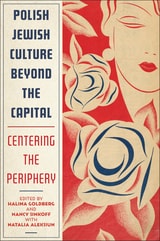
Polish Jewish Culture Beyond the Capital
Centering the PeripheryHalina Goldberg
Rutgers University Press, 2023
PIASA's 2024 Anna M. Cienciala Award for Best-Edited Multi-Authored Scholarly Volume
Polish Jewish Culture beyond the Capital: Centering the Periphery is a path-breaking exploration of the diversity and vitality of urban Jewish identity and culture in Polish lands from the second half of the nineteenth century to the outbreak of the Second World War (1899–1939). In this multidisciplinary essay collection, a cohort of international scholars provides an integrated history of the arts and humanities in Poland by illuminating the complex roles Jews in urban centers other than Warsaw played in the creation of Polish and Polish Jewish culture.
Each essay presents readers with the extraordinary production and consumption of culture by Polish Jews in literature, film, cabaret, theater, the visual arts, architecture, and music. They show how this process was defined by a reciprocal cultural exchange that flourished between cities at the periphery—from Lwów and Wilno to Kraków and Łódź—and international centers like Warsaw, thereby illuminating the place of Polish Jews within urban European cultures.
Companion website (https://polishjewishmusic.iu.edu)
Politics and Apocalypse
Robert Hamerton-Kelly
Michigan State University Press, 2007
Apocalypse. To most, the word signifies destruction, death, the end of the world, but the literal definition is "revelation" or "unveiling," the basis from which renowned theologian René Girard builds his own view of Biblical apocalypse. Properly understood, Girard explains, Biblical apocalypse has nothing to do with a wrathful or vengeful God punishing his unworthy children, and everything to do with a foretelling of what future humans are making for themselves now that they have devised the instruments of global self-destruction. In this volume, some of the major thinkers about the interpretation of politics and religion— including Eric Voegelin, Leo Strauss, and Carl Schmitt— are scrutinized by some of today's most qualified scholars, all of whom are thoroughly versed in Girard’s groundbreaking work.
Including an important new essay by Girard, this volume enters into a philosophical debate that challenges the bona fides of philosophy itself by examining three supremely important philosopher of the twentieth century. It asks how we might think about politics now that the attacks of 9/11 have shifted our intellectual foundations and what the outbreak of rabid religion might signify for international politics.
Politics and the Order of Love
An Augustinian Ethic of Democratic CitizenshipEric Gregory
University of Chicago Press, 2008
Gregory examines a broad range of Augustine’s texts and their reception in different disciplines and identifies two classical themes which have analogues in secular political theory: love—and related notions of care, solidarity, and sympathy—and sin—as well as related notions of cruelty, evil, and narrow self-interest. From an Augustinian point of view, Gregory argues, love and sin constrain each other in ways that yield a distinctive vision of the limits and possibilities of politics.
In providing a constructive argument for Christian participation in liberal democratic societies, Gregory advances efforts to revive a political theology in which love’s relation to justice is prominent. Politics and the Order of Love will provoke new conversations for those interested in Christian ethics, moral psychology, and the role of religion in a liberal society.
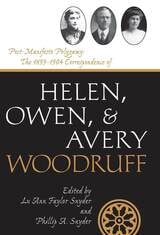
Post-Manifesto Polygamy
The 1899 to 1904 Correspondence of Helen, Owen and Avery WoodruffLu Ann Faylor Snyder and Phillip A. Snyder
Utah State University Press, 2009
These letters among two women and their husband offer a rare look into the personal dynamics of an LDS polygamous relationship. Abraham “Owen” Woodruff was a young Mormon apostle, the son of President Wilford Woodruff, remembered for the Woodruff Manifesto, which called for the divinely inspired termination of plural marriage. It eased a systematic federal judicial assault on Mormons and made Utah statehood possible. It did not end polygamy in the church. Some leaders continued to encourage and perform such marriages. Owen Woodruff himself contracted a secretive, second marriage to Avery Clark. Pressure on the LDS church revived with hearings regarding Reed Smoot’s seat in the U. S. Senate. After church president Joseph F. Smith issued the so-called Second Manifesto in 1904, polygamy and its more prominent advocates were mostly expunged from mainstream Mormonism. Owen Woodruff was not excommunicated, as a couple of his apostolic colleagues were. He and his first wife, Helen May Winters, had died suddenly that same year after contracting smallpox in Mexico. Owen Woodruff had often been “on the underground,” moving frequently, traveling under secret identities, and using code names in his letters to his wives, while still carrying out his administrative duties, which, in particular, involved supervision of the nascent Mormon colonies in the Big Horn Basin of Wyoming.
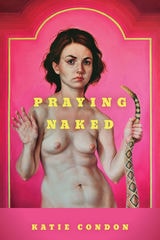
Praying Naked
Katie Condon
The Ohio State University Press, 2020
Pre-Modern Philosophy Defended
Josef Kleutgen
St. Augustine's Press, 2014
“Pre-modern philosophy” means the line of reflection that started with Plato andvAristotle, passed through Augustine and Boethius, and reached its acme in Aquinas, Scotus, and Suarez. The whole line was harshly judged by Descartes, then mocked by the empiricsts of the 18th Century. Why, then, did Pope Leo XII make a determined effort to revive it? And, more importantly, why was the revival a stunning success by the middle of the 20th Century?
The answers to both questions are found in a famous German book, Philosophie der Vorzeit by Josef Kleutgen, now available for the first time in English. Pre-ModernPhilosophy Defended shaped and strengthened Pope Leo’s resolve. It showed how inaccurate the harsh judgments had been and how sadly inferior the modern replacements from Descartes to Hegel had turned out to be in many respects.
Not in all. Kleutgen was no knee-jerk reactionary. He made no bones about the obsolete status of pre-Newtonian physics and cosmology. Rather, he focused on the central boast of “modern” thought, namely, that it had turned at least to the “subject” and had provided a long-needed thing called a “critique of knowledge.”
This book is must reading for intellectual historians and for philosophers working today in epistemology. But most of all, it is essential reading for laity and clergy concerned about revivals of modernism in the church. What was modernism, after all, but an attempt to make the Church revise her theology in the “light” of Kant or Hegel? This is why every Modernist knew Kleutgen’s name and hated this book.
Here is the first English translation (from the German) of the master work of Josef Kleutgen, the nineteenth century social philosopher whose thought lies at, or near, the heart of Catholic Social Thought. Kleutgen is widely and rightly seen as the shadow author of the social encyclicals of Leo XII. Leo’s Rerum Novarum remains the origin and constant reference point of all Catholic Social Teaching. And Popes since have dated their own social encyclicals from Rerum Novarum – hence, Quadragesimo anno and Centesimus annus. —Gerard V. Bradley, University of Notre Dame
Pre-Modern Philosophy Defended is must reading for intellectual historians and for philosophers working today in epistemology. And it is essential reading for laity and clergy concerned about revivals of modernism in the church. What was modernism, after all, but an attempt to make the Church revise her theology in the ‘light’ of Kant or Hegel? This is why every Modernist knew Kleutgen's name and hated Philosophie der Vorzeit (Pre-Modern Philosophy Defended).
Preacher Woman Sings the Blues
The Autobiographies of Nineteenth-Century African American EvangelistsRichard J. Douglass-Chin
University of Missouri Press, 2001
In this thorough and detailed study, Richard Douglass-Chin examines collectively for the first time the autobiographies of nineteenth-century African American women evangelists, along with their eighteenth-century forerunner "Belinda." By studying how black women evangelists employed dialogue created by socioeconomic conditions, the author shows how their writings form the groundwork for a contemporary womanist literature rooted in spirituality. Arguing that the writings have their own unique figurations and forms that develop and alter over time, Douglass-Chin claims that the changing black female spiritual narrative traces an important line in the ongoing traditions of black women's writing, a line that has only now begun to be reclaimed and validated. Through references to the writings of black male autobiographers Frederick Douglass, Richard Allen, Daniel Payne, and John Jea as well as the works of white female autobiographers Harriet Livermore and Phoebe Palmer, Douglass-Chin is able to make valuable comparisons.
Preacher Woman Sings the Blues begins with the study of black evangelists Belinda, Jarena Lee, and Zilpha Elaw, continuing with Rebecca Cox Jackson, Sojourner Truth, Julia Foote, Amanda Smith, Elizabeth, and Virginia Broughton. The author's discussion of Zora Neale Hurston focuses on how Hurston operates as a connection between early black women evangelist writers and black women writing in America today. He ends with the works of Alice Walker, Toni Morrison, and Toni Cade Bambara.
By examining the early traditions prefiguring contemporary African American women's texts and the impact that race and gender have on them, Douglass-Chin shows how the nineteenth-century black women's works are still of utmost importance to many African American women writers today. Preacher Woman Sings the Blues makes a valuable contribution to literary criticism and theoretical analysis and will be welcomed by scholars and students alike.

Prierias
The Life and Works of Silvestro Mazzolini Da Prierio (1456–1527)Michael Tavuzzi
Duke University Press, 1997
Tavuzzi shows that, aside from being Luther’s first opponent, Prierias played a key role in significant early-sixteenth-century controversies such as the cases of Reuchlin, Erasmus, and Pomponazzi. Drawing on previously untapped primary sources, Tavuzzi traces Prierias’s early career as preacher, professor, inquisitor, and administrator, and places him in the context of the struggles fought between unreformed and observant friars during the Renaissance. Prierias’s activities as Master of the Sacred Palace, his long-standing and bitter conflict with Cardinal Cajetan, and especially his forceful writings warning against the threat of witches and witchcraft are also described. Focusing closely on Prierias’s clash with Luther, Tavuzzi accounts for its development and illuminates the ecclesiological issues at stake. Prierias reveals the little-known world of the friars on the eve of the Reformation.
Primer of the Obsolete
Diane Glancy
University of Massachusetts Press, 2004
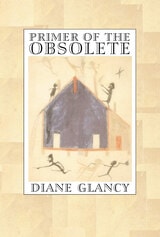
The poems have roots in history, religion, and illiteracy. They are inspired by folk artists who use materials and textures at hand—enamel and cornmeal on plywood, house paint on tar and tin, model airplane paint on corrugated scrap metal. The resulting lyrics walk the boundary between worlds, weaving remnants of the old way of viewing the world with pieces of the new world, such as a clapper that turns lights on and off. The experimental text revisits the gap between past and present. The past is just beneath a newly painted surface. The newly painted surface is not quite dry.
Process-Relational Philosophy
An Introduction to Alfred North WhiteheadC. Robert Mesle
Templeton Press, 2008
Process thought is the foundation for studies in many areas of contemporary philosophy, theology, political theory, educational theory, and the religion-science dialogue. It is derived from Alfred North Whitehead's philosophy, known as process theology, which lays a groundwork for integrating evolutionary biology, physics, philosophy of mind, theology, environmental ethics, religious pluralism, education, economics, and more.
In Process-Relational Philosophy, C. Robert Mesle breaks down Whitehead's complex writings, providing a simple but accurate introduction to the vision that underlies much of contemporary process philosophy and theology. In doing so, he points to a "way beyond both reductive materialism and the traps of Cartesian dualism by showing reality as a relational process in which minds arise from bodies, in which freedom and creativity are foundational to process, in which the relational power of persuasion is more basic than the unilateral power of coercion."
Because process-relational philosophy addresses the deep intuitions of a relational world basic to environmental and global thinking, it is being incorporated into undergraduate and graduate courses in philosophy, educational theory and practice, environmental ethics, and science and values, among others. Process-Relational Philosophy: A Basic Introduction makes Whitehead's creative vision accessible to all students and general readers.
Profaning Paul
Cavan W. Concannon
University of Chicago Press, 2021
The letters of Paul have been used to support and condone a host of evils over the span of more than two millennia: racism, slavery, imperialism, misogyny, and anti-Semitism, to name a few. Despite, or in some cases because of, this history, readers of Paul have felt compelled to reappropriate his letters to fit liberal or radical politics, seeking to set right the evils done in Paul’s name. Starting with the language of excrement, refuse, and waste in Paul’s letters, Profaning Paul looks at how Paul’s “shit” is recycled and reconfigured. It asks why readers, from liberal Christians to academic biblical scholars to political theorists and philosophers, feel compelled to make Paul into a hero, mining his words for wisdom. Following the lead of feminist, queer, and minoritized scholarship, Profaning Paul asks what would happen if we stopped recycling Paul’s writings. By profaning the status of his letters as sacred texts, we might open up new avenues for imagining political figurations to meet our current and coming political, economic, and ecological challenges.
Proslogion
including Gaunilo Objections and Anselm's RepliesSt. Anselm of Canterbury
St. Augustine's Press, 2013
Written for his brother Benedictine monks around 1077, Anselm’s Proslogion is perhaps the best-known partially-read book of the Middle Ages. Many readers are familiar only with Anselm’s well-known argument for God’s existence in Chapters 2–4, which is often called the “ontological argument,” a misleading appellation coined centuries later by Immanuel Kant. In this argument Anselm begins with the thought of “something than which nothing greater is able to be thought,” and subsequently he leads the reader to see that such a reality necessarily exists and cannot be thought not to be. This argument – which is, to be sure, crucial to the work constitutes – but a small portion of the whole. Preceding it is a profound but oft-overlooked opening chapter in which Anselm contemplates his all-too-human condition and disposes the reader to receive aptly his argument for God’s existence in the next three chapters. And following this argument are 20 chapters in which Anselm artfully unfolds the depth and breadth of God’s true existence as that than which nothing greater is able to be thought, showing God to be (among other things) able-to-sense, pity-hearted, just, good, and uncircumscribed. Indeed, if the reader is willing to give himself over to the work as whole, he will be compelled, under Anselm’s deft guidance, to “endeavor to straighten up his mind toward contemplating God,” which is how Anselm describes his own role in the work in his prefatory remarks.
This edition provides a faithful yet readable English rendering of the whole Proslogion, the objections raised to Anselm’s argument by his contemporary Gaunilo, and Anselm’s replies to those objections. (After responding to Gaunilo, Anselm himself requested that these objections and replies be included in subsequent editions of the Proslogion.) This edition also includes an introduction that contextualizes the Proslogion within the monastic, pre-Scholastic age in which it first made its appearance. In addition, by means of notes and commentary, this edition articulates how to contextualize Anselm’s famous argument in the Proslogion as a whole and in light of his replies to Gaunilo, how to appreciate the artistry whereby Anselm knit the Proslogion together into a coherent and concise unity, and how the work may be taught effectively to interested students. These features set this affordable English edition of the Proslogion apart from those currently available, which too often fail to capture accurately the beauty of Anselm’s prose, which often treat the work through the lens of either later Scholasticism or contemporary analytic philosophy of religion, and which take little note of the craftsmanship whereby Anselm constructed this masterfully integrated work that is remembered too often for too few of its 24 chapters.
Matthew Walz has taught in the interdisciplinary program at Thomas Aquinas College in California, and since 2008 he has been a professor in the Philosophy Department of the University of Dallas.

Psychopolitics
Conversations with Trevor Cribben MerrillJean-Michel Oughourlian
Michigan State University Press, 2012
For thousands of years, political leaders have unified communities by aligning them against common enemies. However, today more than ever, the search for “common” enemies results in anything but unanimity. Scapegoats like Saddam Hussein, for example, led to a stark polarization in the United States. Renowned neuropsychiatrist and psychologist Jean-Michel Oughourlian proposes that the only authentic enemy is the one responsible for both everyday frustrations and global dangers, such as climate change—ourselves. Oughourlian, who pioneered an “interdividual” psychology with René Girard, reveals how all people are bound together in a dynamic, contingent process of imitation, and shows that the same patterns of irrational mimetic desire that bring individuals together and push them apart also explain the behavior of nations.