Results by title
123 books match the query 'Religious life' and 4 start with p
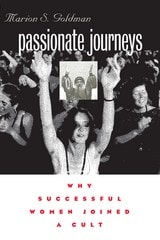
Passionate Journeys
Why Successful Women Joined a CultMarion S. Goldman
University of Michigan Press, 2001
Passionate Journeys explores the fascinating stories behind the Bhagwan Rajneesh phenomenon of the 1970s and 1980s, focusing on women who left families, careers, and identities to join the community of Rajneeshpuram. Rajneesh was a spiritual leader for thousands of young Americans, and in rural Oregon his devotees established a thriving community. Marion S. Goldman's extensive interviews with women who participated at Rajneeshpuram provide a fascinating picture of the cultural and social climate that motivated successful, established women to join such a movement.
Passionate Journeys will appeal to specialists in feminist theory and women's studies, sociology, religious studies, American studies, and the history of the Northwest.
Marion S. Goldman is Professor of Sociology, University of Oregon. She is also the author of Gold Diggers and Silver Miners: Prostitution and Social Life on the Comstock Lode.
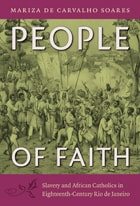
People of Faith
Slavery and African Catholics in Eighteenth-Century Rio de JaneiroMariza de Carvalho Soares
Duke University Press, 2011

Performing Piety
Singers and Actors in Egypt's Islamic RevivalBy Karin van Nieuwkerk
University of Texas Press, 2013
In the 1980s, Egypt witnessed a growing revival of religiosity among large sectors of the population, including artists. Many pious stars retired from art, “repented” from “sinful” activities, and dedicated themselves to worship, preaching, and charity. Their public conversions were influential in spreading piety to the Egyptian upper class during the 1990s, which in turn enabled the development of pious markets for leisure and art, thus facilitating the return of artists as veiled actresses or religiously committed performers.
Revisiting the story she began in “A Trade like Any Other”: Female Singers and Dancers in Egypt, Karin van Nieuwkerk draws on extensive fieldwork among performers to offer a unique history of the religious revival in Egypt through the lens of the performing arts. She highlights the narratives of celebrities who retired in the 1980s and early 1990s, including their spiritual journeys and their influence on the “pietization” of their fans, among whom are the wealthy, relatively secular, strata of Egyptian society. Van Nieuwkerk then turns to the emergence of a polemic public sphere in which secularists and Islamists debated Islam, art, and gender in the 1990s. Finally, she analyzes the Islamist project of “art with a mission” and the development of Islamic aesthetics, questioning whether the outcome has been to Islamize popular art or rather to popularize Islam. The result is an intimate thirty-year history of two spheres that have tremendous importance for Egypt—art production and piety.
Positive Youth Development and Spirituality
From Theory to ResearchRichard M. Lerner
Templeton Press, 2008
<p>Bringing together a never-before-assembled network of biologists, psychologists, and sociologists, <em>Positive Youth Development and Spirituality</em> scientifically examines how spirituality and its cultivation may affect the positive development of adolescents. </p>
<p>Chapters provide groundbreaking new discussions of conceptual, theoretical, definitional, and methodological issues that need to be addressed when exploring the relationships between spirituality and development. Throughout the book, contributors recommend ways in which the research on the spirituality/positive youth development connection may be integral in building the larger field of spiritual development as a legitimate and active domain of developmental science. This volume, which is sure to be seen as a seminal contribution to a field in need of theoretical underpinnings, will be of interest to scholars and scientists in the fields of biology and the social and behavioral sciences.</p>
<p>Contributors include: Mona Abo-Zena, Jeffrey Jensen Arnnett, Peter L. Benson, Marina Umaschi Bers, Aerika Brittian, William Damon, Angela M. DeSilva, Jacquelynne S. Eccles, David Henry Feldman, Simon Gächter, Elena L. Grigorenko, Sonia S. Isaac, Lene Arnett Jensen, Carl N. Johnson, Linda Juang, Pamela Ebstyne King, Richard M. Lerner, Jennifer Menon, Na'ilah Sued Nasir, Guerda Nicolas, Toma´š Paus, Stephen C. Peck, Erin Phelps, Alan P. Poey, Robert W. Roeser, W. George Scarlett, Lonnie R. Sherrod, Gabriel S. Spiewak, Chris Starmer, Moin Syed, Janice L. Templeton, Heather L. Urry, and Richard Wilkinson.</p>