52 books match the query 'Return' and 2 start with p

cover of Palestinian Refugees: The Right of Return

Palestinian Refugees

The Right of Return

Edited by Naseer Aruri

Pluto Press, 2001

With renewed conflict in the Middle East, the prospect of a peaceful resolution looks more unlikely than ever. The Palestinian right of return to their homes has been upheld in international law and through United Nations' resolutions for fifty years. Equally the right of return has been denied by Israel and deferred to a "final status" issue in the Oslo Accords. It is on this right of return that the Palestinians are united. And it is this issue which is so frequently ignored by the international media.

With major contributions from a range of international experts, including Edward W. Said, Noam Chomsky, Ilan Pappe, Alain Gresh and Norman Finkelstein, this volume examines the Palestinians’ right of return. Chapters cover the historical roots of the Palestinian refugee question; the rights of the refugees under international law; the special case of Lebanon; Israeli perceptions of the refugee question; the practical feasibility of the return; the role of the United States and the European Union and the Refugee Question; the value of the refugee property; the principles of compensation; and a programme for an Independent Rights Campaign.
[more]
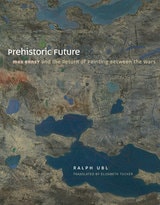
cover of Prehistoric Future: Max Ernst and the Return of Painting between the Wars

Prehistoric Future

Max Ernst and the Return of Painting between the Wars

Ralph Ubl

University of Chicago Press, 2013

One of the most admired artists of the twentieth century, Max Ernst was a proponent of Dada and founder of surrealism, known for his strange, evocative paintings and drawings. In Prehistoric Future, Ralph Ubl approaches Ernst like no one else has, using theories of the unconscious—surrealist automatism, Freudian psychoanalysis, the concept of history as trauma—to examine how Ernst’s construction of collage departs from other modern artists.
 
Ubl shows that while Picasso, Braque, and Man Ray used scissors and glue to create collages, Ernst employed techniques he himself had forged—rubbing and scraping to bring images forth onto a sheet of paper or canvas to simulate how a screen image or memory comes into the mind’s view. In addition, Ernst scoured the past for obsolete scientific illustrations and odd advertisements to illustrate the rapidity with which time passes and to simulate the apprehension generated when rapid flows of knowledge turn living culture into artifact. Ultimately, Ubl reveals, Ernst was interested in the construction and phenomenology of both collective and individual modern history and memory. Shedding new light on Ernst’s working methods and the reasons that his pieces continue to imprint themselves in viewers’ memories, Prehistoric Future is an innovative work of critical writing on a key figure of surrealism.
[more]