Results by title
117 books match the query 'Rural conditions' and 5 start with p

Peasant Cooperation and Capitalist Expansion in Central Peru
Edited by Norman Long and Bryan R. Roberts
University of Texas Press, 1978
This book brings together the research into regional development and social change carried out in highland Peru by a team of British and Latin American social anthropologists and sociologists. The area studied—the Mantaro Valley of central Peru—is one of the most densely populated and economically differentiated of highland zones; it is also notable for its community-based forms of cooperation and its high level of peasant political activity.
The book presents a series of case studies that examine cooperative forms of organization in relation to developments in the regional economy and to changes in national policy. The analysis attempts to avoid interpreting local processes merely as responses to externally initiated change. It stresses instead the need to consider the interplay of local and national forces, because local groups and processes themselves affect the pattern of regional and national development. The case studies cover a range of political and economic topics, from peasant movements to the achievements and shortcomings of government-sponsored agricultural and manufacturing cooperatives. The concluding chapter, by the editors, explores the theoretical implications of these studies.

Persistent Callings
Seasons of Work and Identity on the Oregon CoastJoseph E. Taylor
Oregon State University Press, 2019
The Nestucca Valley is a small watershed, tucked away in one corner of a county in far western Oregon. There are no incorporated towns, and cows outnumber humans. It has long been a place without a written history, yet its past offers many surprising twists on received wisdom about rural economies. In crisp prose and succinct chapters, Persistent Callings carries readers from aboriginal times to the present, illustrating the wisdom of seasonal labor, the complex relationships between work and identity, and the resilience of rural economics across more than a century of almost continual change.
Life in this watershed, known to locals as “South County,” has always been demanding. Farming, fishing, and logging were difficult occupations, but work had deeper meanings. Challenges arrived in many forms, including climate shifts, market crashes, regulatory changes, and industry consolidations. Residents’ ability to innovate was their greatest resource, and their persistence helps us to recognize the callings they pursued.
During the late twentieth and early twenty-first centuries, disruptions came more quickly, and they coincided with infusions of capital that dramatically altered the structure of employment, with devastating results for the valley’s hardest working residents. Unemployment and poverty skyrocketed while health and life expectancy dropped to alarming levels. Moreover, the arrival of retirees and rise of environmental amenities actually exacerbated some ecological problems. Little in this history plays out as expected, and much of it will make readers reconsider how they think about the social, economic, and environmental contours of rural life in the American West.

Pfeiffer Country
The Tenant Farms and Business Activities of Paul Pfeiffer in Clay County, Arkansas, 1902-1954Sherry Laymon
Butler Center for Arkansas Studies, 2009
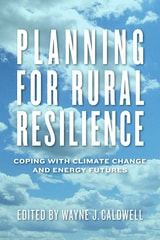
Planning for Rural Resilience
Coping with Climate Change and Energy FuturesWayne J. Caldwell
University of Manitoba Press, 2015
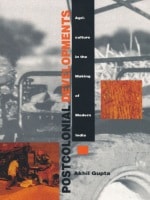
Postcolonial Developments
Agriculture in the Making of Modern IndiaAkhil Gupta
Duke University Press, 1998
Based on fieldwork done in the village of Alipur in rural north India from the early 1980s through the 1990s, Postcolonial Developments examines development itself as a post–World War II sociopolitical ideological formation, critiques related policies, and explores the various uses of the concept of the “indigenous” in several discursive contexts. Gupta begins with an analysis of the connections and conflicts between the world food economy, transnational capital, and technological innovations in wheat production. He then examines narratives of village politics in Alipur to show how certain discourses influenced governmental policies on the green revolution. Drawing links between village life, national trends, and global forces, Gupta concludes with a discussion of the implications of environmentalism as exemplified by the Rio Earth Summit and an examination of how global environmental treaties may detrimentally affect the lives of subaltern peoples.
With a series of subtle observations on rural politics, nationalism, gender, modernization, and difference, this innovative study capitalizes on many different disciplines: anthropology, sociology, comparative politics, cultural geography, ecology, political science, agricultural economics, and history.