Results by title
135 books match the query 'Self-help' and 6 start with p

Panic Diaries
A Genealogy of Panic DisorderJackie Orr
Duke University Press, 2006
Orr, who has experienced panic attacks herself, kept a diary of her participation as a research subject in clinical trials for the Upjohn Company’s anti-anxiety drug Xanax. This “panic diary” grounds her study and suggests the complexity of her desire to track the diffusion and regulation of panic in U.S. society. Orr’s historical research, theoretical reflections, and biographical narrative combine in this remarkable and compelling genealogy, which documents the manipulation of panic by the media, the social sciences and psychiatry, the U.S. military and government, and transnational drug companies.
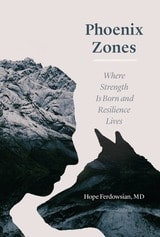
Phoenix Zones
Where Strength Is Born and Resilience LivesHope Ferdowsian, MD
University of Chicago Press, 2018
With Phoenix Zones, Dr. Hope Ferdowsian shows us how. Ferdowsian has spent years traveling the world to work with people and animals who have endured trauma—war, abuse, displacement. Here, she combines compelling stories of survivors with the latest science on resilience to help us understand the link between violence against people and animals and the biological foundations of recovery, peace, and hope. Taking us to the sanctuaries that give the book its title, she reveals how the injured can heal and thrive if we attend to key principles: respect for liberty and sovereignty, a commitment to love and tolerance, the promotion of justice, and a fundamental belief that each individual possesses dignity. Courageous tales show us how: stories of combat veterans and wolves recovering together at a California refuge, Congolese women thriving in one of the most dangerous places on earth, abused chimpanzees finding peace in a Washington sanctuary, and refugees seeking care at Ferdowsian’s own medical clinic.
These are not easy stories. Suffering is real, and recovery is hard. But resilience is real, too, and Phoenix Zones shows how we can foster it. It reveals how both people and animals deserve a chance to live up to their full potential—and how such a view could inspire solutions to some of the greatest challenges of our time.
Police Burnout
Signs, Symptoms and SOLUTIONSGerald Loren Fishkin, PH.D.
Parkhurst Brothers, Inc., 0
Police Burnout is the synthesis of Dr. Fishkin’s sixteen years experience as a police psychologist, and is a must read for all police officers, family members, police and public safety administrators, as well as mental health specialists who work in the area of law enforcement. It is a modern classic in the field of police psychology.
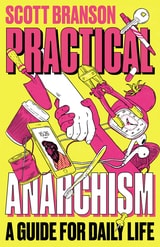
Practical Anarchism
A Guide for Daily LifeScott Branson
Pluto Press, 2022
You may not realise it, but you are probably already practicing anarchism in your daily life. From relationships to school, work, art, even the way you organise your time, anarchism can help you find fulfilment, empathy and liberation in the everyday.
From the small questions such as 'Why should I steal?' to the big ones like 'how do I love?', Scott Branson shows that anarchism isn’t only something we do when we react to the news, protest or even riot. With practical examples enriched by history and theory, these tips will empower you to break free from the consumerist trappings of our world.
Anarchism is not just for white men, but for everyone. In reading this book, you can detach from patriarchal masculinity, norms of family, gender, sexuality, racialisation, individual responsibility and the destruction of our planet, and replace them with ideas of sustainable living, with ties of mutual aid, and the horizon of collective liberation.
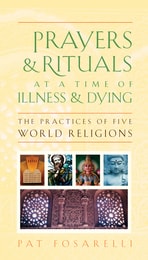
Prayers and Rituals at a Time of Illness and Dying
The Practices of Five World ReligionsPatricia Fosarelli
Templeton Press, 2008
In the course of caring for the ill or dying, health care professionals are sometimes the only ones available to provide spiritual comfort to their patients. In our modern pluralistic society, where patients could come from any number of religious traditions, it can often be difficult to find exactly the right words in these situations.
Prayers and Rituals at a Time of Illness and Dying: The Practices of Five World Religions by experienced physician and theologian Pat Fosarelli offers clear instructions for health care professionals on how to better understand the needs of their Buddhist, Hindu, Muslim, Christian, and Jewish patients during these difficult times. Devoting separate chapters to each tradition, Fosarelli briefly outlines the basic beliefs and then looks at the main tenets of each religion, exploring the varied approaches that they take to illness and end-of-life issues. For each tradition, she also describes practices and offers suitable prayers. Each chapter suggests modifications that may be necessary for Western hospitals, modifications for children, and specific suggestions about what not to do or say in respect to different faith traditions.
This easy-to-use, pocket-sized resource will be referenced again and again by physicians, paramedics, hospital and military chaplains, pastoral counselors, hospice providers, and other medical professionals.

Prepared
The Environmental Politics of the End of the WorldAllison Ford
University of Chicago Press, 0
Shares deep insights into the world of “prepping” and reveals how prepping functions as an environmental practice expressed through right-wing ideology.
Sensationalized in TV shows like Doomsday Preppers, ordinary people who prepare for the end of the world are a subject of fascination. While beginners might keep a few days’ worth of food and water on hand in case of a weather emergency, others truly push themselves to acquire the materials, skills, and knowledge they would need to survive complete societal collapse. Though we might think of them as on the fringe, some estimate that there are as many as 20 million preppers worldwide.
Sociologist Allison Ford’s Prepared: The Environmental Politics of the End of the World shares a behind-the-scenes look at preppers. Ford’s ethnography finds that prepping is a response to environmental risk that originates in right-wing political ideology. Instead of turning to collective action to find a solution, however, preppers approach emergency preparedness as an individual responsibility. Preparedness reasserts and confirms preppers’ self-identification as people who protect their families and maintain self-control, without depending upon others. She argues that preppers adopt the strategies that they do because they are culturally attached to their worldviews, specifically their commitments to liberalism and its unspoken gendered, racial, and class hierarchies, which are being challenged by the failures of modernity that preppers observe. Ultimately, Prepared gives critical insight into how people who do not necessarily identify as environmentalists respond to and deal with environmental risk.