96 books match the query 'Shadow' and 3 start with p
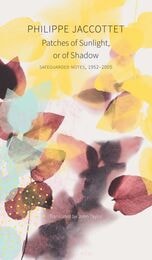
cover of Patches of Sunlight, Or of Shadow: Safeguarded Notes, 1952–2005

Patches of Sunlight, Or of Shadow

Safeguarded Notes, 1952–2005

Philippe Jaccottet

Seagull Books, 2020

Philippe Jaccottet’s newest work follows in some ways the approach of Seedtime, his recent two-volume collection of notebooks. Similarly comprising on-the-spot jottings, philosophical reflections, literary commentary, dream narratives and sundry “notes,” this book nonetheless differs from the preceding volumes in that the Swiss poet includes more personal material than ever before. Drawing on unpublished notebooks from the years 1952–2005, Jacottet offers here passages about his family, the death of his father-in-law and of his mother, his encounters with other major poets—such as René Char, Francis Ponge, Jean Tardieu, and his friends Yves Bonnefoy and André du Bouchet—and his trips abroad, as well as, characteristically, his walks in the countryside around the village of Grignan, in the south of France, where he has lived since 1953. For a poet who has been notoriously discreet about his life, this book offers unexpected glimpses of the private man. Above all, the entries in this notebook show how one of the greatest European poets grapples with the discouraging elements of existence, counterbalancing them by recording fleeting perceptions in which “something else,” almost like a threshold, seems present.
 
[more]
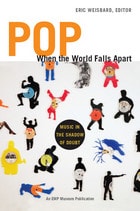
cover of Pop When the World Falls Apart: Music in the Shadow of Doubt

Pop When the World Falls Apart

Music in the Shadow of Doubt

Eric Weisbard, ed.

Duke University Press, 2012

Hearing Elvis Presley, Bob Dylan once said, was “like busting out of jail.” But what happens when popular music isn’t as simple as rock-and-roll rebellion? How does pop respond to such events as a decade-long war in Iraq and Hurricane Katrina? In Pop When the World Falls Apart, a diverse array of music writers, scholars, and enthusiasts reflect on popular music’s role—as commentary, as refuge, and as rallying cry—in times of military conflict, social upheaval, and cultural crisis.

Drawn from presentations at the annual Experience Music Project Pop Conference—hailed by Robert Christgau as “the best thing that’s ever happened to serious consideration of pop music”—the essays in this book include inquiries into the sonic dimension of war in Iraq; the cultural life of jazz in post-Katrina New Orleans; Isaac Hayes’s reappropriation of a country song, “By the Time I Get to Phoenix,” as a symbol of black nationalism; and punk rock pranks played on record execs looking for the next big thing in central Virginia. Offering a diverse range of voices, perspectives, and approaches, this volume mirrors the eclecticism of pop itself.

Contributors: Larry Blumenfeld , Austin Bunn, Nate Chinen, J. Martin Daughtry, Brian Goedde, Michelle Habell-Pallán, Jonathan Lethem, Eric Lott, Kembrew McLeod, Elena Passarello, Diane Pecknold, David Ritz, Carlo Rotella, Scott Seward, Tom Smucker, Greg Tate, Karen Tongson, Alexandra T. Vazquez, Oliver Wang, Eric Weisbard, Carl Wilson
[more]
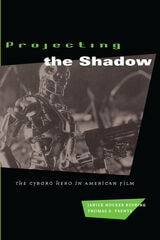
cover of Projecting the Shadow: The Cyborg Hero in American Film

Projecting the Shadow

The Cyborg Hero in American Film

Janice Hocker Rushing and Thomas S. Frentz

University of Chicago Press, 1995

Part human, part machine, the cyborg is the hero of an increasingly popular genre of American film and, as Janice H. Rushing and Thomas S. Frentz so provocatively suggest, a cultural icon emblematic of an emergent postmodern mythology. Using the cyborg film as a point of departure, Rushing and Frentz examine how we rework Western myths and initiation rites in the face of new technologies.

Through in-depth examinations of six representative films—Jaws, The Deer Hunter, The Manchurian Candidate, Blade Runner, The Terminator, and Terminator 2—Rushing and Frentz track the narrative's thread from the hunter to his technological nemesis, demonstrating how each film represents an unfolding hunter myth.

For each movie, Rushing and Frentz show how uninitiated male hunters slowly lose control over their weapons. In Jaws, a 'soft' man, dominated by technology, can re-acquire the heroic hunter qualities he needs by teaming up with a 'savage' man and a 'technological' man. In doing so, he can still conquer the prey. The Manchurian Candidate charts how technology can turn a human into a weapon; Blade Runner perfects the artificial human with its manufactured replicants who are "more than human"; and The Terminator introduces a female hunter who leads humanity in its struggle against technology.
[more]