Results by title
101 books match the query 'Social Activists' and 2 start with p
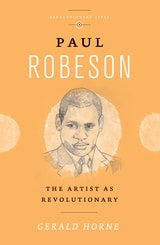
Paul Robeson
The Artist as RevolutionaryGerald Horne
Pluto Press, 2015
***Winner PEN Oakland Josephine Miles Book Award***
“A fine, taut analysis of the great African American athlete, singer, actor, and political activist.”
—Choice, Highly Recommended
Paul Robeson should be remembered today as the forerunner of Malcolm X, Dr. Martin Luther King, Jr. and Muhammad Ali. He sacrificed his fame and fortune a performer and athlete in order to fight for the rights of African Americans during the time of Jim Crow and U.S. Apartheid.
A world-famous singer and actor, a trained lawyer, an early star of American professional football and a polyglot who spoke over a dozen languages: these could be the crowning achievements of a life well-lived. Yet for Paul Robeson the higher calling of social justice led him to abandon both the NFL and Hollywood and become one of the most important political activists of his generation, a crusader for freedom and equality who battled both Jim Crow and US Senator Joseph McCarthy during the communist witch hunt of the 1950s.
In Paul Robeson: The Artist as Revolutionary, Gerald Horne discovers within Robeson's remarkable and revolutionary life the story of the twentieth century's great political struggles: against racism, against colonialism, against poverty—and for international socialism. Chapters include:
*”The Best Known American in the World"
*Rising Revolutionary
*From Moscow to Madrid
*"Black Stalin"?
*Robeson: Primary Victim of the "Blacklist"
*Triumph—and Tragedy
*Death of a Revolutionary
In the Introduction, Horne writes: “Paul Robeson—activist, artist, athlete—experienced a dramatic rise and fall, perhaps unparalleled in U.S. history. From mingling with the elite of London society and Hollywood in the 1930s, by the time he died in 1976, he was a virtual recluse in a plain abode in a working-class neighborhood of Philadelphia. What helps to explicate this tragic art of his life is a fateful decision he made when fascism was rising: he threw in his lot with those battling for socialism and decide to sacrifice his thriving artistic career on behalf of the struggle against Jim Crow—or U.S. apartheid.”
This critical and searching biography provides an opportunity for readers to comprehend the triumphs and tragedies of the revolutionary progressive movement of which Paul Robeson was not just a part, but perhaps its most resonant symbol.
[more]
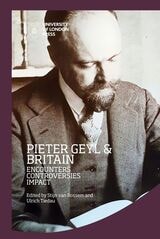
Pieter Geyl and Britain
Encounters, Controversies, ImpactEdited by Stijn van Rossem and Ulrich Tiedau
University of London Press, 2022
An examination of the work and influence of historian Pieter Geyl.
Pieter Geyl (1887—1966) was undoubtedly one of the most internationally renowned Dutch historians of the twentieth century, but also one of the most controversial. Having come to the United Kingdom as a journalist, he started his academic career at the University of London in the aftermath of World War I and played an important role in the early days of the Institute of Historical Research. Known in this time for his reinterpretation of the sixteenth-century Dutch Revolt against the Habsburgs that challenged existing historiographies of both Belgium and the Netherlands but was also linked to his political activism in favor of the Flemish movement in Belgium, Geyl left his stamp on the British perception of Low Countries history before moving back to his country of origin in 1935. Having spent World War II in German hostage camps, he famously coined the adage of history being “a discussion without end” and reengaged in public debates with British historians after the war, partly conducted on the airwaves of the BBC. A prolific writer and an early example of a public intellectual, Geyl remains one of the most influential thinkers on history of his time. The present volume reexamines Geyl’s relationship with Britain (and the Anglophone world at large) and sheds new light on his multifaceted work as a historian, journalist, homme de lettres, and political activist.
Pieter Geyl (1887—1966) was undoubtedly one of the most internationally renowned Dutch historians of the twentieth century, but also one of the most controversial. Having come to the United Kingdom as a journalist, he started his academic career at the University of London in the aftermath of World War I and played an important role in the early days of the Institute of Historical Research. Known in this time for his reinterpretation of the sixteenth-century Dutch Revolt against the Habsburgs that challenged existing historiographies of both Belgium and the Netherlands but was also linked to his political activism in favor of the Flemish movement in Belgium, Geyl left his stamp on the British perception of Low Countries history before moving back to his country of origin in 1935. Having spent World War II in German hostage camps, he famously coined the adage of history being “a discussion without end” and reengaged in public debates with British historians after the war, partly conducted on the airwaves of the BBC. A prolific writer and an early example of a public intellectual, Geyl remains one of the most influential thinkers on history of his time. The present volume reexamines Geyl’s relationship with Britain (and the Anglophone world at large) and sheds new light on his multifaceted work as a historian, journalist, homme de lettres, and political activist.
[more]