Results by title
165 books match the query 'Social sciences' and 10 start with p
Phenomenology and the Social Sciences
Maurice Natanson
Northwestern University Press, 1973
Political Aspects of Social Indicators
Implications for ResearchPeter J. Henriot
Russell Sage Foundation, 1972

Politics, Personality, and Social Science in the Twentieth Century
Essays in Honor of Harold D. LasswellEdited by Arnold A. Rogow
University of Chicago Press, 1969
This collection of essays is the first full-scale effort to deal with the voluminous writings of Lasswell and explore his at once charming and baffling personality which is perhaps inseparable from the inventiveness, unconventionality, and unusual scope of his work.
The authors of these essays, many of whom are former students or collaborators, view their subject from a variety of perspectives. What emerges is a full assessment of Lasswell's many-faceted contribution to the social scholarship of his time.
Process-Tracing Methods
Foundations and GuidelinesDerek Beach and Rasmus Brun Pedersen
University of Michigan Press, 2013
Process-tracing in social science is a method for studying causal mechanisms linking causes with outcomes. This enables the researcher to make strong inferences about how a cause (or set of causes) contributes to producing an outcome. Derek Beach and Rasmus Brun Pedersen introduce a refined definition of process-tracing, differentiating it into three distinct variants and explaining the applications and limitations of each. The authors develop the underlying logic of process-tracing, including how one should understand causal mechanisms and how Bayesian logic enables strong within-case inferences. They provide instructions for identifying the variant of process-tracing most appropriate for the research question at hand and a set of guidelines for each stage of the research process.
Process-Tracing Methods
Foundations and GuidelinesDerek Beach and Rasmus Brun Pedersen
University of Michigan Press, 2019
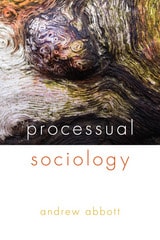
Processual Sociology
Andrew Abbott
University of Chicago Press, 2016
In Processual Sociology, Abbott first examines the endurance of individuals and social groups through time and then goes on to consider the question of what this means for human nature. He looks at different approaches to the passing of social time and determination, all while examining the goal of social existence, weighing the concepts of individual outcome and social order. Abbott concludes by discussing core difficulties of the practice of social science as a moral activity, arguing that it is inescapably moral and therefore we must develop normative theories more sophisticated than our current naively political normativism. Ranging broadly across disciplines and methodologies, Processual Sociology breaks new ground in its search for conceptual foundations of a rigorously processual account of social life.
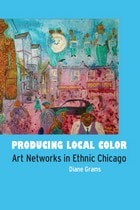
Producing Local Color
Art Networks in Ethnic ChicagoDiane Grams
University of Chicago Press, 2010
In big cities, major museums and elite galleries tend to dominate our idea of the art world. But beyond the cultural core ruled by these moneyed institutions and their patrons are vibrant, local communities of artists and art lovers operating beneath the high-culture radar. Producing Local Color is a guided tour of three such alternative worlds that thrive in the Chicago neighborhoods of Bronzeville, Pilsen, and Rogers Park.
These three neighborhoods are, respectively, historically African American, predominantly Mexican American, and proudly ethnically mixed. Drawing on her ethnographic research in each place, Diane Grams presents and analyzes the different kinds of networks of interest and support that sustain the making of art outside of the limelight. And she introduces us to the various individuals—from cutting-edge artists to collectors to municipal planners—who work together to develop their communities, honor their history, and enrich the experiences of their neighbors through art. Along with its novel insights into these little examined art worlds, Producing Local Color also provides a thought-provoking account of how urban neighborhoods change and grow.
Professional Academic Writing in the Humanities and Social Sciences
Susan Peck MacDonald
Southern Illinois University Press, 1994
In Professional Academic Writing in the Humanities and Social Sciences, Susan Peck MacDonald tackles important and often controversial contemporary questions regarding the rhetoric of inquiry, the social construction of knowledge, and the professionalization of the academy. MacDonald argues that the academy has devoted more effort to analyzing theory and method than to analyzing its own texts. Professional texts need further attention because they not only create but are also shaped by the knowledge that is special to each discipline. Her assumption is that knowledge-making is the distinctive activity of the academy at the professional level; for that reason, it is important to examine differences in the ways the professional texts of subdisciplinary communities focus on and consolidate knowledge within their fields.
Throughout the book, MacDonald stresses her conviction that academics need to do a better job of explaining their text-making axioms, clarifying their expectations of students at all levels, and monitoring their own professional practices. MacDonald’s proposals for both textual and sentence-level analysis will help academic professionals better understand how they might improve communication within their professional communities and with their students.
Profiles of Social Research
The Scientific Study of Human InteractionMorton M. Hunt
Russell Sage Foundation, 1985
Psychoanalysis and Social Theory
The Limits of SociologyIan Craib
University of Massachusetts Press, 1989