Results by title
100 books match the query 'Sovereignty' and 6 start with p
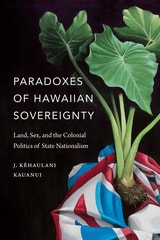
Paradoxes of Hawaiian Sovereignty
Land, Sex, and the Colonial Politics of State NationalismJ. Kehaulani Kauanui
Duke University Press, 2018

Pathways to Indigenous Nation Sovereignty
A Chronicle of Federal Policy DevelopmentsAlan R Parker
Michigan State University Press, 2018

Political Life in the Wake of the Plantation
Sovereignty, Witnessing, RepairDeborah A. Thomas
Duke University Press, 2019
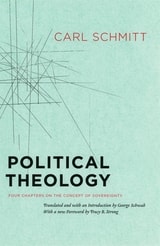
Political Theology
Four Chapters on the Concept of SovereigntyCarl Schmitt
University of Chicago Press, 2005
Focusing on the relationships among political leadership, the norms of the legal order, and the state of political emergency, Schmitt argues in Political Theology that legal order ultimately rests upon the decisions of the sovereign. According to Schmitt, only the sovereign can meet the needs of an "exceptional" time and transcend legal order so that order can then be reestablished. Convinced that the state is governed by the ever-present possibility of conflict, Schmitt theorizes that the state exists only to maintain its integrity in order to ensure order and stability. Suggesting that all concepts of modern political thought are secularized theological concepts, Schmitt concludes Political Theology with a critique of liberalism and its attempt to depoliticize political thought by avoiding fundamental political decisions.
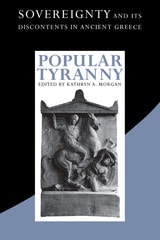
Popular Tyranny
Sovereignty and Its Discontents in Ancient GreeceEdited by Kathryn A. Morgan
University of Texas Press, 2003
The nature of authority and rulership was a central concern in ancient Greece, where the figure of the king or tyrant and the sovereignty associated with him remained a powerful focus of political and philosophical debate even as Classical Athens developed the world's first democracy. This collection of essays examines the extraordinary role that the concept of tyranny played in the cultural and political imagination of Archaic and Classical Greece through the interdisciplinary perspectives provided by internationally known archaeologists, literary critics, and historians.
The book ranges historically from the Bronze and early Iron Age to the political theorists and commentators of the middle of the fourth century B.C. and generically across tragedy, comedy, historiography, and philosophy. While offering individual and sometimes differing perspectives, the essays tackle several common themes: the construction of authority and of constitutional models, the importance of religion and ritual, the crucial role of wealth, and the autonomy of the individual. Moreover, the essays with an Athenian focus shed new light on the vexed question of whether it was possible for Athenians to think of themselves as tyrannical in any way. As a whole, the collection presents a nuanced survey of how competing ideologies and desires, operating through the complex associations of the image of tyranny, struggled for predominance in ancient cities and their citizens.
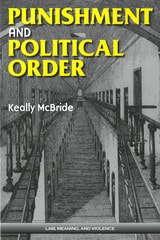
Punishment and Political Order
Keally McBride
University of Michigan Press, 2007
Most of us think of punishment as an ugly display of power. But punishment also tells us something about the ideals and aspirations of a people and their government. How a state punishes reveals whether or not it is confident in its own legitimacy and sovereignty. Punishment and Political Order examines the questions raised by the state’s exercise of punitive power—from what it is about human psychology that desires sanction and order to how the state can administer pain while calling for justice. Keally McBride's book demonstrates punishment's place at the core of political administration and the stated ideals of the polity.
"From start to finish this is a terrific, engaging book. McBride offers a fascinating perspective on punishment, calling attention to its utility in understanding political regimes and their ideals. She succeeds in reminding us of the centrality of punishment in political theory and, at the same time, in providing a framework for understanding contemporary events. I know of no other book that does as much to make the subject of punishment so compelling."
—Austin Sarat, Amherst College
"Punishment and Political Order will be welcome reading for anyone interested in understanding law in society, punishment and political spectacle, or governing through crime control. This is a clear, accessible, and persuasive examination of punishment—as rhetoric and reality. Arguing that punishment is a complex product of the social contract, this book demonstrates the ways in which understanding the symbolic power and violence of the law provides analytical tools for examining the ideological function of prison labor today, as well as the crosscutting and contingent connections between language and identity, legitimation and violence, sovereignty and agency more generally."
—Bill Lyons, Director, Center for Conflict Management, University of Akron
"Philosophical explorations of punishment have often stopped with a theory of responsibility. McBride's book moves well beyond this. It shows that the problem of punishment is a central issue for any coherent theory of the state, and thus that punishment is at the heart of political theory. This is a stunning achievement."
—Malcolm M. Feeley, University of California at Berkeley
Keally McBride is Assistant Professor of Politics at the University of San Francisco.