Results by title
260 books match the query 'Soviet Union' and 7 start with p
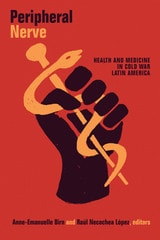
Peripheral Nerve
Health and Medicine in Cold War Latin AmericaAnne-Emanuelle Birn and Raúl Necochea López
Duke University Press, 2020
Contributors. Cheasty Anderson, Anne-Emanuelle Birn, Katherine E. Bliss, Gilberto Hochman, Jennifer L. Lambe, Nicole Pacino, Carlos Henrique Assunção Paiva, Jadwiga E. Pieper Mooney, Raúl Necochea López, Marco A. Ramos, Gabriela Soto Laveaga

Peripheral Visions
Deterrence Theory and American Foreign Policy in the Third World, 1965-1990Ted Hopf
University of Michigan Press, 1994

Petrograd, 1917
Witnesses to the Russian RevolutionJohn Pinfold
Bodleian Library Publishing, 2017
Assembling extracts from letters, journals, diaries, and memoirs from a remarkably diverse cast of both Russians and foreign nationals who were there when the revolution broke, Petrograd, 1917 is a strikingly close-up account of these world-shaking events. Each entry is supplemented with a short introductory note that sets it in context, and the book is rounded out with more than seventy illustrations, including photographs of the Romanovs and the violence in the streets as well as propaganda posters, postcards to loved ones, and more. In these pages, the drama and terror of those days comes to life once more, a century on.

Picturing the Cosmos
A Visual History of Early Soviet Space EndeavorIina Kohonen
Intellect Books, 2017
Kohonen ably examines each image, elucidating how visual media helped to anchor otherwise abstract political and intellectual concepts of the future and modernization within the Soviet Union. The USSR mapped and named the cosmos, using new media to stake a claim to this new territory and incorporating it into the daily lives of its citizens. Soviet cosmonauts, meanwhile, were depicted as prototypes of the perfect Communist man, representing modernity, good taste, and the aesthetics of the everyday. Across five heavily illustrated chapters, Picturing the Cosmos navigates and critically examines these utopian narratives, highlighting the rhetorical tension between propaganda, censorship, art, and politics.
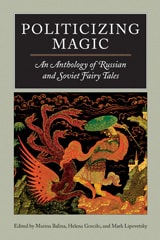
Politicizing Magic
An Anthology of Russian and Soviet Fairy TalesBalina/Goscilo/Lipovetsky
Northwestern University Press, 2005
We were born to make fairy tales come true. As one of Stalinism's more memorable slogans, this one suggests that the fairy tale figured in Soviet culture as far more than a category of children's literature. How much more-and how cannily Russian fairy tales reflect and interpret Soviet culture, especially in its utopian ambitions-becomes clear for the first time in Politicizing Magic, a compendium of folkloric, literary, and critical texts that demonstrate the degree to which ancient fairy-tale fantasies acquired political and historical meanings during the catastrophic twentieth century.
Introducing Western readers to the most representative texts of Russian folkloric and literary tales, this book documents a rich exploration of this colorful genre through all periods of Soviet literary production (1920-1985) by authors with varied political and aesthetic allegiances. Here are traditional Russian folkloric tales and transformations of these tales that, adopting the didacticism of Soviet ideology, proved significant for the official discourse of Socialist Realism. Here, too, are narratives produced during the same era that use the fairy-tale paradigm as a deconstructive device aimed at the very underpinnings of the Soviet system. The editors' introductory essays acquaint readers with the fairy-tale paradigm and the permutations it underwent within the utopian dream of Soviet culture, deftly placing each-from traditional folklore to fairy tales of Socialist Realism, to real-life events recast as fairy tales for ironic effect-in its literary, historical, and political context.
Post-Communism
An IntroductionLeslie Holmes
Duke University Press, 1997
Professions And The State
Expertise and Autonomy in the Soviet Union and Eastern Europeedited by Anthony Jones
Temple University Press, 1991
Unlike autonomous professionals in Western industrialized democracies, professionals in a socialist, bureaucratic setting operate as employees of the state. The change in environment has important Implications not only for the practice of professions but also for the concept of professionalism itself. This collection of nine essays is the first to survey the major professions In the USSR, Czechoslovakia, and Poland. The contributors investigate the implications of professional experience in a socialist economy as well as relating changes in professional organization and power to reform movements in general and perestroika in particular.
In the series Labor and Social Change, edited by Paula Rayman and Carmen Sirianni.