Results by title
370 books match the query 'Spain' and 16 start with p
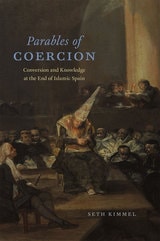
Parables of Coercion
Conversion and Knowledge at the End of Islamic SpainSeth Kimmel
University of Chicago Press, 2015
In its careful examination of how Spanish authors transformed the history of scholarship through debate about forced religious conversion, Parables of Coercion makes us rethink what we mean by tolerance and intolerance, and shows that debates about forced conversion and assimilation were also disputes over the methods and practices that demarcated one scholarly discipline from another.
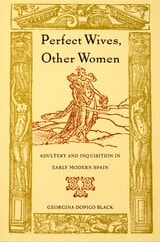
Perfect Wives, Other Women
Adultery and Inquisition in Early Modern SpainGeorgina Dopico Black
Duke University Press, 2001
Subject to the scrutiny of a remarkable array of gazes—inquisitors, theologians, religious reformers, confessors, poets, playwrights, and, not least among them, husbands—the bodies of perfect and imperfect wives elicited diverse readings. Dopico Black reveals how imperialism, the Inquisition, inflation, and economic decline each contributed to a correspondence between the meanings of these human bodies and “other” bodies, such as those of the Jew, the Moor, the Lutheran, the degenerate, and whoever else departed from a recognized norm. The body of the wife, in other words, became associated with categories separate from anatomy, reflecting the particular hermeneutics employed during the Inquisition regarding the surveillance of otherness.
Dopico Black’s compelling argument will engage students of Spanish and Spanish American history and literature, gender studies, women’s studies, social psychology and cultural studies.
Performing Human Rights
Contested Amnesia and Aesthetic Practices in the Global SouthEdited by Liliana Gómez
Diaphanes, 2021
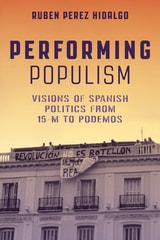
Performing Populism
Visions of Spanish Politics from 15-M to PodemosRuben Perez Hidalgo
Vanderbilt University Press, 2023
The book's first part examines how the 15-M movement created a new way of seeing that in turn led to a new way of doing politics in Spain. Part Two focuses on the multiple ramifications of that new vision once the people stopped marching and the movement became less visible.
From electoral posters to fiction films, documentaries, and internet memes, Performing Populism traces the ways that collective Spanish identities evolved from a period when "the people" seemed to have been willingly subsumed under the apathetic ideation of the middle-class consumer to the moment in 2011 when a crisis of representation forced many into political consciousness. This rude awakening kickstarted the reconstruction of a Spanish "us" that staged exhibitions of popular will on par with and parallel to the Arab Spring, but in a European register that embraced the countercultural through art that disremembered its political past but could not escape the ghostly shadow of its history.
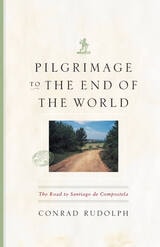
Pilgrimage to the End of the World
The Road to Santiago de CompostelaConrad Rudolph
University of Chicago Press, 2004
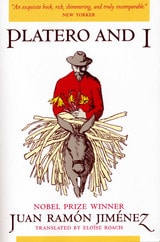
Platero and I
By Juan Ramón Jiménez
University of Texas Press, 1957
This lyric portrait of life—and the little donkey, Platero—in a remote Andalusian village is the masterpiece of Juan Ramón Jiménez, the Spanish poet awarded the 1956 Nobel Prize for Literature.
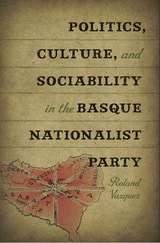
Politics, Culture, and Sociability in the Basque Nationalist Party
Roland Vazquez
University of Nevada Press, 2010
Until now, social scientists studying Spanish politics have focused on party systems, regime transition, and election analysis, and anthropologists studying Spain have largely neglected its political parties. This book is a pathbreaking work of political anthropology and an ethnographic study of the Basque Nationalist Party (PNV). Author Roland Vazquez studies Basque nationalism as not merely a political phenomenon but as a cultural and social one as well. He examines the forces that have shaped the Basque political panorama, the nature of Basque political campaigns, Basque cultural and social movements both inside and outside the explicitly partisan milieu, and the role of other parties in the Basque Country. The study is enhanced by extensive interviews and broad fieldwork among Basque contacts of diverse backgrounds and loyalties. The result is a vivid portrait of political life in the contemporary Basque Country, of the tensions between various nationalist parties and philosophies, and of the way politics are influenced by Basque notions of community, social connections, and national identity. The book also serves as a model for studies of other political and nationalist movements and the cultural and social ties and values that drive them.
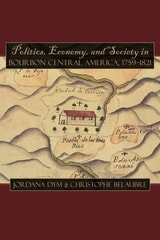
Politics, Economy, and Society in Bourbon Central America, 1759-1821
Jordana Dym
University Press of Colorado, 2007
These reforms profoundly changed aspects of Central America's politics and society; however, these essays reveal that changes in the region were shaped both internally and externally and that they weakened the region's ties to metropolitan Spain as often as they reinforced them. Contributors focus on specific policy changes and their consequences as well as transformations throughout the region for which no direct Bourbon inspiration appears to be responsible. Together they demonstrate that whether or not the Crown achieved its primary goals of centralization and control, its policies nevertheless provided opportunities for evident, often subtle, and occasionally unintentional shifts in the colonial government's relationship to its constituent populations. Contributors include Christophe Belaubre, Michel Bertrand, Jordana Dym, Jorge H. González, Timothy Hawkins, Sajid Alfredo Herrera, Gustavo Palma, Eugenia Rodriguez, Doug Tompson, and Stephen Webre.
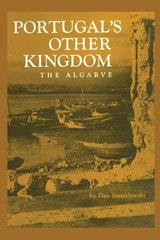
Portugal's Other Kingdom
The AlgarveBy Dan Stanislawski
University of Texas Press, 1963
A land of long ago on the brink of tomorrow. That is the Algarve, the southernmost province of Portugal, a land that knew the Phoenicians, Carthaginians, Greeks, Romans, Visigoths, Moslems—and yet retained its own distinctive personality. In the 1950s it first felt the impact of industrialization, and from that situation the author developed this book.
In presenting this descriptive geography of the Algarve, Dan Stanislawski offers no thesis, except that geographers, economists, politicians, humanists—all those interested in the way the world is developing—should watch the small, culturally disparate areas of the world, to learn what they have of value to teach, to enjoy the qualities of their independent ways of living, and to observe and evaluate their reaction to modern change. This book, the result of detailed observation of one such region, is a valuable contribution to the knowledge necessary to form sound value judgments on the future development of these areas.
From this account the charm of the Algarve emerges in all of its picturesqueness. With the aid of Stanislawski's vivid descriptions, his eighteen helpful maps and graphs, and his more than ninety photographs, the reader moves leisurely through this appealing, but unpublicized, region: along roadways bordered by rock walls and blooming almonds, traveled by sturdy burros bearing their loads of produce; through colorful landscapes of the Lower Algarve, with their pastel-calcimined dwellings and their intensively cultivated plots of olives, figs, carobs, grain, and vegetables; along the rugged cliff coast near Portimão, and the boat-filled port of Faro; past the canyon gardens of the Caldeirão; along the Arade River with its cork barges; northward past Cape S. Vicente to the area of wind-sheared trees.
Guided by Stanislawski, the reader comes to understand Algarvian problems inherent in soils, topography, climate, location, and history. He sees the Algarvians following the occupational practices that have produced for them, in the midst of difficult conditions, a stable culture: fishing, netmaking, shipbuilding, farming, herding, and so on. He realizes that these people, with their unique cultural background and environment, desire to live, and to change, in their own way. Finally, he learns how it is possible to communicate effectively with the Algarvians and with millions of other people whose peculiar problems tend to isolate them from the rest of the world.
Post-Authoritarian Cultures
Spain and Latin America's Southern ConeLuis Martín-Estudillo
Vanderbilt University Press, 2008
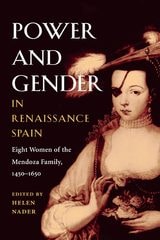
Power and Gender in Renaissance Spain
Eight Women of the Mendoza Family, 1450-1650Edited by Helen Nader
University of Illinois Press, 2003
These essays explore the lives of powerful women whose lineage gave them status within a patriarchal society designed to keep women from public life. Each of the influential and literary women discussed in this volume handled her status differently, and their concerns were not dissimilar from the concerns of feminists today: the blurring of the personal and the political, public versus private space, language and voice, and property.
Spanning the two centuries between Juana Pimentel, a widow who manipulated the patronage system to her own ends, and Luisa de Carvajal y Mendoza, who rejected both convent and marriage in favor of missionary work, Power and Gender in Renaissance Spain reveals a complex society in which women were limited by law, and yet their social status made those laws negotiable.
These women found that their personal agendas had a broad societal impact, challenging the laws of the land and patriarchal assumptions about women's inferiority.
Private Aid, Political Activism
American Medical Relief to Spain and China, 1936–1949Aelwen D. Wetherby
University of Missouri Press, 2017
Properties of Modernity
Romantic Spain, Modern Europe, and the Legacies of EmpireMichael Iarocci
Vanderbilt University Press, 2006
Through a close study of Cadalso, Saavedra, and Larra, Iarocci argues that Spanish writers were intensely concerned with the same issues taken up by more famous Romantics and that the ways in which they address these issues provides us with a richer notion, not only of Spain, but of all of Europe.
Protecting the Spanish Woman
Gender Identity and Empowerment in María de Zayas's WorksXabier Granja Ibarreche
University of Nevada Press, 2023
María de Zayas is unique in the seventeenth century as the only Spanish woman to write a collection of exemplary novels whose quality is often compared to Miguel de Cervantes’ masterful works. Her two main collections of short stories, Novelas amorosas y ejemplares and Desengaños amorosos, encompass a social critique based on literary fiction that exposes flaws in the idealized archetypes of masculine identity in early modern Spain. Zayas’s stories redefine women’s patriarchal disadvantage as a tool to expose the ways in which early modern Spanish women could be empowered to counteract men’s discursive and political authority, which they use to unfairly maintain their own social privilege.
Xabier Granja Ibarreche explores how Zayas defies Spanish hegemony by manipulating and transforming the ideals of courtly masculinity that had been popularized by conduct manuals and the traits they specified for appropriate noble comportment. In doing so, Zayas elaborates a nonofficial discourse throughout plots that subvert patriarchal hierarchies: she rearticulates the existing ideological order to empower women who are no longer willing to remain silent and oppressed by masculine domination after centuries of failing to attain a sufficiently self-sufficient political position to ascend in the social hierarchy. By inverting the male gaze that assumes masculinity as a preeminent identity, Zayas subverts the patriarchal subject/masculine, object/feminine order and destabilizes manly superiority as a basic universal reality, thereby empowering and unshackling Spanish women to liberate Iberian culture from the repressive and pernicious future she forebodes.
Pueblo Indians and Spanish Colonial Authority in Eighteenth-Century New Mexico
Tracy L. Brown
University of Arizona Press, 2013
Brown addresses an understudied period of Pueblo Indian/Spanish colonial history of New Mexico with a work that paints a portrait of pre-contact times through the colonial period with a special emphasis on the eighteenth century. The Pueblo communities that the Spaniards encountered were divided by language, religion,and political and kinship organization. Brown highlights the changes to, but also the maintenance of, social practices and beliefs in the economic, political, spiritual and familial and intimate realms of life that resulted from Pueblo attempts to negotiate Spanish colonial power.
The author combines an analysis of eighteenth century Spanish documentation with archaeological findings concerning Pueblo beliefs and practices that spans the pre-contact period to the eighteenth century in the Southwest. Brown presents a nonlinear view of Pueblo life that examines politics, economics, ritual, and personal relationships. The book paints a portrait of the Pueblo peoples and their complex responses to Spanish colonialism by making sense of little-researched archival documents and archaeological findings that cast light on the daily life of Pueblo peoples.
Pueblos, Plains, and Province
New Mexico in the Seventeenth CenturyJoseph P. Sánchez
University Press of Colorado, 2024
In Pueblos, Plains, and Province Joseph P. Sánchez offers an in-depth examination of sociopolitical conflict in seventeenth-century New Mexico, detailing the effects of Spanish colonial policies on settlers’, missionaries’, and Indigenous peoples’ struggle for economic and cultural control of the region. Sánchez explores the rich archival documentation that provides cultural, linguistic, and legal perspectives of the values of the period.
Spanish dual Indian policies for Pueblo and Plains tribes challenged Indigenous political and social systems to conform to the imperial structure for pacification purposes. Meanwhile, missionary efforts to supplant Indigenous religious beliefs with a Christian worldview resulted, in part, in a syncretism of the two worlds. Indigenous resentment of these policies reflected the contentious disagreements between Spanish clergymen and civil authorities, who feuded over Indigenous labor and encroachment on tribal sovereignties with demands for sworn loyalty to Spanish governance. The little-studied “starvation period” adversely affected Spanish-Pueblo relationships for the remainder of the century and contributed significantly to the battle at Acoma, the Jumano War, and the Pueblo Revolt of 1680.
Pueblos, Plains, and Province shows how history, culture, and tradition in New Mexico shaped the heritage shared by Spain, Mexico, the United States, and Native American tribes and will be of interest to scholars and students of Indigenous, colonial, and borderlands history.