Results by title
149 books match the query 'Spanish & Portuguese' and 11 start with p
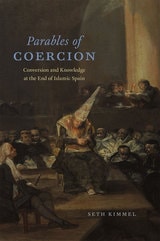
Parables of Coercion
Conversion and Knowledge at the End of Islamic SpainSeth Kimmel
University of Chicago Press, 2015
In its careful examination of how Spanish authors transformed the history of scholarship through debate about forced religious conversion, Parables of Coercion makes us rethink what we mean by tolerance and intolerance, and shows that debates about forced conversion and assimilation were also disputes over the methods and practices that demarcated one scholarly discipline from another.
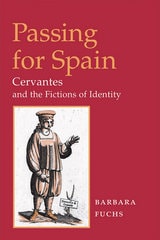
Passing for Spain
CERVANTES AND THE FICTIONS OF IDENTITYBarbara Fuchs
University of Illinois Press, 2003
In five lucid and engaging chapters, Fuchs examines what passes in Cervantes’s fiction: gender and race in Don Quijote and “Las dos doncellas”; religion in “El amante liberal” and La gran sultana; national identity in the Persiles and “La española inglesa.” She argues that Cervantes represents cross-cultural impersonation -- or characters who pass for another gender, nationality, or religion -- as challenges to the state’s attempts to assign identities and categories to proper Spanish subjects.
Fuchs demonstrates the larger implications of this challenge by bringing a wide range of literary and political texts to bear on Cervantes’s representations. Impeccably researched, Passing for Spain examines how the fluidity of individual identity in early modern Spain undermined a national identity based on exclusion and difference.
Passion according to G.H.
Clarice Lispector
University of Minnesota Press, 1988

Passionate Fictions
Gender, Narrative, and Violence in Clarice LispectorMarta Peixoto
University of Minnesota Press, 1994
Passionate Fictions was first published in 1994. Minnesota Archive Editions uses digital technology to make long-unavailable books once again accessible, and are published unaltered from the original University of Minnesota Press editions.
"Clarice Lispector is the premiere Latin American woman prose writer of this century," Suzanne Ruta noted in the New York Times Book Review, "but because she is a woman and a Brazilian, she has remained virtually unknown in the United States." Passionate Fictions provides American readers with a critical introduction to this remarkable writer and offers those who already know Lispector's fiction a deeper understanding of its complex workings.

Persephone's Girdle
Narratives of Rape in Seventeenth-Century Spanish LiteratureMarcia L. Welles
Vanderbilt University Press, 2000
Marcia Welles applies her extensive knowledge of Spanish Golden Age literature and her insightful grasp of current literary theory to synthesize a wide range of material into a uniquely engaging and refreshing interpretation of well-known texts. While the subject of rape and violence has been studied in other European literatures, Persephone's Girdle is the first to do so in the field of early modern Spanish literature.
Poems in Absentia & Poems from The Island and the World
Pedro da Silveira, Translated by George Monteiro
Tagus Press, 2019
Poiesis and Modernity in the Old and New Worlds
Anthony J. Cascardi
Vanderbilt University Press, 2012
Post-Authoritarian Cultures
Spain and Latin America's Southern ConeLuis Martín-Estudillo
Vanderbilt University Press, 2008
Post-Totalitarian Spanish Fiction
Robert C. Spires
University of Missouri Press, 1996
Focusing on post-Franco Spanish fiction from 1975 to 1989, Robert C. Spires applies the concepts of episteme and discursive field to the ways in which language from multiple sources determines how reality is defined at a given moment and how it influences ideas, attitudes, and feelings. Spires identifies bonds connecting disparate academic disciplines and sociopolitical events by exploring how the world of fiction serves as a register of the nonfictional world.
In 1989 the Soviet bloc, along with other totalitarian regimes in South America and Africa, disappeared from the global geopolitical map. Spain set the precedent for this decentralizing revolution when, in 1975, its longtime dictator, Francisco Franco, died; democratic elections followed two years later. This study records an epistemic shift away from logocentric and totalizing approaches to reality by analyzing the links between the novelistic strategies used by Spanish writers from 1975 to 1989 and recent international events and theoretical trends in science, mathematics, communication studies, and art. Highlighting worldwide processes of fragmentation, decentralization, and pluralism, Spires foregrounds ways in which literary and scientific approaches to and concepts of reality coincide, with fiction serving as one more register of how reality is conceived at a particular point in time.
Post-Totalitarian Spanish Fiction makes a major contribution in the field of Spanish literature and will enhance the esteem that contemporary Spanish literature is beginning to achieve internationally. In addition, this "epistemocritical" project will serve as a model for literary critics who wish to accommodate the increasingly popular approach labeled "cultural studies" without surrendering the primacy of the literary text.
Properties of Modernity
Romantic Spain, Modern Europe, and the Legacies of EmpireMichael Iarocci
Vanderbilt University Press, 2006
Through a close study of Cadalso, Saavedra, and Larra, Iarocci argues that Spanish writers were intensely concerned with the same issues taken up by more famous Romantics and that the ways in which they address these issues provides us with a richer notion, not only of Spain, but of all of Europe.
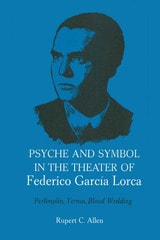
Psyche and Symbol in the Theater of Federico Garcia Lorca
Perlimplin, Yerma, Blood WeddingBy Rupert C. Allen
University of Texas Press, 1974
Symbol and psyche are twin concepts in contemporary symbological studies, where the symbol is considered to be a "statement" by the psyche. The psyche is a manifold of conscious and unconscious contents, and the symbol is their mediator. Because Lorca's dramatic characters are psychic entities made up of both conscious and unconscious elements, they unfold, grow, and meet their fate in a dense realm of shifting symbols.
In Psyche and Symbol in the Theater of Federico García Lorca, Rupert Allen analyzes symbologically three dramatic works of Lorca. He has found Perlimplín to be a good deal more complex in both psyche and symbol than it has been admitted to be. Yerma involves psychological complications that have not been considered in the light of modern critical analysis, and the symbolic reaches ofBlood Wedding have until this book remained largely unexplored.
Lorca was no stranger to the "agony of creation," and this struggle sometimes appears symbolically in the form of his dramatic characters. Both Yerma and Blood Wedding reflect specific problems underlying the creative act, for they are "translations" into the realm of sexuality of the creative turmoil experienced by Lorca the poet. Perlimplín portrays the paradoxical suicide as a self-murder born out of the futile attempt to create not a poem, but a self.
Previous criticism of these three plays has been dominated by critical assumptions that are transcended by Lorca's own twentieth-century mentality. Allen's analysis provides a new view of Lorca as a dramatist and presents new material to students of symbology.