Results by title
73 books match the query 'Strategy' and 3 start with p
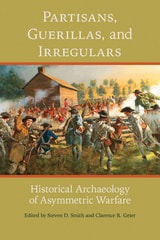
Partisans, Guerillas, and Irregulars
Historical Archaeology of Asymmetric WarfareEdited by Steven D. Smith and Clarence R. Geier
University of Alabama Press, 2019
Essays that explore the growing field of conflict archaeology
Within the last twenty years, the archaeology of conflict has emerged as a valuable subdiscipline within anthropology, contributing greatly to our knowledge and understanding of human conflict on a global scale. Although archaeologists have clearly demonstrated their utility in the study of large-scale battles and sites of conventional warfare, such as camps and forts, conflicts involving asymmetric, guerilla, or irregular warfare are largely missing from the historical record.
Partisans, Guerillas, and Irregulars: Historical Archaeology of Asymmetric Warfare presents recent examples of how historical archaeology can contribute to a better understanding of asymmetric warfare. The volume introduces readers to this growing study and to its historic importance. Contributors illustrate how the wide range of traditional and new methods and techniques of historiography and archaeology can be applied to expose critical actions, sacrifices, and accomplishments of competing groups representing opposing philosophies and ways of life, which are otherwise lost in time.
The case studies offered cover significant events in American and world history, including the French and Indian War, the American Revolution, Indian wars in the Southeast and Southwest, the Civil War, Reconstruction, Prohibition, and World War II. All such examples used here took place at a local or regional level, and several were singular events within a much larger and more complex historic movement. While retained in local memory or tradition, and despite their potential importance, they are poorly, and incompletely addressed in the historic record. Furthermore, these conflicts took place between groups of significantly different cultural and military traditions and capabilities, most taking on a “David vs. Goliath” character, further shaping the definition of asymmetric warfare.
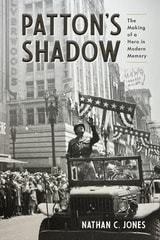
Patton's Shadow
The Making of a Hero in Modern MemoryNathan C. Jones
University of Alabama Press, 2024
An engrossing account of the myth and legend of George S. Patton and what his reputation illuminates about American culture and hero worship
Patton’s Shadow by Nathan C. Jones, a leading authority on George S. Patton, offers a definitive account of the creation of the Patton legend and what it illuminates about American culture and the worship of heroes. Jones traces how the persona of Patton, a brash and brilliant general in the European theater of World War II, transcended the individual man and became a cultural icon and byword for triumphal American might.
Patton was a hero lionized and celebrated in his own time. Patton as well as the US Army cultivated his persona during and after the war. His image was used to promote patriotism, commercial goods, and military recruitment. The 1970 Academy Award–winning film starring George C. Scott cemented his iconic image for millions of Americans, further embellishing Patton’s persona and introducing him to entirely new generations of young Americans.
Patton’s Shadow is an intellectually omnivorous tour de force that draws on ideas about heroes from sources as timeless as ancient mythology and as contemporary as Abraham Maslow, Max Weber, and Carl Jung. Jones artfully locates the honored altar that heroes occupy in the human heart and then answers insightful questions about what America’s embrace of Patton in particular as a military hero illuminates about the United States, about Patton’s generation, and about our own.
Jones’s engrossing work will fascinate readers interested in American history, military history, and the psychology of heroism.
Positive Political Theory II
Strategy and StructureDavid Austen-Smith and Jeffrey S. Banks
University of Michigan Press, 2005
other book like it.”
—Norman Schofield, Washington University
“The authors succeed brilliantly in tackling a large
number of important questions concerning the
interaction among voters and elected representatives
in the political arena, using a common, rigorous
language.”
—Antonio Merlo, University of Pennsylvania
Positive Political Theory II: Strategy and Structure
is the second volume in Jeffrey Banks and David
Austen-Smith’s monumental study of the links
between individual preferences and collective choice.
The book focuses on representative systems, including
both elections and legislative decision-making
processes, clearly connecting individual preferences to
collective outcomes. This book is not a survey. Rather,
it is the coherent, cumulative result of the authors’
brilliant efforts to indirectly connect preferences to
collective choice through strategic behaviors such as
agenda-selection and voting.
The book will be an invaluable reference and teaching
tool for economists and political scientists, and an
essential companion to any scholar interested in the
latest theoretical advances in positive political theory.