Results by title
129 books match the query 'Technique' and 3 start with p
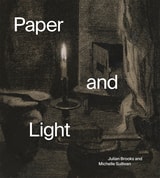
Paper and Light
Luminous DrawingsJulian Brooks
J. Paul Getty Trust, The, 2024
The treatment of light and shadow is one of the building blocks of drawing. From techniques such as highlights and reserves, to material selection and the creation of translucent tracing paper, to the use of light as a medium for viewing artworks, artists for hundreds of years have found innovative and dazzling ways to create light on a sheet of paper.
This publication examines the central relationship between paper and light in the world of drawings in western European art from the Renaissance to the twentieth century. Focusing on drawings from the collection of the J. Paul Getty Museum, as well as works from the British Museum, Musée du Louvre, and others, and featuring masterful works by such artists as Parmigianino, Leonardo da Vinci, Nicolas Poussin, Odilon Redon, Edgar Degas, and Georges Seurat, Paper and Light will entice readers to look longer and more closely at drawings, deriving an even deeper appreciation for the skill and labor that went into them.
This volume is published to accompany an exhibition on view at the J. Paul Getty Museum at the Getty Center from October 15, 2024, to January 19, 2025.
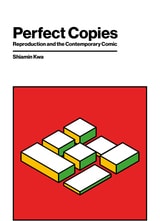
Perfect Copies
Reproduction and the Contemporary ComicShiamin Kwa
Rutgers University Press, 2023
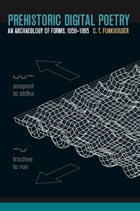
Prehistoric Digital Poetry
An Archaeology of Forms, 1959-1995C.T. Funkhouser, with a foreword by Sandy Baldwin
University of Alabama Press, 2007
Tracing the Origins of Digital Poetry Before the Web Revolution
For the last five decades, poets have had a vibrant relationship with computers and digital technology. This book is a documentary study and analytic history of digital poetry that highlights its major practitioners and the ways that they have used technology to foster a new aesthetic. Focusing primarily on programs and experiments produced before the emergence of the World Wide Web in the mid-1990s, C. T. Funkhouser analyzes numerous landmark works of digital poetry to illustrate that the foundations of today’s most advanced works are rooted in the rudimentary generative, visual, and interlinked productions of the genre’s prehistoric period.
Since 1959, computers have been used to produce several types of poetic output, including randomly generated writings, graphical works (static, animated, and video formats), and hypertext and hypermedia. Funkhouser demonstrates how hardware, programming, and software have been used to compose a range of new digital poetic forms. Several dozen historical examples, drawn from all of the predominant approaches to digital poetry, are discussed, highlighting the transformational and multi-faceted aspects of poetic composition now available to authors. This account includes many works, in English and other languages, which have never before been presented in an English-language publication.
In exploring pioneering works of digital poetry, Funkhouser demonstrates how technological constraints that would seemingly limit the aesthetics of poetry have instead extended and enriched poetic discourse. As a history of early digital poetry and a record of an era that has passed, this study aspires both to influence poets working today and to highlight what the future of digital poetry may hold.