Results by title
132 books match the query 'Thomas, Aquinas, Saint' and 6 start with p
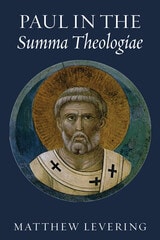
Paul in the Summa Theologiae
Matthew Levering
Catholic University of America Press, 2014
Aquinas's commentaries on St. Paul are well known and have received significant attention in the past few years. It is widely known, too, that Aquinas quotes Paul often in the Summa theologiae. This aspect of the Summa, however, has not been studied in detail. This book seeks to fill that lacuna in scholarship.
[more]
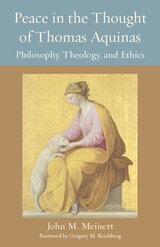
Peace in the Thought of Thomas Aquinas
Philosophy, Theology, and EthicsJohn M. Meinert
Catholic University of America Press, 2024
What does Aquinas have to teach us on the topic of peace? Looking over the scholarly literature, one would think very little. Most Thomists ignore Aquinas’s thought on peace. Most peace researchers summarily dismiss Aquinas. Peace in the Thought of Thomas Aquinas challenges both these trends and offers the first book length study of peace in Aquinas’s thought.
John Meinert outlines Aquinas's historical predecessors, then provides an exposition and interpretation of the full scope of Aquinas's thought on peace: metaphysics, Trinitarian theology, Christology, Pneumatology, ecclesiology, natural theology, ethics, and sacramental theology. What emerges from this extended study is a new vision of Aquinas’s work. Peace in the Thought of Thomas Aquinas establishes Aquinas as an indispensable dialogue partner for anyone thinking rigorously about the theology, philosophy, and ethics of peace. As Aquinas himself says, “observe peace and you will come to salvation.”
[more]
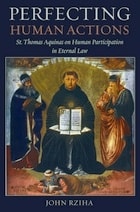
Perfecting Human Actions
St. Thomas Aquinas on Human Participation in Eternal LawJohn Rziha
Catholic University of America Press, 2009
During the last few centuries, a practical dichotomy between God and humans has developed within moral theory. As a result, moral theory tends to focus only on humans where human autonomy is foundational or only on God where divine commands capriciously rule. However, the moral theology of Thomas Aquinas overcomes this dichotomy. For Thomas, humans reach their perfection by participating in God's wisdom and love.
Perfecting Human Actions explores the ways humans participate in eternal law--God's wisdom that guides and moves all things to their proper action. The book begins with a thoughtful examination of the philosophic recovery of the notion of participation in Thomistic metaphysics. It then explains Thomas's theological understanding of the notion of participation to show how humans are related to God. It is discovered that when performing human actions, humans participate in the eternal law in two ways: as moved and governed by it, and cognitively.
In reference to participation as moved and governed, humans are directed by God to their proper end of eternal happiness. This mode of participation can be increased by perfecting the natural inclinations through virtue, grace, and the gifts of the Holy Spirit. In reference to cognitive participation, humans as rational creatures can know their proper end and how to attain it. Through this knowledge of moral truths, the intellect participates in the eternal law. Cognitive participation is perfected by the intellectual virtues (especially faith) and the gifts of the Holy Spirit (especially wisdom).
The book concludes by showing how the notion of human participation in the eternal law is a much better foundation for moral theory than the contemporary notion of autonomy.
[more]
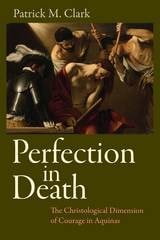
Perfection in Death
Patrick M. Clark
Catholic University of America Press, 2015
Perfection in Death compares and contrasts the relationship between conceptions of courage and death in the thought of Aquinas and his ancient philosophical sources. At the center of this investigation is Aquinas' identification of martyrdom as the paradigmatic act of courage as well as "the greatest proof of the perfection of charity." Such a portrayal of "perfection in death" bears some resemblance to the ancient tradition of "noble death", but departs from it in decisive ways. Clark argues that this departure can only be fully understood in light of an accompanying transformation of the metaphysical and anthropological framework underlying ancient theories of virtue. Perfection in Death aims to provide a new, theological account of this paradigm shift in light of contemporary Thomistic scholarship.
[more]
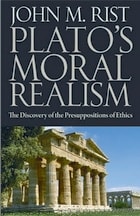
Plato's Moral Realism
The Discovery of the Presuppositions of EthicsJohn M. Rist
Catholic University of America Press, 2012
Surveying many of Plato's dialogues from the early, middle, and late periods, prominent philosopher John M. Rist shows how Plato gradually came to realize the need for metaphysics to support his ethical position and that a rigorous ethics required a secure metaphysics grounded in universal values.
[more]
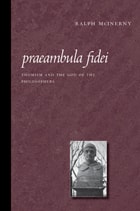
Praeambula Fidei
Thomism and the God of the PhilosophersRalph McInerny
Catholic University of America Press, 2006
In this book, renowned philosopher Ralph McInerny sets out to review what Thomas meant by the phrase and to defend a robust understanding of Thomas's teaching on the subject.
[more]