Results by title
81 books match the query 'Tradition' and 6 start with p
Paul Ricoeur
Tradition and Innovation in Rhetorical TheoryAndreea Deciu Ritivoi
Southern Illinois University Press, 2006
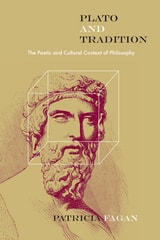
Plato and Tradition
The Poetic and Cultural Context of PhilosophyPatricia Fagan
Northwestern University Press, 2013
Plato’s dialogues are some of the most widely read texts in Western philosophy, and one would imagine them fully mined for elemental material. Yet, in Plato and Tradition, Patricia Fagan reveals the dialogues to be continuing sources of fresh insight. She recovers from them an underappreciated depth of cultural reference that is crucial to understanding their central philosophical concerns. Through careful readings of six dialogues, Fagan demonstrates that Plato’s presentation of Socrates highlights the centrality of tradition in political, erotic, and philosophic life. Plato embeds Socrates’s arguments and ideas in traditional references that would have been familiar to contemporaries of Socrates or Plato but that today’s reader typically passes over. Fagan’s book unpacks this cultural and literary context for the proper and full understanding of the philosophical argument of the Platonic dialogues. She concludes that, as Socrates demonstrates in word and deed, tradition is essential to successful living. But we must take up tradition with a critical openness to questioning its significance and future. Her original and compelling analyses may change the views of many readers who think themselves already well versed in the dialogues.
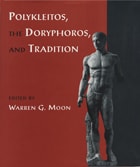
Polykleitos, the Doryphoros, and Tradition
Warren G. Moon
University of Wisconsin Press, 1995
Polykleitos of Argos, who flourished between 450 and 420 BC, is one of the most celebrated sculptors of classical Greece. A philosopher and theoretician as well as a sculptor, Polykleitos sought to capture in his statues the ideal proportions of the human body, and his work was frequently copied by later artists. This richly illustrated volume of superb essays by art historians, classical scholars, and archaeologists discusses Polykleitos’ life and influence, his intellectual and cultural milieu, and his best-known work, the Doryphoros, or “Spearbearer.”
Polykleitos, the Doryphoros, and Tradition displays an impressive range of approaches, beginning with commentary on the artistic and philosophical antecedents that influenced Polykleitos’ own aesthetic, as well as the role of contemporary Greek anatomical knowledge in his representation of the human form. Many of the essays offer extended analysis and detailed illustration of his surviving sculptures, later copies of his work, and reflections of his style in sculpture, paintings, coins, and other art in Greece, Italy, and Asia Minor. Several essays offer an extended discussion of Polykleitos’ original bronze Doryphoros, its pose, its relation to other spearbearer sculptures, and the fine Roman marble copy of it now at the Minneapolis Institute of Arts.
The volume as a whole is a visually and intellectually appealing work that will interest not only specialists but general readers interested in the art of ancient Greece. This volume resulted from a 1989 symposium held at the University of Wisconsin–Madison and the Minneapolis Institute of Arts.

Postmodern Sophistications
Philosophy, Architecture, and TraditionDavid Kolb
University of Chicago Press, 1990
Postsecular Benjamin
Agency and TraditionBrian Britt
Northwestern University Press, 2016
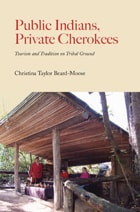
Public Indians, Private Cherokees
Tourism and Tradition on Tribal GroundChristina Taylor Beard-Moose
University of Alabama Press, 2008
A major economic industry among American Indian tribes is the public promotion and display of aspects of their cultural heritage in a wide range of tourist venues. Few do it better than the Eastern Band of the Cherokee, whose homeland is the Qualla Boundary of North Carolina. Through extensive research into the work of other scholars dating back to the late 1800s, and interviews with a wide range of contemporary Cherokees, Beard-Moose presents the two faces of the Cherokee people. One is the public face that populates the powwows, dramatic presentations, museums, and myriad roadside craft locations. The other is the private face whose homecoming, Indian fairs, traditions, belief system, community strength, and cultural heritage are threatened by the very activities that put food on their tables. Constructing an ethnohistory of tourism and comparing the experiences of the Cherokee with the Florida Seminoles and Southwestern tribes, this work brings into sharp focus the fine line between promoting and selling Indian culture.