Results by title
134 books match the query 'Transformation' and 3 start with p

Politicking Online
The Transformation of Election Campaign CommunicationsPanagopoulos, Costas
Rutgers University Press, 2009
While the Internet may have transformed the landscape of modern political campaigns throughout the world, Costas Panagopoulos reminds readers that officials and campaign workers need to adapt to changing circumstances, know the limits of their methods, and combine new technologies with more traditional techniques to achieve an overall balance.
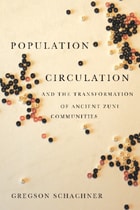
Population Circulation and the Transformation of Ancient Zuni Communities
Gregson Schachner
University of Arizona Press, 2012
Because nearly all aspects of culture depend on the movement of bodies, objects, and ideas, mobility has been a primary topic during the past forty years of archaeological research on small-scale societies. Most studies have concentrated either on local moves related to subsistence within geographically bounded communities or on migrations between regions resulting from pan-regional social and environmental changes. Gregson Schachner, however, contends that a critical aspect of mobility is the transfer of people, goods, and information within regions. This type of movement, which geographers term "population circulation," is vitally important in defining how both regional social systems and local communities are constituted, maintained, and—most important—changed.
Schachner analyzes a population shift in the Zuni region of west-central New Mexico during the thirteenth century AD that led to the inception of major demographic changes, the founding of numerous settlements in frontier zones, and the initiation of radical transformations of community organization. Schachner argues that intraregional population circulation played a vital role in shaping social transformation in the region and that many notable changes during this period arose directly out of peoples' attempts to create new social mechanisms for coping with frequent and geographically extensive residential mobility. By examining multiple aspects of population circulation and comparing areas that were newly settled in the thirteenth century to some that had been continuously occupied for hundreds of years, Schachner illustrates the role of population circulation in the formation of social groups and the creation of contexts conducive to social change.

Prague English Studies and the Transformation of Philologies
Edited by Martin Procházka and Ondrej Pilný
Karolinum Press, 2012