Results by title
283 books match the query 'Transportation' and 10 start with p

PCE 1604 Series, Frigate Panter
Henk Visser
Amsterdam University Press, 2023
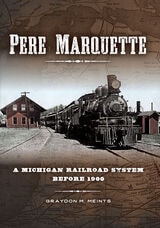
Pere Marquette
A Michigan Railroad System before 1900Graydon M. Meints
Michigan State University Press, 2020
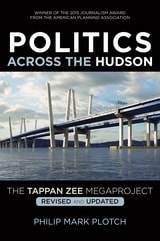
Politics Across the Hudson
The Tappan Zee MegaprojectPhilip Mark Plotch
Rutgers University Press, 2015
The State of New York built one of the world’s longest, widest, and most expensive bridges—the new Tappan Zee Bridge—stretching more than three miles across the Hudson River, approximately thirteen miles north of New York City. In Politics Across the Hudson, urban planner Philip Plotch offers a behind-the-scenes look at three decades of contentious planning and politics centered around this bridge, recently renamed for Governor Mario M. Cuomo, the state's governor from 1983 to 1994. He reveals valuable lessons for those trying to tackle complex public policies while also confirming our worst fears about government dysfunction.
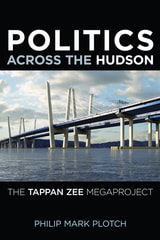
Politics Across the Hudson
The Tappan Zee MegaprojectPhilip Mark Plotch
Rutgers University Press, 2015
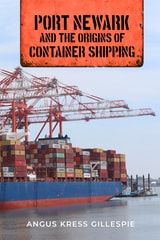
Port Newark and the Origins of Container Shipping
Angus Kress Gillespie
Rutgers University Press, 2023
This fascinating study traces the birth of containerization to Port Newark, New Jersey, in 1956 when trucker Malcom McLean thought of a brilliant new way to transport cargo. It tells the story of how Port Newark grew rapidly as McLean’s idea was backed by both New York banks and the US military, who used containerization to ship supplies to troops in Vietnam. Angus Gillespie takes us behind the scenes of today’s active container shipping operations in Port Newark, talking to the pilots who guide the ships into port, the Coast Guard personnel who help manage the massive shipping traffic, the crews who unload the containers, and even the chaplains who counsel and support the mariners. Port Newark shines a spotlight on the unsung men and women who help this complex global shipping operation run smoothly.
Since McLean's innovation, Port Newark has expanded with the addition of the nearby Elizabeth Marine Terminal. This New Jersey complex now makes up the busiest seaport on the East Coast of the United States. Some have even called it “America’s Front Door.” The book tells the story of the rapid growth of worldwide containerization, and how Port Newark has adapted to bigger ships with deeper channels and a raised bridge. In the end, there is speculation of the future of this port with ever-increasing automation, artificial intelligence, and automation.
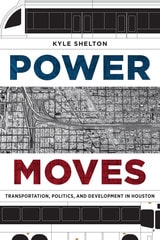
Power Moves
Transportation, Politics, and Development in HoustonBy Kyle Shelton
University of Texas Press, 2017
Since World War II, Houston has become a burgeoning, internationally connected metropolis—and a sprawling, car-dependent city. In 1950, it possessed only one highway, the Gulf Freeway, which ran between Houston and Galveston. Today, Houston and Harris County have more than 1,200 miles of highways, and a third major loop is under construction nearly thirty miles out from the historic core. Highways have driven every aspect of Houston’s postwar development, from the physical layout of the city to the political process that has transformed both the transportation network and the balance of power between governing elites and ordinary citizens.
Power Moves examines debates around the planning, construction, and use of highway and public transportation systems in Houston. Kyle Shelton shows how Houstonians helped shape the city’s growth by attending city council meetings, writing letters to the highway commission, and protesting the destruction of homes to make way for freeways, which happened in both affluent and low-income neighborhoods. He demonstrates that these assertions of what he terms “infrastructural citizenship” opened up the transportation decision-making process to meaningful input from the public and gave many previously marginalized citizens a more powerful voice in civic affairs. Power Moves also reveals the long-lasting results of choosing highway and auto-based infrastructure over other transit options and the resulting challenges that Houstonians currently face as they grapple with how best to move forward from the consequences and opportunities created by past choices.
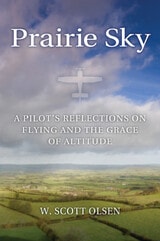
Prairie Sky
A Pilot's Reflections on Flying and the Grace of AltitudeW. Scott Olsen
University of Missouri Press, 2013
“It’s almost like ballet. Preflight. Starting. Warm-up. The voices from the control tower—the instructions. Taxiing. The rush down the runway. Airborne. There are names for every move. The run-up. Position and hold. Every move needs to be learned, practiced, made so familiar you feel the patterns in every other thing you do. It’s technical, yes. But there is a grace to getting metal and bone into the sky.”
Prairie Sky is a celebration of curiosity and a book for explorers. In this collection of contemplative essays, Scott Olsen invites readers to view the world from a pilot’s seat, demonstrating how, with just a little bit of altitude, the world changes, new relationships become visible, and new questions seem to rise up from the ground.
Whether searching for the still-evident shores of ancient lakes, the dustbowl-era shelterbelt supposed to run the length of the country, or the even more elusive understandings of physics and theology, Olsen shares the unique perspective and insight allowed to pilots.
Prairie Sky explores the reality as well as the metaphor of flight: notions of ceaseless time and boundless space, personal interior and exterior vision, social history, meteorology, and geology. Olsen takes readers along as he chases a new way of looking at the physical world and wonders aloud about how the whole planet moves in interconnected ways not visible from the ground. While the northern prairie may call to mind images of golden harvests and summer twilight such images do not define the region. The land bears marks left by gut-shaking thunderstorms, hard-frozen rivers, sweeping floods, and hurricane-size storms. Olsen takes to the midwestern sky to confront the ordinary world and reveals the magic--the wondrous and unique sights visible from the pilot’s seat of a Cessna.
Like Antoine de Saint-Exupery’s classic work Wind, Sand and Stars, Olsen’s Prairie Sky reveals the heart of what it means to fly. In the grand romantic tradition of the travel essay, it opens the dramatic paradoxes of self and collective, linear and circular, the heart and the border.
Propulsion Systems for Hybrid Vehicles
John M. Miller
The Institution of Engineering and Technology, 2010
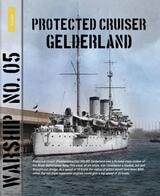
Protected cruiser Gelderland
Jantinus Mulder
Amsterdam University Press, 2023
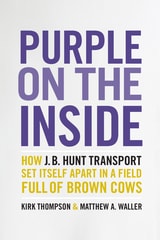
Purple on the Inside
How J.B. Hunt Transport Set Itself Apart in a Field Full of Brown CowsKirk Thompson
Epic Books, 2019
J.B. Hunt’s triumphs and struggles provide a fascinating case study of how business theory, leadership, culture, and organizational best-practices have combined to create one of the most successful companies in American history. Kirk Thompson, with more than forty years of experience inside the company, gives a CEO’s account of the company’s evolution, while Matt Waller connects the leadership decisions to business theories that are transferrable to other leaders and industries.
Purple on the Inside is more than a corporate history or business management primer. It’s a practical case study that illustrates what Seth Godin described in Purple Cow, his best-selling book that considers what characteristics make for a remarkable business. It’s the story of leaders and team members who tap into their founder’s spirit for innovation while maintaining the focus and high level of performance needed to grow. It’s a story about developing partnerships, technologies, and expertise that others can’t easily duplicate. And it’s a story of overcoming disheartening setbacks and cultivating the purple cows that have allowed J.B. Hunt Transport to do what many experts said was impossible—stand out from its competition in an industry full of brown cows.