Results by title
1185 books match the query 'Travel' and 36 start with p
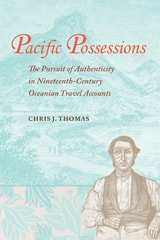
Pacific Possessions
The Pursuit of Authenticity in Nineteenth-Century Oceanian Travel AccountsChris J. Thomas
University of Alabama Press, 2021
Reimagining Oceania through the travel narratives that shaped the meaning of authenticity.
In Pacific Possessions: The Pursuit of Authenticity in Nineteenth-Century Oceanian Travel Accounts, Chris J. Thomas expands the literary canon on Polynesia and Melanesia beyond the giants, such as Herman Melville and Jack London, to include travel narratives by British and American visitors. These accounts were widely read and reviewed when they first appeared but have largely been ignored by scholars. For the first time, Thomas defines these writings as a significant literary genre.
Recovering these works allows us to reconceive of nineteenth-century Oceania as a vibrant hub of cultural interchange. Pacific Possessions recaptures the polyphony of voices that enlivened this space through the writing of these travelers, while also paying attention to their Oceanian interlocutors. Each chapter centers on a Pacific cultural marker, what Thomas refers to as each writer’s “possession”: the Tongan tattoo, the Hawaiian hula, the Fijian cannibal fork, and Robert Louis Stevenson’s cache of South Seas photographs.
Thomas analyzes how westerners formed narratives around these objects and what those objects meant within nineteenth-century Oceanian cultures. He argues that the accounts served to shape a version of Oceanian authenticity that persists today. The profiled traveler-writers had complex experiences, at times promoting exoticized exaggerations of so-called authentic Polynesian and Melanesian cultures and at other times genuinely engaging in cultural exchange. However, their views were ultimately compromised by a western lens. In Thomas’s words, “the authenticity is at once celebrated and written over.”
Palermo
Roberto Alajmo
Haus Publishing, 2017

Palestine and Jewish History
Criticism at the Borders of EthnographyJonathan Boyarin
University of Minnesota Press, 1996
Palestine and Jewish History was first published in 1996. Minnesota Archive Editions uses digital technology to make long-unavailable books once again accessible, and are published unaltered from the original University of Minnesota Press editions.
This provocative and personal series of meditations on the Israeli-Palestinian conflict argues that it represents a struggle not as much about land and history as about space, time, and memory. Juxtaposing entries from Jonathan Boyarin's field diary with critical and theoretical articulations, Palestine and Jewish History shows not only the unfinished nature of anthropological endeavor, but also the author's personal stake in the ethical predicament of being a Jew at this point in history.
Boyarin comes to Israel as a specialist in modern Jewish studies, an individual who has kin, friends, and colleagues there, a scholar with a long history of peace activism. He interweaves fascinating descriptions of ordinary life-parties, walks, classes, visits to homes-with a selection of his related writings on cultural studies and anthropology. Some sections are polemical; others are witty analyses of bumper stickers, slogans, the ambiguities in conversations. Boyarin foregrounds the messiness and lack of closure inherent in this process, presenting "raw materials" (field notes) in some sections of the book that reappear in other sections as various kinds of "finished" products (conference papers, published articles).
In the process, we learn a good deal about the Middle East and its debates and connections to other places. Boyarin addresses two fundamental issues: the difficulty of linking different sorts of memories and memorializations, and the importance of moving beyond objectivity and multiculturalism into a situated, engaged, and nontotalizing framework for fieldwork and ethnography.
Palestine and Jewish History enacts rather than reports on Boyarin's process of error, pain, impatience, uncertainty, discovery, embarrassment, self-criticism, intellectual struggle, and dawning awareness, challenging and engaging us in the process of discovery. Ultimately, it gives the lie, as the Palestinian presence does in Israel, to any concept of a "finishedness" that successfully conceals its unruly and painful multiple processes.
Jonathan Boyarin is the Leonard and Tobee Kaplan Distinguished Professor of Modern Jewish Thought in the Department of Religious Studies at the University of North Carolina at Chapel Hill. He is the author of Storm from Paradise, co-author of Powers of Diaspora, and the co-editor of Remapping Memory and Jews and Other Differences, all available from Minnesota.
Paris in Quotations
Compiled by Jaqueline Mitchell
Bodleian Library Publishing, 2016
Paris in Quotations takes readers on a one-of-a-kind tour of the City of Lights, in which we hear from the likes of Molière and Thomas Gold Appleton, who thought that, “When good Americans die, they go to Paris.” For centuries, Paris has reigned over the popular imagination. For those planning a visit, this collection will be warmly welcomed.
Parties and Elections in Greece
The Search for LegitimacyRichard Clogg
Duke University Press, 1987
Passage to Wonderland
Rephotographing Joseph Stimson's Views of the Cody Road to Yellowstone National Park, 1903 and 2008Michael A. Amundson
University Press of Colorado, 2012
Amundson examines the physical changes along "the most scenic fifty miles in America" and explores the cultural and natural history behind them. This careful analysis of the paired images make Passage to Wonderland more than a "then and now" photography book--it is a unique exploration of the interconnectedness between the Old West and the New West. It will be a wonderful companion for those touring the Cody Road as well as those armchair tourists who can follow the road on Google Earth using the provided GPS coordinates.
The University Press of Colorado gratefully acknowledges the generous support of the Charles Redd Center for Western Studies at Brigham Young University toward the publication of this book.
Patrick Leigh Fermor
Noble Encounters between Budapest and TransylvaniaMichael O'Sullivan
Central European University Press, 2018
Perfect Dirt
And Other Things I've Gotten WrongKeegan Lester
West Virginia University Press, 2021
Words have meaning and meaning evolves over time. In Perfect Dirt, Keegan Lester drags us through his failure to grasp the meaning that always seems to be just beyond his fingertips. These lyrical vignettes depict a lifelong search for home, identity, and the language to say the things we wish we could tell people in the moment.
Born in Southern California to parents who had migrated from West Virginia and South Florida, Lester spent summers with his grandparents in Morgantown, which instilled a deep anchor of place that continued to call to him, an Appalachian at heart even while living in New York City as a poet. As small successes started to come his way—a book and numerous tours—so did crises. Lester’s father, meanwhile, experiencing his own life crisis, embarked on a journey to sail the Caribbean. Both end up lost.
Part memoir, part tour diary, part homage to the places and people who have made him who he is, Perfect Dirt digs into the sometimes painful, sometimes jubilant questions of identity and success. This is a book searching to better understand the world and our place in it, the family we’re born into, and the family we make along the way.

Perimeter
A Contemporary Portrait of Lake MichiganKevin J. Miyazaki
Wisconsin Historical Society Press, 2014
Miyazaki also photographed the water as he went, creating waterscapes of the ever-changing lake affected by weather and time. Perimeter gathers these images together, creating a diverse portrait of both people and a place, encapsulating Lake Michigan’s significance to those who are drawn to it.
Peter Fidler
From York Factory to the Rocky MountainsBarbara Belyea
University Press of Colorado, 2026
The two journals—“From York Factory to Buckingham House” and “From Buckingham House to the Rocky Mountains”—detail Fidler’s travels over a period of nine months. They include remarks on fur trade history, organization of the inland brigade, three distinct geographical regions, and the daily life of a Plains nation. Belyea’s introduction and ample notes provide insight into the way geographic, specifically cartographic, information was noted in the journals, with additional information on industry trading techniques, traders’ economic decisions, broad changes in regional social and economic conditions, and interactions with indigenous peoples.
Fidler’s journals are an exceptional record of the fur trade’s western expansion and the daily life of a Plains nation at the height of its power and prosperity. With its rich analysis of primary source documents and painstaking reproduction of historical trade routes, Peter Fidler: From York Factory to the Rocky Mountains will be of great value to students and scholars in the fields of fur trade studies, cartography, travel literature, and Canadian history, as well as general readers interested in westward expansion, exploration, commerce, and indigenous-colonial relations.
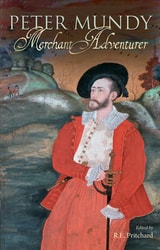
Peter Mundy, Merchant Adventurer
Edited by R. E. Pritchard
Bodleian Library Publishing, 2011
Peter Mundy was an English merchant trader of the seventeenth century who spent most of his life traveling the world, including western Europe, Poland, and Istanbul. Fueled by an insatiable curiosity about the world around him, Mundy kept a detailed account of his travels, illustrated throughout with his own lively drawings of the people and animals he encountered.
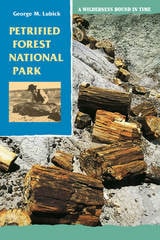
Petrified Forest National Park
A Wilderness Bound in TimeGeorge M. Lubick
University of Arizona Press, 1996
Petrified Forest National Park: A Wilderness Bound in Time speeds the reader on an ancient ecological journey, from the time of dinosaurs to the discovery of their Triassic fossils and on through a century of political maneuvering to create a place for the forest in American history. George Lubick describes how a dedicated few understood the environmental importance as well as the unique beauty of the park's Triassic Chinle Formation and the Painted Desert. Nearly a million people "visit the Triassic" annually; this environmental history of the ancient forest is important for those who know the park as well as those interested in natural America. Petrified Forest National Park is one of the few complete histories of any national park, a well-told, balanced treatment of the environmental, political, and historical factors that shape America's natural history.
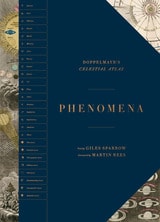
Phenomena
Doppelmayr's Celestial AtlasGiles Sparrow
University of Chicago Press, 2022
The expansive and intricate Atlas Coelestis, created by Johann Doppelmayr in 1742, set out to record everything known about astronomy at the time, covering constellations, planets, moons, comets, and more, all rendered in exquisite detail. Through stunning illustrations, historical notes, and scientific explanations, Phenomena contextualizes Doppelmayr’s atlas and creates a spectacular handbook to the heavens.
Phenomena begins by introducing Doppelmayr’s life and work, placing his extraordinary cosmic atlas in the context of discoveries made in the Renaissance and Enlightenment and highlighting the significance of its publication. This oversized book presents thirty beautifully illustrated and richly annotated plates, covering all the fundamentals of astronomy—from the dimensions of the solar system to the phases of the moon and the courses of comets. Each plate is accompanied by expert analysis from astronomer Giles Sparrow, who deftly presents Doppelmayr’s references and cosmological work to a modern audience. Each plate is carefully deconstructed, isolating key stars, planets, orbits, and moons for in-depth exploration. A conclusion reflects on the development of astronomy since the publication of the Atlas and traces the course of the science up to the present day. Following the conclusion is a timeline of key discoveries from ancient times onward along with short biographies of the key players in this history.
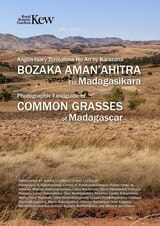
Photographic Field Guide of Common Grasses of Madagascar
Nantenaina Rakotomalala, Fenrita Randrianarimanana, and Rafael Felipe de Almeida
Royal Botanic Gardens, Kew, 2025
An easy-to-use bilingual field guide in English and Malagasy on the grasses of Madagascar.
Field Guide to the Grasses of Madagascar is the first photographic compilation of information on Madagascar’s Poaceae, featuring around half of the known grass species on the island. Compiled by a team of Malagasy and international botanists led by the Royal Botanic Gardens, Kew, Kew Madagascar, and partner institutions, it consolidates expert-generated and expert-verified information in Malagasy and English.
This book contains information on 269 species of grasses, with a general introduction and an index to Malagasy common names in addition to Latin names. The book also provides a critical foundation to the ongoing work of assessing the current biodiversity, distribution, uses, and evolution of the island’s grass flora.
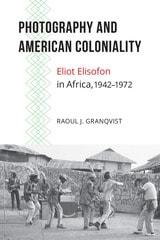
Photography and American Coloniality
Eliot Elisofon in Africa, 1942–1972Raoul J. Granqvist
Michigan State University Press, 2017
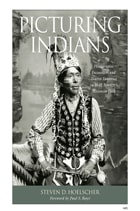
Picturing Indians
Photographic Encounters and Tourist Fantasies in H. H. Bennett's Wisconsin DellsSteven D. Hoelscher
University of Wisconsin Press, 2008
Winner, Book Award of Merit, Wisconsin Historical Society, Best Books for General Audiences, selected by the American Association of School Librarians, and Best Books for Regional Interests, selected by the Public Library Association
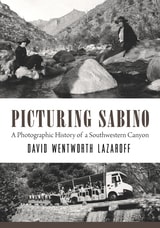
Picturing Sabino
A Photographic History of a Southwestern CanyonDavid Wentworth Lazaroff
University of Arizona Press, 2023
The story is vividly told through numerous historical photographs, lively anecdotes, and an engaging text, informed by decades of research by David Wentworth Lazaroff. Along the way the reader makes the acquaintance of ordinary picnickers as well as influential citizens who helped to reshape the canyon, while witnessing the canyon’s evolving relationship with its growing urban neighbor. The book will fascinate readers who are already familiar with Sabino Canyon, as well as anyone with an interest in local or regional history, or in historical photography.

Picturing Utopia
Bertha Shambaugh and the Amana PhotographersAbigail Foerstner
University of Iowa Press, 2005

Pilgrimage to Dollywood
A Country Music Road Trip through TennesseeHelen Morales
University of Chicago Press, 2014
In Pilgrimage to Dollywood, Morales sets out to discover Parton’s Tennessee. Her travels begin at the top celebrity pilgrimage site of Elvis Presley’s Graceland, then take her to Loretta Lynn’s ranch in Hurricane Mills; the Country Music Hall of Fame and the Grand Ole Opry in Nashville; to Sevierville, Gatlinburg, and the Great Smoky Mountains National Park; and finally to Pigeon Forge, home of the “Dolly Homecoming Parade,” featuring the star herself as grand marshall. Morales’s adventure allows her to compare the imaginary Tennessee of Parton’s lyrics with the real Tennessee where the singer grew up, looking at essential connections between country music, the land, and a way of life. It’s also a personal pilgrimage for Morales. Accompanied by her partner, Tony, and their nine-year-old daughter, Athena (who respectively prefer Mozart and Miley Cyrus), Morales, a recent transplant from England, seeks to understand America and American values through the celebrity sites and attractions of Tennessee.
This celebration of Dolly and Americana is for anyone with an old country soul who relies on music to help understand the world, and it is guaranteed to make a Dolly Parton fan of anyone who has not yet fallen for her music or charisma.
Pilgrimage to the End of the World
The Road to Santiago de CompostelaConrad Rudolph
University of Chicago Press, 2004

Pizza City
The Ultimate Guide to New York's Favorite FoodGenovese, Peter
Rutgers University Press, 2013
In this funny, fascinating book, Genovese explores the bloggers who write about New York pizza, the obsessive city dwellers who collect and analyze the delivery boxes, Mark Bello’s school where students spend a day making pies from scratch, and Scott Wiener’s pizza bus tours.
Along the way, readers learn the history of legendary Totonno’s on Coney Island (Zagat’s number-one pizzeria for 2012), along with behind-the-scenes stories about John’s on Bleecker Street, Joe’s on Carmine, Lombardi’s, Paulie Gee’s, Motorino, and more than a dozen other favorite spots and their owners. Throughout these profiles, Genovese presents a brief history of how pizza came to the city in 1905 and developed into a major attraction in Little Italy, a neighborhood that became a training ground for many of the city’s best-loved pizzerias. Enjoyable facts and figures abound. Did you know that Americans put 250 million pounds of pepperoni on their pies every year? Or that Domino’s has more outlets per capita in Iceland than in any other country?
Beyond the stories and tidbits, Genovese provides detailed, borough-by-borough reviews of 250 pizzerias, from simple “slice shops” with scant atmosphere to gourmet pizzerias, including shops that use organic ingredients and experiment with new variations of crusts and toppings. Complemented by hundreds of current and never-before-seen archival photos, the book gives the humble slice its proper due and will leave readers overwhelmed by a sudden desire for New York pizza.
Place Envy
Essays in Search of OrientationMichael Lowenthal
The Ohio State University Press, 2026
Growing up in places where his family had no past, and met mostly by silence from his Holocaust-refugee grandparents, Michael Lowenthal longed to be from somewhere. Then he realized he was gay and felt displaced from his own displaced family. Place Envy—his first book of essays after five acclaimed books of fiction—chronicles his quest for orientation in the world: as an agnostic Jew, as a queer traveler and lover, and as a writer who can tell or twist the truth. Yearning for a queer lineage, he obsesses about an uncle who perished at Bergen-Belsen but then finds, in his grandmother’s German hometown, a more surprising legacy. He lives with a Pennsylvania Amish family; accompanies blind gay men on a Mexican cruise; plays jazz with Sun Ra, the Afrofuturist who claimed to hail from Saturn; and pursues a clarifying love affair in Brazil. Collectively, these essays recount Lowenthal’s many journeys of dislocation and relocation: to foreign countries and subcultures and to the riskiest shores of family and self.
Place Names in Alabama
Virginia O. Foscue
University of Alabama Press, 1988
Discover the stories, people, and histories behind the names on Alabama's map.
Place Names in Alabama is the first comprehensive and systematic study of the names that define Alabama's geographic landscape. In this indispensable reference work, Virginia O. Foscue examines more than 2,600 place names drawn from across the state, including counties, cities, towns, rivers, lakes, streams, mountains, and other significant geographic features. Each entry provides detailed information on location, historical development, etymology, naming history, and documented sources, creating a rich portrait of the people, cultures, and events that have shaped Alabama over time.
Drawing upon archival records, historical documents, maps, and interviews with local informants, Foscue uncovers the stories behind the names that appear on Alabama's maps. The volume reveals the influence of Native American languages, European settlement, transportation networks, natural features, political leaders, local families, and regional traditions on the state's evolving identity. By tracing how communities and landmarks acquired their names, the book illuminates broader patterns of migration, settlement, economic development, and cultural exchange throughout Alabama's history.
More than a dictionary of place names, this work offers a unique window into Alabama's social and cultural heritage. Readers discover not only the origins of familiar names but also the histories of the individuals and communities that helped build the state. Whether used as a scholarly resource, a genealogical tool, or a source of fascinating historical insights, Place Names in Alabama remains an essential guide to understanding the connections between geography, language, and history in the American South.
Valuable for historians, genealogists, geographers, librarians, educators, students, journalists, and local history enthusiasts, this landmark volume continues to serve as the definitive reference on Alabama's geographic names and the stories they preserve.
Place Names of Wisconsin
Edward Callary
University of Wisconsin Press, 2016
Playa Works
The Myth of the EmptyWilliam L. Fox
University of Nevada Press, 2024
In eight brilliant essays, Fox explores many of the major playas of the American West , examining locations as diverse as Nellis Air Force Base and Frenchman Flat, where the federal government has tested experimental aircraft and atomic weaponry; the Great Salt Lake Desert, where land-speed records have been broken; and the Black Rock Desert of Northern Nevada, site of the colorful Burning Man arts festival. He analyzes the geological and climatological conditions that created the playas and the historical role that playas played in the exploration and settlement of the West. And he offers lucid and keenly perceptive discussions of the ways that artists have responded to the playas, from the ancient makers of geoglyphs to the work of contemporary artists who have found inspiration in these enigmatic spaces, including earthworks builder Michael Heizer, photographer Richard Misrach, and painter Michael Moore. The ensemble is a compelling combination of natural history, philosophy, and art criticism, a thoughtful meditation on humankind's aversion to and fascination with the void.
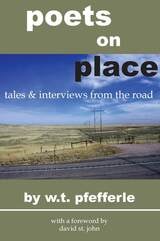
Poets On Place
W. T. Pfefferle
Utah State University Press, 2005
Out to see America and satisfy his travel bug, W. T. Pfefferle resigned from his position as director of the writing program at Johns Hopkins University and hit the road to interview sixty-two poets about the significance of place in their work. The lively conversations that resulted may surprise with the potential meanings of a seemingly simple concept. This gathering of voices and ideas is illustrated with photo and word portraits from the road and represented with suitable poems.
The poets are James Harms, David Citino, Martha Collins, Linda Gregerson, Richard Tillinghast, Orlando Ricardo Menes, Mark Strand, Karen Volkman, Lisa Samuels, Marvin Bell, Michael Dennis Browne, David Allan Evans, David Romtvedt, Sandra Alcosser, Robert Wrigley, Nance Van Winckel, Christopher Howell, Mark Halperin, Jana Harris, Sam Hamill, Barbara Drake, Floyd Skloot, Ralph Angel, Carol Muske-Dukes, David St. John, Sharon Bryan, Donald Revell, Claudia Keelan, Alberto Rios, Richard Shelton, Jane Miller, William Wenthe, Naomi Shihab Nye, Peter Cooley, Miller Williams, Beth Ann Fennelly, Natasha Trethewey, Denise Duhamel, Campbell McGrath, Terrance Hayes, Alan Shapiro, Nikki Giovanni, Charles Wright, Rita Dove, Henry Taylor, Dave Smith, Nicole Cooley, David Lehman, Lucie Brock-Broido, Michael S. Harper, C. D. Wright, Mark Wunderlich, James Cummins, Frederick Smock, Mark Jarman, Carl Phillips, Scott Cairns, Elizabeth Dodd, Jonathan Holden, Bin Ramke, Kenneth Brewer, and Paisley Rekdal.
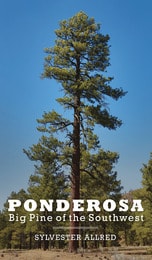
Ponderosa
Big Pine of the SouthwestSylvester Allred
University of Arizona Press, 2015
Ponderosa is the first of its kind to provide an introduction to the natural and human histories of the ponderosa pine forests of the Southwest that is accessible to all who wish to enjoy the forests. The book offers knowledge on elemental aspects of the forests, such as the structure of the trees, as well as theoretical perspectives on issues such as climate change. Included are discussions of biogeography, ecology, and human and natural history, illustrated by over fifty color photographs throughout.
Allred presents his observations as if he is recalling his thoughts over the course of a walk in a ponderosa pine forest. His imagery-saturated prose provides an informal and enjoyable approach to discovering the history and environment of the ponderosa pine. Using a concise, straightforward writing style, Allred invites readers to explore the forests with him.
Ponderosa includes:
- More than 50 color photos
- Learn how to estimate the age of a tree
- See the reptiles, birds, and mammals that make their home in ponderosa pine forests
- Much more!

Pope Francis and the Search for God in America
The Significance of His Early Visits to the AmericasMaria Clara Bingemer
Catholic University of America Press, 2021
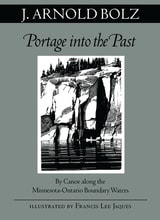
Portage Into The Past
J. Arnold Bolz
University of Minnesota Press, 1999
A Minnesota canoe enthusiast retraces the routes of the voyageurs.
The wilderness of the Boundary Waters is as rich in history as it is in natural beauty. Almost three hundred years ago, French Canadian voyageurs traveled through this area, which straddles the border of the United States and Canada, paddling birch-bark canoes along the St. Lawrence-Superior route to northwestern Canada. In this work of travel and adventure, Bolz recounts a journey he took in 1958, retracing the voyageurs’ route from Grand Portage on Lake Superior through the Quetico-Superior country to Rainy Lake. His canoe and paddle served as a time machine as he re-created a trip first taken centuries ago.
Beautifully illustrated by Francis Lee Jaques, Portage into the Past draws from the journals and maps of the early explorers of the region. Today’s adventurers of the north country will treasure this classic, an ideal guidebook to the region’s remarkable past. “At times, the transition is so smooth that it is with a start that we realize we have suddenly been carried two hundred years into the past.” Canoeing ISBN 0-8166-0919-5 Paper £00.00 $14.95192 Pages 6 x 8 1/4 AprilFesler-Lampert Minnesota Heritage Book SeriesTranslation inquiries: University of Minnesota Press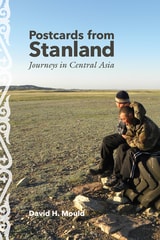
Postcards from Stanland
Journeys in Central AsiaDavid H. Mould
Ohio University Press, 2015
Central Asia has long stood at the crossroads of history. It was the staging ground for the armies of the Mongol Empire, for the nineteenth-century struggle between the Russian and British empires, and for the NATO campaign in Afghanistan. Today, multinationals and nations compete for the oil and gas reserves of the Caspian Sea and for control of the pipelines. Yet “Stanland” is still, to many, a terra incognita, a geographical blank.
Beginning in the mid-1990s, academic and journalist David Mould’s career took him to the region on Fulbright Fellowships and contracts as a media trainer and consultant for UNESCO and USAID, among others. In Postcards from Stanland, he takes readers along with him on his encounters with the people, landscapes, and customs of the diverse countries—Kazakhstan, Kyrgyzstan, Tajikistan, and Uzbekistan—he came to love. He talks with teachers, students, politicians, environmental activists, bloggers, cab drivers, merchants, Peace Corps volunteers, and more.
Until now, few books for a nonspecialist readership have been written on the region, and while Mould brings his own considerable expertise to bear on his account—for example, he is one of the few scholars to have conducted research on post-Soviet media in the region—the book is above all a tapestry of place and a valuable contribution to our understanding of the post-Soviet world.
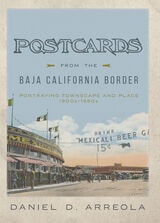
Postcards from the Baja California Border
Portraying Townscape and Place, 1900s–1950sDaniel D. Arreola
University of Arizona Press, 2021
This form of place study calls attention to how we can see a past through a serial view of places, by the nature of repetition, and the photographing of the same place over and over again. Arreola draws our focus to townscapes, or built landscapes, of four border towns—Tijuana, Mexicali, Tecate, and Algodones—during the first half of the twentieth century. With an emphasis on the tourist’s view of these places, this book creates a vivid picture of what life was like for tourists and residents of these towns in the early and mid-twentieth century. Postcards from the Baja California Border is a rich and fascinating experience, one that takes you on a time-travel journey through border town histories and geographies while celebrating the visual intrigue of postcards.
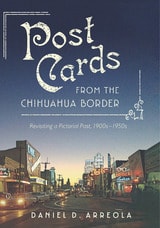
Postcards from the Chihuahua Border
Revisiting a Pictorial Past, 1900s–1950sDaniel D. Arreola
University of Arizona Press, 2019
In Postcards from the Chihuahua Border Daniel D. Arreola captures the exhilaration of places in time, taking us back to Mexico’s northern border towns of Cuidad Juárez, Ojinaga, and Palomas in the early twentieth century. Drawing on more than three decades of archival work, Arreola uses postcards and maps to unveil the history of these towns along west Texas’s and New Mexico’s southern borders.
Postcards offer a special kind of visual evidence. Arreola’s collection of imagery and commentary about them shows us singular places, enriching our understandings of history and the history of change in Chihuahua. No one postcard tells the entire story. But image after image offers a collected view and insight into changing perceptions. Arreola’s geography of place looks both inward and outward. We see what tourists see, while at the same time gaining insight about what postcard photographers and postcard publishers wanted to be seen and perceived about these border communities.
Postcards from the Chihuahua Border is a colorful and dynamic visual history. It invites the reader to time travel, to revisit another era—the first half of the last century—when these border towns were framed and made popular through picture postcards.
Prairie Sky
A Pilot's Reflections on Flying and the Grace of AltitudeW. Scott Olsen
University of Missouri Press, 2013
“It’s almost like ballet. Preflight. Starting. Warm-up. The voices from the control tower—the instructions. Taxiing. The rush down the runway. Airborne. There are names for every move. The run-up. Position and hold. Every move needs to be learned, practiced, made so familiar you feel the patterns in every other thing you do. It’s technical, yes. But there is a grace to getting metal and bone into the sky.”
Prairie Sky is a celebration of curiosity and a book for explorers. In this collection of contemplative essays, Scott Olsen invites readers to view the world from a pilot’s seat, demonstrating how, with just a little bit of altitude, the world changes, new relationships become visible, and new questions seem to rise up from the ground.
Whether searching for the still-evident shores of ancient lakes, the dustbowl-era shelterbelt supposed to run the length of the country, or the even more elusive understandings of physics and theology, Olsen shares the unique perspective and insight allowed to pilots.
Prairie Sky explores the reality as well as the metaphor of flight: notions of ceaseless time and boundless space, personal interior and exterior vision, social history, meteorology, and geology. Olsen takes readers along as he chases a new way of looking at the physical world and wonders aloud about how the whole planet moves in interconnected ways not visible from the ground. While the northern prairie may call to mind images of golden harvests and summer twilight such images do not define the region. The land bears marks left by gut-shaking thunderstorms, hard-frozen rivers, sweeping floods, and hurricane-size storms. Olsen takes to the midwestern sky to confront the ordinary world and reveals the magic--the wondrous and unique sights visible from the pilot’s seat of a Cessna.
Like Antoine de Saint-Exupery’s classic work Wind, Sand and Stars, Olsen’s Prairie Sky reveals the heart of what it means to fly. In the grand romantic tradition of the travel essay, it opens the dramatic paradoxes of self and collective, linear and circular, the heart and the border.
Prairie
A North American GuideSuzanne Winckler
University of Iowa Press, 2004
North America’s grasslands once stretched from southern Canada to northern Mexico, and across this considerable space different prairie types evolved to express the sum of their particular longitude and latitude, soils, landforms, and aspect. This prairie guide is your roadmap to what remains of this varied and majestic landscape.
Suzanne Winckler’s goal is to encourage travelers to get off the highways, out of their cars, and onto North America’s last remaining prairies. She makes this adventure as easy as possible by providing exact driving directions to the more than three hundred sites in her guide. She also includes information about size, management, phone numbers, and outstanding characteristics for every prairie site and provides readers with a thorough list of recommended readings and Web sites.
The scope of the guide is impressive. It encompasses prairies found within national grasslands, parks, forests, recreation areas, wildlife refuges, state parks, preserves, and natural areas and on numerous working ranches in Saskatchewan and Manitoba, the Dakotas, Minnesota, Illinois, Iowa, Kansas, Missouri, Nebraska, Oklahoma, and Texas. A series of maps locate the prairies both geographically and by name.
From “the largest restoration project within the historic range of tallgrass prairie” at Neal Smith National Wildlife Refuge in Iowa to Big Bend National Park in Texas, where “the Chisos Mountains, completely surrounded by the park, rise up majestically from the Chihuahuan Desert floor,” Winckler celebrates the dramatic expanses of untouched prairie, the crown jewels of prairie reconstruction and restoration, and the neglected remnants that deserve to be treasured.
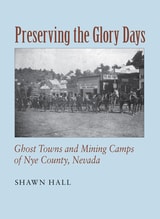
Preserving The Glory Days
Ghost Towns And Mining Camps Of Nye County, NevadaShawn Hall
University of Nevada Press, 1999
Nye County is Nevada’s largest and least populated county, but it is also the site of many of the state’s most colorful ghost towns and mining camps. The county’s economy throughout its history has been largely based on its mines--first, exploiting veins of gold and silver, and more recently deposits of raw materials for modern industry, such as molybdenum and barite. It was here that famous boomtowns like Tonopah and Rhyolite sprang up after the discovery of nearby lodes brought in rushes of prospectors and the merchants who supported them. But the county includes many smaller, shorter-lived camps and numerous abandoned stagecoach and railroad stops associated with defunct mining operations.This book offers a lively, informative record of Nevada’s isolated interior. Hall first published a guide to Nye County’s ghost towns in 1981. Since then, he has continued his research into the county’s past and has uncovered much new information and corrected some errors. To prepare this revised and greatly expanded edition, he revisited all 175 sites recorded earlier and has added more than 20 previously unlisted sites.
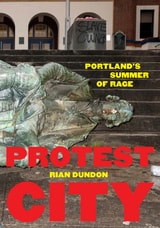
Protest City
Portland's Summer of RageRian Dundon
Oregon State University Press, 2023
In the months leading up to the 2020 presidential election, Portland made national news with nightly social justice protests, often met with violent response by counter protestors and law enforcement. Though frequently regarded as a progressive hub, Portland has a long history of racial inequality and oppression, and the city’s entrenched divisions gained new attention during the Trump years. The photos in Protest City present a visceral visual record of this significant moment in Portland’s history.
Rian Dundon, who has been photographing the rise of extreme politics on the West Coast since 2016, lived only a short walk from the protests that erupted after the murder of George Floyd. For one hundred days, Dundon enmeshed himself in the demonstrations with an unobtrusive point-and-shoot camera. The result is a graphic portrayal of how social movements become politicized, how spectacle serves as a subtext to change in the digital age, and how modern protests blur distinctions among performance, ritual, and surveillance. As he follows the progress of Portland’s conflicts, Dundon draws connections to Oregon’s legacy as a stronghold of white supremacist extremism and interrogates the role of whiteness in racial justice movements.
Most of the photographs in the book were taken between May and October 2020, but the collection also includes photos from protests in late 2020 and 2021 around various related issues, including the Red House eviction blockade, rightwing demonstrations on January 6 and 17, and the one-year anniversary of George Floyd’s murder. Dundon’s striking photos recreate the immediacy and impact of the protests, while essays by historian Carmen Thompson and journalist Donnell Alexander contextualize the uprising’s sociopolitical background. A chronology and author’s note are also featured.
The publisher and author would like to thank the Magnum Foundation, Documentary Arts, and the Economic Hardship Reporting Project for their generous support of this publication. Additional funding has been provided by Furthermore: a program of the J. M. Kaplan Fund.