141 books match the query 'Twentieth Century' and 10 start with p
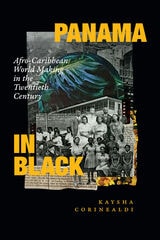
cover of Panama in Black: Afro-Caribbean World Making in the Twentieth Century

Panama in Black

Afro-Caribbean World Making in the Twentieth Century

Kaysha Corinealdi

Duke University Press, 2022
In Panama in Black, Kaysha Corinealdi traces the multigenerational activism of Afro-Caribbean Panamanians as they forged diasporic communities in Panama and the United States throughout the twentieth century. Drawing on a rich array of sources including speeches, yearbooks, photographs, government reports, radio broadcasts, newspaper editorials, and oral histories, Corinealdi presents the Panamanian isthmus as a crucial site in the making of an Afro-diasporic world that linked cities and towns like Colón, Kingston, Panamá City, Brooklyn, Bridgetown, and La Boca. In Panama, Afro-Caribbean Panamanians created a diasporic worldview of the Caribbean that privileged the potential of Black innovation. Corinealdi maps this innovation by examining the longest-running Black newspaper in Central America, the rise of civic associations created to counter policies that stripped Afro-Caribbean Panamanians of citizenship, the creation of scholarship-granting organizations that supported the education of Black students, and the emergence of national conferences and organizations that linked anti-imperialism and Black liberation. By showing how Afro-Caribbean Panamanians used these methods to navigate anti-Blackness, xenophobia, and white supremacy, Corinealdi offers a new mode of understanding activism, community, and diaspora formation.
[more]
cover of Phonology in the Twentieth Century: Theories of Rules and Theories of Representations

Phonology in the Twentieth Century

Theories of Rules and Theories of Representations

Stephen R. Anderson

University of Chicago Press, 1985
[more]
cover of Places of Their Own: African American Suburbanization in the Twentieth Century

Places of Their Own

African American Suburbanization in the Twentieth Century

Andrew Wiese

University of Chicago Press, 2005

On Melbenan Drive just west of Atlanta, sunlight falls onto a long row of well-kept lawns. Two dozen homes line the street; behind them wooden decks and living-room windows open onto vast woodland properties. Residents returning from their jobs steer SUVs into long driveways and emerge from their automobiles. They walk to the front doors of their houses past sculptured bushes and flowers in bloom.

For most people, this cozy image of suburbia does not immediately evoke images of African Americans. But as this pioneering work demonstrates, the suburbs have provided a home to black residents in increasing numbers for the past hundred years—in the last two decades alone, the numbers have nearly doubled to just under twelve million. Places of Their Own begins a hundred years ago, painting an austere portrait of the conditions that early black residents found in isolated, poor suburbs. Andrew Wiese insists, however, that they moved there by choice, withstanding racism and poverty through efforts to shape the landscape to their own needs. Turning then to the 1950s, Wiese illuminates key differences between black suburbanization in the North and South. He considers how African Americans in the South bargained for separate areas where they could develop their own neighborhoods, while many of their northern counterparts transgressed racial boundaries, settling in historically white communities. Ultimately, Wiese explores how the civil rights movement emboldened black families to purchase homes in the suburbs with increased vigor, and how the passage of civil rights legislation helped pave the way for today's black middle class.

Tracing the precise contours of black migration to the suburbs over the course of the whole last century and across the entire United States, Places of Their Own will be a foundational book for anyone interested in the African American experience or the role of race and class in the making of America's suburbs.
 
Winner of the 2005 John G. Cawelti Book Award from the American Culture 
Association.
Winner of the 2005 Award for Best Book in North American Urban 
History from the Urban History Association.
 
[more]
cover of Politics without Vision: Thinking without a Banister in the Twentieth Century

Politics without Vision

Thinking without a Banister in the Twentieth Century

Tracy B. Strong

University of Chicago Press, 2012

From Plato through the nineteenth century, the West could draw on comprehensive political visions to guide government and society. Now, for the first time in more than two thousand years, Tracy B. Strong contends, we have lost our foundational supports. In the words of Hannah Arendt, the state of political thought in the twentieth and twenty-first centuries has left us effectively “thinking without a banister.”

Politics without Vision takes up the thought of seven influential thinkers, each of whom attempted to construct a political solution to this problem: Nietzsche, Weber, Freud, Lenin, Schmitt, Heidegger, and Arendt. None of these theorists were liberals nor, excepting possibly Arendt, were they democrats—and some might even be said to have served as handmaidens to totalitarianism. And all to a greater or lesser extent shared the common conviction that the institutions and practices of liberalism are inadequate to the demands and stresses of the present times. In examining their thought, Strong acknowledges the political evil that some of their ideas served to foster but argues that these were not necessarily the only paths their explorations could have taken. By uncovering the turning points in their thought—and the paths not taken—Strong strives to develop a political theory that can avoid, and perhaps help explain, the mistakes of the past while furthering the democratic impulse.
 
Confronting the widespread belief that political thought is on the decline, Strong puts forth a brilliant and provocative counterargument that in fact it has endured—without the benefit of outside support.  A compelling rendering of contemporary political theory, Politics without Vision is sure to provoke discussion among scholars in many fields.
[more]
cover of Politics, Personality, and Social Science in the Twentieth Century: Essays in Honor of Harold D. Lasswell

Politics, Personality, and Social Science in the Twentieth Century

Essays in Honor of Harold D. Lasswell

Edited by Arnold A. Rogow

University of Chicago Press, 1969

Harold Lasswell is one of America's most distinguished political scientists, a man whose work has had enormous impact both in the United States and abroad upon not only his own field but also those of sociology, psychology and psychiatry, economics, law, anthropology, and communications.

This collection of essays is the first full-scale effort to deal with the voluminous writings of Lasswell and explore his at once charming and baffling personality which is perhaps inseparable from the inventiveness, unconventionality, and unusual scope of his work.

The authors of these essays, many of whom are former students or collaborators, view their subject from a variety of perspectives. What emerges is a full assessment of Lasswell's many-faceted contribution to the social scholarship of his time.
[more]
cover of Post-Military Society: Militarism, Demilitarization and War at the End of the Twentieth Century

Post-Military Society

Militarism, Demilitarization and War at the End of the Twentieth Century

Martin Shaw

Temple University Press, 1991

With the collapse of the Cold War following the Eastern European revolutions and the ongoing democratization of the Soviet republics, optimism about peace has transformed the international political climate. Incidents such as the Gulf War, however, have tempered this optimism and cast doubts on the prospects for demilitarization. In this book, Martin Shaw examines some of the developments that lie behind the recent momentous changes and argues that, despite the Gulf War and other regional wars, militarism is in decisive retreat.

Writing from a broadly sociological perspective, Shaw examines the roles of war and military institutions in human society and the ways in which preoccupation with war has affected domestic, regional, and international politics in the twentieth century. In doing so, he asks: When does the post-war era end? How have nuclear weapons altered the perception of war by society? What is the relationship between industrialism and militarism?

The author contends that, despite the militarism of some Third World countries, societies in the advanced industrial world (especially in Europe) have been undergoing a profound demilitarization. These societies have become politically insulated from war preparation, have recognized the effect of social movements on inter-state relations, and are experiencing a "revolution of rising expectations."

Offering evidence of "post-military citizenship," Shaw describes the increasing resistance to military conscription throughout the Western world, the replacement of blind obedience with demand for accountability in Eastern bloc countries, and the simultaneous rise of nationalism and communitarianism among common market members. And, in light of the collapse of Stalinist militarism in Europe and the USSR, Shaw suggests some of the changes that face Soviet society.
 
[more]
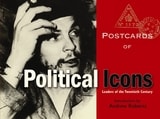
cover of Postcards of Political Icons: Leaders of the Twentieth Century

Postcards of Political Icons

Leaders of the Twentieth Century

Edited by the Bodleian Library

Bodleian Library Publishing, 2008
More than any preceding era, the twentieth century was defined by images. The widespread adoption of photography, the advent of film, and the increasing speed and ease of communications enabled people worldwide for the first time to know the faces of world leaders as intimately as those of their friends and family. The jutting jaw and jaunty cigarette holder of Franklin Delano Roosevelt, Fidel Castro’s raised fist and bearded countenance, Tony Blair’s toothy smile, and Stalin’s bristly frown—these and other iconographic images immediately conjure up unforgettable, dramatic moments in history.
Opening with the end of Queen Victoria’s reign and continuing through the end of the cold war, Postcards of Political Icons tells the story of the twentieth century through images of its most recognizable leaders. The politicians who presided over the demise of colonialism, led the communist revolution, and fought two world wars are presented on these postcards in unusual–and often surprisingly personal—moments. Nelson Mandela is captured in a moment of privacy, looking dreamily into the distance; Yasser Arafat wrestles with chopsticks; while Benito Mussolini, known for his public performances, masters a new curious posture.
Reproducing many rare and little-seen images, Postcards of Political Icons offers a fascinating glimpse at the iconography of political power—and the reality of the people behind it.
[more]
cover of Postsocialism and Cultural Politics: China in the Last Decade of the Twentieth Century

Postsocialism and Cultural Politics

China in the Last Decade of the Twentieth Century

Xudong Zhang

Duke University Press, 2008

In Postsocialism and Cultural Politics, Xudong Zhang offers a critical analysis of China’s “long 1990s,” the tumultuous years between the 1989 Tiananmen Square crackdown and China’s entry into the World Trade Organization in 2001. The 1990s were marked by Deng Xiaoping’s market-oriented reforms, the Taiwan missile crisis, the Asian financial crisis, and the end of British colonial rule of Hong Kong. Considering developments including the state’s cultivation of a market economy, the aggressive neoliberalism that accompanied that effort, the rise of a middle class and a consumer culture, and China’s entry into the world economy, Zhang argues that Chinese socialism is not over. Rather it survives as postsocialism, which is articulated through the discourses of postmodernism and nationalism and through the co-existence of multiple modes of production and socio-cultural norms. Highlighting China’s uniqueness, as well as the implications of its recent experiences for the wider world, Zhang suggests that Chinese postsocialism illuminates previously obscure aspects of the global shift from modernity to postmodernity.

Zhang examines the reactions of intellectuals, authors, and filmmakers to the cultural and political conflicts in China during the 1990s. He offers a nuanced assessment of the changing divisions and allegiances within the intellectual landscape, and he analyzes the postsocialist realism of the era through readings of Mo Yan’s fiction and the films of Zhang Yimou. With Postsocialism and Cultural Politics, Zhang applies the same keen insight to China’s long 1990s that he brought to bear on the 1980s in Chinese Modernism in the Era of Reforms.
[more]
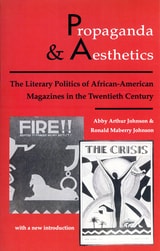
cover of Propaganda and Aesthetics: The Literary Politics of Afro-American Magazines in the Twentieth Century

Propaganda and Aesthetics

The Literary Politics of Afro-American Magazines in the Twentieth Century

Abby Arthur Johnson

University of Massachusetts Press, 1979

The literary materials in Afro-American magazines of the twentieth century weave into a rich narrative. The journals provide insight, not available in a comparable manner elsewhere, into the evolution of Afro-American literature. They trace the contributions made by major figures, including W.E.B. Du Bois, Langston Hughes, Charles S. Johnson, Alain Locke, and Richard Wright, among several others. They record the discussions over art and propaganda which have been long prominent in black literature. Decade by decade, black artists and intellectuals have debated the function of Afro-American literature: should it serve the aesthetic tastes of the individual writer, or should it advance the interests of Afro-Americans as a group. Some writers favored art-for-art's sake, or approximations of that emphasis; others articulated the need for art-for-people's sake, as they termed it.

Little work has been done on individual Afro-American periodicals and nothing, up to this point, has been published on twentieth-century black journals as a group. Studies of magazines in general are relatively rare, with only The Little Magazine, by Frederick Hoffman, Charles Allen, and Carolyn P. Ulrich, attempting a survey of small journals in this century. This book fills a considerable gap in literary history by detailing the development of Afro-American magazines in this century.

[more]
cover of Psycho-Marxism: Marxism and Psychoanalysis Late in the Twentieth Century, Volume 97

Psycho-Marxism

Marxism and Psychoanalysis Late in the Twentieth Century, Volume 97

Robert Miklitsch, spec issue ed

Duke University Press, 0

This special issue of South Atlantic Quarterly examines the recent theoretical convergence of psychoanalysis and Marxism by posing anew the question of the relationship between these two master discourses in the era of late capitalism. Beginning with Zizek’s “Psychoanalysis in Post-Marxism,” which both dramatizes and analyzes the discursive antinomies of psycho-Marxism, this volume comes full circle with Robert Miklitsch’s “Going through the Fantasy,” which seeks the “traumatic kernel” at the core of Zizekian theory. In other essays, psycho-Marxism is submitted to Foucault’s analytics of power/knowledge, Derrida’s spectral letter, the postcolonial theory of Homi Bhabha and Gayatri Spivak, and the performative politics/poetics of Jean Genet. The theoretical perspectives of Laura Mulvey and Gayle Rubin are crosscut and spliced to take women out of commodity traffic and put feminist automobility up on the big screen. Imperialism, Nazi psychoanalytic techno-fetishism, and the strange alliance between (anti)queer Marxism and gay conservatism provide other useful lenses through which the Marxist/psychoanalytic bond is viewed.

Contributors. Elizabeth Jane Bellamy, Teresa Brennan, Rosaria Champagne, Stathis Gourgouris, Catherine Liu, Kathleen McHugh, Robert Miklitsch, Abdul-Karim Mustapha, Laurence A. Rickels, Eugene Victor Wolfenstein, Slavoj Zizek

[more]