Results by title
77 books match the query 'Wars' and 2 start with p
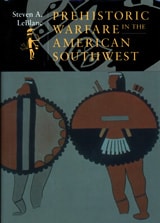
Prehistoric Warfare in the American Southwest
Steven A LeBlanc
University of Utah Press, 2007
Massacres, raiding parties, ambush, pillage, scalping, captive taking: the things we know and sometimes dread to admit occur during times of war all happened in the prehistoric Southwest—and there is ample archaeological evidence. Not only did it occur, but the history of the ancient Southwest cannot be understood without noting the intensity and impact of this warfare.
Most people today, including many archaeologists, view the Pueblo people of the Southwest as historically peaceful, sedentary corn farmers. Our image of the Hopis and Zunis, for example, contrasts sharply with the more nomadic Apaches whose warfare and raiding abilities are legendary. In Prehistoric Warfare in the American Southwest Steven LeBlanc demonstrates that this picture of the ancient Puebloans is highly romanticized. Taking a pan-Southwestern view of the entire prehistoric and early historic time range and considering archaeological and ethnohistorical evidence and oral traditions, he presents a different picture.
War, not peace, was commonplace and deadly throughout the prehistoric sequence. Many sites were built as fortresses, communities were destroyed, and populations massacred. The well-known abandonments of much of the Southwest were warfare related. During the late prehistoric period fighting was particularly intense, and the structure of the historic pueblo societies was heavily influenced by warfare.
Objectively sought, evidence for war and its consequences is abundant. The people of the region fought for their survival and evolved their societies to meet the demands of conflict. Ultimately, LeBlanc asserts that the warfare can be understood in terms of climate change, population growth, and their consequences.
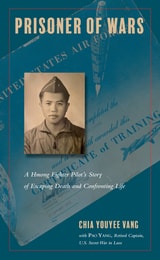
Prisoner of Wars
A Hmong Fighter Pilot's Story of Escaping Death and Confronting LifeChia Youyee Vang
Temple University Press, 2021
Retired Captain Pao Yang was a Hmong airman trained by the U.S. Air Force and CIA to fly T-28D aircraft for the U.S. Secret War in Laos. However, his plane was shot down during a mission in June 1972. Yang survived, but enemy forces captured him and sent him to a POW camp in northeastern Laos. He remained imprisoned for four years after the United States withdrew from Vietnam because he fought on the American side of the war.
Prisoner of Wars shows the impact the U.S Secret War in Laos had on Hmong combatants and their families. Chia Vang uses oral histories thatpoignantly recount Yang’s story and the deeply personal struggles his loved ones—who feared he had died—experienced in both Southeast Asia and the United States. As Yang eventually rebuilt his life in America, he grappled with issues of freedom and trauma.
Yang’s life provides a unique lens through which to better understand the lasting impact of the wars in Southeast Asia and the diverse journeys that migrants from Asia made over the last two centuries. Prisoner of Wars makes visible an aspect of the collateral damage that has been left out of dominant Vietnam War narratives.