Results by title
1295 books match the query 'Women authors' and 48 start with p
PORTAL
Tracy Fuad
University of Chicago Press, 2024
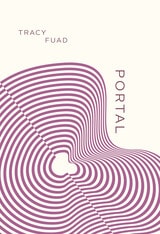
Tracy Fuad’s second collection of poems, PORTAL, probes the fraught experience of bringing a new life into a world that is both lush and filled with gloom. A baby is born in a brutalist building; the planet shrinks under the new logic of contagion; roses washed up from a shipwreck centuries ago are blooming up and down the cape. PORTAL documents a life that is mediated, even at its most intimate moments, by flattening interfaces of technology and in which language—and even intelligence—is no longer produced only by humans. The voices here are stalked by eco-grief and loneliness, but they also brim with song and ecstasy, reveling in the strangeness of contemporary life while grieving losses that cannot be restored. Through Fuad’s frank, honest poetry, PORTAL vibrates with pleasure and dread.
Peeling back the surfaces of words to reveal their etymologies, Fuad embraces playfulness through her formal range, engaging styles from the tersely lineated to the essayistic as she intertwines topics of replication, reproduction, technology, language, history, and biology.
PULSE
Maria Nazos
Omnidawn, 2026
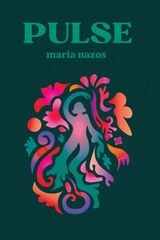
The poems of PULSE look deeply into a troubled world, inspecting what makes us suffer and demonstrating how we overcome difficulties. PULSE interrogates painful losses of friends to cancer, harmful politics, hate crimes, and mass shootings, including the 2016 massacre at Pulse nightclub. Maria Nazos examines the life force that continues to pulse relentlessly through a fragmented world, that enables us to flow, breathe, and regenerate, even through grief and loss. From Provincetown beaches and Costa Rican crab shacks to Midwestern plains and a Tampa nightclub, the collection moves through madness, redemption, and love.

Pacific Northwest Women, 1815-1925
Lives, Memories, and WritingsJean M. Ward
Oregon State University Press, 1995
Palace-Burner
The Selected Poetry of Sarah PiattEdited and with an Introduction by Paula Bernat Bennett
University of Illinois Press, 2001
The unique and powerful voice of an extraordinary nineteenth-century woman poet
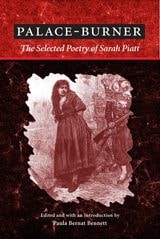
Sarah Morgan Bryan Piatt (1836-1919) now ranks as the strongest American woman poet of the nineteenth century after Emily Dickinson. Published heavily in all the period's most prestigious journals, Piatt was widely celebrated by her peers as a gifted stylist in the genteel tradition. This selected edition reveals Piatt's other side, a side that contemporary critics found more problematic: ironic, experimental, pushing the limits of Victorian language and the sentimental female persona.
Spanning more than half a century, this collection reveals the "borderland temper" of Piatt's mind and art. As an expatriate southerner, Piatt voices guilt at her own past as the daughter of slave-holders and raw anguish at the waste of war; as an eleven-year "exile" in Ireland, she expresses her dismay at the indifference of the wealthy to the daily suffering of the poor. Her poetry, whether speaking of children, motherhood, marriage, or illicit love affairs, uses conventional language and forms but in ways that greatly broadened the range of what women's poetry could say. Going beyond and even contradicting the genteel aesthetic, Piatt's poetry moves toward an innovative kind of dramatic realism built on dialogue, an approach more familiar to modern readers, acquainted with Faulknerian polyvocal texts, than to her contemporaries, who were as ill at ease with complexity as they were with irony.
This astutely edited selection of Piatt's mature work--much of it never before collected--explains why her "deviant poetics" caused her peers such discomfort and why they offer such fertile ground for study today. Illustrated with engravings from Harper's Weekly and Harper's Bazaar, both periodicals in which Piatt's work appeared, Palace-Burner marks the reemergence of one of the most interesting writers in American literary history.

Palm Frond with Its Throat Cut
Vickie Vértiz
University of Arizona Press, 2017
Panic Fiction
Women and Antebellum Economic CrisisMary Templin
University of Alabama Press, 2014
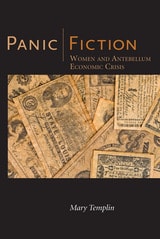
Between the mid-1830s and the late 1850s, authors such as Hannah Lee, Catharine Sedgwick, Eliza Follen, Maria McIntosh, and Maria Cummins wrote dozens of novels and stories depicting the effects of financial panic on the home and proposing solutions to economic instability. This unique body of antebellum American women’s writing, which integrated economic discourse with the language and conventions of domestic fiction, is what critic Mary Templin terms “panic fiction.”
In Panic Fiction: Antebellum Women Writers and Economic Crisis, Templin draws in part from the methods of New Historicism and cultural studies, situating these authors and their texts within the historical and cultural contexts of their time. She explores events surrounding the panics of 1837 and 1857, prevalent attitudes toward speculation and failure as seen in newspapers and other contemporaneous texts, women’s relationships to the marketplace, and the connections between domestic ideology and middle-class formation.
Although largely unknown today, the phenomena of “panic fiction” was extremely popular in its time and had an enormous influence on nineteenth-century popular conceptions of speculation, failure, and the need for marketplace reform, providing a distinct counterpoint to the analysis of panic found in newspapers, public speeches, and male-authored literary texts of the time.
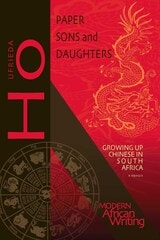
Paper Sons and Daughters
Growing up Chinese in South AfricaUfrieda Ho
Ohio University Press, 2011
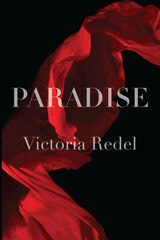
Paradise
Victoria Redel
Four Way Books, 2022
Rewriting Eden, Victoria Redel interrogates the idea of paradise within the historical context of borders, exile, and diaspora that brought us to the present global migration crisis. Drawing from a long family history of flight and refuge, the poems in Paradise interweave religion and myth, personal lore and nation-building, borders actual and imagined. They ask: What if what we fell from was never, actually, grace? What is a boundary, really? Redel navigates geopolitical perimeters while also questioning the border between the living and the dead and delineating the migrations aging women make in their bodies and lives. With stark lyricism and unflinching attention, Paradise considers how a legacy of trauma shapes imagination and asks readers to see the threads that tie contemporary catastrophes to the exigencies and flight paths that made us.
Paradise
Victoria Redel
Four Way Books, 2022
Rewriting Eden, Victoria Redel interrogates the idea of paradise within the historical context of borders, exile, and diaspora that brought us to the present global migration crisis. Drawing from a long family history of flight and refuge, the poems in Paradise interweave religion and myth, personal lore and nation-building, borders actual and imagined. They ask: What if what we fell from was never, actually, grace? What is a boundary, really? Redel navigates geopolitical perimeters while also questioning the border between the living and the dead and delineating the migrations aging women make in their bodies and lives. With stark lyricism and unflinching attention, Paradise considers how a legacy of trauma shapes imagination and asks readers to see the threads that tie contemporary catastrophes to the exigencies and flight paths that made us.
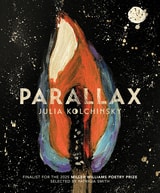
Parallax
Julia Kolchinsky
University of Arkansas Press, 2025
Finalist, 2025 Miller Williams Poetry Prize
Julia Kolchinsky’s Parallax offers a lyrical narrative of parenting a neurodiverse child under the shadow of the ongoing war in Ukraine, the poet’s birthplace. As her child expresses a fascination with death and violence, Kolchinsky struggles to process the war unfolding far away, on the same soil where so many of her ancestors perished during the Holocaust.
Anchored by a series of poems that look to the moon, this collection explores displaced perspectives and turns to the celestial to offer meditations on how elements formed in distant stars account for so much of our human DNA. In these poems, writes series editor Patricia Smith, Kolchinsky “clutches at a feeling of home that is both unfamiliar and deeply treasured, longs for all that was left behind, struggles to come to terms with the rampant violence devastating a landscape that still, in so many encouraging and heartbreaking ways, belongs to her.”
Partenia, A Pastoral Play
A Bilingual EditionBarbara Torelli Benedetti
Iter Press, 2013
Partisans
Marriage, Politics, and Betrayal Among the New York IntellectualsDavid Laskin
University of Chicago Press, 2001

Paula Vogel
Joanna Mansbridge
University of Michigan Press, 2014
Percussing the Thinking Jar
Maw Shein Win
Omnidawn, 2024
With her latest collection, Maw Shein Win deftly braids together the pleasures, pains, and anxieties of living in an aging body, revealing how a mind can log thoughts and observations. Win employs new poetic forms to invite her readers into realms that are both deeply personal and universal, rendered with dreamlike imagery and surprising humor. Reflecting on our strange times and the atmospheric undercurrents of chaos and disintegration, Percussing the Thinking Jar is a hypnotic book and invites the reader into conversation with their own vulnerability and resilience. Throughout the book, sumi ink drawings by artist Mark Dutcher echo the rhythms of Win’s poetry.
Performing Women and Modern Literary Culture in Latin America
Intervening ActsBy Vicky Unruh
University of Texas Press, 2006
Women have always been the muses who inspire the creativity of men, but how do women become the creators of art themselves? This was the challenge faced by Latin American women who aspired to write in the 1920s and 1930s. Though women's roles were opening up during this time, women writers were not automatically welcomed by the Latin American literary avant-gardes, whose male members viewed women's participation in tertulias (literary gatherings) and publications as uncommon and even forbidding. How did Latin American women writers, celebrated by male writers as the "New Eve" but distrusted as fellow creators, find their intellectual homes and fashion their artistic missions?
In this innovative book, Vicky Unruh explores how women writers of the vanguard period often gained access to literary life as public performers. Using a novel, interdisciplinary synthesis of performance theory, she shows how Latin American women's work in theatre, poetry declamation, song, dance, oration, witty display, and bold journalistic self-portraiture helped them craft their public personas as writers and shaped their singular forms of analytical thought, cultural critique, and literary style. Concentrating on eleven writers from Argentina, Brazil, Cuba, Mexico, Peru, and Venezuela, Unruh demonstrates that, as these women identified themselves as instigators of change rather than as passive muses, they unleashed penetrating critiques of projects for social and artistic modernization in Latin America.

Perigee
Diane Kerr
University of Wisconsin Press, 2020
Moments are revealed in layers; we join the poet as she rides through fields on horseback, watches a woman testify on television, and comes to terms with her experiences of sexual abuse. Vivid recollections of emotionally charged minutiae—broken-in cowboy boots, the second button on a blouse, a housecoat patterned with pink begonias—remind us how even the smallest details can be fraught with both nostalgia and pain. Each poem wields power, with resonating narratives of fear and survival reminding us that suffering has no statute of limitations.
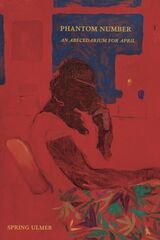
Phantom Number
An Abecedarium for AprilSpring Ulmer
Tupelo Press, 2025
Phantom Number listens for an absent voice. To survive and answer to her best friend and fellow poet April Freely’s death, Spring Ulmer rips meaning apart in her poems, then repairs it, only to rip it up again. Words bend, meaning shifts—abstraction a tool Ulmer wields to better get at the question at the heart of Phantom Number: How might a white friend write in protest of intimate Black death at a time when the push is to write Black joy as antidote to the commodification of Black trauma? Ulmer understands her position is suspect yet cannot shirk her love or rage. Ulmer asks the reader to do the work or else. Her abstracted poems vibrate, emotion emerging from a poem made rag. Ulmer’s abecedarium long form holds these fragments, inviting lines into an order of alliteration and words into an otherwise coherence, a belonging that has nothing to do with their origin. Phantom Number finds in abstraction a radical wail.
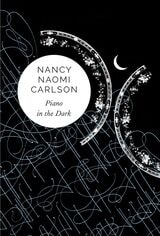
Piano in the Dark
Nancy Naomi Carlson
Seagull Books, 2023
This latest book of wonders from Nancy Naomi Carlson fixes upon one of the few defenses we have to confront the body’s betrayals—our words. Though in the end, even the world’s last word “forgets its name . . . has no word for this forgetting.” At once vulnerable and open, tempered and tempted equally by the erotic and the empathic, such dualities limn these affectingly beautiful and lyrical poems. Carlson’s lines, entreating as Scheherazade, “weave chords / into tales within tales, whirlpools within seas” to save her life. Indeed, music has no need for voice or harp, as “in anechoic chambers, you become / the only instrument of your worldly sounds,” echoing Mozart’s credo “that music lies / in the silence between notes.” In a world scarred by pandemics, wars, and violent tribalism, the givens are gone—“talismans we clung to, believing / we might be spared in some way / by marking our doors / with our own sacrificial blood.” In these unflinching free and formal verse poems, Carlson seduces us with the promise of the joy yet to be had, were we to look in the right places.
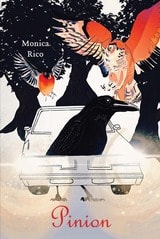
Pinion
Monica Rico
Four Way Books, 2024

Pink Pirates
Contemporary American Women Writers and CopyrightCaren Irr
University of Iowa Press, 2010
Today, copyright is everywhere, surrounded by a thicket of no trespassing signs that mark creative work as private property. Caren Irr’s Pink Pirates asks how contemporary novelists—represented by Ursula Le Guin, Andrea Barrett, Kathy Acker, and Leslie Marmon Silko—have read those signs, arguing that for feminist writers in particular copyright often conjures up the persistent exclusion of women from ownership. Bringing together voices from law schools, courtrooms, and the writer's desk, Irr shows how some of the most inventive contemporary feminist novelists have reacted to this history.
Explaining the complex, three-century lineage of Anglo-American copyright law in clear, accessible terms and wrestling with some of copyright law's most deeply rooted assumptions, Irr sets the stage for a feminist reappraisal of the figure of the literary pirate in the late twentieth century—a figure outside the restrictive bounds of U.S. copyright statutes.
Going beyond her readings of contemporary women authors, Irr’s exhaustive history of how women have fared under intellectual property regimes speaks to broader political, social, and economic implications and engages digital-era excitement about the commons with the most utopian and materialist strains in feminist criticism.

Pink Waves
Sawako Nakayasu
Omnidawn, 2021
Written in loose sonata form, Pink Waves is a poem of radiant elegy and quiet protest. Moving through the shifting surfaces of inarticulable loss, and along the edges of darkness and sadness, Pink Waves was completed in the presence of audience members over the course of a three-day durational performance. Sawako Nakayasu accrues lines written in conversation with Waveform by Amber DiPietro and Denise Leto, and micro-translations of syntax in the Black Dada Reader by Adam Pendleton, itself drawn from Ron Silliman’s Ketjak. Pink Waves holds an amalgamation of texts, constructing a shimmering haunting of tenderness, hunger, and detritus.
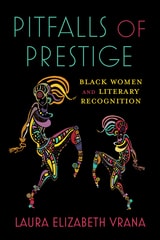
Pitfalls of Prestige
Black Women and Literary RecognitionLaura Elizabeth Vrana
The Ohio State University Press, 2024
Winner, 2025 College Language Association Book Award
From 1987, when Rita Dove won the Pulitzer Prize for Poetry, to 2021, when Amanda Gorman skyrocketed to celebrity status after performing during Biden’s inauguration and the Super Bowl, Black women have seemingly attained secure, stable positions at the forefront of American poetry. But this prominence comes at a price. As figures like Dove and Elizabeth Alexander have become well known, receiving endorsements and gaining visible platforms from major prizes, academic institutions, and publishing houses, the underlying terms of evaluation that greet Black women’s poetics often remain superficial, reflecting efforts to co-opt and contain rather than meaningfully consider new voices and styles. In Pitfalls of Prestige, Laura Elizabeth Vrana surveys how developments in American literary institutions since 1980 have shaped—and been shaped by—Black women poets. Grappling with the refulgent works of the most acclaimed contemporary figures alongside those of lesser-known poets, Vrana both elucidates how seeming gestures of inclusion can actually result in constraining Black women poets’ works and also celebrates how these writers draw on a rich lineage and forge alternative communities in order to craft continually innovative modes of transgressing such limits, on the page and in life.
Place Matters
Morgan, Susan
Rutgers University Press, 1996
"Morgan has written an important and original work that presents a well-substantiated challenge to many recent studies of 'colonial discourse'."--Nancy L. Paxton,
Susan Morgan's study of materials and regions, previously neglected in contemporary postcolonial studies, begins with the transforming premise that "place matters." Concepts derived from writings about one area of the world cannot simply be transposed to another area, in some sort of global theoretical move. Moreover, place in the discourse of Victorian imperialism is a matter of gendered as well as geographic terms. Taking up works by Anna Forbes and Marianne North on the Malay Archipelago, by Margaret Brooke and Harriette McDougall on Sarawak, by Isabella Bird and Emily Innes on British Malaya, by Anna Leonowens on Siam, Morgan also makes extensive use of theorists whose work on imperialism in Southeast Asia is unfamiliar to most American academics.
This vivid examination of a different region and different writings emphasizes that in Victorian literature there was no monolithic imperialist location, authorial or geographic. The very notion of a ‘colony’ or an ‘imperial presence’ in Southeast Asia is problematic. Morgan is concerned with marking the intersections of particular Victorian imperial histories and constructions of subjectivity. She argues that specific places in Southeast Asia have distinctive, and differing, masculine imperial rhetorics. It is within these specific rhetorical contexts that women’s writings, including their moments of critique, can be read.

Playhouse to Powerhouse
Locating Black Power Women and their Movement in the Black TheatreKerry Goldmann
University of Arkansas Press, 2025
In Playhouse to Powerhouse, Kerry L. Goldmann explores the Black theatre movement through the lens of three significant women-led theatres that are still in operation today: Nora Vaughn’s Black Repertory Group in Berkeley, Barbara Ann Teer’s National Black Theatre in Harlem, and George Hawkins and Eileen Morris’s Ensemble Theatre in Houston. Goldmann concludes with a discussion of the current moment, examining contemporary obstacles such as gentrification, the co-opting of Black theatres, and the impact of COVID-19.
This remarkable work sheds light on the foundational role that Vaughn, Teer, and Morris played in the Black cultural revolution of the mid- to late twentieth century, securing theatre houses that thrived in multiple capacities as sites for revolution organizing, revenue generation for communal uplift, and unapologetic Black cultural representation.
Playing House in the American West
Western Women's Life Narratives, 1839–1987Cathryn Halverson
University of Alabama Press, 2013
How domestic life shaped identity, gender, and power in the American West
The controlling metaphor Cathryn Halverson uses in her engrossing study is “playing house.” From Caroline Kirkland and Laura Ingalls Wilder to Willa Cather and Marilynne Robinson, from the mid-nineteenth to the late-twentieth centuries, western authors have persistently embraced wayward or eccentric housekeeping to prove a woman’s difference from western neighbors and eastern readers alike.
The readings in Playing House investigate the surprising textual ends to which westerners turn the familiar terrain of the home: evaluating community; arguing for different conceptions of race and class; and perhaps most especially, resisting traditional gender roles. Western women writers, Halverson argues, render the home as a stage for autonomy, resistance, and imagination rather than as a site of sacrifice and obligation.
The western women examined in Playing House in the American West are promoted and read as representatives of a region, as insiders offering views of distant and intriguing ways of life, even as they conceive of themselves as outsiders. By playing with domestic conventions, they recast the region they describe, portraying the West as a place that fosters female agency, individuality, and subjectivity.
Playing Smart
New York Women Writers and Modern Magazine CultureKeyser, Catherine
Rutgers University Press, 2010
Through humor writing, this "smart set" expressed both sides of the story-promoting their urbanity and wit while using irony and caricature to challenge feminine stereotypes. Their fiction raised questions about what it meant to be a woman in the public eye, how gender roles would change because men and women were working together, and how the growth of the magazine industry would affect women's relationships to their bodies and minds. Keyser provides a refreshing and informative chronicle, saluting the value of being "smart" as incisive and innovative humor showed off the wit and talent of women writers and satirized the fantasy world created by magazines.

Plays by Early American Women, 1775-1850
Amelia Howe Kritzer, Editor
University of Michigan Press, 1995
Plays by French and Francophone Women
A Critical AnthologyChristiane P. Makward and Judith G. Miller, Editors
University of Michigan Press, 1994
Plays by French and Francophone Women presents eight recent plays by contemporary French and francophone women writers. The plays vary in style and form from the satirical to the poetic, from the comedic one-woman show to the potential multi-media esoteric production, and have been written by French, Qué becois, Acadian, and Caribbean francophone writers. The editors have provided informative headnotes to introduce each play, then faithful translations rendered with an ear toward production in English. A general introduction to the volume situates each work within the broader context of contemporary French-language theater by women. The volume also includes an annotated bibliography by Cynthia Running-Johnson of thirty-one additional plays by women in French.
Featured plays and playwrights are The Scent of Sulphur by S. Corinna Bille; When Fairies Thirst by Denise Boucher; Island Memories by Ina Césaire; Warmth: A Bloodsong by Chantal Chawaf; The Goddess Lar or Centuries of Women by Andrée Chedid; The Name of Oedipus: Song of the Forbidden Body by Hélène Cixous; The Table: Womenspeak by Michèle Foucher; and The Rabble by Antonine Maillet.

Plays in Time
The Beekeeper's Daughter, Prophecy, Another Life and Extreme WhetherKaren Malpede
Intellect Books, 2017
Each play was developed by Theater Three Collaborative for production in New York and internationally in Italy, Australia, London, Berlin, and Paris.
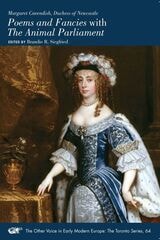
Poems and Fancies with The Animal Parliament
Margaret Cavendish, Duchess of Newcastle
Iter Press, 2018
The Other Voice in Early Modern Europe. The Toronto Series: Volume 64

Poems and Meditations
Anne Bradstreet
Iter Press, 2019
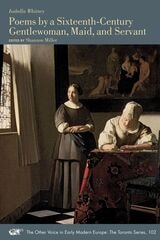
Poems by a Sixteenth-Century Gentlewoman, Maid, and Servant
Isabella Whitney
Iter Press, 2023
Isabella Whitney (c. 1547–after 1624) was the first English woman to publish original secular poetry under her own name. She published two poetic miscellanies of poems: The Copy of a Letter (1567) and A Sweet Nosegay (1573), which include her own work as well as a total of six poems by five different male authors. This edition of her writings prints modernized texts of the complete miscellanies and adds to them six poems attributed to Whitney by largely twentieth-century critics. These poems provide a rich portrait of sixteenth-century female courtship and its dangers, a unique view of class and gender in Whitney’s lifetime, and a portrait of London as a burgeoning market of practical goods and luxury items from foodstuffs to imported silk.
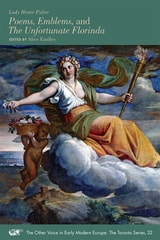
Poems, Emblems, and The Unfortunate Florinda
Lady Hester Pulter
Iter Press, 2014
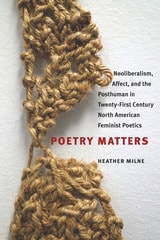
Poetry Matters
Neoliberalism, Affect, and the Posthuman in Twenty-First Century North American Feminist PoeticsHeather Milne
University of Iowa Press, 2018
Poetry Matters explores poetry written by women from the United States and Canada, which documents the social and political turmoil of the early twenty-first century and places this poetry in dialogue with recent currents of feminist theory including new materialism, affect theory, posthumanism, and feminist engagements with neoliberalism and capitalism. Central to this project is the conviction that a poetics that explores the political dimensions of affect; demonstrates an understanding of subjectivity as posthuman and transcorporeal; critically reflects on the impact of capitalism on queer, racialized, and female bodies; and develops an ethical vocabulary for reimagining the nation state and critically engaging with issues of democracy and citizenship is now more urgent than ever before.
Milne focuses on poetry published after 2001 by writers who mostly began writing after the feminist writing movements of the 1980s, but who have inherited and built upon their political and aesthetic legacies. The poets discussed in this book—including Jennifer Scappettone, Margaret Christakos, Larissa Lai, Rita Wong, Nikki Reimer, Rachel Zolf, Yedda Morrison, Marcella Durand, Evelyn Reilly, Juliana Spahr, Claudia Rankine, Dionne Brand, Jena Osman, and Jen Benka—bring a sense of political agency to poetry. These voices seek new vocabularies and dissenting critical and aesthetic frameworks for thinking across issues of gender, materiality, capitalism, the toxic convergences of nationalism and racism, and the decline of democratic institutions. This is poetry that matters—both in its political urgency and in its attentiveness to the world as “matter”—as a material entity under siege. It could not be more timely or more relevant.
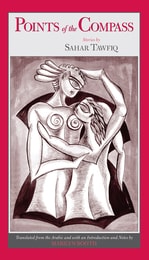
Points of the Compass
StoriesSahar Tawfiq
University of Arkansas Press, 1995

Political Affairs of the Heart
Female Travel Writers, the Sentimental Travelogue, and Revolution, 1775-1800Linda Van Netten Blimke
Bucknell University Press, 2022
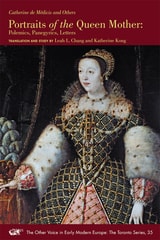
Portraits of the Queen Mother
Polemics, Panegyrics, LettersCatherine de Médicis and Others
Iter Press, 2014
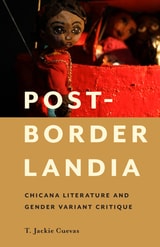
Post-Borderlandia
Chicana Literature and Gender Variant CritiqueCuevas, T. Jackie
Rutgers University Press, 2018
2019 Lambda Literary Awards Finalist
Bringing Chicana/o studies into conversation with queer theory and transgender studies, Post-Borderlandia examines why gender variance is such a core theme in contemporary Chicana and Chicanx narratives. It considers how Chicana butch lesbians and Chicanx trans people are not only challenging heteropatriarchal norms, but also departing from mainstream conceptions of queerness and gender identification.
Expanding on Gloria Anzaldúa’s classic formulation of the Chicana as transformer of the “borderlands,” Jackie Cuevas explores how a new generation of Chicanx writers, performers, and filmmakers are imagining a “post-borderlands” subjectivity, where shifting national, racial, class, sexual, and gender identifications produce complex power dynamics. In addition, Cuevas offers fresh archival analysis of the Chicana feminist canon to reveal how queer gender variance has always been crucial to this literary tradition.
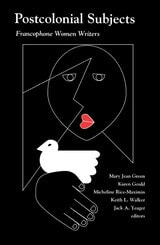
Postcolonial Subjects
Francophone Women WritersMary Green
University of Minnesota Press, 1996
Explores French-language writing by women outside France.
This groundbreaking volume highlights the work of contemporary women writing in French whose cultural links, ethnic identities, and historical roots lie outside France. The writings of these women emanate from the cultures of Africa and the Indian Ocean, the Middle East, the Caribbean, Southeast Asia, and Quebec and other French-speaking regions of Canada.
By writing in French, the writers discussed in Postcolonial Subjects both acknowledge and write against the cultural heritage of France. In doing so, they participate in the subversion of European literary traditions and take part in various forms of cultural and linguistic blending, generating new artistic currents. Each of these essays articulates contemporary debates about the politics and cultural effects of sexism, homophobia, racism, and essentialism, as well as pointing out connections and points of resistance among such diverse strains as feminism, nationalism, and ethnicity. Contributors: Eloise A. Brière, U of Albany; Miriam Cooke, Duke U; Irène Assiba d’Almeida, U of Arizona; Joan Dayan, U of Arizona; John D. Erickson, U of Kentucky; Françoise Lionnet, Northwestern U; Christiane Makward, Pennsylvania State U; Kitzie McKinney, Bentley College; Christopher L. Miller, Yale U; Mary-Kay Miller, Vanderbilt U; Jane Moss, Colby College; Elisabeth Mudimbe-Boyi, Stanford U; Lori Saint-Martin, U du Québec à Montréal; Ronnie Scharfman, Purchase College, SUNY.
Power in the Blood
A Family NarrativeLinda Tate
Ohio University Press, 2009
Power in the Blood: A Family Narrative traces Linda Tate’s journey to rediscover the Cherokee-Appalachian branch of her family and provides an unflinching examination of the poverty, discrimination, and family violence that marked their lives. In her search for the truth of her own past, Tate scoured archives, libraries, and courthouses throughout Kentucky, Tennessee, Alabama, Illinois, and Missouri, visited numerous cemeteries, and combed through census records, marriage records, court cases, local histories, old maps, and photographs. As she began to locate distant relatives — fifth, sixth, seventh cousins, all descended from her great-greatgrandmother Louisiana — they gathered in kitchens and living rooms, held family reunions, and swapped stories. A past that had long been buried slowly came to light as family members shared the pieces of the family’s tale that had been passed along to them.
Power in the Blood is a dramatic family history that reads like a novel, as Tate’s compelling narrative reveals one mystery after another. Innovative and groundbreaking in its approach to research and storytelling, Power in the Blood shows that exploring a family story can enhance understanding of history, life, and culture and that honest examination of the past can lead to healing and liberation in the present.
Praying Naked
Katie Condon
The Ohio State University Press, 2020
Primer of the Obsolete
Diane Glancy
University of Massachusetts Press, 2004
The poems have roots in history, religion, and illiteracy. They are inspired by folk artists who use materials and textures at hand—enamel and cornmeal on plywood, house paint on tar and tin, model airplane paint on corrugated scrap metal. The resulting lyrics walk the boundary between worlds, weaving remnants of the old way of viewing the world with pieces of the new world, such as a clapper that turns lights on and off. The experimental text revisits the gap between past and present. The past is just beneath a newly painted surface. The newly painted surface is not quite dry.
Prolific Ground
Landscape and British Women's Writing, 1690–1790Nicolle Jordan
Bucknell University Press, 2025
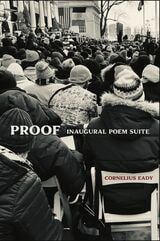
Proof
Inaugural Poem SuiteCornelius Eady
Tupelo Press, 2026
Cornelius Eady turns the inaugural poem into an instrument of reckoning.
First delivered to mark the historic inauguration of New York City’s mayor Zohran Mamdani on January 1, 2026, the title poem is not ceremony—it is summons. “You have to imagine it,” Eady insists, and from that insistence rises a chorus: those called too dark, too queer, too poor, too loud; those renamed invisible; those told “not now.” What if joy could wear down the rock of no? What if imagination were not escape, but evidence?
Moving from Robert Frost squinting into winter glare, to Elizabeth Alexander straightening her back before history, to Aretha Franklin beneath her church-crown hat, Eady braids civic pageantry with private memory. He summons the Colored Conventions of 1830, the 911 call that ricocheted through racial panic, the mock rifles on a Brooklyn rooftop, the “knife in sheep’s clothes.” Each poem widens the frame. Each poem refuses to look away.
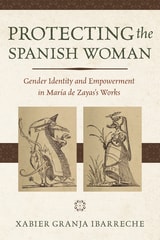
Protecting the Spanish Woman
Gender Identity and Empowerment in María de Zayas's WorksXabier Granja Ibarreche
University of Nevada Press, 2023
María de Zayas is unique in the seventeenth century as the only Spanish woman to write a collection of exemplary novels whose quality is often compared to Miguel de Cervantes’ masterful works. Her two main collections of short stories, Novelas amorosas y ejemplares and Desengaños amorosos, encompass a social critique based on literary fiction that exposes flaws in the idealized archetypes of masculine identity in early modern Spain. Zayas’s stories redefine women’s patriarchal disadvantage as a tool to expose the ways in which early modern Spanish women could be empowered to counteract men’s discursive and political authority, which they use to unfairly maintain their own social privilege.
Xabier Granja Ibarreche explores how Zayas defies Spanish hegemony by manipulating and transforming the ideals of courtly masculinity that had been popularized by conduct manuals and the traits they specified for appropriate noble comportment. In doing so, Zayas elaborates a nonofficial discourse throughout plots that subvert patriarchal hierarchies: she rearticulates the existing ideological order to empower women who are no longer willing to remain silent and oppressed by masculine domination after centuries of failing to attain a sufficiently self-sufficient political position to ascend in the social hierarchy. By inverting the male gaze that assumes masculinity as a preeminent identity, Zayas subverts the patriarchal subject/masculine, object/feminine order and destabilizes manly superiority as a basic universal reality, thereby empowering and unshackling Spanish women to liberate Iberian culture from the repressive and pernicious future she forebodes.
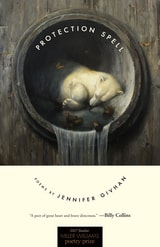
Protection Spell
PoemsJennifer Givhan
University of Arkansas Press, 2017
Finalist, 2017 Miller Williams Poetry Prize, edited by Billy Collins
“A poet of great heart and brave directness.”
—Billy Collins
In Protection Spell Jennifer Givhan explores the guilt, sadness, and freedom of relationships: the sticky love that keeps us hanging on for no reason other than love, the inky place that asks us to continue revising and reimagining, tying ourselves to this life and to each other despite the pain (or perhaps because of it). These poems reassemble safe spaces from the fissures cleaving the speaker’s own biracial home and act as witnesses speaking to the racial iniquity of our broader social landscape as well as to the precarious standpoint of a mother-woman of color whose body lies vulnerable to trauma and abuse. From insistent moments of bravery, a collection of poems arises that asks the impossible, like the childhood chant that palliates suffering by demanding nothing less than magical healing: sana sana colita de rana, si no sanas hoy, sanas mañana (the frog who loses his tail is commanded to grow another). In the end, Givhan’s verse offers a place where healing may begin.
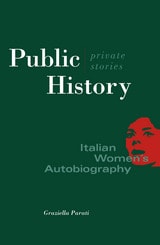
Public History, Private Stories
Italian Women’s AutobiographyGraziella Parati
University of Minnesota Press, 1996
Explores the way Italian women writers craft identities through writing.
In this important volume, Graziella Parati examines the ways in which Italian women writers articulate their identities through autobiography—a public act that is also the creation of a private life. Considering autobiographical writings by five women writers from the seventeenth century to the present, Parati draws important connections between self-writing and the debate over women’s roles, both traditional and transgressive.
Parati considers the first prose autobiography written by an Italian woman -Camilla Faà Gonzaga’s 1622 memoir—as her beginning point, citing it as a central “pre-text.” In her memoir, Gonzaga makes explicit her conflict over the public silence imposed on her, yet succeeds in writing herself into history through self-narrative. Parati then examines Enif Robert’s autobiography, in which Robert strives to enter the public sphere of the post-World War I futurist movement by writing about her fight to overcome cancer of the uterus. Next, Parati considers Fausta Cialente’s life story, an account of her family's life in Trieste from World War I through the fascist era, as well as the narrative in which Rita Levi Montalcini describes her life as a woman, a Nobel-Prize winning scientist, and a Jew who lived under fascism in the thirties and forties. Finally, Parati analyzes Luisa Passerini's look back on her involvement with the student movement of 1968. Through her discussion of these women’s writings, Parati demonstrates the complex negotiations over identity contained within them, negotiations that challenge dichotomies between male and female, maternal and paternal, and private and public. Public History, Private Stories is a compelling exploration of the disparate identities created by these women through the act of writing autobiography.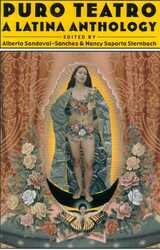
Puro Teatro, A Latina Anthology
Edited by Alberto Sandoval-Sánchez and Nancy Sandoval Sternbach
University of Arizona Press, 2000
Puro Teatro, A Latina Anthology includes a variety of theatrical genres: plays, performance pieces, puppet shows, innovative collaborations, and testimonials. It features previously unpublished plays from a broad range of experiences within the Latino/a community, including families and home, friends and community building, coming of age and empowerment, and sexual and ethnic identities. The editors' introduction provides a comprehensive survey of contemporary Latina theater, placing it in its theatrical context and examining its divergent roots. Puro Teatro, A Latina Anthology is the first book of its kind to reflect in print a diversified body of writing that turns the spotlight on some of America's most talented and prolific artists. A subsequent volume will complement this anthology with a theoretical, critical reading of Latina theater and performance.
CONTENTS
Botánica by Dolores Prida
Heart of the Earth: A Popul Vuh Story by Cherríe Moraga
The Fat-Free Chicana and the Snow Cap Queen by Elaine Romero
One-act Plays
Las nuevas tamaleras by Alicia Mena
And Where Was Pancho Villa When You Really Needed Him? by Silviana Wood
Fuschia by Janis Astor del Valle
Performance Pieces
Nostalgia Maldita: 1-900-MEXICO : A StairMaster Piece by Yareli Arizmendi
Good Grief, Lolita by Wilma Bonet
A Roomful of Men by Amparo García Crow
Describe Your Work by Monica Palacios
Testimonials
"Battle Worn," by Laura Esparza
"Dancing with the Voice of Truth," by María Mar
"Searching for Sanctuaries: Cruising through Town in a Red Convertible," by Diane Rodríguez
"Home, Desire, Memory: There Are No Borders Here," by Caridad Svich
"Tales of a South-of-the-Border/North-of-the-Stereotype Theatre Director, by Susana Tubert
"Catching the Next Play: The Joys and Perils of Playwriting," by Edit Villarreal
Full-Length Plays, Collaborative Works
Frida: The Story of Frida Kahlo by Migdalia Cruz and Hilary Blecher
Memorias de la revolución by Carmelita Tropicana and Uzi Parnes