Results by title
28167 books match the query 'History' and 1297 start with p

Political Aesthetics in the Era of Shakespeare
Edited by Christopher Pye
Northwestern University Press, 2020
Taking up this expansive conception of aesthetics, Political Aesthetics in the Era of Shakespeare suggests that the political stakes of the literary work—and Shakespeare’s work in particular—extend from the most intimate dimensions of affective response to the problem of the grounds of political society. The approaches to aesthetic thought included in this volume explore the intersections between the literary work and the full range of concerns animating the field today: political philosophy, affect theory, and ecocritical analysis of environs and habitus.

Political Affairs of the Heart
Female Travel Writers, the Sentimental Travelogue, and Revolution, 1775-1800Linda Van Netten Blimke
Bucknell University Press, 2022
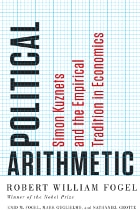
Political Arithmetic
Simon Kuznets and the Empirical Tradition in EconomicsRobert William Fogel, Enid M. Fogel, Mark Guglielmo, and Nathaniel Grotte
University of Chicago Press, 2013
With Political Arithmetic, Nobel Prize–winning economist Robert Fogel and his collaborators tell the story of economist Simon Kuznets, the founding of the National Bureau of Economic Research, and the creation of the concept of GNP, which for the first time enabled us to measure the performance of entire economies. The book weaves together the many strands of political and economic thought and historical pressures that together created the demand for more detailed economic thinking—Progressive-era hopes for activist government, the production demands of World War I, Herbert Hoover’s interest in business cycles as President Harding’s commerce secretary, and the catastrophic economic failures of the Great Depression—and shows how, through trial and error, measurement and analysis, economists such as Kuznets rose to the occasion and in the process built a discipline whose knowledge could be put to practical use in everyday decision-making.
The product of a lifetime of studying the workings of economies and skillfully employing the tools of economics, Political Arithmetic is simultaneously a history of a key period of economic thought and a testament to the power of applied ideas.
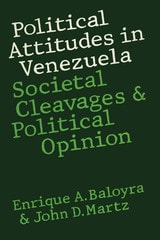
Political Attitudes in Venezuela
Societal Cleavages and Political OpinionBy Enrique A. Baloyra and John D. Martz
University of Texas Press, 1979
Here is a benchmark study of voter attitudes in a Latin American country. This volume is based on extensive survey research conducted during the Venezuelan elections of 1973. The methods employed by Baloyra and Martz to poll an "unpollable" society successfully challenge previously established paradigms.
The authors interviewed a representative sample of over 1,500 voters to determine relationships between class, status, community, context, religion, ideology, and partisanship on the one hand and political attitudes and preferences on the other. They found that the Venezuelan electorate is defined by a series of contradictory tendencies, and they place their conclusions in the context of contemporary political science literature regarding class and party, ideology and party, and inequality and participation.
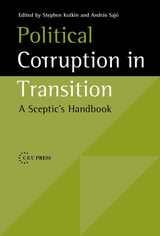
Political Corruption in Transition
A Sceptic's HandbookAndrás Sajó
Central European University Press, 2002
Based on two international conferences at Princeton University and the Central European University, this is a handy guide to the problem of corruption in transition countries, with an important comparative content. Political Corruption in Transition is distinguished from similar publications by at least two features: by the quality of the carefully selected and edited essays ans by its original treatment. Instead of the usual preaching and excommunications, this Skeptic`s Handbook represents down-to-earth realism.
Combines general issues with case studies and original research. The geographic coverage is wide, though it is ideas rather than a geography that drive the volume`s organization.
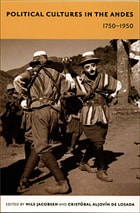
Political Cultures in the Andes, 1750-1950
Nils Jacobsen and Cristóbal Aljovín de Losada, eds.
Duke University Press, 2005
The contributors foreground the struggles over democracy and citizens’ rights as well as notions of race, ethnicity, gender, and class that have been at the forefront of political debates and social movements in the Andes since the waning days of the colonial regime some two hundred years ago. Among the many topics they consider are the significance of the Bourbon reform era to subsequent state-formation projects, the role of race and nation in the work of early-twentieth-century Bolivian intellectuals, the fiscal decentralization campaign in Peru following the devastating War of the Pacific in the late nineteenth century, and the negotiation of the rights of “free men of all colors” in Colombia’s Atlantic coast region during the late colonial period. Political Cultures in the Andes includes an essay by the noted Mexicanist Alan Knight in which he considers the value and limits of the concept of political culture and a response to Knight’s essay by the volume’s editors, Nils Jacobsen and Cristóbal Aljovín de Losada. This important collection exemplifies the rich potential of a pragmatic political culture approach to deciphering the processes involved in the formation of historical polities.
Contributors. Cristóbal Aljovín de Losada, Carlos Contreras, Margarita Garrido, Laura Gotkowitz, Aline Helg, Nils Jacobsen, Alan Knight, Brooke Larson, Mary Roldan, Sergio Serulnikov, Charles F. Walker, Derek Williams
Political Descent
Malthus, Mutualism, and the Politics of Evolution in Victorian EnglandPiers J. Hale
University of Chicago Press, 2014
These two traditions, Hale shows, developed in a context of mutual hostility, debate, and refutation. Participants disagreed not only about evolutionary processes but also on broader questions regarding the kind of creature our evolution had made us and in what kind of society we ought therefore to live. Significantly, and in spite of Darwin’s acknowledgement that natural selection was “the doctrine of Malthus, applied to the whole animal and vegetable kingdoms,” both sides of the debate claimed to be the more correctly “Darwinian.” By exploring the full spectrum of scientific and political issues at stake, Political Descent offers a novel approach to the relationship between evolution and political thought in the Victorian and Edwardian eras.
Political Discourse in Exile
Karl Marx and the Jewish QuestionDennis Fischman
University of Massachusetts Press, 1991
Political Ecologies of Cattle Ranching in Northern Mexico
Private RevolutionsEric P. Perramond
University of Arizona Press, 2010
In this study of the Río Sonora region of northern Mexico, where ranchers own anywhere from several hundred to tens of thousands of acres, Eric Perramond evaluates management techniques, labor expenditures, gender roles, and decision-making on private ranches of varying size. By examining the economic and ecological dimensions of daily decisions made on and off the ranch he shows that, contrary to prevailing notions, ranchers rarely collude as a class unless land titles are at issue, and that their decision-making is as varied as the landscapes they oversee.
Through first-hand observation, field measurements, and intimate ethnographies, Perramond sheds light on a complex set of decisions made, avoided, and confronted by these land managers and their families. He particularly shows that ranching has endured because of its extended kinship network, its reliance on all household members, and its close ties to local politics.
Perramond follows ranchers caught between debt, drought, and declining returns to demonstrate the novel approaches they have developed to adapt to changing economies and ecologies alike—such as strategically marketing the ranches for wild-game hunting or establishing small businesses that subsidize their lifestyles and livelihoods. Even more importantly, he reveals the false dichotomy between private and communal ranching. Political Ecologies of Cattle Ranching in Northern Mexico is essential reading for anyone interested in the future of ranching in western North America.

Political Economy of the Urban Ghetto
Daniel R. Fusfeld and Timothy Bates
Southern Illinois University Press, 1984
The income of blacks in most northern industrial states today is lower relative to the income of whites than in 1949.Fusfeld and Bates examine the forces that have led to this state of affairs and find that these economic relationships are the product of a complex pattern of historical development and change in which black-white economic relationships play a major part, along with patterns of industrial, agricultural, and technological change and urban development. They argue that today’s urban racial ghettos are the result of the same forces that created modern America and that one of the by-products of American affluence is a ghettoized racial underclass.
These two themes, they state, are essential for an understanding of the problem and for the formulation of policy. Poverty is not simply the result of poor education, skills, and work habits but one outcome of the structure and functioning of the economy. Solutions require more than policies that seek to change people: they await a recognition that basic economic relationships must be changed.
Political Epistemics
The Secret Police, the Opposition, and the End of East German SocialismAndreas Glaeser
University of Chicago Press, 2011
What does the durability of political institutions have to do with how actors form knowledge about them? Andreas Glaeser investigates this question in the context of a fascinating historical case: socialist East Germany’s unexpected self-dissolution in 1989. His analysis builds on extensive in-depth interviews with former secret police officers and the dissidents they tried to control as well as research into the documents both groups produced. In particular, Glaeser analyzes how these two opposing factions’ understanding of the socialist project came to change in response to countless everyday experiences. These investigations culminate in answers to two questions: why did the officers not defend socialism by force? And how was the formation of dissident understandings possible in a state that monopolized mass communication and group formation? He also explores why the Stasi, although always well informed about dissident activities, never developed a realistic understanding of the phenomenon of dissidence.
Out of this ambitious study, Glaeser extracts two distinct lines of thought. On the one hand he offers an epistemic account of socialism’s failure that differs markedly from existing explanations. On the other hand he develops a theory—a sociology of understanding—that shows us how knowledge can appear validated while it is at the same time completely misleading.
Political Essay on the Island of Cuba
A Critical EditionAlexander von Humboldt
University of Chicago Press, 2011
The research Alexander von Humboldt amassed during his five-year trek through the Americas in the early nineteenth-century proved foundational to the fields of botany, geography, and geology. But his visit to Cuba during this time yielded observations that extended far beyond the natural world. Political Essay on the Island of Cuba is a physical and cultural study of the island nation. In it, Humboldt denounces colonial slavery on both moral and economic grounds and stresses the vital importance of improving intercultural relations throughout the Americas.
Humboldt’s most controversial book, Political Essay on the Island of Cuba was banned, censored, and willfully mistranslated to suppress Humboldt’s strong antislavery sentiments. It reemerges here, newly translated from the original two volume French edition, to introduce a new generation of readers to Humboldt’s astonishing multiplicity of scientific and philosophical perspectives. In their critical introduction, Vera Kutzinski and Ottmar Ette emphasize Humboldt’s rare ability to combine scientific rigor with a cosmopolitan consciousness and a deeply felt philosophical humanism. The result is a work on Cuba of historical import that will attract historians of science as well as cultural historians, political scientists, and literary scholars.
Political Essay on the Kingdom of New Spain, Volume 1
A Critical EditionAlexander von Humboldt
University of Chicago Press, 2019
Alexander von Humboldt was the most celebrated modern chronicler of North and South America and the Caribbean, and this translation of his essay on New Spain—the first modern regional economic and political geography—covers his travels across today’s Mexico in 1803–1804. The work canvases natural-scientific and cultural-scientific objects alike, combining the results of fieldwork with archival research and expert testimony.
To show how people, plants, animals, goods, and ideas moved across the globe, Humboldt wrote in a variety of styles, bending and reshaping familiar writerly conventions to keep readers attentive to new inputs. Above all, he wanted his readers to be open-minded when confronted with cultural and other differences in the Americas. Fueled by his comparative global perspective on politics, economics, and science, he used his writing to support Latin American independence and condemn slavery and other forms of colonial exploitation. It is these voluminous and innovative writings on the New World that made Humboldt the undisputed father of modern geography, early American studies, transatlantic cultural history, and environmental studies.
This two-volume critical edition—the third installment in the Alexander von Humboldt in English series—is based on the full text, including all footnotes, tables, and maps, of the second, revised French edition of Essai politique sur le royaume de de Nouvelle Espagne from 1825 to 1827, which has never been translated into English before. Extensive annotations and full-color atlases are available on the series website.
Political Essay on the Kingdom of New Spain, Volume 2
A Critical EditionAlexander von Humboldt
University of Chicago Press, 2019
Alexander von Humboldt was the most celebrated modern chronicler of North and South America and the Caribbean, and this translation of his essay on New Spain—the first modern regional economic and political geography—covers his travels across today’s Mexico in 1803–1804. The work canvases natural-scientific and cultural-scientific objects alike, combining the results of fieldwork with archival research and expert testimony.
To show how people, plants, animals, goods, and ideas moved across the globe, Humboldt wrote in a variety of styles, bending and reshaping familiar writerly conventions to keep readers attentive to new inputs. Above all, he wanted his readers to be open-minded when confronted with cultural and other differences in the Americas. Fueled by his comparative global perspective on politics, economics, and science, he used his writing to support Latin American independence and condemn slavery and other forms of colonial exploitation. It is these voluminous and innovative writings on the New World that made Humboldt the undisputed father of modern geography, early American studies, transatlantic cultural history, and environmental studies.
This two-volume critical edition—the third installment in the Alexander von Humboldt in English series—is based on the full text, including all footnotes, tables, and maps, of the second, revised French edition of Essai politique sur le royaume de de Nouvelle Espagne from 1825 to 1827, which has never been translated into English before. Extensive annotations and full-color atlases are available on the series website.
Political Justice in Budapest after World War II
Andrea Peto
Central European University Press, 2015
In Hungary, which fell under Soviet influence at the end of World War II, those who had participated in the wartime atrocities were tried by so called people’s courts. This book analyses this process in an objective, quantitative way, contributing to the present timely discussion on the Hungarian war guilt. The authors apply a special focus on the gender aspect of the trials.
Political justice had a specific nature in Hungary. War criminals began to be brought to trial while fighting was still underway in the western part of the country, well before the Nuremberg trials. Not only crimes committed during the war were tried in the same frame but also post-war ones. As far as the post-war period is concerned, legal proceedings regarding these crimes were most often launched on the basis of Act VII of 1946. This act of law concerned “the criminal law protection of the democratic constitutional order and the republic” and its basic aim was to facilitate the creation of a communist dictatorship and to deal with perceived or real enemies of the regime.
Political Landscape
The Art History of NatureMartin Warnke
Reaktion Books, 2004
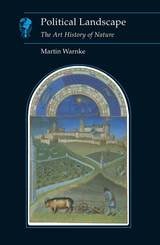
The Political Landscape is underpinned with a fascinating array of examples and illustrations, many of which will be new even to experts in the art of landscape and related disciplines.
Political Landscapes
Forests, Conservation, and Community in MexicoChristopher R. Boyer
Duke University Press, 2015
Political Life in the Wake of the Plantation
Sovereignty, Witnessing, RepairDeborah A. Thomas
Duke University Press, 2019

Political Memory in and after the Persian Empire
Jason M. Silverman
SBL Press, 2015
An interdisciplinary study of the Persian Period
Various disciplines that deal with Achaemenid rule offer starkly different assessments of Persian kingship. While Assyriologists treat Cyrus's heirs as legitimate successors of the Babylonian kings, biblical scholars often speak of a "kingless era" in which the priesthood took over the function of the Davidic monarch. Egyptologists see their land as uniquely independently minded despite conquests, while Hellenistic scholarship tends to evaluate the interface between Hellenism and native traditions without reference to the previous two centuries of Persian rule. This volume brings together in dialogue a broad array of scholars with the goal of seeking a broader context for assessing Persian kingship through the anthropological concept of political memory.
Features
- Articles present the results of an international symposium held in Leiden, the Netherlands, 2014
- More than twenty illustrations
- Seventeen articles, an introduction, and a summary response
Political Perversion
Rhetorical Aberration in the Time of TrumpeteeringJoshua Gunn
University of Chicago Press, 2020
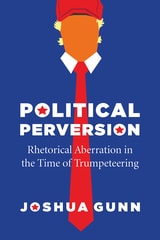
Drawing on insights from critical theory, media ecology, and psychoanalysis, Gunn argues that perverse rhetorics dominate not only the political sphere but also our daily interactions with others, in person and online. From sexting to campaign rhetoric, Gunn advances a new way to interpret our contemporary political context that explains why so many of us have difficulty deciphering the appeal of aberrant public figures. In this book, Trump is only the tip of a sinister, rapidly growing iceberg, one to which we ourselves unwittingly contribute on a daily basis.

Political Philosophy 1
Rights--The New Quarrel between the Ancients and the ModernsLuc Ferry
University of Chicago Press, 1990
In this first of four volumes that aim to revitalize the fundamental values of modern political thought, one of the leading figures in the contemporary revival of liberalism in France responds to these critics and offers a philosophically cogent defense of a humanistic modernity. Luc Ferry reexamines the philosopical basis of the contemporary retreat from the Enlightenment and then suggests his own alternative, which defends the ideals of modernity while giving due consideration to the objections of the critics.
Political Philosophy 2
The System of Philosophies of HistoryLuc Ferry
University of Chicago Press, 1992
Ferry begins this second volume of his ambitious three-volume Political Philosophy by considering both the structure and the potential political effects of the various philosophies of history born of German Idealism. He focuses on the key question of whether, and to what extent, the principle of reason may be said to govern the totality of the historically real. This leads to an examination of Hegel's criticism of the moral view of the world and to an assessment of the phenomenological criticism of Hegel put forth by Heidegger and Arendt.

Political Philosophy
From Plato to MaoMartin Cohen
Pluto Press, 2008
Guiding the reader through the key arguments of the classic figures of Western political philosophy, from Plato through to the modern era, this revised edition includes new essays on Aristotle's 'Politics', Confucianism, Islamic social philosophy and Nazism, as well as additional material on 'Roman Law', Anarchism and 'anti-capitalism'.
Cohen moves chronologically through the development of political philosophy. He presents key texts in their own terms, before offering short, precise analyses of their strengths, weaknesses and influence. The book finishes with a discussion of modern liberalism and conservatism.
Providing both a broad overview and precise summaries of key ideas, this is an invaluable guide for all students of political thought.
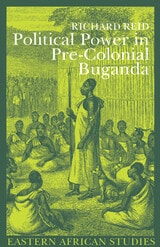
Political Power in Pre-Colonial Buganda
Economy, Society, and Warfare in the Nineteenth CenturyRichard Reid
Ohio University Press, 2002
Blessed with fertile and well-watered soil, East Africa’s kingdom of Buganda supported a relatively dense population and became a major regional power by the mid-nineteenth century. This complex and fascinating state has also long been in need of a thorough study that cuts through the image of autocracy and military might.
Political Power in Pre-Colonial Buganda explores the material basis of Ganda political power, gives us a new understanding of what Ganda power meant in real terms, and relates the story of how the kingdom used the resources at its disposal to meet the challenges that confronted it. Reid further explains how these same challenges ultimately limited Buganda’s dominance of the East African great lakes region.

Political Prairie Fire
The Nonpartisan League, 1915-1922Robert L. Morlan
University of Minnesota Press, 1955
Political Prairie Fire was first published in 1955. Minnesota Archive Editions uses digital technology to make long-unavailable books once again accessible, and are published unaltered from the original University of Minnesota Press editions.
Political Prairie Fire was first published in 1955.
The farmers of North Dakota were ripe for revolt when the magnetic figure of A. C. Townley strode into their midst and offered them a new political formula to redress their grievances. Townley's plan was simple but revolutionary; it called for the formation of a Nonpartisan Political League dedicated to the election of candidates through the established two-party system and to a platform emphasizing public ownership of certain vital farm services and facilities, such as terminal grain elevators and hail insurance on crops.
Like the great prairie fires of the plains states, the political flames of the Nonpartisan League spread swiftly from one farm to the next across North Dakota and into the adjoining states. The League is regarded by many as the last of the great agrarian protest movements. It is historically significant because it achieved a measure of success well beyond that of most similar movements. It controlled the government of one state for some years, elected state officials and legislators in a number of midwestern and western states, and sent several congressmen to Washington. Its impact helped shape the destinies of a dozen states and the political philosophies of an important segment of the nation's voters. The League's methods of operation often serve today as a guide for political action.
This is the first detailed, unbiased history of the Nonpartisan League. Thoroughly documented for the specialist, it is nevertheless equally interesting for the general reader.
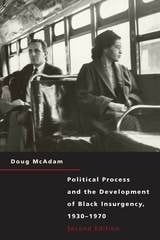
Political Process and the Development of Black Insurgency, 1930-1970
Doug McAdam
University of Chicago Press, 1999
"[A] first-rate analytical demonstration that the civil rights movement was the culmination of a long process of building institutions in the black community."—Raymond Wolters, Journal of American History
"A fresh, rich, and dynamic model to explain the rise and decline of the black insurgency movement in the United States."—James W. Lamare, Annals of the American Academy of Political and Social Science
Political Radicalism in Late Imperial Vienna
Origins of the Christian Social Movement, 1848-1897John W. Boyer
University of Chicago Press, 1995
"Offers a comprehensive, multicausal study of the rise of Christian Socialism in Vienna, that phenomenon which was experienced nowhere else in urban Central Europe and which culminated in the famous clash between the Austrian establishment and the colourful, domineering lead of the movement, Karl, Lueger."—R.J.W. Evans, History
"Boyer's analysis is masterful in terms of research, exposition, and organization. His use of available economic data is judicious, and his sense of the social structure of late nineteenth-century Vienna is formidable."—William A. Jenks, American Historical Review
"To understand Viennese and even imperial politics in the latter half of the nineteenth century, Boyer's book is absolutely essential.""—Robert Wegs, Review of Politics
Political Recruitment across Two Centuries
Mexico, 1884-1991By Roderic Ai Camp
University of Texas Press, 1995
During more than twenty years of field research, Roderic Ai Camp built a monumental database of biographical information on more than 3,000 leading national figures in Mexico. In this major contribution to Mexican political history, he draws on that database to present a definitive account of the paths to power Mexican political leaders pursued during the period 1884 to 1992.
Camp’s research clarifies the patterns of political recruitment in Mexico, showing the consequences of choosing one group over another. It calls into question numerous traditional assumptions, including that upward political mobility was a cause of the Mexican Revolution of 1910.
Comparing Mexican practices with those in several East Asian countries also allows Camp to question many of the tenets of political recruitment theory. His book will be of interest to students not only of Mexican politics but also of history, comparative politics, political leadership, and Third World development.

Political Repression in Modern America
FROM 1870 TO 1976Robert Justin Goldstein
University of Illinois Press, 1978
Enhanced with a new introduction and an updated bibliography, Political Repression in Modern America remains an essential record of the relentless intolerance that suppresses radical dissent in the United States.
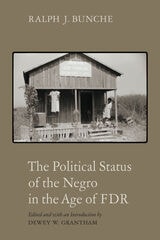
Political Status of the Negro in the Age of FDR
A Carnegie-Myrdal Report Emphasizing the American SouthRalph J. Bunche
University of Chicago Press, 1973
This volume presents the essence of a massive report prepared in 1940 by a team headed by political scientist and civil rights leader Ralph J. Bunche for the Carnegie Corporation’s Survey of the Negro in America. The report was used by Swedish social economist Gunnar Myrdal in writing his monumental An American Dilemma, and it shaped Myrdal’s treatment of the Black political experience. As a valuable historical document, it provides a backdrop against which we can measure change in the Black American’s political status and interpret the origins and consequences of the second Reconstruction.
The Political Status of the Negro introduces essential information about political practices in the Southern states. It offers insight into the historical, economic, sociological, and psychological factors that accounted for these practices, as well as some understanding of the myths, stereotypes, and symbols that contemporaries often used to explain and justify them. The study’s most enduring value lies in its wealth of personal interviews which were conducted in the South in the late 1930s and in its first-hand impressions of the African Americans and Southern politics.
The book is divided into two parts: The first contains Bunche’s explanations, comments, and analytical writings on the subject; the second includes almost all of the interviews and field reports. To this text historian Dewey W. Grantham added a comprehensive introduction that discusses Bunche and his work, the preparation of the research manuscript, and the book’s role in Gunnar Myrdal’s later work.
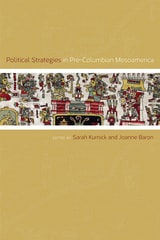
Political Strategies in Pre-Columbian Mesoamerica
Sarah Kurnick
University Press of Colorado, 2020
Political authority contains an inherent contradiction. Rulers must reinforce social inequality and bolster their own unique position at the top of the sociopolitical hierarchy, yet simultaneously emphasize social similarities and the commonalities shared by all. Political Strategies in Pre-Columbian Mesoamerica explores the different and complex ways that those who exercised authority in the region confronted this contradiction.
New data from a variety of well-known scholars in Mesoamerican archaeology reveal the creation, perpetuation, and contestation of politically authoritative relationships between rulers and subjects and between nobles and commoners. The contributions span the geographic breadth and temporal extent of pre-Columbian Mesoamerica—from Preclassic Oaxaca to the Classic Petén region of Guatemala to the Postclassic Michoacán—and the contributors weave together archaeological, epigraphic, and ethnohistoric data.
Grappling with the questions of how those exercising authority convince others to follow and why individuals often choose to recognize and comply with authority, Political Strategies in Pre-Columbian Mesoamerica discusses why the study of political authority is both timely and significant, reviews how scholars have historically understood the operation of political authority, and proposes a new analytical framework to understand how rulers rule.
Contributors include Sarah B. Barber, Joanne Baron, Christopher S. Beekman, Jeffrey Brzezinski, Bryce Davenport, Charles Golden, Takeshi Inomata, Arthur A. Joyce, Sarah Kurnick, Carlo J. Lucido, Simon Martin, Tatsuya Murakami, Helen Perlstein Pollard, and Víctor Salazar Chávez.
Political Survival of Small Parties in Europe
Jae-Jae Spoon
University of Michigan Press, 2015
It is often thought that small party survival or failure is a result of institutional constraints, the behavior of large parties, and the choices of individual politicians. Jae-Jae Spoon, in contrast, argues that the decisions made by small parties themselves determine their ability to balance the dual goals of remaining true to their ideals while maximizing their vote and seat shares, thereby enabling them to survive even in adverse electoral systems.
Spoon employs a mixed-methods approach in order to explore the policy, electoral, and communication strategies of West European Green Parties from 1980 to the present. She combines cross-national data on these parties with in-depth comparative case studies of two New Politics parties, the French and British Green Parties, that have survived in similar national-level plurality electoral systems. Both of these parties have developed as organizations which run candidates in elections at the local, national, and European levels in their respective countries. The parties’ survival, Spoon asserts, results from their ability to balance their competing electoral, policy, and communication goals.
Political Theology and Early Modernity
Edited by Graham Hammill and Julia Reinhard Lupton
University of Chicago Press, 2012
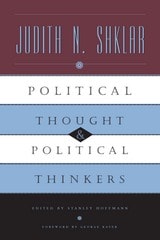
Political Thought and Political Thinkers
Judith N. Shklar
University of Chicago Press, 1998
This second volume of Shklar's work—which follows the 1997 publication of Redeeming American Political Thought—brings together heretofore uncollected (and several unpublished) essays on a number of themes, including the place of the intellect in the modern political world and the dangers of identity politics. While many of these essays have been previously published, they remain far from accessible. In collecting the work scattered over the past forty years in journals and other publications, noted political theorist Stanley Hoffmann provides an essential guide to Shklar's thought, complemented by George Kateb's comprehensive introduction to her work. Hoffmann's selection, which includes Shklar's classic essay "The Liberalism of Fear," showcases her distinctive defense of liberalism and follows her explorations in this history of moral and political thought as she engages with Bergson, Arendt, and Rousseau.
Political Thought and Political Thinkers displays one of the century's most compelling and flexible intellects in action and is the definitive collection of her work on European history and thinkers.
"Shklar's legacy is an inspiring example of liberal thought at its arresting best, unflinchingly courageous and unmoved by the dreary and unmeaning harmonies conjured up by theories of justice and rights."—John Gray, Times Literary Supplement
Judith N. Shklar (1928-1992) was Cowles Professor of Government at Harvard University and the author of nine books in political theory.
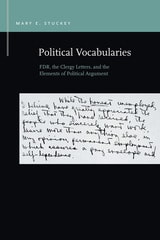
Political Vocabularies
FDR, the Clergy Letters, and the Elements of Political ArgumentMary E. Stuckey
Michigan State University Press, 2018
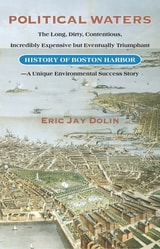
Political Waters
The Long, Dirty, Contentious, Incredibly Expensive but Eventually Triumphant History of Boston Harbor-A Unique Environmental Success StoryEric Jay Dolin
University of Massachusetts Press, 2004
Boston Harbor served as a colonial gateway to the world, witnessed the Boston Tea Party, and helped the community transform itself from an outpost of a few hardy settlers into a bustling metropolis and self-proclaimed hub of the universe. Yet for hundreds of years Boston Harbor was also a cesspool. Long before Bostonians dumped tea into the harbor to protest English taxes, they dumped sewage there.
As the Boston area grew and prospered, its sewage problems worsened, as did the harbor's health, to the point where in the 1980s it was considered the most polluted harbor in the country and ridiculed as the “harbor of shame.” Then, in one of the most impressive environmental comebacks in American history, Boston Harbor was dramatically cleaned up. All it took was two lawsuits, two courts, dozens of lawyers, the creation of a powerful sewage authority, thousands of workers, millions of labor hours, and billions of dollars.
Sewage management is rarely as compelling and exciting as higher profile environmental issues such as global climate change, preserving endangered species, or protecting tropical rainforests. But it can be, as Eric Jay Dolin shows in this engaging narrative account. Boston's struggle to deal with its sewage is an epic story of failure and success, replete with colorful characters, political, bureaucratic, and legal twists and turns, engineering feats, and massive amounts of money. In the end, success hinged on the often overlooked yet monumentally important act of responsibly disposing of the waste people produce every day.
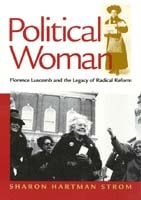
Political Woman
FlorenceSharon Strom
Temple University Press, 2001
Politcal Women counters the traditional narratives that place men at the center of political thinking and history. Showing how three generations of Luscomb's family had set the stage for her activism, this biography presents her story against the backdrop of Boston's politics and larger struggles for social justice. Luscomb participated in every significant social reform movement of her time -- from securing women's right to vote and supporting trade unionism to advocating an end to the war in Vietnam. Luscomb also ran for public office; she was narrowly defeated when she ran for Boston's city council in 1922. Although unsuccessful as a third-party candidate for Congress (in 1936 and 1950) and for Governor of Massachusetts (in 1952), she was one of the few women of her time to seek office. Independent, athletic, and spirited, she apparently never thought that traditional gender prescriptions applied to her. A practicing architect before the First World War, an exuberant hiker all her life, and a member in collective-living arrangements, Luscomb enjoyed a life of rich experiences and sustaining relationships.
In Florence Luscomb's biography, Sharon Hartman Strom suggests that although women were excluded from the activities and sites associated with conventional politics until recently, they did political work that gave purpose to their lives and affected political thinking in their communities, states, and ultimately the nation.
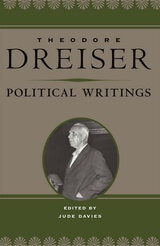
Political Writings
Edited by Jude Davies
University of Illinois Press, 2011
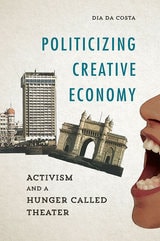
Politicizing Creative Economy
Activism and a Hunger Called TheaterDia Da Costa
University of Illinois Press, 2016
As Da Costa shows, commodification, heritage, and management discussions inevitably creep into performance. Yet the ability of performance to undermine such subtle invasions make activist theater a crucial site for considering what counts as creativity in the cultural politics of creative economy. Da Costa explores the precarious lives, livelihoods, and ideologies at the intersection of heritage projects, planning discourse, and activist performance. By analyzing the creators, performers, and activists involved--individuals at the margins of creative economy as well as society--Da Costa builds a provocative argument. Their creative economy practices may survive, challenge, and even reinforce the economies of death, displacement, and divisiveness used by the urban poor to survive.

Politicizing Gender
Narrative Strategies in the Aftermath of the French RevolutionKadish, Doris Y
Rutgers University Press, 1991
Politicizing Islam in Austria
The Far-Right Impact in the Twenty-First CenturyFarid Hafez
Rutgers University Press, 2024
Politicizing Islam in Austria examines this anti-Muslim swerve in Austrian politics through a comprehensive analysis of government policies and regulations, as well as party and public discourses. In their innovative study, Hafez and Heinisch show how the far-right Austrian Freedom Party (FPÖ) adapted anti-Muslim discourse to their political purposes and how that discourse was then appropriated by the conservative center-right Austrian People’s Party (ÖVP). This reconfiguration of the political landscape prepared the way for a right-wing coalition government between conservatives and far-right actors that would subsequently institutionalize anti-Muslim political demands and change the shape of the civic conditions and public perceptions of Islam and the Muslim community in the republic.
Politics Over Process
Partisan Conflict and Post-Passage Processes in the U.S. CongressHong Min Park, Steven S. Smith, and Ryan J. Vander Wielen
University of Michigan Press, 2018
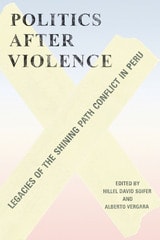
Politics after Violence
Legacies of the Shining Path Conflict in PeruEdited by Hillel David Soifer and Alberto Vergara
University of Texas Press, 2019
Between 1980 and 1994, Peru endured a bloody internal armed conflict, with some 69,000 people killed in clashes involving two insurgent movements, state forces, and local armed groups. In 2003, a government-sponsored “Truth and Reconciliation Committee” reported that the conflict lasted longer, affected broader swaths of the national territory, and inflicted higher costs in both human and economic terms than any other conflict in Peru’s history. Of those killed, 75 percent were speakers of an indigenous language, and almost 40 percent were among the poorest and most rural members of Peruvian society. These unequal impacts of the violence on the Peruvian people revealed deep and historical disparities within the country.
This collection of original essays by leading international experts on Peruvian politics, society, and institutions explores the political and institutional consequences of Peru’s internal armed conflict in the long 1980s. The essays are grouped into sections that cover the conflict itself in historical, comparative, and theoretical perspectives; its consequences for Peru’s political institutions; its effects on political parties across the ideological spectrum; and its impact on public opinion and civil society. This research provides the first systematic and nuanced investigation of the extent to which recent and contemporary Peruvian politics, civil society, and institutions have been shaped by the country’s 1980s violence.
Politics and Apocalypse
Robert Hamerton-Kelly
Michigan State University Press, 2007
Apocalypse. To most, the word signifies destruction, death, the end of the world, but the literal definition is "revelation" or "unveiling," the basis from which renowned theologian René Girard builds his own view of Biblical apocalypse. Properly understood, Girard explains, Biblical apocalypse has nothing to do with a wrathful or vengeful God punishing his unworthy children, and everything to do with a foretelling of what future humans are making for themselves now that they have devised the instruments of global self-destruction. In this volume, some of the major thinkers about the interpretation of politics and religion— including Eric Voegelin, Leo Strauss, and Carl Schmitt— are scrutinized by some of today's most qualified scholars, all of whom are thoroughly versed in Girard’s groundbreaking work.
Including an important new essay by Girard, this volume enters into a philosophical debate that challenges the bona fides of philosophy itself by examining three supremely important philosopher of the twentieth century. It asks how we might think about politics now that the attacks of 9/11 have shifted our intellectual foundations and what the outbreak of rabid religion might signify for international politics.
Politics and History in William Golding
The World Turned Upside DownPaul Crawford
University of Missouri Press, 2002
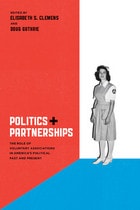
Politics and Partnerships
The Role of Voluntary Associations in America's Political Past and PresentEdited by Elisabeth S. Clemens and Doug Guthrie
University of Chicago Press, 2011
But despite the ubiquity of the idea of volunteerism in public policy debates, analysis of its role in American governance has been fragmented. Bringing together a diverse set of disciplinary approaches, Politics and Partnerships is a thorough examination of the place of voluntary associations in political history and an astute investigation into contemporary experiments in reshaping that role. The essays here reveal the key role nonprofits have played in the evolution of both the workplace and welfare and illuminate the way that government’s retreat from welfare has radically altered the relationship between nonprofits and corporations.
Politics and Poetics of Authenticity
A Cultural Genealogy of Sinhala NationalismHarshana Rambukwella
University College London, 2018
Through a series of fine-grained and historically grounded analyses of the writings of individual figures central to the making of Sinhala nationalist ideology the book demonstrates authenticity’s rich and varied presence in Sri Lankan public life and its key role in understanding postcolonial nationalism in Sri Lanka and elsewhere in South Asia and the world. It also explores how notions of authenticity shape certain strands of postcolonial criticism and offers a way of questioning the nature of the nation as a unit of analysis but at the same time critically explore the deep imprint of nations and nationalisms on people’s lives.
Politics and Policies in Post-Communist Transition
Primary and Secondary Privatisation in Central Europe and the Former Soviet UnionKároly Attila Soós
Central European University Press, 2011
Politics and Property Rights
The Closing of the Open Range in the Postbellum SouthShawn Everett Kantor
University of Chicago Press, 1998
In this original study, Kantor uses economic analysis to show that, contrary to traditional historical interpretation, this conflict was centered on anticipated benefits from fencing livestock rather than on class, cultural, or ideological differences. Kantor proves that the stock law brought economic benefits; at the same time, he analyzes why the law's adoption was hindered in many areas where it would have increased wealth. This argument illuminates the dynamics of real-world institutional change, where transactions are often costly and where some inefficient institutions persist while others give way to economic growth.
Politics and Welfare in Birmingham, 1900–1975
Edward Shannon LaMonte
University of Alabama Press, 1995
This well-written volume explores the relationships between politics and welfare programs for low-income residents in Birmingham during four periods in the twentieth century:
From the time of its founding in 1871, Birmingham has had a biracial population, so the theme of race relations runs naturally throughout the narrative. LaMonte pays particular attention to those efforts to achieve a more harmonious biracial community, including the failed effort to establish an Urban League in the 1940s, the progressive activities of the Community Chest’s Interracial Division in the 1950s, which were abruptly terminated, and the dramatic events of the Civil Rights Movement in the 1960s, when local events were elevated to international significance.