Results by title
22279 books match the query 'Social Science' and 1104 start with p
Power, Culture and Place
Essays on New York CityJohn H. Mollenkopf
Russell Sage Foundation, 1988
Power, Money, and Media
Communication Patterns and Bureaucratic Control in Cultural ChinaChin-Chuan Lee
Northwestern University Press, 2000
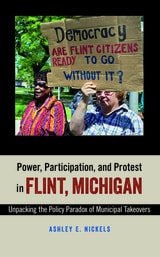
Power, Participation, and Protest in Flint, Michigan
Unpacking the Policy Paradox of Municipal TakeoversAshley E. Nickels
Temple University Press, 2019
When the 2011 municipal takeover in Flint, Michigan placed the city under state control, some supported the intervention while others saw it as an affront to democracy. Still others were ambivalent about what was supposed to be a temporary disruption. However, the city’s fiscal emergency soon became a public health emergency—the Flint Water Crisis—that captured international attention.
But how did Flint’s municipal takeovers, which suspended local representational government, alter the local political system? In Power, Participation, and Protest in Flint, Michigan, Ashley Nickels addresses the ways residents, groups, and organizations were able to participate politically—or not—during the city’s municipal takeovers in 2002 and 2011. She explains how new politics were created as organizations developed, new coalitions emerged and evolved, and people’s understanding of municipal takeovers changed.
Inwalking readers through the policy history of, implementation of, and reaction to Flint’s two municipal takeovers, Nickels highlights how the ostensibly apolitical policy is, in fact, highly political.
Power, Patronage, and the Local State in Ghana
Barry Driscoll
Ohio University Press, 2023
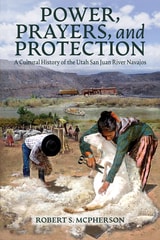
Power, Prayers, and Protection
A Cultural History of the Utah San Juan River NavajoRobert S. McPherson
University Press of Colorado, 2022
Navajo oral tradition is rich in stories and themes that form the basis for ceremonial performance. Everything that is physical, emotional, or spiritual has been placed in this world by the holy people at the time of creation, a process recognized in these accounts and teachings. Each chapter references sacred narratives that provide power through prayers that bring protection and a path for believers to follow. Topics include life on the river before and during the introduction of the white man, efficacy of the chantways, teachings of medicine people, childhood memories, arrival of trading posts, encounters with the automobile and other technology, livestock reduction and its aftermath, and the development of the Aneth oilfield with its ensuing protests. This is the Navajo elders’ story as seen through their eyes and told in their voice.

Power, Protest, and the Public Schools
Jewish and African American Struggles in New York CityMelissa F. Weiner
Rutgers University Press, 2012
Power, Trust, and Meaning
Essays in Sociological Theory and AnalysisS. N. Eisenstadt
University of Chicago Press, 1995
Framed by a new introduction and an extensive epilogue, which are themselves important statements about processes of institutional formations and cultural creativity, the essays trace the major developments of contemporary sociological theory and analysis. Examining themes of trust and solidarity among immigrants, youth groups, and generations, and in friendships, kinships, and patron-client relationships, Eisenstadt explores larger questions of social structure and agency, conflict and change, and the reconstitution of the social order. He looks also at political and religious systems, paying particular attention to great historical empires and the major civilizations.
United by what they reveal about three major dimensions of social life—power, trust, and meaning—these essays offer a vision of culture as both a preserving and a transforming aspect of social life, thus providing a new perspective on the relations between culture and social structure.
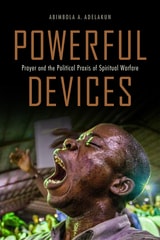
Powerful Devices
Prayer and the Political Praxis of Spiritual WarfareAbimbola Adunni Adelakun
Rutgers University Press, 2023

Powerful Frequencies
Radio, State Power, and the Cold War in Angola, 1931–2002Marissa J. Moorman
Ohio University Press, 2019
Powerful Frequencies details the central role that radio technology and broadcasting played in the formation of colonial Portuguese Southern Africa and the postcolonial nation-state, Angola. In Intonations, Marissa J. Moorman examined the crucial relationship between music and Angolan independence during the 1960s and ’70s. Now, Moorman turns to the history of Angolan radio as an instrument for Portuguese settlers, the colonial state, African nationalists, and the postcolonial state. They all used radio to project power, while the latter employed it to challenge empire.
From the 1930s introduction of radio by settlers, to the clandestine broadcasts of guerrilla groups, to radio’s use in the Portuguese counterinsurgency strategy during the Cold War era and in developing the independent state’s national and regional voice, Powerful Frequencies narrates a history of canny listeners, committed professionals, and dissenting political movements. All of these employed radio’s peculiarities—invisibility, ephemerality, and its material effects—to transgress social, political, “physical,” and intellectual borders. Powerful Frequencies follows radio’s traces in film, literature, and music to illustrate how the technology’s sonic power—even when it made some listeners anxious and frightened—created and transformed the late colonial and independent Angolan soundscape.
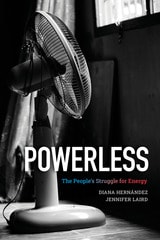
Powerless
The People's Struggle for EnergyDiana Hernández
Russell Sage Foundation, 2025
Approximately one in ten households in the U.S. are energy insecure and four in ten are at risk for energy insecurity. These statistics alone do not convey the acute pain of utility shutoffs, or the relentless toll of chronic energy hardships marked by difficult choices and harsh living conditions. Drawing on survey data and interviews with one hundred energy-insecure individuals and families, Hernández and Laird detail the experience of energy insecurity. Individuals and families suffering from energy insecurity endure economic hardships, such as difficulty paying utility bills, utility debt, and disconnection from utility services. They also struggle with physical challenges, such as poor housing conditions and poor or dysfunctional heating and cooling systems. They are often forced to make difficult choices about what bills to pay. These decisions are sometimes referred to as “heat or eat?” choices, as families cannot afford to pay for heating and food at the same time. Energy insecure individuals and families employ a variety of strategies to keep energy costs down to avoid having to make these hard choices. This includes deliberate underconsumption of energy, enduring physical discomfort, and using dangerous alternatives such as open flames, ovens, or space heaters to try to maintain a comfortable temperature in their home. To be energy insecure is to suffer. Despite the heavy toll of energy insecurity, most people confront these difficulties behind closed doors, believing it is a private matter. Thus, the enormous social crisis of energy insecurity goes unnoticed.
Hernández and Laird argue that household energy is a basic human right and detail policies and practices that would expand access to consistent, safe, clean, and affordable energy. Their proposals include improving the current energy safety net, which is limited and often does not serve the most energy insecure due to stringent program requirements and administrative burdens. They also suggest redesigning rates to accommodate income, promoting enrollment and expansion of discount programs, reforming utility disconnection policies, improving energy literacy, and ensuring an equitable shift to renewable energy resources.
Powerless creates a comprehensive picture of the complex social and environmental issue of energy insecurity and shows how energy equity is not just an aspiration but an achievable reality.
Powers Of Diaspora
Two Essays On The Relevance Of Jewish CultureJonathan Boyarin
University of Minnesota Press, 2002
Reasserts the centrality of Jewish culture to contemporary discussions of diaspora
Diaspora: the scattering of a people, often described as a condition of helplessness and a pathology to be overcome. It can also be, as Jonathan Boyarin and Daniel Boyarin assert in this provocative work, a unique source of power and strength. Focusing on Jewish experience, Powers of Diaspora forcefully argues that diasporic communities exercise a distinct form of cultural power in order to maintain themselves.
With reference to rabbinic culture and contemporary Jewish ethnography, the authors evoke the cultural strategies of Jewish diaspora—of regeneration through statelessness—that should prove increasingly relevant to the dilemmas and possibilities of the "new diasporas" born in the midst and in the aftermath of the modern world-system. Their work exposes the various methods by which peoples in diaspora "legislate" distinctive ways of life and establish formal communal structures, thus creating fluid yet effective boundaries between themselves and the others who surround them, and critiques the internal power dynamics that can sometimes result.Powers of Diaspora strongly reasserts the place of Jewish culture in contemporary discussions of diaspora, where the cultural politics of postcolonialism have remarginalized Jewish experience; at the same time, it brings insights from studies of other diasporas to bear on the study of Jews. In challenging the equation of diaspora with powerlessness, the book questions the modern nation-state ideal and suggests that diasporic cultural formations offer important clues toward an alternative means of relating culture to polity.
Pox, Empire, Shackles, and Hides
The Townsend Site, 1670-1715Jon Bernard Marcoux
University of Alabama Press, 2010
Marcoux studies the material remains of daily life in order to identify the strategies that households enacted while adapting to the social, political, and economic disruptions associated with European contact. The author focuses on households as the basic units of analysis because these represent the most fundamental and pervasive unit of economic and social production in the archaeological record. His investigations show how the daily lives of Cherokee households changed dramatically as they coped with the shifting social, political, and economic currents of the times. He demonstrates that the community excavated at the Townsend site was formed by immigrant households who came together from geographically disparate and ethnically distinct Cherokee settlements as a way to ameliorate population losses. He also explores changes in community and household patterning, showing how the spatial organization of the Townsend community became less formal and how households became more transient compared to communities predating contact with Europeans. From this evidence, Marcoux concludes that these changes reflect a broader strategic shift to a more flexible lifestyle that would have aided Cherokee households in negotiating the social, political, and economic uncertainty of the period.
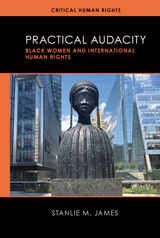
Practical Audacity
Black Women and International Human RightsStanlie James
University of Wisconsin Press, 2022
Stanlie M. James weaves narratives by and about these women throughout the history of the field, illustrating how they conceptualize, develop, and implement human rights. By centering the courage and innovative interventions of capable and visionary Black women, she places them rightfully alongside such figures as Thurgood Marshall and Charles Hamilton Houston. This volume fundamentally shifts the frame through which human rights struggles are understood, illuminating how those who witness and experience oppression have made some of the biggest contributions to building a better world.
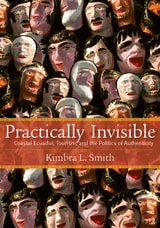
Practically Invisible
Coastal Ecuador, Tourism, and the Politics of AuthenticityKimbra Smith
Vanderbilt University Press, 2015
Thus came a nearly inevitable shock, as the daily rhythms of life--rising before dawn to prepare for a long day of maintaining livestock and crops; returning for a late lunch and siesta; joining in a game of soccer followed by dinner in the evening--transformed forever in favor of a new tourist industry and the compromises required to support it. As Practically Invisible demonstrates, for Agua Blancans, becoming a supposedly "authentic" version of their own indigenous selves required performing their culture for outsiders, thus becoming these performances within the minds of these visitors. At the heart of this story, then, is a delicate balancing act between tradition and survival, a performance experienced by countless indigenous groups.

Practically Joking
Moira Marsh
Utah State University Press, 2015
In Practically Joking, the first full-length study of the practical joke, Moira Marsh examines the value, artistry, and social significance of this ancient and pervasive form of vernacular expression.
Though they are sometimes dismissed as the lowest form of humor, practical jokes come from a lively tradition of expressive play. They can reveal both sophistication and intellectual satisfaction, with the best demanding significant skill and talent not only to conceive but also to execute. Practically Joking establishes the practical joke as a folk art form subject to critical evaluation by both practitioners and audiences, operating under the guidance of local aesthetic and ethical canons.
Marsh studies the range of genres that pranks comprise; offers a theoretical look at the reception of practical jokes based on “benign transgression”—a theory that sees humor as playful violation—and uses real-life examples of practical jokes in context to establish the form’s varieties and meanings as an independent genre, as well as its inextricable relationship with a range of folklore forms. Scholars of folklore, humor, and popular culture will find much of interest in Practically Joking.

Practice of Everyday Life
Volume 2: Living and CookingMichel De Certeau
University of Minnesota Press, 1998
Practices of Coexistence
Constructions of the Other in Early Modern PerceptionsMarianna D. Birnbaum
Central European University Press, 2017
Practicing Community
Class Culture and Power in an Urban NeighborhoodBy Rhoda H. Halperin
University of Texas Press, 1998
Cincinnati's East End river community has been home to generations of working-class people. This racially mixed community has roots that reach back as far as seven generations. But the community is vulnerable. Developers bulldoze "raggedy" but affordable housing to build upscale condos, even as East Enders fight to preserve the community by participating in urban development planning controlled by powerful outsiders.
This book portrays how East Enders practice the preservation of community. Drawing on more than six years of anthropological research and advocacy in the East End, Rhoda Halperin argues for redefining community not merely as a place, but as a set of culturally embedded and class-marked practices that give priority to caring for children and the elderly, procuring livelihood, and providing support for family, friends, and neighbors. These practices create the structures of community within the larger urban power structure.
Halperin uses different genres to weave the voices of East Enders throughout the book. Poems and narratives offer poignant insights into the daily struggles against impersonal market forces that work against the struggle for livelihood. This firsthand account questions commonly held assumptions about working-class people. In a fresh way, it reveals the cultural construction of marginality, from the viewpoints of both "real East Enders" and the urban power structure.
Practicing Cooperation
Mutual Aid beyond CapitalismAndrew Zitcer
University of Minnesota Press, 2021
A powerful new understanding of cooperation as an antidote to alienation and inequality
From the crises of racial inequity and capitalism that inspired the Black Lives Matter movement and the Green New Deal to the coronavirus pandemic, stories of mutual aid have shown that, though cooperation is variegated and ever changing, it is also a form of economic solidarity that can help weather contemporary social and economic crises. Addressing this theme, Practicing Cooperation delivers a trenchant and timely argument that the way to a more just and equitable society lies in the widespread adoption of cooperative practices. But what renders cooperation ethical, effective, and sustainable?
Providing a new conceptual framework for cooperation as a form of social practice, Practicing Cooperation describes and critiques three U.S.-based cooperatives: a pair of co-op grocers in Philadelphia, each adjusting to recent growth and renewal; a federation of two hundred low-cost community acupuncture clinics throughout the United States, banded together as a cooperative of practitioners and patients; and a collectively managed Philadelphia experimental dance company, founded in the early 1990s and still going strong. Through these case studies, Andrew Zitcer illuminates the range of activities that make contemporary cooperatives successful: dedicated practitioners, a commitment to inclusion, and ongoing critical reflection. In so doing he asserts that economic and social cooperation must be examined, critiqued, and implemented on multiple scales if it is to combat the pervasiveness of competitive individualism.
Practicing Cooperation is grounded in the voices of practitioners and the result is a clear-eyed look at the lived experience of cooperators from different parts of the economy and a guidebook for people on the potential of this way of life for the pursuit of justice and fairness.
Practicing Digital Activisms
Nicole E. Allen
Utah State University Press, 2027
Practicing Digital Activisms reframes digital activism as embodied, situated work that extends across classrooms, communities, institutions, streets, and ecosystems. It develops frameworks for studying and practicing activism in an era shaped by social media, datafication, and artificial intelligence. At the heart of the collection is a rethinking of digital activism for the twenty-first century that traces activism through networks of people, platforms, infrastructures, and material practices.
Bringing together scholars in rhetoric, writing studies, technical communication, and community engagement, contributors show how activism now unfolds across interconnected media ecologies, through affective and material infrastructures, and at multiple tempos ranging from viral moments to the quieter practices of organizing, care, and persistence. Through case studies of food activism, environmental advocacy, reproductive health, social media movements, and emerging data practices, contributors demonstrate digital activism as a sustained practice of coalition building, circulation, documentation, and persistence. The chapters provide theoretical tools for making infrastructures visible, negotiating ethical responsibility, and designing interventions responsive to local needs and broader struggles for justice.
Attending to the risks that shape contemporary digital life—including surveillance, commodification, algorithmic bias, harassment, platform control, and unequal access—the collection offers language, methods, and examples for understanding how communities build power, sustain movements, and imagine just futures through digital practice. For scholars, teachers, students, organizers, and readers interested in digital rhetoric and social change, Practicing Digital Activisms invites attention to digital participation as a vital site where collective action is imagined, contested, and practiced.

Practicing Feminisms, Reconstructing Psychology
Notes on a Liminal ScienceJill Morawski
University of Michigan Press, 1994

Practicing Materiality
Edited by Ruth M. Van Dyke
University of Arizona Press, 2015
Practicing Materiality focuses on the practical job of applying materiality to anthropological investigations, but with the firm retention of anthropocentrism. The philosophical discussions that run through the nine chapters develop practical applications for material studies, including Heideggerian phenomenology, Gellian secondary agency, object life histories, and bundling. Seven case studies are flanked by an introduction and a discussion chapter. The case studies represent a wide range of archaeological and anthropological contexts, from contemporary New York City and Turkey to fifteenth-century Portugal, the ancient southwest United States, and the ancient Andes. Authors in every chapter argue for the rejection of subject/object dualism, regarding material things as actively involved in the negotiation of power within human social relationships. Practicing Materiality demonstrates that it is possible to focus on the entangled lives of things without losing sight of their political and social implications.
Pragmatism and Feminism
Reweaving the Social FabricCharlene Haddock Seigfried
University of Chicago Press, 1996
With careful attention to their interwoven histories and contemporary concerns, Pragmatism and Feminism effectively invigorates both traditions, opening them to new interpretations and appropriations and asserting their timely philosophical relevance. This foundational work in feminist theory simultaneously invites and guides future scholarship in an area of rapidly emerging significance.
Pragmatism and Social Theory
Hans Joas
University of Chicago Press, 1993
Along with pragmatism's impact on American sociology and social research from 1895 to the 1940s, Joas traces its reception by French and German traditions during this century. He explores the influences of pragmatism—often misunderstood—on Emile Durkheim's sociology of knowledge, and on German thought, with particularly enlightening references to its appropriation by Nazism and its rejection by neo-Marxism. He also explores new currents of social theory in the work of Habermas, Castoriadis, Giddens, and Alexander, fashioning a bridge between Continental thought, American philosophy, and contemporary sociology; he shows how the misapprehension and neglect of pragmatism has led to systematic deficiencies in contemporary social theory.
From this skillful historical and theoretical analysis, Joas creates a powerful case for the enduring legacy of Peirce, James, Dewey, and Mead for social theorists today.
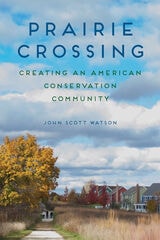
Prairie Crossing
Creating an American Conservation CommunityJohn Scott Watson
University of Illinois Press, 2016
The first comprehensive look at an American conservation community, Prairie Crossing goes beyond windmills and nest boxes to examine an effort to connect adults to the land while creating a healthy and humane setting for raising a new generation attuned to nature. John Scott Watson places Prairie Crossing within the wider context of suburban planning, revealing how two first-time developers implemented a visionary new land ethic that saved green space by building on it. The remarkable achievements include a high rate of resident civic participation, the reestablishment of a thriving prairie ecosystem, the reintroduction of endangered and threatened species, and improved water and air quality. Yet, as Watson shows, considerations like economic uncertainty, lack of racial and class diversity, and politics have challenged, and continue to challenge, Prairie Crossing and its residents.

Praising Girls
The Rhetoric of Young Women, 1895-1930Henrietta Rix Wood
Southern Illinois University Press, 2016
The site of the study—Kansas City, Missouri—reflects the diverse rhetorical experiences of girls in cities across the United States at the beginning of the last century. Four case studies examine the writing of privileged white girls at a college preparatory school, Native American girls at an off-reservation boarding school, African American girls at a segregated high school, and working- and middle-class girls at a large whites-only public high school. Wood’s analysis reveals a contemporary concept of epideictic rhetoric that accounts for issues of gender, race, class, and age.
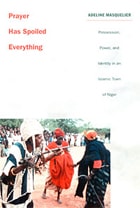
Prayer Has Spoiled Everything
Possession, Power, and Identity in an Islamic Town of NigerAdeline Masquelier
Duke University Press, 2001
To explore the role of bori possession in local definitions of history, power, and identity, Masquelier spent a total of two years in Niger, focusing on the diverse ways in which spirit mediums share, transform, and contest a rapidly changing reality, threatened by Muslim hegemony and financial hardship. She explains how the spread of Islam has provoked irreversible change in the area and how prayer—a conspicuous element of daily life that has become virtually synonymous with Islamic practice in this region of west Africa—has thus become equated with the loss of tradition. By focusing on some of the creative and complex ways that bori at once competes with and borrows from Islam, Masquelier reveals how possession nonetheless remains deeply embedded in Mawri culture, representing more than simple resistance to Islam, patriarchy, or the state. Despite a widening gap between former ways of life and the contradictions of the present, it maintains its place as a feature of daily life in which villagers participate with varying degrees of enthusiasm and approval.
Specialists in African studies, in the anthropology of religion, and in the historical transformations of colonial and postcolonial societies will welcome this study.
Prayers and Rituals at a Time of Illness and Dying
The Practices of Five World ReligionsPatricia Fosarelli
Templeton Press, 2008
In the course of caring for the ill or dying, health care professionals are sometimes the only ones available to provide spiritual comfort to their patients. In our modern pluralistic society, where patients could come from any number of religious traditions, it can often be difficult to find exactly the right words in these situations.
Prayers and Rituals at a Time of Illness and Dying: The Practices of Five World Religions by experienced physician and theologian Pat Fosarelli offers clear instructions for health care professionals on how to better understand the needs of their Buddhist, Hindu, Muslim, Christian, and Jewish patients during these difficult times. Devoting separate chapters to each tradition, Fosarelli briefly outlines the basic beliefs and then looks at the main tenets of each religion, exploring the varied approaches that they take to illness and end-of-life issues. For each tradition, she also describes practices and offers suitable prayers. Each chapter suggests modifications that may be necessary for Western hospitals, modifications for children, and specific suggestions about what not to do or say in respect to different faith traditions.
This easy-to-use, pocket-sized resource will be referenced again and again by physicians, paramedics, hospital and military chaplains, pastoral counselors, hospice providers, and other medical professionals.
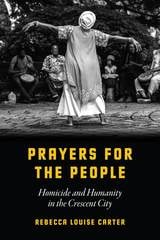
Prayers for the People
Homicide and Humanity in the Crescent CityRebecca Louise Carter
University of Chicago Press, 2019
Inspired by ministers and guided by grieving mothers who hold birthday parties for their deceased sons, Prayers for the People traces the emergence of a powerful new African American religious ideal at the intersection of urban life, death, and social and spiritual change. Carter frames this sensitive ethnography within the complex history of structural violence in America—from the legacies of slavery to free but unequal citizenship, from mass incarceration and overpolicing to social abandonment and the unequal distribution of goods and services. And yet Carter offers a vision of restorative kinship by which communities of faith work against the denial of Black personhood as well as the violent severing of social and familial bonds. A timely directive for human relations during a contentious time in America’s history, Prayers for the People is also a hopeful vision of what an inclusive, nonviolent, and just urban society could be.

Pre-Columbian Jamaica
Phillip Allsworth-Jones
University of Alabama Press, 2008
Pre-Election Polling
Sources of Accuracy and ErrorIrving Crespi
Russell Sage Foundation, 1988

Pre-Gay L.A.
A Social History of the Movement for Homosexual RightsC. Todd White
University of Illinois Press, 2008
Pre-Hispanic Occupance in the Valley of Sonora, Mexico
Archaeological Confirmations of Early Spanish ReportsWilliam E. Doolittle
University of Arizona Press, 1988

Pre-Mamom Pottery Variation and the Preclassic Origins of the Lowland Maya
Debra S. Walker
University Press of Colorado, 2022
Analyzing ceramics found at sites in Belize, Petén (Guatemala), and Mexico, the contributors provide evidence that the pre-Mamom expansion of pottery resulted from increased dependence on maize agriculture, exploitation of limestone caprock, and greater reliance on a preexisting system of long-distance exchange. The chapters describe the individual experiences of new potting communities at various sites across the region. They are supplemented by appendixes presenting key chronological data as well as the principal types and varieties of pre-Mamom ceramic complexes across the various spheres: Xe, Eb, Swasey, Cunil, and Ek.
A significant amount of new material has been excavated in the last decade, changing what is known about the early Middle Preclassic period and making Pre-Mamom Pottery Variation and the Preclassic Origins of the Lowland Maya a first read of the early ceramic prehistory of the Maya lowlands. It will be a valuable resource for students and scholars interested in the archaeology of the Maya lowlands, Mesoamerican social complexity, and ceramic technology.
Contributors: E. Wyllys Andrews V, Jaime Awe, George J. Bey III, Ronald L. Bishop, Michael G. Callaghan, Ryan H. Collins, Kaitlin Crow, Sara Dzul Góngora, Jerald Ek, Tomás Gallareta Negrón, Bernard Hermes, Takeshi Inomata, Betsy M. Kohut, Laura J. Kosakowsky, Wieslaw Koszkul, Jon Lohse, Michael Love, Nina Neivens, Terry Powis, Duncan C. Pring, Kathryn Reese-Taylor, Prudence M. Rice, Robert M. Rosenswig, Kerry L. Sagebiel, Donald A. Slater, Katherine E. South, Lauren A. Sullivan, Travis Stanton, Juan Luis Velásquez Muñoz, Debra S. Walker, Michal Wasilewski, Jaroslaw Źrałka
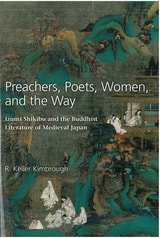
Preachers, Poets, Women, and the Way
Izumi Shikibu and the Buddhist Literature of Medieval JapanR. Keller Kimbrough
University of Michigan Press, 2008
Preaching Prevention
Born-Again Christianity and the Moral Politics of AIDS in UgandaLydia Boyd
Ohio University Press, 2015
Preaching Prevention examines the controversial U.S. President’s Emergency Plan for AIDS Relief (PEPFAR) initiative to “abstain and be faithful” as a primary prevention strategy in Africa. This ethnography of the born-again Christians who led the new anti-AIDS push in Uganda provides insight into both what it means for foreign governments to “export” approaches to care and treatment and the ways communities respond to and repurpose such projects. By examining born-again Christians’ support of Uganda’s controversial 2009 Anti-Homosexuality Bill, the book’s final chapter explores the enduring tensions surrounding the message of personal accountability heralded by U.S. policy makers.
Preaching Prevention is the first to examine the cultural reception of PEPFAR in Africa. Lydia Boyd asks, What are the consequences when individual responsibility and autonomy are valorized in public health initiatives and those values are at odds with the existing cultural context? Her book investigates the cultures of the U.S. and Ugandan evangelical communities and how the flow of U.S.-directed monies influenced Ugandan discourses about sexuality and personal agency. It is a pioneering examination of a global health policy whose legacies are still unfolding.
Precarious Accumulation
Fast Fashion Bosses in Transnational GuangzhouNellie Chu
Duke University Press, 2026
Precarious Democracy
Ethnographies of Hope, Despair, and Resistance in BrazilBenjamin Junge
Rutgers University Press, 2021
Precarious Eating
Narrating Environmental Harm in the Global SouthBen Jamieson Stanley
University of Minnesota Press, 2024
The role of food and hunger in contemporary South African and Indian environmental writing
From GMOs to vegetarianism and veganism, questions of what we should (and shouldn’t) eat can be frequent sources of debate and disagreement. In Precarious Eating, Ben Jamieson Stanley asks how recentering global South representations of food might shift understandings of environmental precarity.
Precarious Eating follows the lead of writers and thinkers in South Africa and India who are tracing the production and consumption of food, exploring ways to reconnect our narratives about climate change, global capitalism, and social justice. Taking up a diverse range of novels, films, scholar/activist writings, intellectual histories, and cookbooks, Stanley connects the ethics of eating to histories of empire and apartheid, uneven globalization, gender and sexuality, and global South experiences of climate change. They shift the lens of environmental humanities from climate-focused paradigms developed in the global North to food-focused environmental culture and activism in the South, addressing topics that range from foraging and farmer suicides to disordered eating and queer intimacy.
By highlighting authors, activists, and environments of the global South, Precarious Eating joins with scholarship from postcolonial, decolonial, Indigenous, and Black studies to underscore how capitalism and empire shape our planetary environmental crisis.
Retail e-book files for this title are screen-reader friendly with images accompanied by short alt text and/or extended descriptions.

Precarious Japan
Anne Allison
Duke University Press, 2013
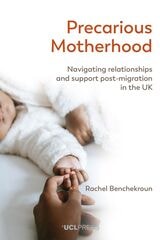
Precarious Motherhood
Navigating Relationships and Support Post-Migration in the UKRachel Benchekroun
University College London, 2025
Precarious Motherhood is a deeply human investigation of the lives of racially minoritized mothers as they navigate the intersecting challenges of financial hardship and the UK’s hostile immigration policies. Based on thorough ethnographic research, Rachel Benchekroun examines how these mothers forge relationships to access support, maintain their children’s well-being, and carve out spaces of belonging in an often unwelcoming system. The book captures the resilience and the relentless precarity of motherhood in migration, where every relationship shapes social barriers and everyday survival.
Through the voices of over twenty migrant mothers, this work sheds light on the personal and political dimensions of motherhood. It provides critical insights into state policies and social infrastructures that shape migrant lives, making it a valuable resource for scholars of migration and social justice.
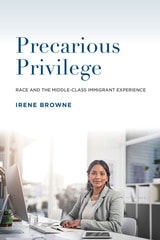
Precarious Privilege
Race and the Middle-Class Immigrant ExperienceIrene Browne
Russell Sage Foundation, 2024
Browne finds that when asked to identify themselves by race, these immigrants either reject racial identities entirely or draw on belief systems from Mexico and the Dominican Republic that emphasize European-indigenous mixed race identities. When branded as typical Latines in the U.S., Mexican middle-class immigrants emphasize their social class or explain that a typical Latine can be middle-class, while Dominicans simply indicate that they are not Mexican. Rather than blame systemic racism, both Mexican and Dominican middle-class immigrants often attribute misperceptions of their identity to non-Latines’ ignorance or to individual Latines’ lack of effort in trying to assimilate.
But these middle-class Latine immigrants do not simply seek to position themselves on par with the U.S.-born white middle class. Instead, they leverage their cosmopolitanism—for example, their multilingualism or their children’s experiences traveling abroad—to engage in what Browne calls “one-up assimilation,” a strategy that aims to position them above the white middle class, who are often monolingual and unaware of the world outside the United States. Middle-class Latines’ cosmopolitanism and valuing of diversity also lead them to have cordial relations with African Americans, but these immigrants do not see themselves as sharing African Americans’ status as oppressed minorities.
Although the stereotype of the typical Latine has made middle-class Latine immigrants susceptible to stigma, they insist that this stigma does not play a significant role in their lives. In many cases, they view the stereotype as a minor issue, feel that opportunities for upward mobility outweigh any negative experiences, or downplay racism by emphasizing their class privilege. Browne observes that while downplaying racism may help middle-class Latine immigrants maintain their dignity, it also perpetuates inequality by reinforcing the lower status of working-class undocumented immigrants. It is thus imperative, Browne argues, to repeal harsh anti-immigration policies, a move that will not only ease the lives of the undocumented but also send a message about who belongs in the country.
Offering a nuanced exploration of how race, social class, and immigration status intersect, Precarious Privilege provides a complex portrait of middle-class Latine immigrants in the United States today.
Precarious Rhetorics
Edited by Wendy S. Hesford, Adela C. Licona, and Christa Teston
The Ohio State University Press, 2018
This collection features cross-disciplinary contributions from leading scholars, including the editors of the volume as well as James J. Brown Jr., Gale Coskan-Johnson, Ronald Greene, Lavinia Hirsu, Arabella Lyon, Louis Maraj, Sara McKinnon, Alexandra Schultheis Moore, Kimberlee Pérez, Margaret Price, Amy Shuman, Kristin Swenson, Becca Tarsa, and Belinda Walzer. Chapters emphasize a materialist-rhetorical approach while also drawing on feminist studies, women of color feminisms, affect studies, critical disability studies, critical race and ethnic studies, medical humanities, sexuality studies, queer migration studies, and human rights and humanitarian studies. While theoretically rich, this volume intentionally features chapters that explore precarious rhetorics as they operate in practice—whether in borderlands, politics, public policy, or the quotidian spaces of human activity, such as school, work, social media, and medicine.

Precarious Spaces
The Arts, Social and Organizational ChangeEdited by Katarzyna Kosmala and Miguel Imas
Intellect Books, 2016
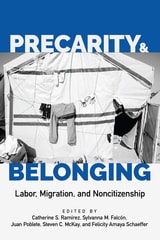
Precarity and Belonging
Labor, Migration, and NoncitizenshipCatherine S. Ramírez
Rutgers University Press, 2021

Precious Fire
Maud Russell and the Chinese RevolutionKaren Garner
University of Massachusetts Press, 0
Preclassic Maya Pottery at Cuello, Belize
Laura J. Kosakowsky
University of Arizona Press, 1987
Precolumbian Water Management
Ideology, Ritual, and PowerEdited by Lisa J. Lucero and Barbara W. Fash
University of Arizona Press, 2006
Precolumbian Water Management examines water management from both economic and symbolic perspectives. Water management facilities, settlement patterns, shrines, and water-related imagery associated with civic-ceremonial and residential architecture provide evidence that water systems pervade all aspects of ancient society. Through analysis of such data, the contributors seek to combine an understanding of imagery and the religious aspects of water with its functional components, thereby presenting a unified perspective of how water was conceived, used, and represented in ancient greater Mesoamerica. The collection boasts broad chronological and geographical coverage—from the irrigation networks of Teotihuacan to the use of ritual water technology at Casas Grandes—that shows how procurement and storage systems were adapted to local conditions.
The articles consider the mechanisms that were used to build upon the sacredness of water to enhance political authority through time and space and show that water was not merely an essential natural resource but an important spiritual one as well, and that its manipulation was socially far more complex than might appear at first glance. As these papers reveal, an understanding of materials associated with water can contribute much to the ways that archaeologists study ancient cultural systems. Precolumbian Water Management underscores the importance of water management research and the need to include it in archaeological projects of all types.
Predator Empire
Drone Warfare and Full Spectrum DominanceIan G. R. Shaw
University of Minnesota Press, 2016
What does it mean for human beings to exist in an era of dronified state violence? How can we understand the rise of robotic systems of power and domination? Focusing on U.S. drone warfare and its broader implications as no other book has to date, Predator Empire argues that we are witnessing a transition from a labor-intensive “American empire” to a machine-intensive “Predator Empire.”
Moving from the Vietnam War to the War on Terror and beyond, Ian G. R. Shaw reveals how changes in military strategy, domestic policing, and state surveillance have come together to enclose our planet in a robotic system of control. The rise of drones presents a series of “existential crises,” he suggests, that are reengineering not only spaces of violence but also the character of the modern state. Positioning drone warfare as part of a much longer project to watch and enclose the human species, he shows that for decades—centuries even—human existence has slowly but surely been brought within the artificial worlds of “technological civilization.” Instead of incarcerating us in prisons or colonizing territory directly, the Predator Empire locks us inside a worldwide system of electromagnetic enclosure—in which democratic ideals give way to a system of totalitarian control, a machinic “rule by Nobody.”
As accessibly written as it is theoretically ambitious, Predator Empire provides up-to-date information about U.S. drone warfare, as well as an in-depth history of the rise of drones.
Predatory Economies
The Sanema and the Socialist State in Contemporary AmazoniaAmy Penfield
University of Texas Press, 2023
2024 Honorable Mention, Fernando Coronil Prize, Latin American Studies Association, Section on Venezuelan Studies
A study of the modes of predation used by and against the Sanema people of Venezuela.
Predation is central to the cosmology and lifeways of the Sanema-speaking Indigenous people of Venezuelan Amazonia, but it also marks their experience of modernity under the socialist “Bolivarian” regime and its immense oil wealth. Yet predation is not simply violence and plunder. For Sanema people, it means a great deal more: enticement, seduction, persuasion. It suggests an imminent threat but also opportunity and even sanctuary.
Amy Penfield spent two and a half years in the field, living with and learning from Sanema communities. She discovered that while predation is what we think it is—invading enemies, incursions by gold miners, and unscrupulous state interventions—Sanema are not merely prey. Predation, or appropriation without reciprocity, is essential to their own activities. They use predatory techniques of trickery in hunting and shamanism activities, while at the same time, they employ tactics of manipulation to obtain resources from neighbors and from the state. A richly detailed ethnography, Predatory Economies looks beyond well-worn tropes of activism and resistance to tell a new story of agency from an Indigenous perspective.