Results by title
664 books match the query 'Ancient & Classical' and 69 start with p
Plotinus Ennead V.8
On Intelligible Beauty: Translation with an Introduction and CommentaryAndrew Smith
Parmenides Publishing, 2017
Plotinus Ennead VI.9
On the Good or the One: Translation with an Introduction and CommentaryStephen R. L. Clark
Parmenides Publishing, 2020
Plotinus on Beauty (Enneads 1.6 and 5.8.1–2)
The Greek Text with NotesAndrew Smith
SBL Press, 2019
A Greek edition of Plotinus's philosophical works with notes for students of Classical Greek
Plotinus, the father of Neoplatonism, composed the treatise On Beauty (Ennead 1.6) as the first of a series of philosophical essays devoted to interpreting and elucidating Platonic ideas. This treatise is one of the most accessible and influential of Plotinus's works, and it provides a stimulating entrée into the many facets of his philosophical activity. In this volume Andrew Smith first introduces readers to the Greek of Plotinus and to his philosophy in general, then provides the Greek text of and English notes on Plotinus's systematic argument and engaging exhortation to foster the inner self. The volume ends with the text of and notes on Plotinus's complementary statements in On Intelligible Beauty (Ennead 5.8.1–2).
Features:
- An overview of Plotinus's life
- Background discussion of Plotinus's thought and outline of his philosophical system
- Analysis of the relationship of Plotinus's thought to Plato’s
Plotinus or the Simplicity of Vision
Pierre Hadot
University of Chicago Press, 1993
Pierre Hadot's lively philosophical portrait of Plotinus is the preeminent introduction to the man and his thought. Michael Chase's lucid translation—complete with a useful chronology and analytical bibliography—at last makes this book available to the English-speaking world.
Hadot carefully examines Plotinus's views on the self, existence, love, virtue, gentleness, and solitude. He shows that Plotinus, like other philosophers of his day, believed that Plato and Aristotle had already articulated the essential truths; for him, the purpose of practicing philosophy was not to profess new truths but to engage in spiritual exercises so as to live philosophically. Seen in this light, Plotinus's counsel against fixation on the body and all earthly matters stemmed not from disgust or fear, but rather from his awareness of the negative effect that bodily preoccupation and material concern could have on spiritual exercises.
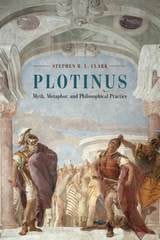
Plotinus
Myth, Metaphor, and Philosophical PracticeStephen R. L. Clark
University of Chicago Press, 2016
Clark examines a variety of Plotinus’s myths and metaphors within the cultural and philosophical context of his time, asking probing questions about their contemplative effects. What is it, for example, to “think away the spatiality” of material things? What state of mind is Plotinus recommending when he speaks of love, or drunkenness, or nakedness? What star-like consciousness is intended when he declares that we were once stars or are stars eternally? What does it mean to say that the soul goes around God? And how are we supposed to “bring the god in us back to the god in all”? Through these rich images and structures, Clark casts Plotinus as a philosopher deeply concerned with philosophy as a way of life.
Poetic Justice
Rereading Plato's "Republic"Jill Frank
University of Chicago Press, 2018
With Poetic Justice, Jill Frank overturns the conventional view that the Republic endorses a hierarchical ascent to knowledge and the authoritarian politics associated with that philosophy. When learning to read is understood as the passive absorption of a teacher’s beliefs, this reflects the account of Platonic philosophy as authoritative knowledge wielded by philosopher kings who ruled the ideal city. When we learn to read by way of the method Socrates introduces in the Republic, Frank argues, we are offered an education in ethical and political self-governance, one that prompts citizens to challenge all claims to authority, including those of philosophy.
Politics, Philosophy, Writing
Plato's Art of Caring for SoulsEdited & Intro by Zdravko Planinc
University of Missouri Press, 2001
The leading scholars represented in Politics, Philosophy, Writing examine six key Platonic dialogues and the most important of the epistles, moving from Plato's most public or political writings to his most philosophical. The collection is intended to demonstrate the unity of Plato's concerns, the literary quality of his writing, and the integral relation of form and content in his work. Taken together, these essays show the consistency of Plato's understanding of the political art, the art of writing, and the philosophical life.
Studies emphasizing the unity of Plato's lifework have given way in recent scholarship to specialized and overspecialized examinations of individual dialogues. While each of the contributors to Politics, Philosophy, Writing studies one text, his or her work is oriented toward illuminating the whole of Plato's project. Each of the essays is an innovative contribution to scholarship on its topic; as a collection, they constitute a unique reading of Plato's political philosophy.
Plato scholars have generally divided themselves into two camps: those who concentrate on the analytic or logical aspects of the dialogues, and those who concentrate on the literary-critical features. In one camp are the philologists and classicists, and in the other, the writers of inventive interpretive commentaries. By avoiding distinctions between Plato the poet and Plato the philosopher, Politics, Philosophy, Writing allows a deeper exploration of the comprehensiveness of Plato's theoretical vision and illuminates the lasting challenge of his understanding of the human condition.
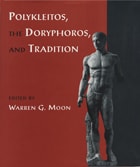
Polykleitos, the Doryphoros, and Tradition
Warren G. Moon
University of Wisconsin Press, 1995
Polykleitos of Argos, who flourished between 450 and 420 BC, is one of the most celebrated sculptors of classical Greece. A philosopher and theoretician as well as a sculptor, Polykleitos sought to capture in his statues the ideal proportions of the human body, and his work was frequently copied by later artists. This richly illustrated volume of superb essays by art historians, classical scholars, and archaeologists discusses Polykleitos’ life and influence, his intellectual and cultural milieu, and his best-known work, the Doryphoros, or “Spearbearer.”
Polykleitos, the Doryphoros, and Tradition displays an impressive range of approaches, beginning with commentary on the artistic and philosophical antecedents that influenced Polykleitos’ own aesthetic, as well as the role of contemporary Greek anatomical knowledge in his representation of the human form. Many of the essays offer extended analysis and detailed illustration of his surviving sculptures, later copies of his work, and reflections of his style in sculpture, paintings, coins, and other art in Greece, Italy, and Asia Minor. Several essays offer an extended discussion of Polykleitos’ original bronze Doryphoros, its pose, its relation to other spearbearer sculptures, and the fine Roman marble copy of it now at the Minneapolis Institute of Arts.
The volume as a whole is a visually and intellectually appealing work that will interest not only specialists but general readers interested in the art of ancient Greece. This volume resulted from a 1989 symposium held at the University of Wisconsin–Madison and the Minneapolis Institute of Arts.
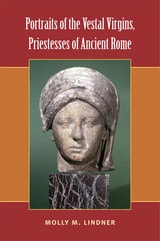
Portraits of the Vestal Virgins, Priestesses of Ancient Rome
Molly M. Lindner
University of Michigan Press, 2015
Postclassicisms
The Postclassicisms Collective
University of Chicago Press, 2020
Structured around three primary concepts—value, time, and responsibility—and nine additional concepts, Postclassicisms asks scholars to reflect upon why they choose to work in classics, to examine how proximity to and distance from antiquity has been—and continues to be—figured, and to consider what they seek to accomplish within their own scholarly practices. Together, the authors argue that a stronger critical self-awareness, an enhanced sense of the intellectual history of the methods of classics, and a greater understanding of the ethical and political implications of the decisions that the discipline makes will lead to a more engaged intellectual life, both for classicists and, ultimately, for society. A timely intervention into the present and future of the discipline, Postclassicisms will be required reading for professional classicists and students alike and a model for collaborative disciplinary intervention by scholars in other fields.

Postmodern Platos
Nietzsche, Heidegger, Gadamer, Strauss, DerridaCatherine H. Zuckert
University of Chicago Press, 1996
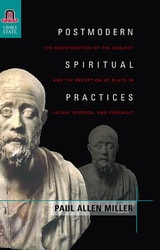
Postmodern Spiritual Practices
The Construction of the Subject and the Reception of Plato in Lacan, Derrida, and FoucaultPaul Allen Miller
The Ohio State University Press, 2007
On the other hand, blindness to the merits of postmodern thought is also due to Anglo-American philology’s own parochial instincts. Ensconced within a nineteenth-century model of Alterumswissenschaft, only a minority of classicists have made forays into philosophical, psychoanalytic, and other speculative modes of inquiry. The result has been that postmodern French thought has largely been the province of scholars of modern languages.
A situation thus emerges in which most classicists do not know theory, and so cannot appreciate the scope of these thinkers’ contribution to our understanding of the genealogy of Western thought, while most theorists do not know the Platonic texts and their contexts that ground them. This book bridges this gap, offering detailed and theoretically informed readings of French postmodernism’s chief thinkers’ debts to Plato and the ancient world.
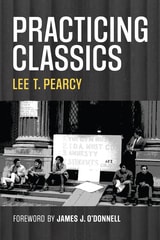
Practicing Classics
A MemoirLee T. Pearcy
University of Michigan Press, 2026
Practicing Classics is a memoir about education in America between the end of WWII and the early 21st century. Not only does it consider memory, its truths, and its deceptions, but it also unravels the complexities of class, race, gender, and social positioning in education. Lee Pearcy’s story begins with the 1957 desegregation crisis at Little Rock Central High School and its aftermath, describing how growing up in this environment shaped his academic and personal life.
As he came to study Latin and then Classics, Pearcy’s education intersected with the student disturbances at Columbia University in 1968 and a feminist revolution that brought significant numbers of women into the classical professoriate. He gives a first-hand account of a scandalous episode in the toxic administrative culture that characterized the classics department at the University of Texas in the 1980s. Against the background of these events, he unfolds his own education as a classicist and his development from apprentice to journeyman to confident teacher of Latin and Greek. Practicing Classics will engage readers who care about American education, classical studies, or the ways that choices, chances, and contingencies shaped one man’s life.
Pre-Modern Philosophy Defended
Josef Kleutgen
St. Augustine's Press, 2014
“Pre-modern philosophy” means the line of reflection that started with Plato andvAristotle, passed through Augustine and Boethius, and reached its acme in Aquinas, Scotus, and Suarez. The whole line was harshly judged by Descartes, then mocked by the empiricsts of the 18th Century. Why, then, did Pope Leo XII make a determined effort to revive it? And, more importantly, why was the revival a stunning success by the middle of the 20th Century?
The answers to both questions are found in a famous German book, Philosophie der Vorzeit by Josef Kleutgen, now available for the first time in English. Pre-ModernPhilosophy Defended shaped and strengthened Pope Leo’s resolve. It showed how inaccurate the harsh judgments had been and how sadly inferior the modern replacements from Descartes to Hegel had turned out to be in many respects.
Not in all. Kleutgen was no knee-jerk reactionary. He made no bones about the obsolete status of pre-Newtonian physics and cosmology. Rather, he focused on the central boast of “modern” thought, namely, that it had turned at least to the “subject” and had provided a long-needed thing called a “critique of knowledge.”
This book is must reading for intellectual historians and for philosophers working today in epistemology. But most of all, it is essential reading for laity and clergy concerned about revivals of modernism in the church. What was modernism, after all, but an attempt to make the Church revise her theology in the “light” of Kant or Hegel? This is why every Modernist knew Kleutgen’s name and hated this book.
Here is the first English translation (from the German) of the master work of Josef Kleutgen, the nineteenth century social philosopher whose thought lies at, or near, the heart of Catholic Social Thought. Kleutgen is widely and rightly seen as the shadow author of the social encyclicals of Leo XII. Leo’s Rerum Novarum remains the origin and constant reference point of all Catholic Social Teaching. And Popes since have dated their own social encyclicals from Rerum Novarum – hence, Quadragesimo anno and Centesimus annus. —Gerard V. Bradley, University of Notre Dame
Pre-Modern Philosophy Defended is must reading for intellectual historians and for philosophers working today in epistemology. And it is essential reading for laity and clergy concerned about revivals of modernism in the church. What was modernism, after all, but an attempt to make the Church revise her theology in the ‘light’ of Kant or Hegel? This is why every Modernist knew Kleutgen's name and hated Philosophie der Vorzeit (Pre-Modern Philosophy Defended).
Presocratics and Plato
Festschrift at Delphi in Honor of Charles KahnRichard Patterson
Parmenides Publishing, 2012
Charles Kahn taught Classics and Philosophy at Columbia University from 1957 to 1965, and has since been teaching in the Philosophy Department of the University of Pennsylvania. He spent a year as Visiting Professor at the American School of Classical Studies in Athens, and had additional Visiting Fellowships at Balliol College, Oxford and Clare Hall, Cambridge, and a term as Visiting Professor at Harvard. He is the recipient of several prestigious research grants, from the American Council of Learned Societies (1963/64 and 1984/85), the National Endowment for the Humanities (1974/75 and 1990/91), and the Guggenheim Foundation (1979/80). In 2000 he was elected Fellow of the National Academy of Arts and Sciences. He is the author of Anaximander and the Origins of Greek Cosmology, The Verb “Be” in Ancient Greek, The Art and Thought of Heraclitus, Plato and the Socratic Dialogue, Pythagoras and the Pythagoreans, and Essays on Being. His latest book,Plato and the Post-Socratic Dialogue, is forthcoming from Cambridge University Press.
Sarah Broadie
Lesley Brown
Tomás Calvo-Martínez
Diskin Clay
John M. Dillon
Dorothea Frede
Arnold Hermann
Carl A. Huffman
Enrique Hülsz Piccone
D. M. Hutchinson
Paul Kalligas
Vassilis Karasmanis
Aryeh Kosman
Anthony A. Long
Richard McKirahan
Susan Sauvé Meyer
Alexander P.D.Mourelatos
Satoshi Ogihara
Richard Patterson
Christopher J. Rowe
David Sedley
Richard Sorabji
Prometheus Bound
Aeschylus
University of Chicago Press, 2013
A stand-alone edition of Aeschylus’s Prometheus Bound taken from Chicago’s renowned translations of the Greek tragedies.
In the wake of the Olympian gods’ clash with the Titans, Zeus punishes his former ally and fellow deity, Prometheus, for having dared to bring knowledge to humankind. In this sole surviving play of Aeschylus’s Prometheus trilogy, we find Prometheus chained in a desolate landscape, suffering great cruelty at the hands of his fellow gods.
Drawn from the authoritative third edition of the University of Chicago Press’s Complete Greek Tragedies series, David Grene’s searing translation of Prometheus Bound is presented here in a stand-alone edition. An introduction by Glenn W. Most and Mark Griffith provides essential information about the play’s first production, plot, and reception in antiquity.
Provenance Research for Mediterranean Antiquities
Methods and ResourcesJudith Barr
J. Paul Getty Trust, The, 2026
The first of its kind, this book is an accessible, comprehensive primer of methods and resources for researching the provenance of Mediterranean (Greek, Roman, and Etruscan) antiquities. In addition to outlining effective strategies for documentation and investigation, the volume features an annotated guide to key archives, databases, and twentieth-century dealers to facilitate a broad spectrum of research endeavors. Building upon a decade-long review of the Getty Museum’s antiquities collection, it draws together instructive case studies, legal perspectives, and practical experience to provide an efficient reference for museum professionals, scholars, collectors, and students. The authors aim to emphasize the need for diligent provenance research and to shorten the learning curve for such projects.
The free online edition of this open-access publication is available at getty.edu/publications/provenance-research and includes zoomable illustrations. Also available are free PDF and EPUB downloads of the book.
Proverbs
An Eclectic Edition with Introduction and Textual CommentaryMichael V. Fox
SBL Press, 2015
A new critical text for Proverbs drawing from many manuscripts
This first volume of The Hebrew Bible: A Critical Edition series, features a critical text of Proverbs with extensive text-critical introductions and commentaries. This and future HBCE volumes bring together a scholar’s critical decisions into a single text. construct an eclectic text, drawing from many manuscripts or placing entirely variant texts side by side. A common approach for critical editions of other ancient books, including the New Testament, the eclectic approach and scope used in the HBCE is a first of its kind for the Hebrew Bible.
Features:
- Emendations set in context rather than singly and marginally
- Introduction that sets out the method and purpose of the volume
- Extensive list of abbreviations and sigla
Provincial Soldiers and Imperial Instability in the Histories of Tacitus
Jonathan Master
University of Michigan Press, 2016
Master draws on scholarship in political theory, Latin historiography, Roman history, and ethnic identity to demonstrate how Tacitus presented to his contemporary audience in Trajanic Rome the dangerous consequences of the city’s failure to reward and incorporate its provincial subjects. Master argues that Tacitus’ presentation of the Vitellian and Flavian armies, and especially the Batavian auxiliary soldiers, reflects a central lesson of the Histories: the Empire’s exploitation of provincial manpower (increasingly the majority of all soldiers under Roman banners) while offering little in return, set the stage for civil wars and ultimately the separatist Batavian revolt.