Results by title
1038 books match the query 'Antiquities' and 78 start with p
Prehistoric America
Marquis de Nadaillac, with a new introduciton by Jon Muller
University of Alabama Press, 2005
With the settling of the New World, word spread throughout Europe of the native inhabitants, their artifacts, communities, and culturals. Prehistoric America by Marquis de Nadaillac is a prime example of a classic work of the period that addressed the antiquity of humans in the New World, drawing upon the full range of scientific data compiled on the inhabitants and their cultures. The proximity of human remains with those of extinct animals was still a very recent finding, even in the Old World. Nadaillac’s early attempts at cross-cultural comparison and theoretical explanations make this work valid despite the advances of modern-day scholarship. This work was originally published in French in 1883 and translated into English in 1884.
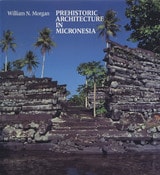
Prehistoric Architecture in Micronesia
William N. Morgan
University of Texas Press, 1988
In the many centuries preceding Western contact, a richly diverse and innovative architectural tradition reached maturity in the western Pacific. Prehistoric Architecture in Micronesia, the first modern study of this remarkable work, reveals that there is no such thing as primitive architecture but only primitive means.
This study presents five distinctly different examples of Micronesia's ancient architecture. The sites include the extraordinary stone cities of Leluh and Nan Madol on the islands of Kosrae and Pohnpei, respectively. Other structures include the meeting houses and residences built on hexagonal stone platforms in the Yap Islands, the earth terraces and ornately decorated meeting houses of Palau, and the megalithic columns and capstones of prehistoric houses in the Mariana Islands.
These structures are illustrated by photographs, maps, plans, and other drawings. Many of the basic data come from archaeological investigations of the specific sites. Summaries at the ends of chapters and in the concluding section compare the architectural characteristics of the island groups with each other and with monuments outside Micronesia. One of the most remarkable achievements of any ancient people, the prehistoric architecture of Micronesia is a source of continuing inspiration for persons who search for meaning in the built form of our present-day environment.
Prehistoric Copper Mining in Michigan
The Nineteenth-Century Discovery of “Ancient Diggings” in the Keweenaw Peninsula and Isle RoyaleJohn R Halsey
University of Michigan Press, 2018
Prehistoric Culture Change on the Colorado Plateau
Ten Thousand Years on Black MesaEdited by Shirley Powell and Francis E. Smiley
University of Arizona Press, 2002
Now a single comprehensive work summarizes the results of this intensive survey, excavation, and analysis. Prehistoric Culture Change on the Colorado Plateau offers the only complete synthesis of Kayenta-area archaeology as well as the single most intensive study of the ancestral Puebloan and Navajo occupation of the Four Corners region. It also provides the human context for more than two decades of theoretical, methodological, and empirical work.
The authors—all associated with the Black Mesa project—synthesize previous analyses of faunal, lithic, ceramic, chronometric, and human osteological data, weaving a coherent and compelling story of the prehistory and ethnohistory of northern Arizona. Through these data, they provide a summary of culture history which emphasizes that organizational variation and other aspects of culture change are largely a response to a changing natural environment.
The volume provides a systematic overview of human occupation on and around Black Mesa through time, beginning with the Paleoindian period, moving through the Archaic and Basketmaker periods, considering the Puebloan dispersion and the magnificent remains of the Pueblo III period, and culminating with Hopi and Navajo perspectives on their history. The authors examine relationships among population density, subsistence strategies, and social organization, and use these data to identify the regional context within which the Black Mesa people may have operated during different time periods.
Broad in scope with a wealth of supporting detail, Prehistoric Culture Change on the Colorado Plateau offers a basic reference on this important project that collects twenty years of analysis into one volume. It is a unique touchstone in Southwest archaeology that will stand as the last word on Black Mesa.
Prehistoric Households at Turkey Creek Pueblo, Arizona
Julie C. Lowell
University of Arizona Press, 1991
Prehistoric Life on the Mississippi Floodplain
Stone Tool Use, Settlement Organization, and Subsistence Practices at the Labras Lake Site, IllinoisRichard W. Yerkes
University of Chicago Press, 1987
With a fine-tuned control of the data, Yerkes challenges prevailing theories based on simple classifications of stone tools according to shape or on simple models of diffuse and focal economies. He views environment as a dynamic factor in economic and cultural life, rather than as merely a backdrop to it. Using incident light microscopy, he examines wear patterns on stone tools to determine what activities were performed during each period the site was inhabited—the Late Archaic, the Late Woodland, and the Mississippian. As he documents environmental change at Labras Lake, he analyzes plant and animal remains in context to explore diet and seasonal patterns of subsistence and settlement.
The result is a more accurate and detailed picture than ever before what prehistoric life on the Mississippi floodplain was like. Yerkes shows how to assess the duration and size of occupations and how to determine where and when true permanent settlements arose. What others call "sedentary encampments" he reveals as sequences of small residental occupations for a narrow range of activities during shorter, seasonal periods. His contribution to the study of the development of sedentism is potentially far-reaching and will interest many North American anthropologists and archeologists.
Prehistoric Lifeways in the Great Basin Wetlands
Bioarchaelogical Reconstruction and InterpretationBrian Hemphill
University of Utah Press, 1999
Prehistoric Lifeways of the Great Basin Wetlands examines how the earliest inhabitants of the Great basin in Nevada, Utah, and Oregon made use of ancient marshes and lakes.
When the Great Salt Lake receded in the 1980s from its highest historically recorded levels, it exposed a large number of archaeological and burial sites. Other wetland areas in the region experienced similar flooding and site exposure. The resulting archaeological bonanza resolved long-standing controversy over the role of wetlands in prehistoric Great Basin human subsistence. Previously, archaeologists argued two disparate views: either wetlands offered a wealth of resources and served as a magnet for human occupation and rather sedentary lifestyles, or wetlands provided only meager fare that was insufficient to promote increased sedentism. The exposure of human remains coincided with improved analytic techniques, enabling new conclusions about diet, behavior, and genetic affiliation.
This volume presents findings from three Great Basin wetland areas: Great Salt Lake, Stillwater Marsh (Nevada) and Malheur Lake (Oregon). The evidence presented here does not indicate the superiority of one interpretation over another but offers a more complex picture of variable adaptation, high mobility, and generally robust health among peoples living in a harsh setting with heavy physical demands. It is the first volume to draw together new approaches to the study of earlier human societies, including analysis of mtDNA for population reconstruction and cross-sectional geometric assessment of long bones for behavior interpretation.
Prehistoric Peoples of South Florida
William E. McGoun
University of Alabama Press, 1993
To many people in South Florida, and "oldtimer" is someone who has lived there for more than five years. Prehistoric Peoples of South Florida considers the culture history of the real South Florida "oldtimers" dating from 10,000 B.C. through the invasion by Europeans and analyzes the ways in which they adapted to their environment through time—or caused their environment to adapt to them.
South Florida is a biological island, its plant communities circumscribed by the southern limits of frost. Its peoples were distinct from those to the north and were less studied by scholars. In recent years the pace of research has increased, but there has been no attempt at synthesis since John M. Goggin wrote his still-unpublished manuscript on the Glades nearly half a century ago. Prehistoric Peoples of South Florida assembles the available knowledge and discusses competing theories, and does so in terms that are understandable to the general reader. McGoun outlines a cultural system that maintained an impressive continuity for 10,000 years—before being destroyed by two centuries of European contact.
Prehistoric Quarries and Terranes
The Modena and Tempiute Obsidian SourcesMichael J. Shott
University of Utah Press, 2021
Prehistoric Sandals from Northeastern Arizona
The Earl H. Morris and Ann Axtell Morris ResearchKelley Ann Hays-Gilpin, Ann Cordy Deegan, and Elizabeth Ann Morris
University of Arizona Press, 1998
Prehistoric Settlement Patterns and Cultures in Susiana, Southwestern Iran
The Analysis of the F.G.L. Gremliza Survey CollectionAbbas Alizadeh with a foreword by Henry T. Wright
University of Michigan Press, 1992
Prehistoric Social, Political, and Economic Development in the Area of the Tehuacan Valley
Some Results of the Palo Blanco ProjectEdited by Robert D. Drennan
University of Michigan Press, 1979
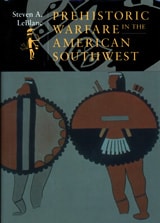
Prehistoric Warfare in the American Southwest
Steven A LeBlanc
University of Utah Press, 2007
Massacres, raiding parties, ambush, pillage, scalping, captive taking: the things we know and sometimes dread to admit occur during times of war all happened in the prehistoric Southwest—and there is ample archaeological evidence. Not only did it occur, but the history of the ancient Southwest cannot be understood without noting the intensity and impact of this warfare.
Most people today, including many archaeologists, view the Pueblo people of the Southwest as historically peaceful, sedentary corn farmers. Our image of the Hopis and Zunis, for example, contrasts sharply with the more nomadic Apaches whose warfare and raiding abilities are legendary. In Prehistoric Warfare in the American Southwest Steven LeBlanc demonstrates that this picture of the ancient Puebloans is highly romanticized. Taking a pan-Southwestern view of the entire prehistoric and early historic time range and considering archaeological and ethnohistorical evidence and oral traditions, he presents a different picture.
War, not peace, was commonplace and deadly throughout the prehistoric sequence. Many sites were built as fortresses, communities were destroyed, and populations massacred. The well-known abandonments of much of the Southwest were warfare related. During the late prehistoric period fighting was particularly intense, and the structure of the historic pueblo societies was heavily influenced by warfare.
Objectively sought, evidence for war and its consequences is abundant. The people of the region fought for their survival and evolved their societies to meet the demands of conflict. Ultimately, LeBlanc asserts that the warfare can be understood in terms of climate change, population growth, and their consequences.
Prehistory Of Carson Desert and Stillwater
Anthropological Paper 123Robert Kelly
University of Utah Press, 2001
University of Utah Anthropological Paper No. 123
This study examines prehistoric use of the Stillwater Marsh in the Carson Desert of western Nevada and the adjacent Stillwater Mountains based on an archaeological survey undertaken in 1980 and 1981, and excavations conducted in 1987. Much of the argument about the use of wetlands revolved around whether they were used be sedentary hunter-gatherers, were just one stop of a family’s seasonal round, or were used only as backup resources. As a result, this report focuses on the issues of hunter-gatherer subsistence and mobility.
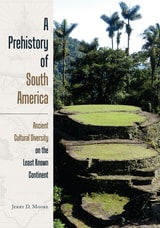
Prehistory of South America
Ancient Cultural Diversity on the Least Known ContinentJerry D. Moore
University Press of Colorado, 2014
For more than 12,000 years, South American cultures ranged from mobile hunters and gatherers to rulers and residents of colossal cities. In the process, native South American societies made advancements in agriculture and economic systems and created great works of art—in pottery, textiles, precious metals, and stone—that still awe the modern eye. Organized in broad chronological periods, A Prehistory of South America explores these diverse human achievements, emphasizing the many adaptations of peoples from a continent-wide perspective. Moore examines the archaeologies of societies across South America, from the arid deserts of the Pacific coast and the frigid Andean highlands to the humid lowlands of the Amazon Basin and the fjords of Patagonia and beyond.
Illustrated in full color and suitable for an educated general reader interested in the Precolumbian peoples of South America, A Prehistory of South America is a long overdue addition to the literature on South American archaeology.
Prehistory of the Central Mississippi Valley
Edited by Charles H. McNutt
University of Alabama Press, 1996
The Central Mississippi Valley, defined as the region along the Mississippi River from where the Ohio River joins in the north to its confluence with the Arkansas River in the south, lies between the two most important archaeological areas of the Southeast: American Bottom/Cahokia and the Lower Yazoo Basin. The valley has been influenced by these major centers and has a complex history of its own. Contributions from experts throughout the region present current, if sometimes conflicting, views of the regional cultural sequences supported by data from recent surveys and excavations, as well as radiocarbon and chronometric determinations. By examining this new information and reevaluating earlier interpretations of local archaeological sequences, this volume provides a comprehensive overview of the valley and defines future research goals.
Prehistory of the Rustler Hills
Granado CaveBy Donny L. Hamilton
University of Texas Press, 2001
The Northeastern Trans-Pecos region of Texas is an unforgiving environment for anyone living off the land, yet nomadic hunters and gatherers roamed its deserts and mountains and sheltered in caves and sinkholes from around AD 200 to 1450. This book provides detailed insights into the lifeways of these little-known prehistoric peoples. It places their occupation of the region in a wider temporal and cultural framework through a comprehensive description and analysis of the archaeological remains excavated by Donny L. Hamilton at Granado Cave in 1978.
Hamilton begins with a brief overview of the geology and environment of the Granado Cave area and reviews previous archaeological investigations. Then he and other researchers present detailed analyses of the burials and other material remains found in the cave, as well as the results of radiocarbon dating. From these findings, he reconstructs the subsistence patterns and burial practices of these Native Americans, whom he identifies as a distinct group that was pushed into the environment by surrounding peoples. He proposes that they should be represented by a new archaeological phase, thus helping to clarify the poorly understood late prehistory of the Trans-Pecos.
Prehistory, Personality, and Place
Emil W. Haury and the Mogollon ControversyJefferson Reid and Stephanie Whittlesey
University of Arizona Press, 2011
Reid and Whittlesey present the arguments and actions surrounding the Mogollon discovery, definition, and debate. Drawing on extensive interviews conducted with Haury before his death in 1992, they explore facets of the debate that scholars pursued at various times and places and how ultimately the New Archaeology shifted attention from the research questions of cultural affiliation and antiquity that had been at the heart of the controversy. In gathering the facts and anecdotes surrounding the debate, Reid and Whittlesey offer a compelling picture of an academician who was committed to understanding the unwritten past, who believed wholeheartedly in the techniques of scientific archaeology, and who used his influence to assist scholarship rather than to advance his own career.
Prehistory, Personality, and Place depicts a real archaeologist practicing real archaeology, one that fashioned from potsherds and pit houses a true understanding of prehistoric peoples. But more than the chronicle of a controversy, it is a book about places and personalities: the role of place in shaping archaeologists’ intellect and personalities, as well as the unusual intersections of people and places that produced resolutions of some intractable problems in Southwest history.
Principles of Geoarchaeology
A North American PerspectiveMichael R. Waters
University of Arizona Press, 1992
CONTENTS
1. Research Objectives of Geoarchaeology
2. Geoarchaeological Foundations: The Archaeological Site Matrix: Sediments and Soils / Stratigraphy / The Geoarchaeological Interpretation of Sediments, Soils, and Stratigraphy
3. Alluvial Environments: Streamflow / Sediment Erosion, Transport, and Deposition / Alluvial Environments: Rivers, Arroyos, Terraces, and Fans / Alluvial Landscapes Evolution and the Archaeological Record / Alluvial Landscape Reconstruction
4. Eolian Environments: Sediment Erosion, Transport, and Deposition / Sand Dunes / Loess and Dust / Stone Pavements / Eolian Erosion / Volcanic Ash (Tephra)
5. Springs, Lakes, Rockshelters, and Other Terrestrial Environments: Springs / Lakes / Slopes / Glaciers / Rockshelters and Caves
6. Coastal Environments: Coastal Processes / Late Quaternary Sea Level Changes / Coastal Environments / Coastal Landscape Evolution and the Archaeological Record / Coastal Landscape Reconstruction
7. The Postburial Disturbance af Archaeological Site Contexts: Cryoturbation / Argilliturbation / Graviturbation / Deformation / Other Physical Disturbances / Floralturbation / Faunalturbation
8. Geoarchaeological Research
Appendix A: Geoarchaeological Studies Illustrating the Effects of Fluvial Landscape Evolution on the Archaeological Record
Appendix B: Geoarchaeological Studies Illustrating Site-Specific Synchronic and Diachronic Alluvial Landscape Reconstructions
Appendix C: Geoarchaeological Studies Illustrating Regional Synchronic and Diachronic Alluvial Landscape Reconstructions
Process and Meaning in Spatial Archaeology
Investigations into Pre-Columbian Iroquoian Space and PlaceEric Jones
University Press of Colorado, 2017
The research in this volume represents a new wave of spatial research—exploring beyond settlement patterning to the process and the meaning behind spatial arrangement of past communities and people—and describes new approaches being used for better understanding of past Northern Iroquoian societies. Addressing topics ranging from household task-scapes and gender relations to bioarchaeology and social network analysis, Process and Meaning in Spatial Archaeology demonstrates the vitality of current archaeological research into ancestral Northern Iroquoian societies and its growing contribution to wider debates in North American archaeology.
This cutting-edge research will be of interest to archaeologists globally, as well as academics and graduate students studying Northern Iroquoian societies and cultures, geography, and spatial analysis.
Contributors: Kathleen M. S. Allen, Jennifer A. Birch, William Engelbrecht, Crystal Forrest, John P. Hart, Sandra Katz, Robert H. Pihl, Aleksandra Pradzynski, Erin C. Rodriguez, Dean R. Snow, Ronald F. Williamson, Rob Wojtowicz
Protecting Heritage in the Caribbean
Peter E. Siegel
University of Alabama Press, 2011

Protohistoric Yamato
Archaeology of the First Japanese StateGina Lee Barnes
University of Michigan Press, 1988
Provenance Research for Mediterranean Antiquities
Methods and ResourcesJudith Barr
J. Paul Getty Trust, The, 2026
The first of its kind, this book is an accessible, comprehensive primer of methods and resources for researching the provenance of Mediterranean (Greek, Roman, and Etruscan) antiquities. In addition to outlining effective strategies for documentation and investigation, the volume features an annotated guide to key archives, databases, and twentieth-century dealers to facilitate a broad spectrum of research endeavors. Building upon a decade-long review of the Getty Museum’s antiquities collection, it draws together instructive case studies, legal perspectives, and practical experience to provide an efficient reference for museum professionals, scholars, collectors, and students. The authors aim to emphasize the need for diligent provenance research and to shorten the learning curve for such projects.
The free online edition of this open-access publication is available at getty.edu/publications/provenance-research and includes zoomable illustrations. Also available are free PDF and EPUB downloads of the book.
Provincial Inca
Archaeological and Ethnohistorical Assessment of the Impact of the Inca StateMichael A. Malpass
University of Iowa Press, 1993
Pulltrouser Swamp
Ancient Maya Habitat, Agriculture, and Settlement in Northern BelizeEdited by B. L. Turner and Peter D. Harrison
University of Texas Press, 1983
Among Mesoamericanists, the agricultural basis of the ancient Maya civilization of the Yucatan Peninsula has been an important topic of research—and controversy. Interest in the agricultural system of the Maya greatly increased as new discoveries showed that the lowland Maya were not limited to slash-and-burn technology, as had been previously believed, but used a variety of more sophisticated agricultural techniques and practices, including terracing, raised fields, and, perhaps, irrigation. Because of the nature of the data and because this form of agricultural technology had been key to explanations of state formation elsewhere in Mesoamerica, raised-field agriculture became a particular focus of investigation.
Pulltrouser Swamp conclusively demonstrates the existence of hydraulic, raised-field agriculture in the Maya lowlands between 150 B.C. and A.D. 850. It presents the findings of the University of Oklahoma's Pulltrouser SwampProject, an NSF-supported interdisciplinary study that combined the talents of archaeologists, anthropologists, geographers, paleobotanists, biologists, and zoologists to investigate the remains of the Maya agricultural system in the swampy region of northern Belize.
By examining soils, fossil pollen and other plant remains, gastropods, relic settlements, ceramics, lithics, and other important evidence, the Pulltrouser Swamp team has clearly demonstrated that the features under investigation are relics of Maya-made raised and channelized fields and associated canals. Other data suggest the nature of the swamps in which the fields were constructed, the tools used for construction and cultivation, the possible crops cultivated, and at least one type of settlement near the fields, with its chronology. This verification of raised fields provides dramatic evidence of a large and probably organized workforce engaged in sophisticated and complex agricultural technology. As record of this evidence, Pulltrouser Swamp is a work of seminal importance for all students and scholars of New World prehistory.

Purple Hummingbird
A Biography of Elizabeth Warder Crozer CampbellClaude N. Warren and Joan S. Schneider
University of Utah Press, 2016
Elizabeth Warder Crozer Campbell and her husband, William Campbell, found themselves forced to move to the Mojave Desert in 1924, its dry climate proving to be the best for William’s frail lungs burned by mustard gas in World War I. They camped at Twentynine Palm Oasis in what is now Joshua Tree National Park, homesteaded nearby, and became a central part of that early community. Life in the remote, stark landscape contrasted sharply with Elizabeth’s early years of wealth and privilege in Pennsylvania. Her resilient spirit made the best of what at first seemed like a bleak situation: she became an amateur archaeologist and explored the desert. A keen observer and independent thinker, she soon hypothesized that prehistoric people had lived in the California deserts along the shores of late Pleistocene lakes and waterways much earlier than was then believed. She devised a means for testing her hypothesis and found evidence to support it. Her interpretations, however, conflicted with the archaeological paradigm of the day and she was dismissed by formally trained archaeologists. Even so, she and her husband continued their work, convinced of the accuracy of her findings. Four decades later the archaeological establishment validated and accepted her ideas. Campbell’s research ultimately revolutionized archaeological thought, forming the basis of today’s landscape archaeology.
Pushing Boundaries in Southwestern Archaeology
Chronometry, Collections, and ContextsStephen E. Nash
University Press of Colorado, 2022
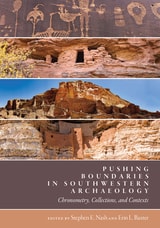
The first of the volume’s four sections examines the status, history, and prospects of Bears Ears National Monument, the broader regulatory and political boundaries that complicate the nature and integrity of the archaeological record, and the cultural contexts and legal stakes of archaeological inquiry. The second section focuses on chronological “big data” in the context of pre-Columbian history and the potential and limits of what can be empirically derived from chronometric analysis of the past. The chapters in the third section advocate for advancing collections-based research, focusing on the vast and often untapped research potential of archives, previously excavated museum collections, and legacy data. The final section examines the permeable boundaries involved in Plains-Pueblo interactions, obvious in the archaeological record but long in need of analysis, interpretation, and explanation.
Contributors: James R. Allison, Erin Baxter, Benjamin A. Bellorado, Katelyn J. Bishop, Eric Blinman, J. Royce Cox, J. Andrew Darling, Kaitlyn E. Davis, William H. Doelle, B. Sunday Eiselt, Leigh Anne Ellison, Josh Ewing, Samantha G. Fladd, Gary M. Feinman, Jeffrey R. Ferguson, Severin Fowles, Willie Grayeyes, Matthew Guebard, Saul L. Hedquist, Greg Hodgins, Lucas Hoedl, John W. Ives, Nicholas Kessler, Terry Knight, Michael W. Lindeman, Hannah V. Mattson, Myles R. Miller, Lindsay Montgomery, Stephen E. Nash, Sarah Oas, Jill Onken, Scott G. Ortman, Danielle J. Riebe, John Ruple, Will G. Russell, Octavius Seowtewa, Deni J. Seymour, James M. Vint, Adam S. Watson
Pushmataha
A Choctaw Leader and His PeopleGideon Lincecum, with an introdution by Greg O'Brien
University of Alabama Press, 2004
Comprises two valuable, original, and difficult-to-find pieces on Choctaw history and culture that originally appeared in the 1904 and 1906 volumes of Publications of the Mississippi Historical Society
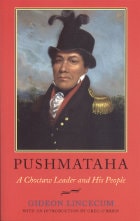
This important book comprises two articles that appeared in the 1904 and 1906 volumes of Publications of the Mississippi Historical Society. In “Life of Apushimataha,” Gideon Lincecum tells the story of Choctaw chief Pushmataha, who was born in Mississippi in 1764. A fearless warrior, his name literally means “one whose tomahawk is fatal in war or hunting.” As a charismatic leader, his foresight in making an alliance with General Andrew Jackson brought the Choctaws into war with the Creek Nation and into the War of 1812 but served to their benefit for many years with the United States government. In 1824, Pushmataha traveled to Washington, DC, to negotiate the Treaty of Doak’s Stand as pressure grew for Choctaw removal to Oklahoma Territory, but he fell ill and died there. He was buried with full military honors in the Congressional Cemetery at Arlington.
In “Choctaw Traditions about Their Settlement in Mississippi and the Origin of Their Mounds,” Lincecum translates a portion of the Skukhaanumpula—the traditional history of the tribe, which was related to him verbally by Chata Immataha, “the oldest man in the world, a man that knew everything.” It explains how and why the sacred Nanih Waya mound was erected and how the Choctaws formed new towns, and it describes the structure of leadership roles in their society.