Results by title
3258 books match the query 'Art' and 209 start with p
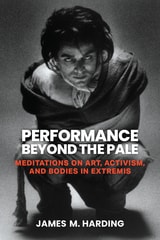
Performance Beyond the Pale
Meditations on Art, Activism, and Bodies in ExtremisJames M. Harding
University of Michigan Press, 2026
The metaphor “beyond the pale” refers to something that’s unacceptable and, as James M. Harding argues in this book, “almost always refers to something—an activity, an action, or an act—that is performed.” In this book, Harding recalls that historically the pale marked contested political boundaries and that what lay beyond the pale was considered to be a dangerous frontier. Siding with seemingly excessive and unreasonable acts and with the artists and activists who produce them, Harding brings together a series of ideas and performances that operate beyond the pale and asks readers to examine them on their own terms.
Drawing on political science, critical theory, and philosophy, Harding investigates instances of self-immolation, life-threatening journeys across deserts and seas, radical political hoaxes, extreme speech acts, and anti-police activism. The book’s five chapters consist of a series of meditations, each with an easily identifiable scholarly logic and clear argument, though the connections between the meditations are left up to the reader. Together these meditations urge readers to understand that “beyond the pale” acts are frequently the product of a sense of urgency that preempts the dictates of accepted reason, conventional logic, and safety.
Performance, Transparency, and the Cultures of Surveillance
James M. Harding
University of Michigan Press, 2018
Performative Polemic
Anti-Absolutist Pamphlets and their Readers in Late Seventeenth-Century FranceKathrina Ann LaPorta
University of Delaware Press, 2021

Performing Arts in Prisons
Creative PerspectivesEdited by Michael Balfour, Brydie-Leigh Bartleet, Linda Davey, John Rynne, and Huib Schippers
Intellect Books, 2019
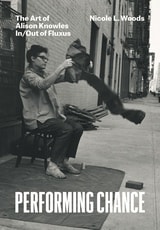
Performing Chance
The Art of Alison Knowles In/Out of FluxusNicole L. Woods
University of Chicago Press, 2026
Alison Knowles stands out as the sole female artist among the founders of Fluxus, yet she has remained an enigmatic, underrecognized figure in the history of art. Performing Chance fills a gap in the record, bringing to light Knowles’s transformative body of work as it evolved from abstract painting in the late 1950s, to silkscreens, print media, and performance in the early 1960s, to groundbreaking works in digital poetry, acoustical art, and large-scale installations in the late 1960s-70s.
Through her access to previously unpublished archival materials and direct interviews with the artist, Nicole L. Woods provides close readings of pivotal works, disclosing the ways Knowles instituted formal tactics that moved beyond modernist painting, championed principles of indeterminacy and chance, and fostered sociopolitical consciousness. Situating Knowles’s innovations in various media within the distinct cultural contexts of Wiesbaden, London, Paris, New York City, and Los Angeles, Performing Chance brings this key artist back to her rightful place as a leader of the postwar avant-garde and provides a nuanced history of the role of women artists in Fluxus and beyond.
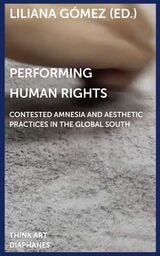
Performing Human Rights
Contested Amnesia and Aesthetic Practices in the Global SouthEdited by Liliana Gómez
Diaphanes, 2021
Performing Maternities
Political, Social and Feminist EnquiryEdited by Kate Aughterson and Jess Moriarty
Intellect Books, 2027
This volume brings together research and artistic practices that challenge dominant narratives around motherhood.
Performing Maternities is a collection of essays, creative work, images, and scripts that emerged out of an online international symposium held at Brighton University in November 2020. Together, the contributors challenge, celebrate, and share the normative, the queer, the transgressive, the joy, and the pain of performing maternity. The book asks key questions about the construction of maternal identities and mythologies in the contemporary world; the ways these affect individuals in different social, economic, and sexual identities; and how—as mothers, writers, artists, parents, and grandparents—we can address and challenge those identities.
Performing Process
Sharing Dance and Choreographic PracticeEdited by Emma Meehan and Hetty Blades
Intellect Books, 2018
Performing Revolutionary
Art, Action, ActivismNicole Garneau and Anne Cushwa
Intellect Books, 2018
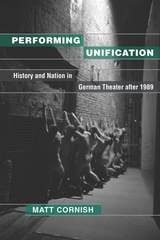
Performing Unification
History and Nation in German Theater after 1989Matt Cornish
University of Michigan Press, 2017
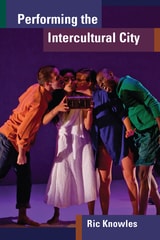
Performing the Intercultural City
Ric Knowles
University of Michigan Press, 2017
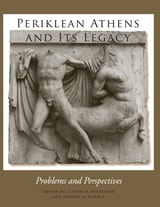
Periklean Athens and Its Legacy
Problems and PerspectivesEdited by Judith M. Barringer and Jeffrey M. Hurwit
University of Texas Press, 2005
The late fifth century BC was the golden age of ancient Athens. Under the leadership of the renowned soldier-statesman Perikles, Athenians began rebuilding the Akropolis, where they created the still awe-inspiring Parthenon. Athenians also reached a zenith of artistic achievement in sculpture, vase painting, and architecture, which provided continuing inspiration for many succeeding generations.
The specially commissioned essays in this volume offer a fresh, innovative panorama of the art, architecture, history, culture, and influence of Periklean Athens. Written by leading experts in the field, the articles cover a wide range of topics, including:
- An evaluation of Perikles' military leadership during the early stages of the Peloponnesian War.
- Iconographical and iconological studies of vase paintings, wall paintings, and sculpture.
- Explorations of the Parthenon and other monuments of the Athenian Akropolis.
- The legacy of Periklean Athens and its influence upon later art.
- Assessments of the modern reception of the Akropolis.
As a whole, this collection of essays proves that even a well-explored field such as Periklean Athens can yield new treasures when mined by perceptive and seasoned investigators.
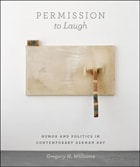
Permission to Laugh
Humor and Politics in Contemporary German ArtGregory H. Williams
University of Chicago Press, 2012
Permission to Laugh explores the work of three generations of German artists who, beginning in the 1960s, turned to jokes and wit in an effort to confront complex questions regarding German politics and history. Gregory H. Williams highlights six of them—Martin Kippenberger, Isa Genzken, Rosemarie Trockel, Albert Oehlen, Georg Herold, and Werner Büttner—who came of age in the mid-1970s in the art scenes of West Berlin, Cologne, and Hamburg. Williams argues that each employed a distinctive brand of humor that responded to the period of political apathy that followed a decade of intense political ferment in West Germany.
Permissions, A Survival Guide
Blunt Talk about Art as Intellectual PropertySusan M. Bielstein
University of Chicago Press, 2006
Organized as a series of “takes” that range from short sidebars to extended discussions, Permissions, A Survival Guide explores intellectual property law as it pertains to visual imagery. How can you determine whether an artwork is copyrighted? How do you procure a high-quality reproduction of an image? What does “fair use” really mean? Is it ever legitimate to use the work of an artist without permission? Bielstein discusses the many uncertainties that plague writers who work with images in this highly visual age, and she does so based on her years navigating precisely these issues. As an editor who has hired a photographer to shoot an incredibly obscure work in the Italian mountains (a plan that backfired hilariously), who has tried to reason with artists' estates in languages she doesn't speak, and who has spent her time in the archival trenches, she offers a snappy and humane guide to this difficult terrain.
Filled with anecdotes, asides, and real courage, Permissions, A Survival Guide is a unique handbook that anyone working in the visual arts will find invaluable, if not indispensable.
Persecution and the Art of Writing
Leo Strauss
University of Chicago Press, 1988
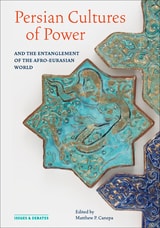
Persian Cultures of Power and the Entanglement of the Afro-Eurasian World
Matthew P. Canepa
J. Paul Getty Trust, The, 2024
With the rise of the Achaemenid Empire (550–330 BCE), Persian institutions of kingship became the model for legitimacy, authority, and prestige across three continents. Despite enormous upheavals, Iranian visual and political cultures connected an ever-wider swath of Afro-Eurasia over the next two millennia, exerting influence at key historical junctures. This book provides the first critical exploration of the role Persian cultures played in articulating the myriad ways power was expressed across Afro-Eurasia between the sixth century BCE and the nineteenth century CE.
Exploring topics such as royal cosmologies, fashion, banqueting, manuscript cultures, sacred landscapes, and inscriptions, the volume’s essays analyze the intellectual and political exchanges of art, architecture, ritual, and luxury material within and beyond the Persian world. They show how Perso-Iranian cultures offered neighbors and competitors raw material with which to formulate their own imperial aspirations. Unique among studies of Persia and Iran, this volume explores issues of change, renovation, and interconnectivity in these cultures over the longue durée.
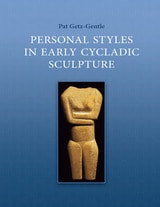
Personal Styles in Early Cycladic Sculpture
Pat Getz-Gentle; With a Chapter by Jack de Vries
University of Wisconsin Press, 2001
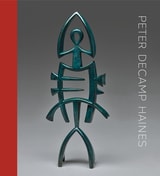
Peter DeCamp Haines
Sculpture, 1975–2024Peter DeCamp Haines
The Artist Book Foundation, 2025
The first major monograph on Peter DeCamp Haines, this title explores how the sculptor's interest in psychology and anthropology deeply informed his art.
This book is the first major monograph on the work of Peter DeCamp Haines (March 27, 1942–October 25, 2024), which builds on the evolution of Modernism as much as it harkens back to the Bronze Age. The clearest expression of this is a series of 1,000 elemental bronze “artifacts” he created over the course of nearly fifty years, to which he contributed yearly, ranging from palm-size pieces to colossal outdoor works. He called this output “a personal archaeology,” or “an archaeology of the subconscious,” referencing ancient tools, animal and human shapes, and the synchronicity of antique forms with the purely abstract.
Haines’s interest in psychology and anthropology deeply informed his art. Working in a Modernist tradition, his career pursued a continuing exploration of the formal attributes of sculpture: form, scale, negative space, and composition. As Haines saw it, one of the satisfactions of sculpture is that ideas such as wholeness, beauty, and timelessness can be expressed without words and one of the critical elements of this wordless communication is negative space. Thus, the doorways, windows, and silhouettes of his sculptures can suggest an area larger than the sculpture itself.
Peter Weir
A Creative Journey from Australia to HollywoodSerena Formica
Intellect Books, 2012
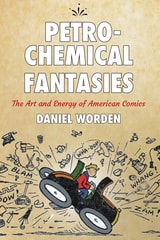
Petrochemical Fantasies
The Art and Energy of American ComicsDaniel Worden
The Ohio State University Press, 2024
Finalist, Comics Studies Society Charles Hatfield Book Prize 2025
Nominee, Eisner Award for Best Academic/Scholarly Work 2025
In Petrochemical Fantasies, Daniel Worden reveals the entwined history of comics and fossil fuels in the United States. From the 1840s to the present, comics have depicted the power, pollution, and rapid expansion of energy systems—especially the explosive growth of coal and oil. In the 1930s, some of the first comic books were the gas station giveaways Gulf Funny Weekly and Standard Oil Comics. And in recent years, comics have become one of the major sites for visualizing life after oil, a striking reversal of the medium’s early boosterism.
Surveying the work of acclaimed artists such as Nell Brinkley, George Herriman, Jack Kirby, Winsor McCay, and R. F. Outcault and recovering little-known works, Worden advances a new history of American comics in the Anthropocene. From late nineteenth- and early twentieth-century editorial cartoons and superhero comics that visualize our modern energy culture to contemporary comics grappling with climate crises, Petrochemical Fantasies places comics, environmental humanities, and energy studies in conversation with each other to unearth the crucial but overlooked history of comics’ place in US energy culture.
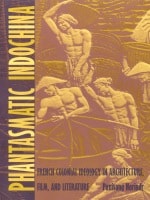
Phantasmatic Indochina
French Colonial Ideology in Architecture, Film, and LiteraturePanivong Norindr
Duke University Press, 1996
Analyzing the first Exposition Coloniale Internationale, held in Paris in 1931, Norindr shows how the exhibition’s display of architecture gave a vision to the colonies that justified France’s cultural prejudices, while stimulating the desire for further expansionism. He critiques the Surrealist counter-exposition mounted to oppose the imperialist aims of the Exposition Coloniale, and the Surrealist incorporation and appropriation of native artifacts in avant-garde works. According to Norindr, all serious attempts at interrogating French colonial involvement in Southeast Asia are threatened by discourse, images, representations, and myths that perpetuate the luminous aura of Indochina as a place of erotic fantasies and exotic adventures. Exploring the resilience of French nostalgia for Indochina in books and movies, the author examines work by Malraux, Duras, and Claudel, and the films Indochine, The Lover, and Dien Bien Phu.
Certain to impact across a range of disciplines, Phantasmatic Indochina will be of interest to those engaged in the study of the culture and history of Vietnam, Cambodia, Thailand, and Laos, as well as specialists in the fields of French modernism, postcolonial studies, cultural studies, and comparative literature.
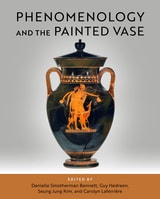
Phenomenology and the Painted Vase
Edited by Danielle Smotherman Bennett, Guy Hedreen, SeungJung Kim, and Carolyn Laferrière
University of Wisconsin Press, 2026
Most people today encounter ancient Greek vases as static, untouchable artifacts safely out of reach behind glass, in the quiet of a museum gallery. Once, however, these vessels were also useful objects, made to be held, filled, and generally used in a variety of settings, from the ritual to the quotidian. This volume considers these ancient vases together with the theoretical frameworks developed by pioneers of phenomenology such as Maurice Merleau-Ponty and Edmund Husserl, helping us encounter Greek vases as they once were. The principles of phenomenology require that we understand objects as active participants in shaping the manner in which humans experience the world. A phenomenological perspective allows us to see how the function and use of Greek vases shaped both their visual appearance and the perceptual experience of them—as well as our continued understanding of them today—while taking into account multisensory perspectives. With this alternative approach to the study of classical pottery, the authors offer new and illuminating insights not just into the objects in question but also into ancient Greek culture and life more broadly.
Phenomenology for Actors
Theatre-Making and the Question of BeingDaniel Johnston
Intellect Books, 2021
In this book, Daniel Johnston examines how phenomenology can describe, analyze, and inspire theater-making. Each chapter introduces themes to guide the creative process through objects, bodies, spaces, time, history, freedom, and authenticity. Key examples in the work are drawn from Chekhov’s The Cherry Orchard, Sophocles’ Antigone, and Shakespeare’s Hamlet. Practical tasks throughout explore how the theatrical event can offer unique insights into being and existence, as Johnston’s philosophical perspective shines a light on broader existential issues of being. In this way, the book makes a bold contribution to the study of acting as an embodied form of philosophy and reveals how phenomenology can be a rich source of creativity for actors, directors, designers, and collaborators in the performance process.
Brimming with insight into the practice and theory of acting, this original new work stimulates new approaches to rehearsal and sees theater-making as capable of speaking back to philosophical discourse.
Philadelphia Mural Arts @ 30
Jane Golden
Temple University Press, 2014
The Mural Arts Program of Philadelphia began in 1984 as a summer youth program with modest support from city government. Under the guidance of Jane Golden, however, it gradually grew into one of the largest and most successful public art organizations in the country, garnering support from local corporations, foundations, and individuals to extend the reach and effectiveness of its innovative programs.
Now three decades later, the Mural Arts Program has created more than 3,800 murals and public art projects that have made lasting imprints in every Philadelphia neighborhood. In the process, Mural Arts has engaged thousands of people of all ages from across the city, helped hundreds of ex-offenders train for new jobs, transformed the face of struggling commercial corridors, and developed funding partners in both public and private sectors.
While the Mural Arts Program has significantly changed the appearance of the city, it has also demonstrated how participatory public art can empower individuals and promote communal healing around difficult issues. Philadelphia Mural Arts @ 30 is a celebration of and guide to the program's success. Unlike Philadelphia Murals and the Stories They Tell and its sequel, More Philadelphia Murals and the Stories They Tell, Philadelphia Murals @ 30 showcases the results of 21 projects completed since 2009 and features essays by policy makers, curators, scholars, and educators that offer valuable lessons for artists, activists, and communities to emulate.
Philadelphia Mural Arts @ 30 traces the program's history and evolution, acknowledging the challenges and rewards of growth and change while maintaining a core commitment to social, personal, and community transformation.
Contributors include: Dr. Arthur C. Evans, Jr., Arlene Goldbard, Thora Jacobson, Rick Lowe, Dr. Samantha L. Matlin, Paulette Moore, Jeremy Nowak, Maureen H. O'Connell, Elisabeth Perez Luna, Robin Rice, Dr. Jacob Kraemer Tebes, Elizabeth Thomas, Cynthia Weiss, Howard Zehr, and the editors.
Philadelphia Murals & Stories They Tell
Jane Golden
Temple University Press, 2002
Philip Guston's Poor Richard
Debra Bricker Balken
University of Chicago Press, 2001
A visual narrative of Nixon's life, the drawings trace Nixon from his childhood, through his ascent to power, to his years in the White House. They incorporate Henry Kissinger (a pair of glasses), Spiro Agnew (a cone-head), and John Mitchell (a dolt smoking a pipe). They depict Nixon and his cohorts in China, plotting strategy in Key Biscayne, and shamelessly pandering to African Americans, hippies, and elderly tourists.
As Balken discusses in her accompanying essay, these drawings also reflect a dramatic transformation in Guston's work. In response to social unrest and the Vietnam War, he began to question the viability of a private art given to self-expression. His betrayal of aesthetic abstraction in favor of imagery imbued with personal and political meaning largely engendered the renewal of figuration in painting in America in the 1970s. These drawings not only represent one of the few instances of an artist in the late twentieth century engaging caricature in his work, they are also a witty, acerbic take on a corrupt figure and a scandalous political regime.
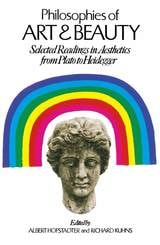
Philosophies of Art and Beauty
Selected Readings in Aesthetics from Plato to HeideggerAlbert Hofstadter and Richard Kuhns
University of Chicago Press, 1964
This anthology of primary texts gathers an incredibly large number of the most important philosophical writings on art and aesthetics from the ancient Greeks to contemporary thought. Albert Hofstadter and Richard Kuhns present English-language translations of works of
- Plato
- Aristotle
- Plotinus
- Augustine
- Marsilio Ficino
- Earl of Shaftesbury
- Kant
- Schelling
- Hegel
- Schopenhauer
- Nietzsche
- Benedetto Croce
- John Dewey
- Heidegger

Philosophy Looks At The Arts
Joseph Margolis
Temple University Press, 1987
Philosophy and Art
Daniel O. Dahlstrom
Catholic University of America Press, 2018
Philosophy by Other Means
The Arts in Philosophy and Philosophy in the ArtsRobert B. Pippin
University of Chicago Press, 2021
The arts hold a range of values and ambitions, offering beauty, playfulness, and craftsmanship while deepening our mythologies and enriching the human experience. Some works take on philosophical ambitions, contributing to philosophy in ways that transcend the discipline’s traditional analytic and discursive forms. Pippin’s claim is twofold: criticism properly understood often requires a form of philosophical reflection, and philosophy is impoverished if it is not informed by critical attention to aesthetic objects. In the first part of the book, he examines how philosophers like Kant, Hegel, and Adorno have considered the relationship between art and philosophy. The second part of the book offers an exploration of how individual artworks might be considered forms of philosophical reflection. Pippin demonstrates the importance of practicing philosophical criticism and shows how the arts can provide key insights that are out of reach for philosophy, at least as traditionally understood.
Phoenician Aniconism in Its Mediterranean and Ancient Near Eastern Contexts
Brian R. Doak
SBL Press, 2015
The Hebrew Bible contains a prohibition against divine images (Exod 20:2-5a). Explanations for this command are legion, usually focusing on the unique status of Israel's deity within the context of the broader Near Eastern and Mediterranean worlds. Doak explores whether or not Israel was truly alone in its severe stance against idols. This book focuses on one particular aspect of this iconographic context in Israel's Iron Age world: that of the Phoenicians. The question of whether Phoenicians employed aniconic (as opposed to iconic) representational techniques has significance not only for the many poorly understood aspects of Phoenician religion generally, but also for the question of whether aniconism can be considered a broader trend among the Semitic populations of the ancient Near East.
Features:
- More than fifty images and illustrations
- Examination of textual and archaeological evidence
- Application of art historical methods
Photo Obscura
The Photographic in Post-PhotographyNatasha Chuk
Intellect Books, 2025
Photo Obscura brings a much-needed reflection on the radical transformations of photography in the digital age, where AI, computational media, and hybrid art practices challenge traditional definitions of the photographic image. Moving beyond nostalgia for analog or the simple embrace of digital, this book positions post-photography as a movement reshaping our visual culture. It is a movement in which images may no longer look like photographs but remain deeply influenced by photography’s logic and history.
Through discussions of key artworks and a variety of artists, the book explores themes including AI-generated imagery and the blurred line between representation and perception. Grounded in art history and media studies, Photo Obscura offers a new outlook on photography’s evolving role in contemporary art. Particularly suited for students, artists, and scholars of photography, digital arts, and visual culture, this work redefines what it means to see and believe in an era of infinite images.
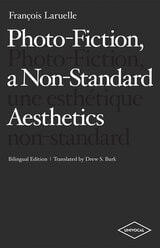
Photo-Fiction, a Non-Standard Aesthetics
François Laruelle
University of Minnesota Press, 2012
Twenty years after cultivating a new orientation for aesthetics via the concept of non-photography, François Laruelle returns, having further developed his notion of a non-standard aesthetics. Published for the first time in a bilingual edition, Photo-Fiction, a Non-Standard Aesthetics expounds on Laruelle’s current explorations into a photographic thinking as an alternative to the worn-out notions of aesthetics based on an assumed domination of philosophy over art. He proposes a new philosophical photo-fictional apparatus, or philo-fiction, that strives for a discursive mimesis of the photographic apparatus and the flash of the Real entailed in its process of image making. “A bit like if an artisan, to use a Socratic example, instead of making a camera based off of diagrams found in manuals, on the contrary had as his or her project the designing of a completely new apparatus of philo-fiction, thus capable of producing not simply photos, but photo-fictions.” One must enter into a space for seeing the vectorial and the imaginary number. Laruelle’s philo-fictions become not art installations, but “theoretical installations” calling for the consideration of the possibility of a non-standard aesthetics being of an equal or superior power to art and philosophy, an aesthetics in-the-last-instance that is itself an inventive and creative act of the most contemporary kind.
Photocinema
The Creative Edges of Photography and FilmEdited by Neil Campbell and Alfredo Cramerotti
Intellect Books, 2013
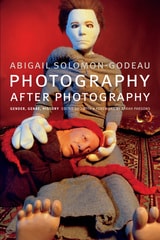
Photography after Photography
Gender, Genre, HistoryAbigail Solomon-Godeau
Duke University Press, 2017

Photography and Work
Kevin Coleman, Daniel James, and Jayeeta Sharma, special issue editors
Duke University Press, 2018
Contributors: Siobhan Angus, Ian Bourland, Oliver Coates, Kevin Coleman, Clare Corbould, Adrian De Leon, Rick Halpern, Daniel James, Tong Lam, Walter Benn Michaels, Jessica Stites Mor, Carol Quirke, Jayeeta Sharma, Erica Toffoli, Daniel Zamora
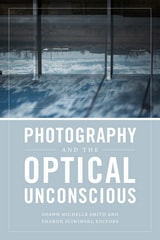
Photography and the Optical Unconscious
Shawn Michelle Smith and Sharon Sliwinski, editors
Duke University Press, 2017
Contributors. Mary Bergstein, Jonathan Fardy, Kristan Horton, Terri Kapsalis, Sarah Kofman, Elisabeth Lebovici, Zoe Leonard, Gabrielle Moser, Mignon Nixon, Thy Phu, Mark Reinhardt, Shawn Michelle Smith, Sharon Sliwinski, Laura Wexler, Kelly Wood, Andrés Mario Zervigón
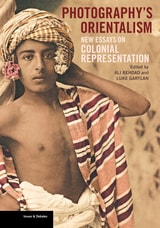
Photography's Orientalism
New Essays on Colonial RepresentationAli Behdad
J. Paul Getty Trust, The, 2013
Photography’s Orientalism offers the first in-depth cultural study of the works of European and non- European photographers active in the Middle East and India, focusing on the relationship between photographic, literary, and historical representations of this region and beyond. The essays explore the relationship between art and politics by considering the connection between the European presence there and aesthetic representations produced by traveling and resident photographers, thereby contributing to how the history of photography is understood.
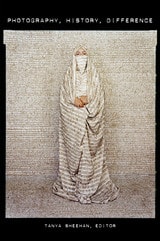
Photography, History, Difference
Edited by Tanya Sheehan
Dartmouth College Press, 2014
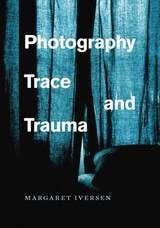
Photography, Trace, and Trauma
Margaret Iversen
University of Chicago Press, 2017
Examining photography and film, molds, rubbings, and more, Margaret Iversen considers how these artistic processes can be understood as presenting or simulating a residue, trace, or “index” of a traumatic event. These approaches, which involve close physical contact or the short-circuiting of artistic agency, are favored by artists who wish to convey the disorienting effect and elusive character of trauma. Informing the work of a number of contemporary artists—including Tacita Dean, Jasper Johns, Mary Kelly, Gabriel Orozco, and Gerhard Richter—the concept of the trace is shown to be vital for any account of the aesthetics of trauma; it has left an indelible mark on the history of photography and art as a whole.
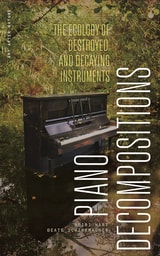
Piano Decompositions
The Ecology of Destroyed and Decaying InstrumentsHeidi Hart
University of Minnesota Press, 2026
Examining musical instrument destruction through an ecological and intermedial lens
Musical instruments are typically seen as objects both used and maintained with ritualistic care. But what happens when they’re tossed from homes in mudslides, burned during ecstatic parties, or waterlogged by pop stars in viral videos—and how do these elemental interactions transform the way we see and play instruments? Piano Decompositions asks what happens when we let go of controlling musical instruments. What kind of meanings start to sound when instruments are moved out of the protected cultural space and engage with their surrounding elements?
Heidi Hart and Beate Schirrmacher trace the history of destroyed and decaying pianos, both sorting them within the realm of artistic violence against instruments and following their return journeys into water, sand, and soil. They parse the artistic vision of Annea Lockwood, whose iconic burning, drowning, and decaying Piano Transplants presented a novel means of drawing attention to the increasing threats of climate change in the 1960s and ’70s. Turning to instruments made from found materials and others played collaboratively with wind and water, they demonstrate how human sound making is entangled in the more-than-human world.
Showing how the piano can transform conversations around the Anthropocene and environmental destruction, Hart and Schirrmacher find the instrument to be a potent creative and ecological force, a medium to connect with environments in an explorative, attentive way. Piano Decompositions unearths new ways to relate our concepts of curiosity, pleasure, and music to the natural world.
Retail e-book files for this title are screen-reader friendly with images accompanied by short alt text and/or extended descriptions.
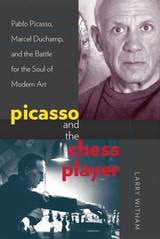
Picasso and the Chess Player
Pablo Picasso, Marcel Duchamp, and the Battle for the Soul of Modern ArtLarry Witham
University Press of New England, 2013
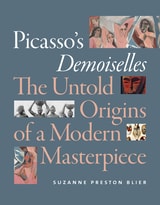
Picasso's Demoiselles
The Untold Origins of a Modern MasterpieceSuzanne Preston Blier
Duke University Press, 2019
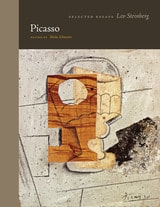
Picasso
Selected EssaysLeo Steinberg
University of Chicago Press, 2022
Leo Steinberg was one of the most original art historians of the twentieth century, known for taking interpretive risks that challenged the profession by overturning reigning orthodoxies. In essays and lectures ranging from old masters to modern art, he combined scholarly erudition with eloquent prose that illuminated his subject and a credo that privileged the visual evidence of the image over the literature written about it. His writings, sometimes provocative and controversial, remain vital and influential reading. Steinberg’s perceptions evolved from long, hard looking at his objects of study. Almost everything he wrote included passages of formal analysis but always put into the service of interpretation.
This volume brings together Steinberg’s essays on Pablo Picasso, many of which have been studied and debated for decades, such as “The Philosophical Brothel,” as well as unpublished lectures, including “The Intelligence of Picasso,” a wide-ranging look at Picasso’s enduring ambition to stretch the agenda of representation, from childhood drawings to his last self-portrait. An introduction by art historian Richard Shiff contextualizes these works and illuminates Steinberg’s lifelong dedication to refining the expository, interpretive, and rhetorical features of his writing.
Picasso is the fourth volume in a series that presents Steinberg’s writings, selected and edited by his longtime associate Sheila Schwartz.

Pick of the Bunch
Twelve Treasured FlowersMargaret Willes
Bodleian Library Publishing, 2009
In the dark, bitter days of winter, when the ground lies frozen and snow-covered, it can be hard to believe that mere months before, gardens and window boxes were bursting forth with fragrant, colorful blossoms. Today on the frosty walk home, at least we can pick up cut flowers at the store to remind us of the spring to come. But before the technological miracles of hothouses and refrigeration, flowers could only be captured for the winter months by artists and painters. Some of the finest flower-pieces ever painted were by Dutch and Flemish artists in the seventeenth century, which depict flowers in vases of metal and porcelain, sometimes with insects and butterflies nestling in petals or clinging to stalks. From these flower-pieces we can see what Europeans of the time considered desirable flowers: the rose, iris, carnation, lily, snowdrop, violet, fritillary, narcissus, tulip, daffodil, and hyacinth—many of which are still our favorites today.
Alongside lush color botanical illustrations, Pick of the Bunch presents the social history of these flora—how they arrived in our gardens; how they were bought, acquired and displayed; and who were their devotees and cultivators. The book delves into their symbolic associations in classical and Christian traditions and examines the complex language of flowers employed by the Victorians. Beautiful to behold and engagingly written, Pick of the Bunch is a wonderful gift for any garden lover and will be a warm, much needed glimpse of spring and summer throughout the cold, barren months.
Pictorial Nominalism
On Marcel Duchamp’s Passage from Painting to the ReadymadeThierry De Duve
University of Minnesota Press, 2005
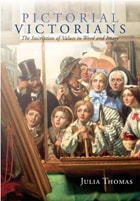
Pictorial Victorians
The Inscription of Values in Word and ImageJulia Thomas
Ohio University Press, 2005
The Victorians were image obsessed. The middle decades of the nineteenth century saw an unprecedented growth in the picture industry. Technological advances enabled the Victorians to adorn with images the pages of their books and the walls of their homes. But this was not a wholly visual culture. Pictorial Victorians focuses on two of the most popular mid-nineteenth-century genres—illustration and narrative painting—that blurred the line between the visual and textual.
Illustration negotiated text and image on the printed page, while narrative painting juxtaposed the two media in its formulation of pictorial stories. Author Julia Thomas reassesses mid-nineteenth-century values in the light of this interplay. The dialogue between word and image generates meanings that are intimately related to the Victorians' image of themselves. Illustrations in Victorian publications and the narrative scenes that lined the walls of the Royal Academy reveal the Victorians' ideas about the world in which they lived and their notions of gender, class, and race.
Pictorial Victorians surveys a range of material, from representations of the crinoline, to the illustrations that accompanied Harriet Beecher Stowe’s novel Uncle Tom's Cabin and Tennyson's poetry, to paintings of adultery. It demonstrates that the space between text and image is one in which values are both constructed and questioned.
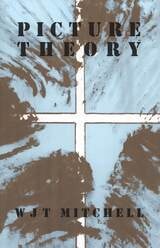
Picture Theory
Essays on Verbal and Visual RepresentationW. J. T. Mitchell
University of Chicago Press, 1994
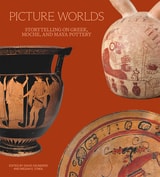
Picture Worlds
Storytelling on Greek, Moche, and Maya PotteryDavid Saunders
J. Paul Getty Trust, The, 2024
Satyrs and sphinxes, violent legumes, and a dancing maize deity figure in the stories painted on the pottery produced by the ancient Greek, Moche, and Maya cultures, respectively. Picture Worlds is the first book to examine the elaborately decorated terracotta vessels of these three distinct civilizations. Although the cultures were separated by space and time, they all employed pottery as a way to tell stories, explain the world, and illustrate core myths and beliefs. Each of these painted pots is a picture world. But why did these communities reach for pottery as a primary method of visual communication? How were the vessels produced and used? In this book, experts offer introductions to the civilizations, exploring these foundational questions and examining the painted imagery. Readers will be rewarded with a better understanding of each of these ancient societies, fascinating insights into their cultural commonalities and differences, and fresh perspectives on image making and storytelling, practices that remain vibrant to this day.
This volume is published to accompany an exhibition on view at the J. Paul Getty Museum at the Getty Villa from April 10 to July 29, 2024, and at the Michael C. Carlos Museum at Emory University from September 14 to December 15, 2024.
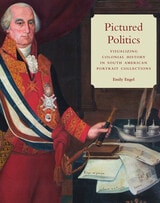
Pictured Politics
Visualizing Colonial History in South American Portrait CollectionsBy Emily Engel
University of Texas Press, 2020
The Spanish colonial period in South America saw artists develop the subgenre of official portraiture, or portraits of key individuals in the continent’s viceregal governments. Although these portraits appeared to illustrate a narrative of imperial splendor and absolutist governance, they instead became a visual record of the local history that emerged during the colonial occupation.
Using the official portrait collections accumulated between 1542 and 1830 in Lima, Buenos Aires, and Bogotá as a lens, Pictured Politics explores how official portraiture originated and evolved to become an essential component in the construction of Ibero-American political relationships. Through the surviving portraits and archival evidence—including political treatises, travel accounts, and early periodicals—Emily Engel demonstrates that these official portraits not only belie a singular interpretation as tools of imperial domination but also visualize the continent's multilayered history of colonial occupation. The first stand alone analysis of South American portraiture, Pictured Politics brings to light the historical relevance of political portraits in crafting the history of South American colonialism.