Results by title
3369 books match the query 'Cultural & Social' and 173 start with p
People of Pascua
Edward H. Spicer; Edited by Kathleen M. Sands and Rosamond B. Spicer
University of Arizona Press, 1988
People of the Desert and Sea
Ethnobotany of the Seri IndiansRichard Stephen Felger, Mary Beck Moser
University of Arizona Press, 1985
"To read and gaze through this elegantly illustrated book is to be exposed, as if through a work of science fiction, to an astonishing and unknown cultural world."—North Dakota Quarterly
People of the Water
Change and Continuity among the Uru-Chipayans of BoliviaJoseph Bastien
University of Utah Press, 2012
People of the Water is an ethnographic analysis of the cultural practices of the Uru-Chipayans—how they have maintained their culture and how they have changed. The Chipayans are an Andean people whose culture predates the time of the Incas (c. AD 1400), but they were almost wiped out by 1940, when only around 400 remained. Yet their population has quadrupled in the last 60 years. Joseph Bastien has spent decades living with and studying the Chipayans, and here for the first time he discusses the dynamics between traditional, social, and religious practices and the impending forces of modernity upon them. With the support of more than 100 illustrations he documents how, in spite of challenges, the Chipayans maintain ecological sustainability through an ecosystem approach that is holistic and symbolically embedded in rituals and customs.
Chipayans have a resilient and innovative culture, maintaining dress, language, hairstyle, rituals, and behavior while also re-creating their culture from a dialectic between themselves and the world around them. Bastien provides the reader with a series of experienced observations and intimate details of a group of people who strive to maintain their ancient traditions while adapting to modern society. This ethnographic study offers insightful, surprising, and thoughtful conclusions applicable to interpreting the world around us.
People, Plants, and Landscapes
Studies in PaleoethnobotanyKristen J. Gremillion
University of Alabama Press, 1997
Discover how ancient peoples and plants shaped one another across generations and landscapes.
People, Plants, and Landscapes showcases the potential of modern paleoethnobotany, an interdisciplinary field that explores the interactions between human beings and plants by examining archaeological evidence. Using different methods and theoretical approaches, the essays in this work apply botanical knowledge to studies of archaeological plant remains and apply paleoethnobotany to nonarchaeological sources of evidence. The resulting techniques often lie beyond the traditional boundaries of either archaeology or botany.
With this ground-breaking work, the technically and methodologically enhanced paleoethnobotany of the 1990s has joined forces with ecological and evolutionary theory to forge explanations of changing relationships between human and plant populations.
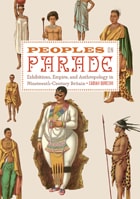
Peoples on Parade
Exhibitions, Empire, and Anthropology in Nineteenth-Century BritainSadiah Qureshi
University of Chicago Press, 2011
Performances of Violence
Austin Sarat
University of Massachusetts Press, 2011
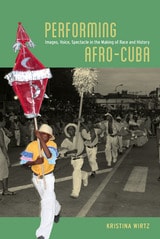
Performing Afro-Cuba
Image, Voice, Spectacle in the Making of Race and HistoryKristina Wirtz
University of Chicago Press, 2014
Wirtz analyzes a variety of performances and the ways they construct Cuban racial and historical imaginations. She offers a sophisticated view of performance as enacting diverse revolutionary ideals, religious notions, and racial identity politics, and she outlines how these concepts play out in the ongoing institutionalization of folklore as an official, even state-sponsored, category. Employing Bakhtin’s concept of “chronotopes”—the semiotic construction of space-time—she examines the roles of voice, temporality, embodiment, imagery, and memory in the racializing process. The result is a deftly balanced study that marries racial studies, performance studies, anthropology, and semiotics to explore the nature of race as a cultural sign, one that is always in process, always shifting.
Performing Hybridity
May Joseph
University of Minnesota Press, 1999
A kaleidoscopic consideration of transnational culture and performance
Amid the modern-day complexities of migration and exile, immigration and repatriation, notions of stable national identity give way to ideas about cultural “hybridity.” The authors represented in this volume use different forms of performative writing to question this process, to ask how the production of new political identities destabilizes ideas about gender, sexuality, and the nation in the public sphere.
Contributors use forms such as the essay, poem, photography, and case study to examine historically specific cases in which the notion of hybridity recasts our ideas of identity and performance: the struggle for Aboriginal land rights in Australia; Bahian carnival; the creolization and pidginization of language in the Caribbean world; queer videos; and others. Contributors: Meena Alexander, CUNY; Awam Amkpa, Mount Holyoke; Tony Birch; Barbara Browning, New York U; Manthia Diawara, New York U; Fiona Foley; Sikivu Hutchinson; Deborah A. Kapchan, U of Texas; Toby Miller, New York U; Shani Mootoo; Fred Moten, U of California, Santa Barbara; José Esteban Muñoz, New York U; Chon A. Noriega, UCLA; Celeste Olalquiaga; Ella Shohat, CUNY; Robert Stam, New York U.
Performing Kinship
Narrative, Gender, and the Intimacies of Power in the AndesBy Krista E. Van Vleet
University of Texas Press, 2008
In the highland region of Sullk'ata, located in the rural Bolivian Andes, habitual activities such as sharing food, work, and stories create a sense of relatedness among people. Through these day-to-day interactions—as well as more unusual events—individuals negotiate the affective bonds and hierarchies of their relationships. In Performing Kinship, Krista E. Van Vleet reveals the ways in which relatedness is evoked, performed, and recast among the women of Sullk'ata.
Portraying relationships of camaraderie and conflict, Van Vleet argues that narrative illuminates power relationships, which structure differences among women as well as between women and men. She also contends that in the Andes gender cannot be understood without attention to kinship.
Stories such as that of the young woman who migrates to the city to do domestic work and later returns to the highlands voicing a deep ambivalence about the traditional authority of her in-laws provide enlightening examples of the ways in which storytelling enables residents of Sullk'ata to make sense of events and link themselves to one another in a variety of relationships. A vibrant ethnography, Performing Kinship offers a rare glimpse into an compelling world.

Performing Maternities
Political, Social and Feminist EnquiryEdited by Kate Aughterson and Jess Moriarty
Intellect Books, 2027
This volume brings together research and artistic practices that challenge dominant narratives around motherhood.
Performing Maternities is a collection of essays, creative work, images, and scripts that emerged out of an online international symposium held at Brighton University in November 2020. Together, the contributors challenge, celebrate, and share the normative, the queer, the transgressive, the joy, and the pain of performing maternity. The book asks key questions about the construction of maternal identities and mythologies in the contemporary world; the ways these affect individuals in different social, economic, and sexual identities; and how—as mothers, writers, artists, parents, and grandparents—we can address and challenge those identities.
Perilous States
Conversations on Culture, Politics, and NationEdited by George E. Marcus
University of Chicago Press, 1993
politics, history, comparative literature, and
philosophy—the unprecedented annual publication Late
Editions exposes unsettling dilemmas and unprecedented
challenges facing cultural studies on the brink of the
twenty-first century. Successive volumes will appear
annually until the year 2000, each engaging the predicaments
of particular institutions, nations, and persons at this
point of social, cultural, and political change. The
project will test the limits of scholarly conventions by
finding new ways to expose cultural formations emerging from
the maturation or exhaustion of once-powerful ideas whose
validity is now deeply in question.
Perilous States, the first volume of Late
Editions, presents conversations between American
scholars, most of whom are anthropologists, and individuals
situated amidst political and social upheaval. Pimarily but
not exclusively from Eastern Europe, the cast includes
Russian writers, Hungarian scientists and academics, Armenian
politicians, Siberian religious and medical leaders, a Gypsy
leader, a Polish poet, a French politician, and a white South
African musician who is a self-styled Zulu. Their voices
unite around themes of democracy, market economy, individual
rights, and the reawakened force of suppressed ethnic and
racial identities.
To obtain fresh perspectives on these cultural and social
transformations, the volumes will consist of in-depth
conversations, relayed in essay form, between scholars and
individuals in other cultures with whom they share
affinities. This novel approach blends the immediacy of
interviews, the objectivity of journalism, and the
intellectual rigor of scholarship.
Contributors to this volume are Marjorie Balzer, Sam
Beck, David B. Coplan, Michael M. J. Fischer, Nia Georges,
Bruce Grant, Douglas R. Holmes, Stella Gregorian, George E.
Marcus, Kathryn Milun, Eleni Papagaroufali, Paul Rabinow,
Julie Taylor, and Tom White.
Peripheral Labour Mobilities
Tanja Višic
Campus Verlag, 2022
The precarious situation in the successor states of Yugoslavia created a specific dynamic in the field of labor mobility. Still, little research has been done in this region on how women, who are older care workers from Serbia or Bosnia commute—often via illegal border crossings—to German households to look after the elderly. In Peripheral Labor Mobilities, Tanja Višic explores this gender-specific migration pattern in the first expansive ethnography of contemporary cross-border elder care in this region. She takes up questions about how the mobility and work practices of women are integrated into the socio-economic networks of the informal care work sector while also looking at worker confrontations with labor laws and border regimes. Illustrative case studies clearly detail culturally specific patterns of perception of care work, family relationships, and the mobility demanded by these labor arrangements.
Peripheral Visions
Publics, Power, and Performance in YemenLisa Wedeen
University of Chicago Press, 2008
Lisa Wedeen, who spent a year and a half in Yemen observing and interviewing its residents, argues that national solidarity in such weak states tends to arise not from attachments to institutions but through both extraordinary events and the ordinary activities of everyday life. Yemenis, for example, regularly gather to chew qat, a leafy drug similar to caffeine, as they engage in wide-ranging and sometimes influential public discussions of even the most divisive political and social issues. These lively debates exemplify Wedeen’s contention that democratic, national, and pious solidarities work as ongoing, performative practices that enact and reproduce a citizenry’s shared points of reference. Ultimately, her skillful evocations of such practices shift attention away from a narrow focus on government institutions and electoral competition and toward the substantive experience of participatory politics.
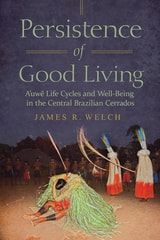
Persistence of Good Living
A’uwe Life Cycles and Well-Being in the Central Brazilian CerradosJames R. Welch
University of Arizona Press, 2023
Anthropologist James R. Welch transparently presents ethnographic insights from his long-term fieldwork in two A’uwẽ communities. He addresses how distinctive constructions of age organization contribute to social well-being in an era of major ecological, economic, and sociocultural change. Welch shows how A’uwẽ perspectives on the human life cycle help define ethnic identity, promote cultural resilience, and encourage the betterment of youth. They provide frameworks that people may creatively mobilize to responsibly and respectfully engage with others at different stages of life. They also motivate people to access and manage landscape resources essential to the social construction of good living. Through careful analysis, Welch shows how contemporary traditional peoples can foster enthusiasm for service to family and community amid dominant cultures that prioritize individual well-being.
This book is an essential resource for students and scholars interested in sociocultural anthropology, Indigenous cultures, health and culture, and human ecology.
Persistent Peoples
Cultural Enclaves in PerspectiveEdited by George Pierre Castile and Gilbert Kushner
University of Arizona Press, 1981
Contributors:
William Y. Adams
George Pierre Castile
N. Ross Crumrine
Timothy Dunnigan
Charles J. Erasmus
Frederick J. E. Gorman
Vera M. Green
William B. Griffen
Robert C. Harman
Mark P. Leone
Janet R. Moone
John van Willigen
Willard Walker
Personalities on the Plate
The Lives and Minds of Animals We EatBarbara J. King
University of Chicago Press, 2017
Yet that realization hasn’t yet made its presence felt to any great degree in our most intimate relationship with animals: at the dinner table. Sure, there are vegetarians and vegans all over, but at the same time, meat consumption is up, and meat remains a central part of the culinary and dining experience for the majority of people in the developed world.
With Personalities on the Plate, Barbara King asks us to think hard about our meat eating--and how we might reduce it. But this isn’t a polemic intended to convert readers to veganism. What she is interested in is why we’ve not drawn food animals into our concern and just what we do know about the minds and lives of chickens, cows, octopuses, fish, and more. Rooted in the latest science, and built on a mix of firsthand experience (including entomophagy, which, yes, is what you think it is) and close engagement with the work of scientists, farmers, vets, and chefs, Personalities on the Plate is an unforgettable journey through the world of animals we eat. Knowing what we know--and what we may yet learn--what is the proper ethical stance toward eating meat? What are the consequences for the planet? How can we life an ethically and ecologically sound life through our food choices?
We could have no better guide to these fascinatingly thorny questions than King, whose deep empathy embraces human and animal alike. Readers will be moved, provoked, and changed by this powerful book.
Personality and the Cultural Construction of Society
Edited by David K. Jordan and Marc J. Swartz
University of Alabama Press, 1990
Pyschological anthropology is a vital area of contemporary social science, and one of the field's most important and innovative thinkers is Melford E. Spiro. This volume brings together sixteen essays that review Spiro's theoretical insights and extend them into new areas. The essays center on several general problems: In what ways is it meaningful to speak of a social act as having "functions"? What elements and processes of human personality are universal, and why? What is the relationship between religion and personality? Why? What are the pyschological underpinnings of social manipulation?
Perspectives on Prehistoric Trade and Exchange in California and the Great Basin
Richard E. Hughes
University of Utah Press, 2011
How does prehistoric material get from its place of origin to its location of archaeological recovery? While this question may seem basic, a moment’s reflection suggests that the answers carry important implications for arc-haeological interpretation about social organization, settlement, and subsistence practices. Archaeologists know much about the temporal and spatial distribution of materials in prehistoric western North America, but comparatively little has emerged regarding the causes of such distributions. Trade and exchange, mobility, and direct access all have been credited with observed distributions, but the reasons for settling on specific behavioral linkages is rarely made clear.
This volume investigates the circumstances and conditions under which trade/exchange, direct access, and/or mobility best account for material conveyance across varying distances at different times in the past. Each chapter contextualizes distributional and chemical data, evaluates competing distribution hypotheses, and addresses the reasoning and inferences employed to arrive at conclusions about the human behaviors responsible for the distributions of materials. Contributors showcase a range of diverse and creative ways of thinking about these issues in the California and Great Basin archaeological record, and why it matters.
Peruvian Street Lives
Culture, Power, and Economy among Market Women of CuzcoLinda J. Seligmann
University of Illinois Press, 2004
In Peruvian Street Lives, Seligmann argues that the sometimes invisible and informal economic, social, and political networks market women establish may appear disorderly and chaotic, but in fact often keep dysfunctional economies and corrupt bureaucracies from utterly destroying the ability of citizens to survive from day to day. Seligmann asks why the constructive efforts of market women to make a living provoke such negative social perceptions from some members of Peruvian society, who see them as symbols and actual catalysts of social disorder. At the same time, Seligmann shows how market women eke out a living, combat discrimination, and transgress racial and gender ideologies within the rich and expressive cultural traditions they have developed.
Petrochemical Planet
Multiscalar Battles of Industrial TransformationAlice Mah
Duke University Press, 2023
Pharmocracy
Value, Politics, and Knowledge in Global BiomedicineKaushik Sunder Rajan
Duke University Press, 2017
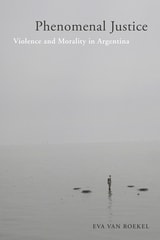
Phenomenal Justice
Violence and Morality in ArgentinaEva van Roekel
Rutgers University Press, 2020
Short-listed for the Juan E. Méndez Book Award for Human Rights in Latin America from Duke University Libraries
How do victims and perpetrators of political violence caught up in a complicated legal battle experience justice on their own terms? Phenomenal Justice is a compelling ethnography about the reopened trials for crimes against humanity committed during the brutal military dictatorship that ruled Argentina between 1976 and 1983. Grounded in phenomenological anthropology and the anthropology of emotion, this book establishes a new theoretical basis that is faithful to the uncertainties of justice and truth in the aftermath of human rights violations. The ethnographic observations and the first-person stories about torture, survival, disappearance, and death reveal the enduring trauma, heartfelt guilt, happiness, battered pride, and scratchy shame that demonstrate the unreserved complexities of truth and justice in post-conflict societies. Phenomenal Justice will be an indispensable contribution to a better understanding of the military dictatorship in Argentina and its aftermath.
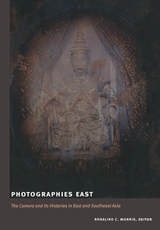
Photographies East
The Camera and Its Histories in East and Southeast AsiaRosalind C. Morris, ed.
Duke University Press, 2009
The contributors analyze how in specific cultural and historical contexts, the camera has affected experiences of time and subjectivity, practices of ritual and tradition, and understandings of death. They highlight the links between photography and power, looking at how the camera has figured in the operations of colonialism, the development of nationalism, the transformation of monarchy, and the militarization of violence. Moving beyond a consideration of historical function or effect, the contributors also explore the forms of illumination and revelation for which the camera has offered itself as instrument and symbol. And they trace the emergent forms of alienation and spectralization, as well as the new kinds of fetishism, that photography has brought in its wake. Taken together, the essays chart a bravely interdisciplinary path to visual studies, one that places the particular knowledge of a historicized anthropology in a comparative frame and in conversation with aesthetics and art history.
Contributors. James L. Hevia, Marilyn Ivy, Thomas LaMarre, Rosalind C. Morris, Nickola Pazderic, John Pemberton, Carlos Rojas, James T. Siegel, Patricia Spyer
Picturing Culture
Explorations of Film and AnthropologyJay Ruby
University of Chicago Press, 2000
The book begins with analyses of key filmmakers (Robert Flaherty, Robert Garner, and Tim Asch) who have striven to generate profound statements about human behavior on film. Ruby then discusses the idea of research film, Eric Michaels and indigenous media, the ethics of representation, the nature of ethnography, anthropological knowledge, and film and lays the groundwork for a critical approach to the field that borrows selectively from film, communication, media, and cultural studies. Witty and original, yet intensely theoretical, this collection is a major contribution to the field of visual anthropology.
Pilgrimage and Healing
Edited by Jill Dubisch and Michael Winkelman
University of Arizona Press, 2005
This volume brings together anthropological and interdisciplinary perspectives on these persistent forms of popular religion to expand our understanding of the role of the traditional practice of pilgrimage in what many believe to be an increasingly secular world. Focusing on the healing dimensions of pilgrimage, the authors present case studies grounded in specific cultures and pilgrimage traditions to help readers understand the many therapeutic resources pilgrimage provides for people around the world. The chapters examine a variety of pilgrimage forms, both religious and non-religious, from Nepalese and Huichol shamanism pilgrimage to Catholic journeys to shrines and feast days to Nevada’s Burning Man festival. These diverse cases suggest a range of meanings embodied in the concept of healing itself, from curing physical ailments and redefining the self to redressing social suffering and healing the wounds of the past.
Collectively and individually, the chapters raise important questions about the nature of ritual in general, and healing through pilgrimage in particular, and seek to illuminate why so many participants find pilgrimage a compelling way to address the problem of suffering. They also illustrate how pilgrimage exerts its social and political influence at the personal, local, and national levels, as well as providing symbols and processes that link people across social and spiritual boundaries. By examining the persistence of pilgrimage as a significant source of personal engagement with spirituality, Pilgrimage and Healing shows that the power of pilgrimage lies in its broad transformative powers. As our world increasingly adopts a secular and atheistic perspective in many domains of experience, it reminds us that, for many, spiritual quest remains a potent force.
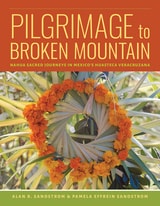
Pilgrimage to Broken Mountain
Nahua Sacred Journeys in Mexico's Huasteca Veracruzanaby Alan R. Sandstrom & Pamela Effrein Sandstrom illustrated by Michael K. Aakhus, Ana Laura Ávila-Myers & Michael A. Sandstrom
University Press of Colorado, 2022
Pilgrimage to Broken Mountain contains richly detailed descriptions and analyses of ritual procedures as well as translations from the Nahuatl of core myths, chants performed before decorated altars, and statements from participants. Particular emphasis is placed on analyzing the role of sacred paper figures that are produced by the thousands for each pilgrimage. The work contains drawings of these cuttings of spirit entities along with hundreds of color photographs illustrating how they are used throughout the pilgrimages. The analysis reveals the monist philosophy that underlies Nahua religious practice in which altars, dancing, chanting, and the paper figures themselves provide direct access to the sacred.
In the context of their pilgrimage traditions, the ritual practices of Nahua religion show one way that people interact effectively with the forces responsible for not only their own prosperity but also the very survival of humanity. A magnum opus with respect to Nahua religion and religious practice, Pilgrimage to Broken Mountain is a significant contribution to several fields, including but not limited to anthropology, Indigenous literatures of Mesoamerica, Nahuatl studies, Latinx and Chicanx studies, and religious studies.
Pillars of the Nation
Child Citizens and Ugandan National DevelopmentKristen E. Cheney
University of Chicago Press, 2007
How can children simultaneously be the most important and least powerful people in a nation? In her innovative ethnography of Ugandan children—the pillars of tomorrow’s Uganda, according to the national youth anthem—Kristen E. Cheney answers this question by exploring the daily contradictions children face as they try to find their places amid the country’s rapidly changing social conditions.
Drawing on the detailed life histories of several children, Cheney shows that children and childhood are being redefined by the desires of a young country struggling to position itself in the international community. She moves between urban schools, music festivals, and war zones to reveal how Ugandans are constructing childhood as an empowering identity for the development of the nation. Moreover, through her analysis of children’s rights ideology, national government strategy, and children’s everyday concerns, Cheney also shows how these young citizens are vitally linked to the global political economy as they navigate the pitfalls and possibilities for a brighter tomorrow.
Piman Shamanism and Staying Sickness (Ká
cim Múmkidag)Donald M. Bahr, Juan Gregorio, David I. Lopez, and Albert Alvarez
University of Arizona Press, 1974
This definitive study of shamanic theory and practice was developed through a four-person collaboration: three Tohono O’odham Indians—a shaman, a translator, and a trained linguist—and a non-Indian explicator. It provides an in-depth examination of the Piman philosophy of sickness as well as an introduction to the world view of an entire people.
Using the most highly developed techniques of modern ethnolinguistics, anthropologist Bahr investigates the culturally based concept of staying sickness. He conducted extensive discussions in the Piman language with shaman Gregorio. The native informant theorized at length about the cause of staying sickness, the dúajida (divination), and ritual prayers. The translator and the linguist analyzed the content and style of Gregorio’s discussions. Texts in the Piman language of Gregorio’s discussions are included, as well as literal and idiomatic English translations.
American Anthropologist cites “the infinite care with which each utterance has been analyzed” and “the richness of cultural expression captured in the texts themselves and in their explanation. To read Piman Shamanism and Staying Sickness is to become familiar with the unique properties of Piman thinking and modes of expression: abstract, elliptical, contracted, and yet filled with a rich and natural imagery.”

Pink Globalization
Hello Kitty's Trek across the PacificChristine R. Yano
Duke University Press, 2013
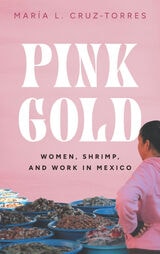
Pink Gold
Women, Shrimp, and Work in MexicoMaria L. Cruz-Torres
University of Texas Press, 2023
A rich, long-term ethnography of women seafood traders in Mexico.
The "shrimp ladies," locally known as changueras in southern Sinaloa, Mexico, sell seafood in open-air markets, forming an extralegal but key part of the economy built around this "pink gold.” Over time, they struggled to evolve from marginalized peddlers to local icons depicted in popular culture, even as they continue to work at an open-air street market.
Pink Gold documents the shrimp traders' resilience and resourcefulness, from their early conflicts with the city, state, and federal authorities and forming a union, to carving out a physical space for a seafood market, and even engaging in conflicts with the Mexican military. Drawing from her two decades of fieldwork, María L. Cruz-Torres explores the inspiring narrative of this overlooked group of women involving grassroots politics, trans-border and familial networking, debt and informal economic practices, personal sacrifices, and simple courage. She argues that, amid intense economic competition, their success relies on group solidarity that creates interlocking networks of mutual trust, or confianza, that in turn enable them to cross social and political boundaries that would typically be closed to them. Ultimately, Pink Gold offers fresh insights into issues of gender and labor, urban public space, the street economy, commodities, and globalization.
Pink Revolutions
Globalization, Hindutva, and Queer Triangles in Contemporary IndiaNishant Shahani
Northwestern University Press, 2021
Eschewing structures of absolute complicity or abject alterity, Pink Revolutions pays attention to the logics of triangulation in various contexts: gay tourism, university campus politics, diasporic cultural productions, and AIDS activism. The book articulates a framework through which queer politics can challenge rather than participate in neoliberal imperatives, an approach that will interest scholars engaged with queer studies and postcolonial scholarship, as well as activists and academics wrestling with global capitalism and right-wing regimes around the world.
Pinoy Capital
The Filipino Nation in Daly CityBenito M. Vergara, Jr.
Temple University Press, 2009
Home to 33,000 Filipino American residents, Daly City, California, located just outside of San Francisco, has been dubbed “the Pinoy Capital of the United States.” In this fascinating ethnographic study of the lives of Daly City residents, Benito Vergara shows how Daly City has become a magnet for the growing Filipino American community.
Vergara challenges rooted notions of colonialism here, addressing the immigrants’ identities, connections and loyalties. Using the lens of transnationalism, he looks at the “double lives” of both recent and established Filipino Americans. Vergara explores how first-generation Pinoys experience homesickness precisely because Daly City is filled with reminders of their homeland’s culture, like newspapers, shops and festivals. Vergara probes into the complicated, ambivalent feelings these immigrants have—toward the Philippines and the United States—and the conflicting obligations they have presented by belonging to a thriving community and yet possessing nostalgia for the homeland and people they left behind.
Pipe Politics, Contested Waters
Embedded Infrastructures of Millennial MumbaiLisa Bjorkman
Duke University Press, 2015
Despite Mumbai's position as India's financial, economic, and cultural capital, water is chronically unavailable for rich and poor alike. Mumbai's dry taps are puzzling, given that the city does not lack for either water or financial resources. In Pipe Politics, Contested Waters, Lisa Björkman shows how an elite dream to transform Mumbai into a "world class" business center has wreaked havoc on the city’s water pipes. In rich ethnographic detail, Pipe Politics explores how the everyday work of getting water animates and inhabits a penumbra of infrastructural activity—of business, brokerage, secondary markets, and sociopolitical networks—whose workings are reconfiguring and rescaling political authority in the city. Mumbai’s increasingly illegible and volatile hydrologies, Björkman argues, are lending infrastructures increasing political salience just as actual control over pipes and flows becomes contingent on dispersed and intimate assemblages of knowledge, power, and material authority. These new arenas of contestation reveal the illusory and precarious nature of the project to remake Mumbai in the image of Shanghai or Singapore and gesture instead toward the highly contested futures and democratic possibilities of the actually existing city.
Piroska and the Pantokrator
Dynastic Memory, Healing and Salvation in Komnenian ConstantinopleMarianne Sághy
Central European University Press, 2019
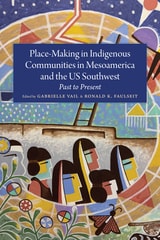
Place-Making in Indigenous Communities in Mesoamerica and the US Southwest
Past to PresentGabrielle Vail
University Press of Colorado, 2027
Place-Making in Indigenous Communities in Mesoamerica and the US Southwest explores shared Indigenous place-making concepts and practices across culturally diverse regions of Mesoamerica and the US Southwest from both historical and contemporary perspectives. Drawing on multidisciplinary research approaches, the volume demonstrates how Indigenous communities create and maintain deep connections to landscapes through stories, rituals, and reciprocal relationships, stressing the dynamic nature of the place-making process.
Contributors emphasize themes that crosscut Mesoamerican and Southwestern Indigenous cultures, including place-making through the (re)activation of primordial time, how people and spiritual energies embodied in geographical features of the land co-define time and space, the role of nonlocal materials and beings in establishing new—and often prestigious—place-based connections, and the impact of colonialism and neocolonialism on place-making and identity. Integrating archaeological evidence with contemporary ethnographic work, contributors explore the significance of places like Chichen Itzá's Balankanche cave as manifestations of primordial emergence sites. They also examine Hopi pilgrimages to ancestral shrines and how places such as Mirador Mountain in Chiapas, Cerro Danush in Oaxaca, and Black Mesa near San Ildefonso Pueblo continue to serve as focal points for ritual processions and community belonging.
Organized into sections emphasizing deep-time perspectives and contemporary heritage issues, Place-Making in Indigenous Communities in Mesoamerica and the US Southwest advocates for collaborative research approaches that center Indigenous voices and knowledge systems. By highlighting the deep connections between Indigenous communities and their sacred landscapes, this work brings a new perspective to ongoing conversations centered on land—one that urges engagement with Indigenous communities in a spirit of openness, collaboration, and respect.
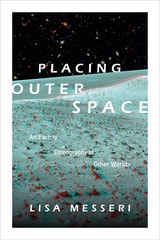
Placing Outer Space
An Earthly Ethnography of Other WorldsLisa Messeri
Duke University Press, 2016

Plain but Wholesome
Foodways of the Mormon PioneersBrock Cheney
University of Utah Press, 2012
Plain But Wholesome presents a groundbreaking foray into Mormon history. Brock Cheney explores the foodways of Mormon pioneers from their trek west through the arrival of the railroad and reveals new perspectives on the fasci-nating Mormon settlement era. Relying on original diaries, newspaper accounts, and recipe books from the 1850s, Cheney draws a vivid portrait of what Mormon pioneers ate and drank. Although other authors have sketched the subject before, this portrait is the first effort that might be described as scholarly, though the lively prose will interest a broad general audience.
Presented here are the first explicit descriptions of the menus, food processes, and recipes of the Mormon pioneers. While many have supposed that earlier pioneer foodways continued to be handed down through Mormon families, Cheney has confirmed traditions going back generations and covering more than a century. The book also exposes myths and clichés about pioneer piety and hardships, as Cheney examines such pioneer extravagances as fresh “oysters on the half shell” and pioneer trends of alcohol consumption.
A perfect gift for the history buff or Dutch oven chef, Plain But Wholesome will also prove its place among scholars and historians. With its rollicking blend of historical source material and modern interpretation, this book will entertain and educate novice and expert alike.
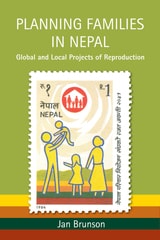
Planning Families in Nepal
Global and Local Projects of ReproductionBrunson, Jan
Rutgers University Press, 2016
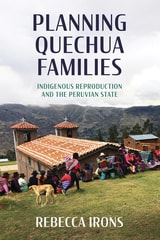
Planning Quechua Families
Indigenous Reproduction and the Peruvian StateRebecca Irons
University of Arizona Press, 2027
Planning Quechua Families: Indigenous Reproduction and the Peruvian State examines how reproductive health is shaped by a history of colonial power, state intervention, and social upheaval. This ethnography is centered on the experiences of Indigenous women in the Andes. The book situates contemporary family planning within the legacy of forced sterilizations and political violence during the era of Shining Path terrorism. Drawing on extensive fieldwork, Rebecca Irons brings together the perspectives of both Quechua women and the health-care workers who serve them, offering a nuanced account of how reproductive services are experienced, negotiated, and contested in rural clinics.
The book explores how reproductive health is embedded within broader processes of social change, including “Incanization,” shifting ideas of citizenship, and efforts to integrate marginalized communities into the Peruvian nation. Irons demonstrates how Indigenous understandings of kinship, health, and identity intersect with state policies and biomedical practices, revealing forms of violence that are often less visible but deeply consequential.
By placing Indigenous reproductive experiences within a wider cultural and political context, Planning Quechua Families provides a critical perspective on how power operates through intimate aspects of life in the contemporary Andes.
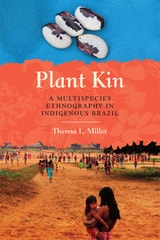
Plant Kin
A Multispecies Ethnography in Indigenous BrazilBy Theresa L. Miller
University of Texas Press, 2019
The Indigenous Canela inhabit a vibrant multispecies community of nearly 3,000 people and over 300 types of cultivated and wild plants living together in Maranhão State in the Brazilian Cerrado (savannah), a biome threatened with deforestation and climate change. In the face of these environmental threats, Canela women and men work to maintain riverbank and forest gardens and care for their growing crops, whom they consider to be, literally, children. This nurturing, loving relationship between people and plants—which offers a thought-provoking model for supporting multispecies survival and well-being throughout the world—is the focus of Plant Kin.
Theresa L. Miller shows how kinship develops between Canela people and plants through intimate, multi-sensory, and embodied relationships. Using an approach she calls “sensory ethnobotany,” Miller explores the Canela bio-sociocultural life-world, including Canela landscape aesthetics, ethnobotanical classification, mythical storytelling, historical and modern-day gardening practices, transmission of ecological knowledge through an education of affection for plant kin, shamanic engagements with plant friends and lovers, and myriad other human-nonhuman experiences. This multispecies ethnography reveals the transformations of Canela human-environment and human-plant engagements over the past two centuries and envisions possible futures for this Indigenous multispecies community as it reckons with the rapid environmental and climatic changes facing the Brazilian Cerrado as the Anthropocene epoch unfolds.
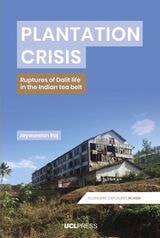
Plantation Crisis
Ruptures of Dalit Life in the Indian Tea BeltJayaseelan Raj
University College London, 2022
What does the collapse of India’s tea industry mean for Dalit workers who have lived, worked, and died on the plantations since the colonial era? Since the mid-1990s, the colonial era plantation system—and its workforce of more than two million people— has faced a series of ruptures stemming from neoliberal economic globalization. In the South Indian state of Kerala, the Dalit workforce is at the forefront of this crisis and its profound effects on their social identity and economic wellbeing. Plantation Crisis offers a complex understanding of how processes of social and political alienation unfold in moments of economic rupture. Based on long-term ethnographic fieldwork in the Peermade and Munnar tea belts, the book analyzes the profound, multidimensional sense of crisis felt by those who are at the bottom of global plantation capitalism. Out of the colonial history of racial capitalism and indentured migration, Plantation Crisis opens our eyes to the collapse of the plantation system in India, and the profound impacts this has on the Dalit workers who lived there for generations.
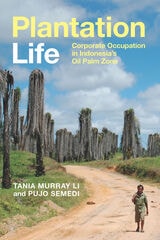
Plantation Life
Corporate Occupation in Indonesia's Oil Palm ZoneTania Murray Li and Pujo Semedi
Duke University Press, 2021

Plants for Desperate Times
The Diversity of Life-Saving Famine FoodsPaul E. Minnis and Robert L. Freedman
University of Arizona Press, 2024
Plants for Desperate Times is an introduction to the diversity of plant foods that have saved millions of lives during lethal food shortages. While not a field guide, it addresses questions about what famine foods are and why they are important. The work highlights one hundred plants. Each entry includes the common and scientific names, botanical family, distribution, use as a famine food and other uses, and nutritional information. The species come from across the botanical kingdom, demonstrating the diversity of life-saving plants and the human ingenuity of making what might seem to be inedible plants edible. Unexpectedly, important famine foods include alternative uses of important crops as well as native plants.
Beyond a study of famine foods, the authors share why keeping an inventory of plant foods of last resort is so important. They help to build an understanding of little-known and underappreciated foods that may have a greater role in provisioning humanity in the future. As much as we may hope that severe food scarcity will never occur again, history suggests otherwise, and Plants for Desperate Times provides invaluable documentation of these vital foods.

Plastic Bodies
Sex Hormones and Menstrual Suppression in BrazilEmilia Sanabria
Duke University Press, 2016
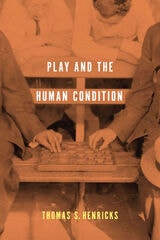
Play and the Human Condition
Thomas S. Henricks
University of Illinois Press, 2015
Imaginative and stimulating, Play and the Human Condition shows how play allows us to learn about our qualities and those of the world around us--and in so doing make sense of ourselves.

Playing Patriot
Inside Florida’s Alt-RightAlexander Lowie
Rutgers University Press, 2027
What draws ordinary Americans into extremist political movements, and why do they stay? Playing Patriot takes readers inside the contemporary Patriot Movement through immersive ethnographic fieldwork conducted with members of the Patriot Movement in Central Florida (including those active in the Proud Boys and Three-Percenters) following January 6. Over months of participant observation, conversations, and firsthand experiences, anthropologist Alexander Lowie explores how humor, play, alternative media, conspiracy narratives, and performances of masculinity shape political belonging. Rather than portraying these organizations as collections of abstract beliefs alone, the book reveals them as communities built through everyday relationships, shared rituals, and stories about national decline and renewal. Written as a first-person narrative ethnography, Playing Patriot offers an accessible, deeply human account of political extremism while providing fresh insight into the emotional and cultural forces shaping contemporary American populism.
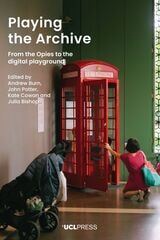
Playing the Archive
From the Opies to the Digital PlaygroundEdited by Andrew Burn, John Potter, Kate Cowan, and Julia Bishop
University College London, 2025
Playing the Archive: From the Opies to the Digital Playground revisits the trailblazing work of Iona and Peter Opie, who documented children’s playground games, rhymes, and traditions in mid-20th century Britain, and brings their research into the digital age. Through a major new study, this book explores how children’s play has evolved, drawing on fresh ethnographic research, digital storytelling, and interactive media to compare past and present-day playground cultures.
By making the Opie Archive publicly accessible and involving children through digital interfaces, the project opens up new ways of understanding play as a dynamic, ever-changing practice. The chapters offer novel theoretical insights into the shifting landscapes of play, considering the role of archives and digital media in shaping children’s cultural expressions. Playing the Archive questions stereotypes about childhood in the digital era, positioning children as active creators of their own play cultures.
Pleasure Consuming Medicine
The Queer Politics of DrugsKane Race
Duke University Press, 2009
Race does not suggest that drug use is risk-free, good, or bad, but rather that the regulation of drugs has become a site where ideological lessons about the propriety of consumption are propounded. He argues that official discourses about drug use conjure a space where the neoliberal state can be seen to be policing the “excesses” of the amoral market. He explores this normative investment in drug regimes and some “counterpublic health” measures that have emerged in response. These measures, which Race finds in certain pragmatic gay men’s health and HIV prevention practices, are not cloaked in moralistic language, and they do not cast health as antithetical to pleasure.

Pleasure Grounds of Death
The Rural Cemetery in Nineteenth-Century AmericaJoy M. Giguere
University of Michigan Press, 2024
Pleasure Grounds of Death considers the history of the rural cemetery in the United States throughout the duration of the nineteenth century as not only a critical cultural institution embedded in the formation of community and national identities, but also as major sites of contest over matters of burial reform, taste and respectability, and public behavior; issues concerning race, class, and gender; conflicts over the burial of the Civil War dead and formation of postwar memory; and what constituted the most appropriate ways to structure the landscape of the dead in a modern and progressive society. As cultural landscapes that served the needs of the living as well as the dead, rural cemeteries offer a mirror for the transformations and conflicts taking place throughout the nineteenth century in American society.
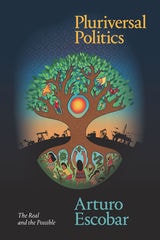
Pluriversal Politics
The Real and the PossibleArturo Escobar
Duke University Press, 2020