Results by title
783 books match the query 'History & Theory' and 59 start with p
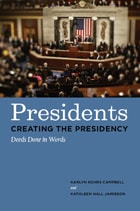
Presidents Creating the Presidency
Deeds Done in WordsKarlyn Kohrs Campbell and Kathleen Hall Jamieson
University of Chicago Press, 2008
Identifying the primary genres of presidential oratory, Campbell and Jamieson add new analyses of signing statements and national eulogies to their explorations of inaugural addresses, veto messages, and war rhetoric, among other types. They explain that in some of these genres, such as farewell addresses intended to leave an individual legacy, the president acts alone; in others, such as State of the Union speeches that urge a legislative agenda, the executive solicits reaction from the other branches. Updating their coverage through the current administration, the authors contend that many of these rhetorical acts extend over time: George W. Bush’s post-September 11 statements, for example, culminated in a speech at the National Cathedral and became a touchstone for his subsequent address to Congress.
For two centuries, presidential discourse has both succeeded brilliantly and failed miserably at satisfying the demands of audience, occasion, and institution—and in the process, it has increased and depleted political capital by enhancing presidential authority or ceding it to the other branches. Illuminating the reasons behind each outcome, Campbell and Jamieson draw an authoritative picture of how presidents have used rhetoric to shape the presidency—and how they continue to re-create it.
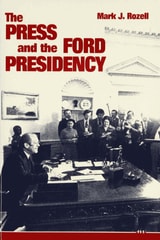
Press and the Ford Presidency
Mark J. Rozell
University of Michigan Press, 1992

Prison Letters
Antonio Gramsci
Pluto Press, 1997
Antonio Gramsci is one of the great European Marxists, hailed by Eric Hobsbawm as 'an extraordinary philosopher ... probably the most original communist thinker of twentieth-century Europe'.
Gramsci developed Marx's ideas with an emphasis on culture rather than economics. This classic work reveals his thinking through letters to friends and family written whilst he was in prison.
His primary contribution has been in his insistence on an understanding of popular culture in the battle to create a revolutionary consciousness. It is this humanitarian aspect of his thinking that illuminates the vivid personal testimony of his prison letters, written between 1926 and 1937.
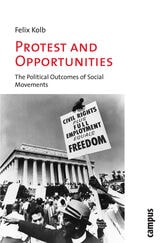
Protest and Opportunities
A Theory of Social Movements and Political ChangeFelix Kolb
Campus Verlag, 2007
In addition to reviewing the existing literature on the political outcomes of social movements, this volume analyzes the examples of the American civil rights movement and anti-nuclear energy efforts in eighteen countries to forge a new understanding of their momentous impact.
Protocols of Liberty
Communication Innovation and the American RevolutionWilliam B. Warner
University of Chicago Press, 2013
Psychology and Society
Radical Theory and PracticeEdited by Ian Parker and Russell Spears
Pluto Press, 1996
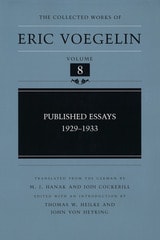
Published Essays, 1929-1933 (CW8)
Eric Voegelin & Edited, Translated, & Intro by Thomas W. Heilke & John von Heyking
University of Missouri Press, 2003
This volume of The Collected Works contains essays published by Eric Voegelin between 1929 and 1933, the period between the publication of his first book, On the Form of the American Mind, and Hitler's rise to power, as well as Voegelin's two books analyzing the explosive race issues posed by National Socialism. The essays herein reflect the intellectual and political tumult of the period and their author's maturing grasp of political reality as he moved away from positivism and Kelsen's "Pure Theory of Law" toward a more refined and open philosophical stance. The heart of this shift is signaled by his emphasis on philosophical anthropology and on the decisive importance of the moral substance basic to political communities.
The topics of the essays are grouped around major themes in sociological theory, political science, and the theory of law. They illuminate the theoretical and practical impact of Voegelin's experiences in America as he increasingly engages European theories of state, especially the social theories of leading French and German scholars. In content, these essays include such pragmatic concerns as American theories of property, economic transactions, due process of law, and Austrian constitutional reforms.
Voegelin also explores the technically complex speculative matters surrounding sovereignty and law, Max Weber's science, and the spiritual form of Europe. He analyzes Kant's understanding of moral duty and the meaning of solidarity as the substance of democratic society. Through these discourses, readers can see how the theme of divine transcendence increasingly finds expression during this crucial early stage of Voegelin's scholarly life. Thus, these studies mark the early path Voegelin took in making his arduous journey from legal scholar to philosophical political scientist. They display his increasingly resolute attention-- against challenges both existential and urgently political--to a growing insight into what it means to be fully human as he struggles toward an eventual philosophy of politics and history sufficient to amplify that noble insight.
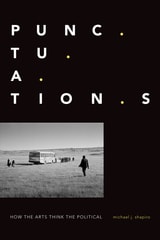
Punctuations
How the Arts Think the PoliticalMichael J. Shapiro
Duke University Press, 2019
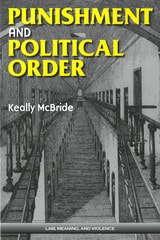
Punishment and Political Order
Keally McBride
University of Michigan Press, 2007
Most of us think of punishment as an ugly display of power. But punishment also tells us something about the ideals and aspirations of a people and their government. How a state punishes reveals whether or not it is confident in its own legitimacy and sovereignty. Punishment and Political Order examines the questions raised by the state’s exercise of punitive power—from what it is about human psychology that desires sanction and order to how the state can administer pain while calling for justice. Keally McBride's book demonstrates punishment's place at the core of political administration and the stated ideals of the polity.
"From start to finish this is a terrific, engaging book. McBride offers a fascinating perspective on punishment, calling attention to its utility in understanding political regimes and their ideals. She succeeds in reminding us of the centrality of punishment in political theory and, at the same time, in providing a framework for understanding contemporary events. I know of no other book that does as much to make the subject of punishment so compelling."
—Austin Sarat, Amherst College
"Punishment and Political Order will be welcome reading for anyone interested in understanding law in society, punishment and political spectacle, or governing through crime control. This is a clear, accessible, and persuasive examination of punishment—as rhetoric and reality. Arguing that punishment is a complex product of the social contract, this book demonstrates the ways in which understanding the symbolic power and violence of the law provides analytical tools for examining the ideological function of prison labor today, as well as the crosscutting and contingent connections between language and identity, legitimation and violence, sovereignty and agency more generally."
—Bill Lyons, Director, Center for Conflict Management, University of Akron
"Philosophical explorations of punishment have often stopped with a theory of responsibility. McBride's book moves well beyond this. It shows that the problem of punishment is a central issue for any coherent theory of the state, and thus that punishment is at the heart of political theory. This is a stunning achievement."
—Malcolm M. Feeley, University of California at Berkeley
Keally McBride is Assistant Professor of Politics at the University of San Francisco.