Results by title
22279 books match the query 'Social Science' and 1104 start with p
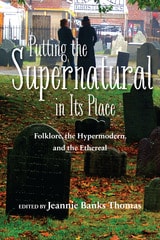
Putting the Supernatural in Its Place
Folklore, the Hypermodern, and the EtherealJeannie B. Thomas
University of Utah Press, 2015
Putting the Supernatural in Its Place explores zombies, vampires, witches, demented nuns, mediums, and ghosts in their natural (and unnatural) habitats while making sense of the current ubiquity of the supernatural on the Internet, in the movies, in tourism, and in places like New Orleans. This unique study of how we locate the supernatural sheds light on why certain sites and their stories captivate us and shows how pondering the supernatural can bring a better understanding of the places we create and inhabit. Each chapter is authored by a noted folklorist who examines the supernatural as it appears “in place.” Among the locales are Salem, Massachusetts; Lily Dale, New York; and Internet fan sites for the Twilight movies and the TV series Buffy the Vampire Slayer. Supernatural places have the potential to alter perceptions of reality—sometimes enchanting, sometimes terrifying, and sometimes even schooling those who experience them. Ultimately, the authors demonstrate that, culturally speaking, the supernatural’s place is important and not trivial.
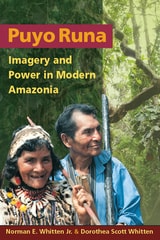
Puyo Runa
Imagery and Power in Modern AmazoniaNorman E. Whitten Jr. and Dorothea Scott Whitten
University of Illinois Press, 2007
The Andean nation of Ecuador derives much of its revenue from petroleum that is extracted from its vast Upper Amazonian rain forest, which is home to ten indigenous nationalities. Norman E. Whitten Jr. and Dorothea Scott Whitten have lived among and studied one such people, the Canelos Quichua, for nearly forty years. In Puyo Runa, they present a trenchant ethnography of history, ecology, imagery, and cosmology to focus on shamans, ceramic artists, myth, ritual, and political engagements. Canelos Quichua are active participants in national politics, including large-scale movements for social justice for Andean and Amazonian people. Puyo Runa offers readers exceptional insight into this cultural world, revealing its intricacies and embedded humanisms.
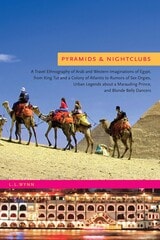
Pyramids and Nightclubs
A Travel Ethnography of Arab and Western Imaginations of Egypt, from King Tut and a Colony of Atlantis to Rumors of Sex Orgies, Urban Legends about a Marauding Prince, and Blonde Belly DancersBy L. L. Wynn
University of Texas Press, 2007
2008 — Leeds Honor Book in Urban Anthropology – Society for Urban, National, and Transnational/Global Anthropology
Living in Egypt at the turn of the millennium, cultural anthropologist L. L. Wynn was struck by the juxtapositions of Western, Gulf Arab, and Egyptian viewpoints she encountered. For some, Egypt is the land of mummies and pharaohs. For others, it is a vortex of decadence, where nightlife promises a chance to salivate over belly dancers and maybe even glimpse a movie star. Offering a new approach to ethnography, Pyramids and Nightclubs examines cross-cultural encounters to bring to light the counterintuitive ways in which Egypt is defined.
Guiding readers on an armchair journey that introduces us to Russian and Australian belly dancers on Nile cruise ships, Egyptian rumors about an Arab prince and his royal entourage, Saudi girls looking for a less restrictive dating scene, and other visitors to this "antique" land, Wynn uses the lens of travel and tourism to depict a fascinating and often surprising version of Egypt, while exploring the concept of stereotype itself. Tracing the history of Western and Arab fascination with Egypt through spurious hunts for lost civilizations and the new economic disparities brought about by the oil industry, Pyramids and Nightclubs ultimately describes the ways in which moments of cultural contact, driven by tourism and labor migration, become eye-opening opportunities for defining self and other.
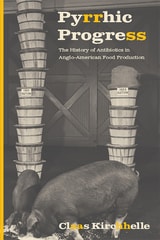
Pyrrhic Progress
The History of Antibiotics in Anglo-American Food ProductionClaas Kirchhelle
Rutgers University Press, 2020
2020 Choice Outstanding Academic Title
Winner of the 2020 Turriano Prize from ICOHTEC
Short-listed and highly commended for the Antibiotic Guardian Award from Public Health England
Long-listed for the Michel Déon Prize from the Royal Irish Academy
Pyrrhic Progress analyses over half a century of antibiotic use, regulation, and resistance in US and British food production. Mass-introduced after 1945, antibiotics helped revolutionize post-war agriculture. Food producers used antibiotics to prevent and treat disease, protect plants, preserve food, and promote animals’ growth. Many soon became dependent on routine antibiotic use to sustain and increase production. The resulting growth of antibiotic infrastructures came at a price. Critics blamed antibiotics for leaving dangerous residues in food, enabling bad animal welfare, and selecting for antimicrobial resistance (AMR) in bacteria, which could no longer be treated with antibiotics. Pyrrhic Progress reconstructs the complicated negotiations that accompanied this process of risk prioritization between consumers, farmers, and regulators on both sides of the Atlantic. Unsurprisingly, solutions differed: while Europeans implemented precautionary antibiotic restrictions to curb AMR, consumer concerns and cost-benefit assessments made US regulators focus on curbing drug residues in food. The result was a growing divergence of antibiotic stewardship and a rise of AMR. Kirchhelle’s comprehensive analysis of evolving non-human antibiotic use and the historical complexities of antibiotic stewardship provides important insights for current debates on the global burden of AMR. This Open Access ebook is available under a CC-BY-NC-ND license, and is supported by a generous grant from Wellcome Trust.