Results by title
2817 books match the query 'Nature' and 111 start with p

Propagation of Pacific Northwest Native Plants
Robin Rose
Oregon State University Press, 1998
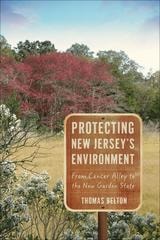
Protecting New Jersey's Environment
From Cancer Alley to the New Garden StateBelton, Thomas
Rutgers University Press, 2011
And you can add even more to the list-ozone depletion, nuclear power, toxic waste, sprawl, racial inequity, brownfields remediation versus environmental justice concerns. Through a series of gripping accounts organized by geographic area, Thomas Belton considers key environmental issues in New Jersey and champions the ways common citizens have sought justice when faced with unseen health threats. Often, as people search for remedies in their neighborhoods, the challenges they face result in what Belton calls bare-knuckles environmental protection, replete with back-room political deals, infighting, criminals, and hapless victims.
With people as its focus, Protecting New Jersey's Environment explores the science underpinning environmental issues and the public policy infighting that goes undocumented behind the scenes and beneath the controversies. Belton demonstrates the ways that scientists, regulators, lobbyists, and politicians interact and offers the public a go-to guide on how to seek environmental protection in practical ways.
Protection of Global Biodiversity
Converging StrategiesLakshman D. Guruswamy and Jeffrey A. McNeely, eds.
Duke University Press, 1998
Although the global community has recently adopted a Convention of Biological Diversity, the agreement sets forth only abstract goals. Contributors to this volume advance the Convention’s initial steps by providing workable solutions that can be implemented regionally, nationally, and locally. The contributors—including natural, social, and political scientists; economists; lawyers; and environmentalists; and decisionmakers in business, agriculture, and government—have united to create a common discourse and to evaluate and propose strategies for halting this alarming loss of biodiversity. In recognizing the diverse aspects of this task—scientific, economic, institutional, moral, and legal—this book presents a new picture of emerging action.
Contributors. S. James Anaya, Gregory Benford, Graciela Chichilnisky, S. Todd Crider, Yvonne Cripps, Robert T. Fraley, Anil K. Gupta, Lakshman D. Guruswamy, G. M. Heal, Brent Hendricks, Robert B. Horsch, Laura L. Jackson, Annie Lovejoy, Ariel E. Lugo, Jeffrey A. McNeely, Brian G. Norton, Elinor Ostrom, Peter H. Raven, John W. Reid, Walter V. Reid, Mark Sagoff, Roger A. Sedgo, R. David Simpson, Ana Sittenfeld, Christopher D. Stone, Gary H. Toenniessen
Public Lands, Public Debates
A Century of ControversyChar Miller, editor
Oregon State University Press, 2012
—Char Miller, from the introduction
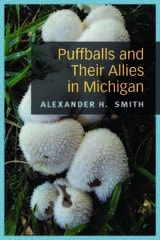
Puffballs and their Allies in Michigan
Alexander Hanchett Smith
University of Michigan Press, 1951
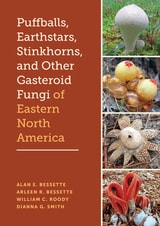
Puffballs, Earthstars, Stinkhorns, and Other Gasteroid Fungi of Eastern North America
Alan E. Bessette, Arleen R. Bessette, William C. Roody, Dianna G. Smith
University of Texas Press, 2025
The first fully illustrated reference guide to gasteroid mushrooms in North America.
Gasteroid fungi are one of the most diverse groups of mushrooms. Unlike the majority of mushrooms that produce spores externally, these unusual fungi produce spores within their fruitbodies. Puffballs, Earthstars, Stinkhorns, and Other Gasteroid Fungi of Eastern North America is the first color-illustrated reference guide for this unique group of fungi in North America.
Providing information for the identification of more than one hundred species, it includes keys based on macroscopic features, detailed species descriptions with both common and scientific names, accurate and beautiful color images, and key identification features. Additionally, the book contains a plethora of useful information about the biology of gasteroid fungi, current taxonomy, mechanisms of spore dispersal, as well as fun facts. A much-needed volume from well-known mycologists Alan and Arleen Bessette, William Roody, and Dianna Smith, this comprehensive book is a must-have for all fungi enthusiasts, from mushroom hunting hobbyists to professional mycologists.
Pure Adulteration
Cheating on Nature in the Age of Manufactured FoodBenjamin R. Cohen
University of Chicago Press, 2019
In the latter nineteenth century, extraordinary changes in food and agriculture gave rise to new tensions in the ways people understood, obtained, trusted, and ate their food. This was the Era of Adulteration, and its concerns have carried forward to today: How could you tell the food you bought was the food you thought you bought? Could something manufactured still be pure? Is it okay to manipulate nature far enough to produce new foods but not so far that you question its safety and health? How do you know where the line is? And who decides?
In Pure Adulteration, Benjamin R. Cohen uses the pure food crusades to provide a captivating window onto the origins of manufactured foods and the perceived problems they wrought. Cohen follows farmers, manufacturers, grocers, hucksters, housewives, politicians, and scientific analysts as they struggled to demarcate and patrol the ever-contingent, always contested border between purity and adulteration, and as, at the end of the nineteenth century, the very notion of a pure food changed.
In the end, there is (and was) no natural, prehuman distinction between pure and adulterated to uncover and enforce; we have to decide. Today’s world is different from that of our nineteenth-century forebears in many ways, but the challenge of policing the difference between acceptable and unacceptable practices remains central to daily decisions about the foods we eat, how we produce them, and what choices we make when buying them.
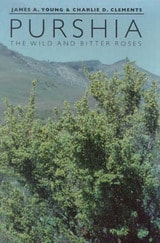
Purshia
The Wild And Bitter RosesJames A. Young
University of Nevada Press, 2002
A useful and complete summary of all the scientific information available on one of the most significant plant species in the western and intermountain regions. Among the plant species of the great Basin rangeland, the Purshia—ancient members of the rose family evolved to survive the aridity and temperature extremes of this harsh region—are one of the most important. This book-length study of this key plant species provides a comprehensive examination of the biology and ecology of the species and region.
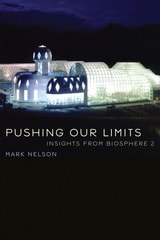
Pushing Our Limits
Insights from Biosphere 2Mark Nelson
University of Arizona Press, 2018
Biosphere 2 helped change public understanding of what our global biosphere is and how it provides for our health and well-being. However, the experiment is often dismissed as a failure, and news outlets at the time focused on interpersonal conflicts and unexpected problems that arose. Delving past the sensationalism, Nelson presents the goals and results of the experiment, addresses the implications of the project for our global situation, and discusses how the project’s challenges and successes can change our thinking about Biosphere 1: the Earth.
Pushing Our Limits offers insights from the project that can help us deal with our global ecological challenges. It also shows the intense and fulfilling connection the biospherians felt with their life support system and how this led to their vigilant attention to its needs.
With current concerns of sustainability and protection of our global biosphere, as well as the challenge of learning how to support life in space and on Mars, the largest, longest, and most important experiment in closed ecosystems is more relevant than ever. The book explores Biosphere 2’s lessons for changing technology to support and not destroy nature and for reconnecting people to a healthy relationship with nature.
Putting the Horse before Descartes
My Life's Work on Behalf of AnimalsAuthored by Bernard Rollin
Temple University Press, 2011
When philosopher Bernard Rollin was six years old, he visited an animal shelter and was told about unwanted dogs being put to sleep. The event shaped his moral outlook and initiated his concern for how animals were treated. In his irreverent memoir, Putting the Horse before Descartes, Rollin provides an account of how he came to educate himself and others about the ethical treatment of animals and work toward improvements in animal welfare.
Rollin describes, in witty, often disarming detail, how he became an outspoken critic of how animals were being treated in veterinary and medical schools as well as in research labs. Putting the Horse before Descartes showcases the passionate animal advocate at his best. He recalls teaching veterinary students about ethical issues. He also recalls face-offs with ranchers and cowboys about branding methods and roping competitions in rodeos. In addition, he describes his work to legally mandate more humane conditions for agricultural and laboratory animals. As public concern about animal welfare and the safety of the food supply heighten, Rollin carries on this work all over the world—in classrooms, lecture halls and legislatures, meetings of agricultural associations and industrial settings, as well as in print.
Putting the Horse before Descartes, ultimately, is more than a memoir. Rollin offers a wide-ranging discussion of ethical issues in many settings and he testifies to the myriad ways that people of good conscience accept their ethical responsibility in regard to animals.
Pyrocene Park
A Journey into the Fire History of Yosemite National ParkStephen J. Pyne
University of Arizona Press, 2023
In the last decade, fire has blasted into public attention. California’s blazes have captured national and global media interest with their drama and urgency. Expand the realm of fire to include the burning of fossil fuels, and the fire story also subsumes climate change. Renowned fire historian Stephen J. Pyne argues that the relationship between fire and humans has become a defining feature of our epoch, and he reveals how Yosemite offers a cameo of how we have replaced an ice age with a fire age: the Pyrocene.
Organized around a backcountry trek to a 50-year experiment in restoring fire, Pyrocene Park describes the 150-year history of fire suppression and management that has led us, in part, to where the park is today. But there is more. Yosemite’s fire story is America’s, and the Earth’s, as it shifts from an ice-informed world to a fire-informed one. Pyrocene Park distills that epic story into a sharp miniature.
Flush with people, ideas, fires, and controversy, Pyrocene Park is a compelling and accessible window into the American fire scene and the future it promises.