Results by title
3258 books match the query 'Performing Arts' and 173 start with p
Plays by French and Francophone Women
A Critical AnthologyChristiane P. Makward and Judith G. Miller, Editors
University of Michigan Press, 1994
Plays by French and Francophone Women presents eight recent plays by contemporary French and francophone women writers. The plays vary in style and form from the satirical to the poetic, from the comedic one-woman show to the potential multi-media esoteric production, and have been written by French, Qué becois, Acadian, and Caribbean francophone writers. The editors have provided informative headnotes to introduce each play, then faithful translations rendered with an ear toward production in English. A general introduction to the volume situates each work within the broader context of contemporary French-language theater by women. The volume also includes an annotated bibliography by Cynthia Running-Johnson of thirty-one additional plays by women in French.
Featured plays and playwrights are The Scent of Sulphur by S. Corinna Bille; When Fairies Thirst by Denise Boucher; Island Memories by Ina Césaire; Warmth: A Bloodsong by Chantal Chawaf; The Goddess Lar or Centuries of Women by Andrée Chedid; The Name of Oedipus: Song of the Forbidden Body by Hélène Cixous; The Table: Womenspeak by Michèle Foucher; and The Rabble by Antonine Maillet.
Plays, Movies, and Critics
Jody McAuliffe, ed.
Duke University Press, 1993
DeLillo's interview play is accompanied in this collection by interviews with theater director Roberta Levitow, Martin Scorsese, and film/theater critic Stanley Kauffmann. Other contributions include a critical look at the current American theater scene, analyses of the place of politics in the careers of G. B. Shaw and Luigi Pirandello, a compelling reading of Chekhov's "The Seagull", a detailed inquiry into the obsessions that energize the works of Sam Shepard, provocative reinterpretations of the films Mean Streets and The Sheltering Sky, and a translation of André Bazin's important piece on theology and film.
Contributors. André Bazin, Robert Brustein, Bert Cardullo, Anthony DeCurtis, Don DeLillo, Jesse Ward Engdhal, Richard Gilman, Jim Hosney, Mame Hunt, Jonathan Kalb, Stanley Kauffmann, Jody McAuliffe, Mary Ann Frese Witt, Jacquelyn Wollman, David Wyatt
Poetry FM
American Poetry and Radio CountercultureLisa Hollenbach
University of Iowa Press, 2023
Lisa Hollenbach traces the history of Pacifica Radio—founded in 1946, the nation’s first listener-supported public radio network—through the 1970s: from the radical pacifists and poets who founded Pacifica after the war; to the San Francisco Renaissance, Beat, and New York poets who helped define the countercultural sound of Pacifica stations KPFA and WBAI in the 1950s and 1960s; to the feminist poets and activists who seized Pacifica’s frequencies in the 1970s. In the poems and recorded broadcasts of writers like Kenneth Rexroth, Jack Spicer, Allen Ginsberg, Amiri Baraka, Audre Lorde, Pat Parker, Bernadette Mayer, and Susan Howe, one finds a recurring ambivalence about the technics and poetics of reception. Through tropes of static noise, censorship, and inaudibility as well as voice, sound, and signal, these radiopoetic works suggest new ways of listening to the sounds and silences of Cold War American culture.

Poetry and Prophecy
The Anthropology of InspirationJohn Leavitt, Editor
University of Michigan Press, 1997
Based on rich ethnographic work in Western and non-Western cultures, the essays represent distinct approaches to the topic, from one person's account of her interactions with a possessing spirit to another's world-spanning statement on prophetic poetics. Each contributor challenges easy assumptions that poetic texts are crafted works, products of skill rather than inspiration, while prophetic speech and writing are best understood as spontaneous performance rather than formal art.
As a whole the collection aims to reorient the anthropological study of possession and oracular experiences toward an awareness of the word, and to draw the attention of literary critics to "inspired" poetry. It will also appeal to readers in performance studies and comparative religion.
Contributors are Marjorie Mandelstam Balzer, James Fernandez, Paul Friedrich, John Leavitt, Dennis Tedlock, Margaret Trawick.
John Harold Leavitt is Professor of Anthropology, University of Montreal.

Point Blank
'Nothing to Declare', 'Operation Wonderland', and 'Roses and Morphine'Edited by Liz Tomlin
Intellect Books, 2007
Point of Sale
Analyzing Media RetailDaniel Herbert
Rutgers University Press, 2020
Points on the Dial
Golden Age Radio beyond the NetworksAlexander Russo
Duke University Press, 2010

Polish Theatre Revisited
Theatre Fans in the Nineteenth CenturyAgata Luksza
University of Iowa Press, 2023
ASTR Barnard Hewitt Award, Finalist
Polish Theatre Revisited explores nineteenth-century Polish theatre through the lens of theatre audiences. Agata Łuksza places special emphasis on the most engaged spectators, known as “theatremaniacs”—from what they wore, to what they bought, to what they ate. Her source material is elusive ephemera from fans’ lives, such as notes scribbled on a weekly list of shows in the Warsaw theatres, collections of theatre postcards, and recipes for sweets named after famous actors.
The fannish behavior of theatremaniacs was usually deemed excessive or in poor taste by people in positions of power, as it clashed with the ongoing embourgeoisement of the theatre and the disciplining of audiences. Nevertheless, the theatre was one of the key areas where early fan cultures emerged, and theatremaniacs indulged in diverse fan practices in opposition to the forces reforming the theatre and its spectatorship.
Politics of Contemporary European Cinema
Mike Wayne
Intellect Books, 1995
Mike Wayne identifies some key themes pertinent to a study of the contemporary cultural and political dynamics of European cinema from the mid-1980's, including the fall of the Berlin wall and the end of the Soviet Empire.
Throughout the book, issues are raised that question European culture and the nature of national cinema, including;
• The cultural relationship with Hollywood;
• Debates over cultural plurality and diversity;
• The disintegration of nation states along the eastern flank;
• Postcolonial travels and the hybridisation of the national formation.

Poor Dancer's Almanac
Managing Life & Work in the Performing ArtsDavid R. White, Lise Friedman, and Tia Tibbitts Levinson, eds.
Duke University Press, 1993
Organized and compiled by Dance Theater Workshop in New York and authored by more than fifty leading professionals in the field, Poor Dancer's Almanac offers in-depth discussions of everything from personal livelihood to professional career development, from medical care, housing, and unemployment insurance to management, touring, and legal issues. Each chapter is followed by an appendix containing extensive and varied listings, giving names and addresses for finding internship programs, videotaping, flooring, grant-writing, and reference publications. Although centered on New York the Almanac includes lists of resources and contacts for many other states—California, Washington D.C, Illinois, Minnesota, North Carolina, Texas, Florida, and Ohio. An entirely new section has been added dealing with health issues and the crisis of AIDS.
In personal anecdotes and essays various performers offer their own insights and stories—both of struggles and of successes—to bring to life the practical realities of working in the arts. We hear from Merce Cunningham, Eric Bogosian, Karen Finley, Paul Zaloom, and Bill T. Jones, among others. Illustrated with original drawings by Janie Geiser, this thoroughly revised and updated edition of the Poor Dancer's Almanac will continue to serve as one of the leading sources for those concerned with managing life and work in the performing arts.
Pop Modernism
Noise and the Reinvention of the EverydayJuan A. Suarez
University of Illinois Press, 2007
Popular Cinema of the Third Reich
By Sabine Hake
University of Texas Press, 2002
Too often dismissed as escapist entertainment or vilified as mass manipulation, popular cinema in the Third Reich was in fact sustained by well-established generic conventions, cultural traditions, aesthetic sensibilities, social practices, and a highly developed star system—not unlike its Hollywood counterpart in the 1930s. This pathfinding study contributes to the ongoing reassessment of Third Reich cinema by examining it as a social, cultural, economic, and political practice that often conflicted with, contradicted, and compromised the intentions of the Propaganda Ministry. Nevertheless, by providing the illusion of a public sphere presumably free of politics, popular cinema helped to sustain the Nazi regime, especially during the war years.
Rather than examining Third Reich cinema through overdetermined categories such as propaganda, ideology, or fascist aesthetics, Sabine Hake concentrates on the constituent elements shared by most popular cinemas: famous stars, directors, and studios; movie audiences and exhibition practices; popular genres and new trends in set design; the reception of foreign films; the role of film criticism; and the representation of women. She pays special attention to the forced coordination of the industry in 1933, the changing demands on cinema during the war years, and the various ways of coming to terms with these filmic legacies after the war. Throughout, Hake's findings underscore the continuities among Weimar, Third Reich, and post-1945 West German cinema. They also emphasize the codevelopment of German and other national cinemas, especially the dominant Hollywood model.

Popular Stories and Promised Lands
Fan Cultures and Symbolic PilgrimagesRoger C. Aden
University of Alabama Press, 2007
A conversation about who we are, where we’ve been, and where we might be going.
Popular Stories and Promised Lands enters a conversation about who we are, where we’ve been, and where we might be going by suggesting that possible answers to those questions can be found in the popular stories we encounter at the movies, on television, in popular magazines, and even on the funny pages.
As countless scholars and popular writers have noted, those of us living in the United States find ourselves at a cultural crossroads. We are increasingly aware that the stories that once permeated life in these United States, stories that tell us that social and economic progress comes from working hard, that everyone has an equal opportunity to experience such progress, do not resonate to the degree they once did. Because many Americans have traditionally defined themselves, others, and their unique sense of place through these stories, we find ourselves displaced socially, economically, politically, and/or culturally.
So, Roger Aden says, we go to places of our own making. Fans of the television series The X-Files return to the Funhouse each week for a dose of frightening fun. Fans of the weekly magazine Sports Illustrated play in the American Elysian Fields where democratic efforts at balancing work and play are valued. Fans of the movie Field of Dreams work as altruistic producers in an alternative garden spot.
Grounded in the author’s own experiences and reinforced by the voices of approximately two hundred additional fans of the four popular stories, this book offers a compelling case for understanding the alleged wasteland of popular culture as a fertile site of individually and communally created sacred places.
Popular Theatre in Political Culture
Britain and Canada in focusEdited by Tim Prentki and Jan Selman
Intellect Books, 1995
Attention is drawn to several key issues including: distinctions between popular and mainstream theatre; the Theatre in Education movement; influence of Theatre for Development from Africa and Asia; popular theatre as an art form, a process of self-empowerment and an instrument of cultural intervention. The book follows an innovative structure, integrating a comparative history of popular theatre with the contributions of current, active popular theatre makers. The co-authors, one British, one Canadian, shape their discourses around these contributions so that the the authentic voices are neither mediated nor distorted. The book is thus designed to appeal both to the theatrical practitioner and to the academic.
Popular Trauma Culture
Selling the Pain of Others in the Mass MediaRothe, Anne
Rutgers University Press, 2011
In Popular Trauma Culture, Anne Rothe argues that American Holocaust discourse has a particular plot structure—characterized by a melodramatic conflict between good and evil and embodied in the core characters of victim/survivor and perpetrator—and that it provides the paradigm for representing personal experiences of pain and suffering in the mass media. The book begins with an analysis of Holocaust clichés, including its political appropriation, the notion of vicarious victimhood, the so-called victim talk rhetoric, and the infusion of the composite survivor figure with Social Darwinism. Readers then explore the embodiment of popular trauma culture in two core mass media genres: daytime TV talk shows and misery memoirs.
Rothe conveys how victimhood and suffering are cast as trauma kitsch on talk shows like Oprah and as trauma camp on modern-day freak shows like Springer. The discussion also encompasses the first scholarly analysis of misery memoirs, the popular literary genre that has been widely critiqued in journalism as pornographic depictions of extreme violence. Currently considered the largest growth sector in book publishing worldwide, many of these works are also fabricated. And since forgeries reflect the cultural entities that are most revered, the book concludes with an examination of fake misery memoirs.
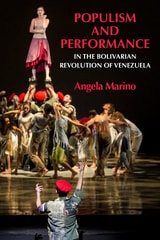
Populism and Performance in the Bolivarian Revolution of Venezuela
Angela Marino
Northwestern University Press, 2018
Based on ethnographic and archival research, Marino focuses on performances of the devil figure, tracing this beloved trickster through religious fiestas, mid-century theater and film, and other media as it both antagonizes and unifies a movement against dictatorship and neoliberalism. She then demonstrates that performance became a vehicle through which cultural producers negotiated boundaries of inclusion and exclusion in ways that overcame the simplistic logic of good versus evil, us versus them. The result is a nuanced insight into the process of building political mobilization out of crisis and through monumental times of change.
The book will interest readers of Latin American politics, cultural studies, political science, and performance studies by providing a vital record of the revolution, with valuable insights into its internal dynamics and lessons towards building a populist movement of the left in contentious times.
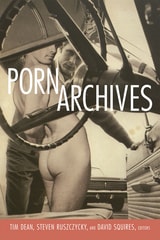
Porn Archives
Tim Dean, Steven Ruszczycky and David Squires, eds.
Duke University Press, 2014
The essays in this collection address the historically and culturally varied interactions between porn and the archive. Topics range from library policies governing access to sexually explicit material to the growing digital archive of "war porn," or eroticized combat imagery; and from same-sex amputee porn to gay black comic book superhero porn. Together the pieces trace pornography as it crosses borders, transforms technologies, consolidates sexual identities, and challenges notions of what counts as legitimate forms of knowledge. The collection concludes with a valuable resource for scholars: a list of pornography archives held by institutions around the world.
Contributors. Jennifer Burns Bright, Eugenie Brinkema, Joseph Bristow, Robert Caserio, Ronan Crowley, Tim Dean, Robert Dewhurst, Lisa Downing, Frances Ferguson, Loren Glass, Harri Kahla, Marcia Klotz, Prabha Manuratne, Mireille Miller-Young, Nguyen Tan Hoang, John Paul Ricco, Steven Ruszczycky, Melissa Schindler, Darieck Scott, Caitlin Shanley, Ramon Soto-Crespo, David Squires, Linda Williams
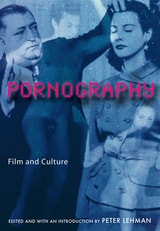
Pornography
Film and CultureLehman, Peter
Rutgers University Press, 2006
In this collection of path-breaking essays, thirteen respected scholars bring critical insights to the reality of porn and what it can tell us about ourselves sexually, culturally, and economically. Moving beyond simplistic feminist and religious positions that cast these films as categorical evils-a collective preserve of sexual perversion, misogyny, pedophilia, and racism-the contributors to this volume raise the bar of the debate and push porn studies into intriguing new territory.
The essays are divided into two sections. The first reprints important debates on the topic and traces the evolution of pornographic film, including comparing its development to that of Hollywood cinema. The second part presents new essays that consider current trends in the field, including pornography's expansion into new technologies.
This book separates this compelling genre from the sensation and shame that have long surrounded and obscured it. It will be of interest to general readers and film scholars alike.
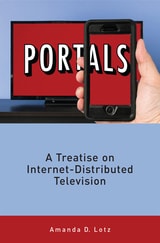
Portals
A Treatise on Internet-Distributed TelevisionAmanda D. Lotz
Michigan Publishing Services, 2017
Portals: A Treatise on Internet-Distributed Television pushes understandings of the business of television to keep pace with the considerable technological change of the last decade. It explains why shows such as Orange is the New Black or Transparent are indeed television despite coming to screens over internet connection and in exchange for a monthly fee. It explores how internet-distributed television is able to do new things – particularly, allow different people to watch different shows chosen from a library of possibilities. This technological ability allows new audience behaviors and new norms in making television.
Portals are the “channels” of internet-distributed television, and Portals identifies how the task of curating a library of shows differs from channels’ task of building a schedule. It explores the business model—subscriber funding—that supports many portals, and identifies the key differences from advertiser or direct purchase. Portals considers what we know about the future of television, even though we remain early in a process of transformative change.
Possessed
Hypnotic Crimes, Corporate Fiction, and the Invention of CinemaStefan Andriopoulos
University of Chicago Press, 2008
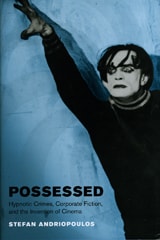
Tracing this preoccupation through the period’s films—as well as its legal, medical, and literary texts—Andriopoulos pays particular attention to the terrifying notion of murder committed against one’s will. He returns us to a time when medical researchers described the hypnotized subject as a medium who could be compelled to carry out violent crimes, and when films like The Cabinet of Dr. Caligari and Dr. Mabuse, the Gambler famously portrayed the hypnotist’s seemingly unlimited power on the movie screen. Juxtaposing these medicolegal and cinematic scenarios with modernist fiction, Andriopoulos also develops an innovative reading of Kafka’s novels, which center on the merging of human and corporate bodies.
Blending theoretical sophistication with scrupulous archival research and insightful film analysis, Possessed adds a new dimension to our understanding of today’s anxieties about the onslaught of visual media and the expanding reach of vast corporations that seem to absorb our own identities.
Post-Catastrophe Film
Cinematic Visions in the Aftermath of DisasterStephen Lee Naish
Intellect Books, 2026
Focusing on the fragile, immediate aftermath of global events, before any new social order or rules for living have formed, Stephen Lee Naish’s latest book introduces an emerging subgenre: post-catastrophe film. Positioned between disaster movies, which depict humanity facing large-scale collapse, and post-apocalyptic films, where new societies and rules have already taken hold, this subgenre captures a unique threshold of survival amid change. Through lively case studies of selected popular films, Naish not only offers close readings of cinematic narratives but also explores deeper themes that emerge in the aftermath of disaster, including the role of artificial intelligence and cyborgs, cosmic survival and colonization, and the tensions between individual isolation and life with others. Ultimately, Naish shows how post-catastrophe films speak to our present reality.
In an age shaped by pandemics, climate crisis, and the uncertainties of postmodernity, cinema persists as a resilient mythmaking machine—mapping scenarios of global destruction while offering anxious viewers ways to envision alternative modes of being before a true “post-catastrophe era” arrives. Written in an engaging style and grounded in accessible examples from popular films, this book appeals to scholars, film enthusiasts, and anyone seeking to better understand our uncertain times.
Post-Communist Malaise
Cinematic Responses to European IntegrationZoran Samardzija
Rutgers University Press, 2020
Post-Theory
Reconstructing Film StudiesEdited by David Bordwell and Noël Carroll
University of Wisconsin Press, 1996
Post-Theory offers fresh directions for understanding film, presenting new essays by twenty-seven scholars on topics as diverse as film scores, audience response, and the national film industries of Russia, Scandinavia, the U.S., and Japan. They use historical, philosophical, psychological, and feminist methods to tackle such basic issues as: What goes on when viewers perceive a film? How do filmmakers exploit conventions? How do movies create illusions? How does a film arouse emotion? Bordwell and Carroll have given space not only to distinguished film scholars but to non-film specialists as well, ensuring a wide variety of opinions and ideas on virtually every topic on the current agenda of film studies. Full of stimulating essays published here for the first time, Post-Theory promises to redefine the study of cinema.
Postcinematic Vision
The Coevolution of Moving-Image Media and the SpectatorRoger F. Cook
University of Minnesota Press, 2020
A study of how film has continually intervened in our sense of perception, with far-ranging insights into the current state of lived experience
How has cinema transformed our senses, and how does it continue to do so? Positing film as a stage in the long coevolution of human consciousness and visual technology, Postcinematic Vision offer a fresh perspective on the history of film while providing startling new insights into the so-called divide between cinematic and digital media.
Starting with the argument that film viewing has long altered neural circuitry in our brains, Roger F. Cook proceeds to reevaluate film’s origins, as well as its merger with digital imaging in the 1990s. His animating argument is that film has continually altered the relation between media and human perception, challenging the visual nature of modern culture in favor of a more unified, pan-sensual way of perceiving. Through this approach, he makes original contributions to our understanding of how mediation is altering lived experience.
Along the way, Cook provides important reevaluations of well-known figures such as Franz Kafka, closely reading cinematic passages in the great author’s work; he reassesses the conventional wisdom that Marshall McLuhan was a technological determinist; and he lodges an original new reading of The Matrix. Full of provocative and far-reaching ideas, Postcinematic Vision is a powerful work that helps us see old concepts anew while providing new ideas for future investigation.
Postfeminist War
Women in the Media-Military-Industrial ComplexMary Douglas Vavrus
Rutgers University Press, 2019

Postmodern Sophistications
Philosophy, Architecture, and TraditionDavid Kolb
University of Chicago Press, 1990
Postmodern Theatric(k)s
Monologue in Contemporary American DramaDeborah Geis
University of Michigan Press, 1993
Postmodernism, or, The Cultural Logic of Late Capitalism
Fredric Jameson
Duke University Press, 1992
Poverty and Antitheatricality
Form and Formlessness in Latin American Literature, Art, and TheoryStephen Buttes
Rutgers University Press, 2025
Poverty and Charity in Early Modern Theater and Performance
Robert Henke
University of Iowa Press, 2015
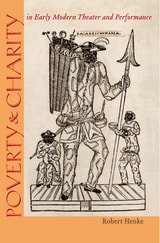
The actor-based theatre and performance traditions examined in this study, which persistently explore felt connections between the itinerant actor and the vagabond beggar, evoke the poor through complex and variegated forms of imagination, thought, and feeling. Early modern theatre does not simply reflect the social ills of hunger, poverty, and degradation, but works them through the forms of poverty, involving displacement, condensation, exaggeration, projection, fictionalization, and marginalization. As the critical mass of medieval charity was put into question, the beggar-almsgiver encounter became more like a performance. But it was not a performance whose script was prewritten as the inevitable exposure of the dissembling beggar. Just as people’s attitudes toward the poor could rapidly change from skepticism to sympathy during famines and times of acute need, fictions of performance such as Edgar’s dazzling impersonation of a mad beggar in Shakespeare’s King Lear could prompt responses of sympathy and even radical calls for economic redistribution.
Power Plays
Wayang Golek Puppet Theater of West JavaAndrew N. Weintraub
Ohio University Press, 2004
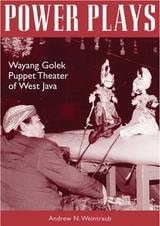
Using interviews with performers, musical transcriptions, translations of narrative and song texts, and archival materials, author Andrew N. Weintraub analyzes the shifting and flexible nature of a set of performance practices called Padalangan, the art of the puppeteer. He focuses on “superstar” performers and the musical troupes that dominated wayang golek during the New Order political regime of former president Suharto (1966-98) and the ensuing three years of the post-Suharto period. Studies of actual performances illuminate stylistic and formal elements and situate wayang golek as a social process in Sundanese culture and society. Power Plays includes an interactive multimedia CD-ROM of wayang golek.
Power Plays shows how meanings about identity, citizenship, and community are produced through theater, music, language, and discourse. While based in ethnographic theory and methods, this book is at the center of a new synthesis emerging among ethnomusicology, anthropology, and cultural studies. Its cross-disciplinary approach will inspire researchers studying similar struggles over cultural authority and popular representation in culture and the performing arts.
Practising the Real on the Contemporary Stage
José Antonio Sánchez
Intellect Books, 2014
Pragmatic Liberation and the Politics of Puerto Rican Diasporic Drama
Jon D. Rossini
University of Michigan Press, 2024
2025 ATHE Outstanding Book Award Finalist
- 2025 ATDS John W. Frick Book Award Finalist
- 2025 MLA Prize in U.S. Latina and Latino and Chicana and Chicano Literary and Cultural Studies Honorable Mention
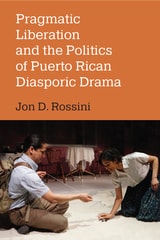
Pragmatic Liberation and the Politics of Puerto Rican Diasporic Drama explores the work of a unique group of playwrights—Puerto Rican dramatists writing in the United States—who offer a model of political engagement. As members of the Puerto Rican diaspora, they have a heightened awareness of the systematic discrimination and the colonial citizenship created by Puerto Rico’s territorial status. Pragmatic Liberation analyzes the work of established playwrights as well as work that has previously received little attention in the world of theater studies, including René Marqués’s Palm Sunday. The book demonstrates the strategies these playwrights use to model a nuanced way of moving toward liberation while being sensitive to the potential impact these actions might have on those closest to us. This is a crucially important model that needs more attention in our currently polarized political moment.
Preaching to Convert
Evangelical Outreach and Performance Activism in a Secular AgeJohn Fletcher
University of Michigan Press, 2015
The book positions evangelicals as a diverse, complicated group confronting the loss of conservative Christianity’s default status in 21st-century U.S. culture. In the face of an increasingly secular age, evangelicals have been reassessing models of outreach. In acts like handing out Bible tracts to strangers on the street or going door-to-door with a Bible in hand, in elaborately staged horror-themed morality plays or multimillion-dollar creationist discovery centers, in megachurch services beamed to dozens of satellite campuses, and in controversial “ex-gay” ministries striving to return gays and lesbians to the straight and narrow, evangelicals are redefining what it means to be deeply committed in a pluralist world. The book’s engaging style and careful argumentation make it accessible and appealing to scholars and students across a range of fields.
Precarious Forms
Performing Utopia in the Neoliberal AmericasCandice Amich
Northwestern University Press, 2020
The poets and artists surveyed in Precarious Forms enact gestures of solidarity and mutual care at sites of neoliberal dispossession. In her analysis of poems, body art, and multimedia installations that illuminate the persistence of a radical utopian imaginary in the Americas, Amich engages critical debates in performance studies, Latin American cultural studies, literature, and art history.
Precarious Intimacies
The Politics of Touch in Contemporary Western European CinemaMaria Stehle and Beverly Weber
Northwestern University Press, 2020
Twenty-first-century Europe is undergoing dramatic political and economic transformations that produce new forms of transnational contact as well as new regimes of exclusion and economic precarity. These political and economic shifts both circumscribe and enable new possibilities for intimacy. Many European films of the last two decades depict experiences of political and economic vulnerability in narratives of precarious intimacies. In these films, stories of intimacy, sex, love, and friendship are embedded in violence and exclusion, but, as Maria Stehle and Beverly Weber show, the politics of touch and connection also offers avenues to theorize forms of attention and affection that challenge exclusive notions of race, citizenship, and belonging.
Precarious Intimacies examines the aesthetic strategies that respond to this tension and proposes a politics of interpretation that identifies the potential and possibility of intimacy.
Precarious Secrets
A History of the Latin American Political ThrillerFabricio Tocco
University of Texas Press, 2025
An exploration of the political thriller genre and its context in Latin American politics and entertainment.
For the past five decades, a distinctive type of political thriller has been steadily developing in Latin America. Precarious Secrets is a panoramic overview of the genre in the hands of renowned writers and filmmakers from Argentina, Mexico, Chile, and Brazil, as well as lesser-known Peruvian, Uruguayan and Paraguayan artists for whom the style has been a vehicle for pungent narratives shot through with menace and conspiracy.
Fabricio Tocco explores the genre’s unique role in Latin American entertainment and activism. Precarious Secrets traces the evolutions of the Latin American political thriller from its emergence in the 1970s, through the silence imposed by dictatorships and the genre’s resurgence after the Cold War. The political thriller has dramatized the region’s turbulent past, through assassinations, coups, mass killings, revolutions and the search of desaparecidos by human rights organizations. In the process, Tocco isolates the Latin American political thriller’s particular grammar of secrecy. In the Hollywood thriller, revealing secrets involves high stakes and transformative consequences. In Latin American political thrillers, by contrast, secrets produce only more precarity—moral ambiguity as unsettling as it is unshakeable.

Prepare to Scare
How to tell scary storiesElizabeth Ellis
Parkhurst Brothers, Inc., 2021

Prescription TV
Therapeutic Discourse in the Hospital and at HomeJoy V. Fuqua
Duke University Press, 2012
Presence and Desire
Essays on Gender, Sexuality, PerformanceJill Dolan
University of Michigan Press, 1993
This book critically bridges feminist theory and theatrical practice. Dolan examines how performance can subvert normative constructs of gender and sexuality. The collection evaluates mainstream theater, academic stages, subcultural venues, and performance in daily life. It centers sexuality as a primary analytical framework to explore queer visibility and cultural representation. It bridges contemporary feminist theory, poststructuralism, and theatrical practice and places sexuality at the center of its analytical framework to explore how theatrical representation can subvert normative constructs of gender and desire. Dolan evaluates a vast spectrum of performance spaces—ranging from mainstream professional and academic stages to subcultural venues, pornography, and everyday social interactions—to champion queer visibility and claim recognition for women's bodies. Ultimately, the volume functions as a foundational text in performance studies and LGBTQ+ cultural criticism, demonstrating how deliberate theatrical strategies can provoke American culture to actively dismantle and reimagine its traditional social relations
Presence and Resistance
Postmodernism and Cultural Politics in Contemporary American PerformancePhilip Auslander
University of Michigan Press, 1994
Presidential Libraries as Performance
Curating American Character from Herbert Hoover to George W. BushJodi Kanter
Southern Illinois University Press, 2016
Kanter considers the moments in the presidents’ lives the museums choose to interpret, and not to interpret, and how the libraries approach common subjects in the presidential museum narrative—the presidents’ early years in relation to cultural ideals, the libraries’ representations of presidential failures, personal and political, and the question of presidential legacy. Identifying the limited number of strategies the libraries currently use to represent the diversity of the American experience and American character, Kanter offers concrete suggestions for reinventing and reshaping the practices of museum professionals and visitors within the walls of these institutions.
Presidential museums can tell us important things about the relationships between performance and politics, entertainment and history, and leaders and the people they lead. Kanter demonstrates how the presidential libraries generate normative narratives about individual presidents, historical events, and what it means to be an American.
Prestige Television
Cultural and Artistic Value in Twenty-First-Century AmericaSeth Friedman
Rutgers University Press, 2023
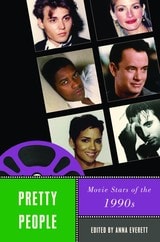
Pretty People
Movie Stars of the 1990sEverett, Anna
Rutgers University Press, 2012
In the 1990s, American civil society got upended and reordered as many social, cultural, political, and economic institutions were changed forever. Pretty People examines a wide range of Hollywood icons who reflect how stardom in that decade was transformed as the nation itself was signaling significant changes to familiar ideas about gender, race, ethnicity, age, class, sexuality, and nationality.
Such actors as Denzel Washington, Andy Garcia, Halle Berry, Angela Bassett, Will Smith, Jennifer Lopez, and Antonio Banderas became bona fide movie stars who carried major films to amazing box-office success. Five of the decade’s top ten films were opened by three women—Julia Roberts, Jodie Foster, and Whoopi Goldberg. “Chick flick” entered the lexicon as Leonardo DiCaprio became the “King of the World,” ushering in the cult of the mega celebrity. Tom Hanks and Tom Cruise defined screen masculinity as stark contrasts between “the regular guy” and “the intense guy” while the roles of Michael Douglas exemplified the endangered “Average White Male.” A fascinating composite portrait of 1990s Hollywood and its stars, this collection marks the changes to stardom and society at century’s end.
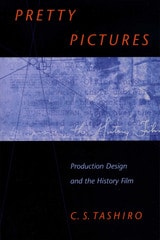
Pretty Pictures
Production Design and the History FilmBy C. S. Tashiro
University of Texas Press, 1998
Theories of film have traditionally dealt with either narrative or industrial issues, with the consequence that the physical content of the graphic frame has often been ignored or relegated to the sidelines. By contrast, C. S. Tashiro foregrounds the visual aspect of cinema in this book, drawing on his experiences as a designer and filmmaker, as well as on contemporary theory, to show how production design can support or contradict narrative structure, or exist in an entirely parallel realm of meaning.
Tashiro looks at cinematic production design from a broadly interdisciplinary perspective, encompassing art and architecture theory, audience reception, narrative theory, and phenomenology, to arrive at a more encompassing definition of the process. He builds his argument around studies of several prominent history films, since design is central to historical representation, and explores the most pertinent issues raised by the topic, particularly commodity consumption. In his conclusion, he also offers possible solutions to some of the social problems raised by design.
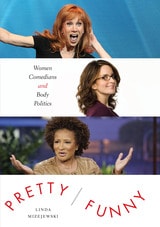
Pretty/Funny
Women Comedians and Body PoliticsBy Linda Mizejewski
University of Texas Press, 2014
Women in comedy have traditionally been pegged as either “pretty” or “funny.” Attractive actresses with good comic timing such as Katherine Hepburn, Lucille Ball, and Julia Roberts have always gotten plum roles as the heroines of romantic comedies and television sitcoms. But fewer women who write and perform their own comedy have become stars, and, most often, they’ve been successful because they were willing to be funny-looking, from Fanny Brice and Phyllis Diller to Lily Tomlin and Carol Burnett. In this pretty-versus-funny history, women writer-comedians—no matter what they look like—have ended up on the other side of “pretty,” enabling them to make it the topic and butt of the joke, the ideal that is exposed as funny.
Pretty/Funny focuses on Kathy Griffin, Tina Fey, Sarah Silverman, Margaret Cho, Wanda Sykes, and Ellen DeGeneres, the groundbreaking women comics who flout the pretty-versus-funny dynamic by targeting glamour, postfeminist girliness, the Hollywood A-list, and feminine whiteness with their wit and biting satire. Linda Mizejewski demonstrates that while these comics don’t all identify as feminists or take politically correct positions, their work on gender, sexuality, and race has a political impact. The first major study of women and humor in twenty years, Pretty/Funny makes a convincing case that women’s comedy has become a prime site for feminism to speak, talk back, and be contested in the twenty-first century.
Principles of Adaptation for Film and Television
By Ben Brady
University of Texas Press, 1994
From All Quiet on the Western Front, the Academy Award-winning "Best Picture" of 1929-1930, to Dances with Wolves, the 1991 winner, many of Hollywood's most popular and enduring movies have been screen adaptations of written work, including novels, stories, and plays. In this practical, hands-on guide, veteran TV and screenwriter Ben Brady unlocks the secrets of the adaptation process, showing aspiring writers and writing teachers how to turn any kind of narrative material into workable, salable screenplays for film and television.
Step by step, Brady guides novice screenwriters to the completion of a professional screenplay. He begins with an incisive discussion of how to evaluate a written work's potential as a screenplay. Then he discusses each step of the writing process, showing how to identify the plot and premise of the play, develop character, treatment, and dialogue, and handle camera language and format. Brady illustrates each of these points by developing and writing a complete screenplay of the novel Claire Serrat within the text.
With these tools, beginning screenwriters can draw on the rich resources of words in print to create exciting screenplays for film and television. Written in vivid, entertaining prose, the book will be equally useful in the classroom or at the kitchen table, wherever enterprising writers ply their craft.
Print, Manuscript, and Performance
THE CHANGING RELATIONS OF THE MEDIA IN EARLY MODERN ENGLANDArthur F. Marotti and Michael D. Bristol
The Ohio State University Press, 2000
Although canonical literary writers such as Shakespeare, Jonson, and Rochester are discussed, the field of writing examined is a broad one, embracing political speeches, coterie manuscript poetry, popular pamphlets, parochially targeted martyrdom accounts, and news reports. Setting writers, audiences, and texts in their specific historical context, the contributors focus on a period in early modern England, from the late sixteenth through the late seventeenth century, when the shift from orality and manuscript communication to print was part of large-scale cultural change. Arthur F. Marotti’s and Michael D. Bristol’s introduction analyzes some of the sociocultural issues implicit in the collection and relates the essays to contemporary work in textual studies, bibliography, and publication history.
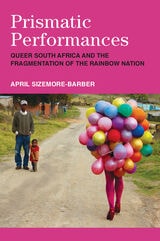
Prismatic Performances
Queer South Africa and the Fragmentation of the Rainbow NationApril Sizemore-Barber
University of Michigan Press, 2021
Listed as one of Lambda Literary's Most Anticipated LGBTQ Books for September 2020
At his 1994 inauguration, South African president Nelson Mandela announced the “Rainbow Nation, at peace with itself and the world.” This national rainbow notably extended beyond the bounds of racial coexistence and reconciliation to include “sexual orientation” as a protected category in the Bill of Rights. Yet despite the promise of equality and dignity, the new government’s alliance with neoliberal interests and the devastation of the AIDS epidemic left South Africa an increasingly unequal society.
Prismatic Performances focuses on the queer embodiments that both reveal and animate the gaps between South Africa’s self-image and its lived realities. It argues that performance has become a key location where contradictions inherent to South Africa’s post-apartheid identity are negotiated. The book spans 30 years of cultural production and numerous social locations and includes: a team of black lesbian soccer players who reveal and redefine the gendered and sexed limitations of racialized “Africanness;” white gay performers who use drag and gender subversion to work through questions of racial and societal transformation; black artists across the arts who have developed aesthetics that place on display their audiences’ complicity in the problem of sexual violence; and a primarily heterosexual panAfrican online soap opera fandom community who, by combining new virtual spaces with old melodramatic tropes allow for extended deliberation and new paradigms through which African same-sex relationships are acceptable.
Prismatic Performances contends that when explicitly queer bodies emerge onto public stages, audiences are made intimately aware of their own bodies’ identifications and desires. As the sheen of the New South Africa began to fade, these performances revealed the inadequacy and, indeed, the violence, of the Rainbow Nation as an aspirational metaphor. Simultaneously they created space for imagining new radical configurations of belonging.
Private Screenings
Television and the Female ConsumerLynn Spigel
University of Minnesota Press, 1992