Results by title
3748 books match the query 'Europe' and 180 start with p

Prelude to Protectorate in Morocco
Pre-Colonial Protest and Resistance, 1860-1912Edmund Burke, III
University of Chicago Press, 1977

Present Tensions
European Writers on Overcoming DictatorshipsKristina Kaiserová
Central European University Press, 2009

Press Freedom and Pluralism in Europe
Concepts and ConditionsEdited by Andrea Czepek, Melanie Hellwig and Eva Nowak
Intellect Books, 2009
We assume that freedom of the press is guaranteed in a democratic society. But, in Press Freedom and Pluralism in Europe, researchers from twelve countries reveal that it is all too frequently a freedom that is taken for granted. In turn, they examine media systems throughout Europe and report on their conditions for independence and pluralism. Contributors to this volume discuss press freedom and diversity through several case studies involving such countries as the Baltics, Bulgaria, Poland, Romania, Finland, France, Germany, Austria, Italy, Spain, and the United Kingdom. This volume provides a critical basis from which to evaluate media freedom in the United States, and will consequently be of interest to scholars of media and communication studies.
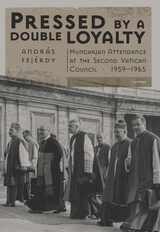
Pressed by a Double Loyalty
Hungarian Attendance at the Second Vatican Council, 1959-1965András Fejérdy
Central European University Press, 2017
Priceless Markets
The Political Economy of Credit in Paris, 1660-1870Philip T. Hoffman, Gilles Postel-Vinay, and Jean-Laurent Rosenthal
University of Chicago Press, 2000
The implications for historians and economists are substantial. The role of notaries operating in Paris that Priceless Markets uncovers has never before been recognized. In the wake of this pathbreaking new study, historians will also have to rethink the origins of the French Revolution. As the authors show, the crisis of 1787-88 did not simply ignite revolt; it was intimately bound up in an economic struggle that reached far back into the eighteenth century, and continued well into the 1800s.

Primed for Violence
Murder, Antisemitism, and Democratic Politics in Interwar PolandPaul Brykczynski
University of Wisconsin Press, 2017
As Paul Brykczynski tells this gripping story, he explores the complex role of antisemitism, nationalism, and violence in Polish politics between the two World Wars. Though focusing on Poland, the book sheds light on the rise of the antisemitic right in Europe and beyond, and on the impact of violence on political culture and discourse.

Prince of Tricksters
The Incredible True Story of Netley Lucas, Gentleman CrookMatt Houlbrook
University of Chicago Press, 2016
The lives of Netley Lucas are as flamboyant as they are unlikely. In Prince of Tricksters, Matt Houlbrook picks up the threads of Lucas’s colorful lies and lives. Interweaving crime writing and court records, letters and life-writing, Houlbrook tells Lucas’s fascinating story and, in the process, provides a panoramic view of the 1920s and ’30s. In the restless times after the Great War, the gentlemanly trickster was an exemplary figure, whose tall tales and bogus biographies exposed the everyday difficulties of knowing who and what to trust. Tracing how Lucas both evoked and unsettled the world through which he moved, Houlbrook shows how he prompted a pervasive crisis of confidence that encompassed British society, culture, and politics.
Taking readers on a romp through Britain, North America, and eventually into Africa, Houlbrook confronts readers with the limits of our knowledge of the past and challenges us to think anew about what history is and how it might be made differently.

Printing and Prophecy
Prognostication and Media Change 1450-1550Jonathan Green
University of Michigan Press, 2011
Printing and Prophecy: Prognostication and Media Change 1450-1550 examines prognostic traditions and late medieval prophetic texts in the first century of printing and their effect on the new medium of print. The many prophetic and prognostic works that followed Europe's earliest known printed book---not the Gutenberg Bible, but the Sibyl's Prophecy, printed by Gutenberg two years earlier and known today only from a single page---over the next century were perennial best sellers for many printers, and they provide the modern observer with a unique way to study the history and inner workings of the print medium. The very popularity of these works, often published as affordable booklets, raised fears of social unrest. Printers therefore had to meet customer demand while at the same time channeling readers' reactions along approved paths. Authors were packaged---and packaged themselves---in word and image to respond to the tension, while leading figures of early modern culture such as Paracelsus, Martin Luther, and Sebastian Brant used printed prophecies for their own purposes in a rapidly changing society.
Based on a wide reading of many sources, Printing and Prophecy contributes to the study of early modern literature, including how print changed the relationship among authors, readers, and texts. The prophetic and astrological texts the book examines document changes in early modern society that are particularly relevant to German studies and are key texts for understanding the development of science, religion, and popular culture in the early modern period. By combining the methods of cultural studies and book history, this volume brings a new perspective to the study of Gutenberg and later printers.

Prisons of Poverty
Loïc Wacquant
University of Minnesota Press, 2009
An international best seller dissects the globalization of penal policies “made in U.S.A.” as part of the spread of neoliberalism
In the early 1990s, Mayor Rudolph Giuliani launched a zero-tolerance campaign aimed at street disorders and petty offenders, incarnated in the infamous “squeegee man.” New York City soon became a planetary showcase for an aggressive approach to law enforcement that, despite its extravagant costs and the absence of connection to the crime drop, came to be admired and imitated by other cities in the United States, Western Europe, and Latin America.
In Prisons of Poverty, Loïc Wacquant tracks the incubation and internationalization of the slogans, theories, and measures composing this new punitive “common sense,” fashioned to curb mounting urban inequality and marginality in the metropolis. He finds that a network of Reagan-era conservative think tanks (led by the Manhattan Institute) forged them as weapons in their crusade to dismantle the welfare state and, in effect, to criminalize poverty. He traces their import and export through the agency of the media and the pro-market policy institutes that have mushroomed across the European Union, particularly in Tony Blair’s Britain. And he shows how academics helped smuggle U.S. techniques of penalization into their countries by dressing them up in scholarly garb.Now available in English for the first time in an expanded edition, Prisons of Poverty reveals how the Washington consensus on economic deregulation and welfare retrenchment was extended to encompass punitive crime control because the invisible hand of the market necessitates and calls forth the iron fist of the penal state.
Privatization in Eastern Europe
Is the State Withering Away?Roman Frydman
Central European University Press, 1994
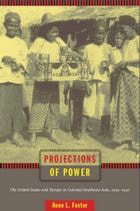
Projections of Power
The United States and Europe in Colonial Southeast Asia, 1919-1941Anne L. Foster
Duke University Press, 2010
Promises of 1968
Crisis, Illusion and UtopiaVladimir Tismaneanu
Central European University Press, 2011
Promoting the Saints
Cults and Their Contexts from Late Antiquity until the Early Modern PeriodOttó Gecser
Central European University Press, 2010
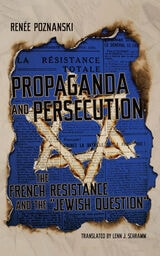
Propaganda and Persecution
Renée Poznanski
University of Wisconsin Press, 2024
Poznanski argues that Jews in France suffered a double persecution: one led by the Vichy government, the other imposed by the Nazis. Marginalization and exclusion soon led to internment and deportation to terrifying places. Meanwhile, a propaganda war developed between the Resistance and the official voice of Vichy. Poznanski draws on a breathtaking array of sources, especially clandestine publications and French-language BBC transmissions, to show how the Resistance both fought and accommodated the deeply entrenched antisemitism within French society. Her close readings of propaganda texts against public opinions probe ambiguities and silences in Resistance writing about the persecution of the Jews and, in parallel, the numerous and detailed denunciations that could be read in the Jewish clandestine press. This extensive synthesis extends to the post-Liberation period, during which the ongoing persecution of Jews in Europe and North Africa would be portrayed as secondary to the suffering of the nation.
The winner of the 2009 Henri Hertz Prize by the Chancellerie des Universités de Paris, Sorbonne, Propaganda and Persecution makes major contributions to the study of the Resistance and of antisemitism. Lenn J. Schramm’s English translation brings Poznanski’s dynamic prose to life.

Properties of Modernity
Romantic Spain, Modern Europe, and the Legacies of EmpireMichael Iarocci
Vanderbilt University Press, 2006
Through a close study of Cadalso, Saavedra, and Larra, Iarocci argues that Spanish writers were intensely concerned with the same issues taken up by more famous Romantics and that the ways in which they address these issues provides us with a richer notion, not only of Spain, but of all of Europe.

Prophets in Their Own Country
Living Saints and the Making of Sainthood in the Later Middle AgesAviad M. Kleinberg
University of Chicago Press, 1992
"[A] fascinating and sometimes iconoclastic view of saints in the medieval period." —Sandra R. O'Neal, Theological Studies
"[An] important new book. . . . [And] an excellent piece of scholarship." —Diane L. Mockridge, Method & Theory in the Study of Religion
"[Kleinberg's] style is clear and accessible and his observations insightful; the book is a pleasure to read." —Veronica Lawrence, Theological Book Review
"Original and interesting. . . . [Kleinberg] has made a major contribution." —Anne L. Clark, American Historical Review
"Kleinberg's concern is not just with perceptions of sanctity, but, refreshingly, with what actually happened: and he is especially good on the conflict of the two. . . . [This] is not just a book but a way of thought, and one that promises interesting conversations at all levels from the church porch to the tutorial and the academic conference." —Helen Cooper, Times Literary Supplement

Prosdocimo de' Beldomandi's Musica Plana and Musica Speculativa
Prosdocimo de Beldomandi. Translated by Jan Herlinger.
University of Illinois Press, 2007
Available in English for the first time, Prosdocimo's Tractatus plane musice (1412) and Tractatus musice speculative (1425) are exemplary texts for understanding the high sophistication of music theory in the early fifteenth century. Known for considering music as a science based on demonstrable mathematical principles, Prosdocimo praises Marchetto for his theory of plainchant but criticizes his influential Lucidarium for its heterodox mathematics. In dismissing Marchetto as a “mere performer,” Prosdocimo takes up matters as broad as the nature and definition of music and as precise as counterpoint, tuning, and ecclesiastical modes. The treatises also reveal much about Prosdocimo’s understanding of plainchant; his work with Euclid's Elementa; and his familiarity with the music theory of Boethius, Macrobius, and Johannes de Muris. A foremost authority on Italian music theory of the Middle Ages and early Renaissance, Jan Herlinger consults manuscripts from Bologna, Cremona, and Lucca in preparing these valuable first critical editions.
Prostitution in Medieval Society
The History of an Urban Institution in LanguedocLeah Lydia Otis
University of Chicago Press, 1985
– Catharine R. Stimpson

Prostitution, Repentance and Social Welfare in Renaissance Florence
Gillian Jack
University of London Press, 2026
A study of the survival of Sant'Elisabetta delle Convertite, the Florence monastery for repentant prostitutes, during the long Renaissance.
From the fourteenth century, prostitutes in Florence were encouraged to leave their profession and spend their lives in repentance at the monastery of Sant’Elisabetta delle Convertite. Many did over its five hundred years, and the monastery was soon one of the most populous in Florence. As the longest enduring monastery for repentant prostitutes, Sant’Elisabetta is an integral part of the history of nuns and of prostitution in the medieval and early modern periods, and it had an important place in municipal responses to social welfare and civic morality. It is only by uncovering successive governments’ involvement in Sant'Elisabetta that we can fully understand how the city attempted to manage both prostitution and welfare.
This is the first book-length study to put Sant’Elisabetta into its full historical context. It establishes the place of this often-overlooked nunnery in the wider world of medieval penitential piety, renaissance charity, and early modern social welfare, exploring the myriad ways in which the Florentine authorities attempted to stabilize Sant’Elisabetta’s finances and ensure its continued survival. Drawing on diverse archival sources, the book’s long chronological scope offers valuable insights into the broader histories of the relationship between the Florentine state and monastic institutions, public policy, welfare, and women in the long Renaissance.
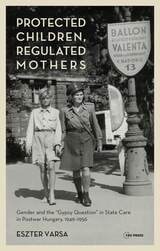
Protected Children, Regulated Mothers
Gender and the "Gypsy Question" in State Care in Postwar Hungary, 1949–1956Eszter Varsa
Central European University Press, 2021
Protected Children, Regulated Mothers examines child protection in Stalinist Hungary as a part of twentieth-century East Central, Eastern, and Southeastern European history. Across the communist bloc, the prewar foster care system was increasingly replaced after 1945 by institutionalization in residential homes. This shift was often interpreted as a further attempt to establish totalitarian control. However, this study—based on hundreds of children's case files and interviews with institution leaders, teachers, and people formerly in state care—provides a new perspective. Rather than being merely a tool of political repression, state care in postwar Hungary was often shaped by the efforts of policy actors and educators to address the myriad of problems engendered by the social and economic transformations that emerged after World War II. This response built on, rather than broke with, earlier models of reform and reformatory education. Yet child protection went beyond safeguarding and educating children; it also focused on parents, particularly lone mothers, regulating not only their entrance to paid work but also their sexuality. In so doing, children's homes both reinforced and changed existing cultural and social patterns, whether about gendered division of work or the assimilation of minorities. Indeed, a major finding of the book is that state socialist child protection continued a centuries-long national project of seeking a “solution to the Gypsy question,” rooted in efforts to eliminate the perceived “workshyness” of Roma.

Protecting Women
Labor Legislation in Europe, the United States, and Australia, 1880-1920Edited by Ulla Wikander, Alice Kessler-Harris, and Jane Lewis
University of Illinois Press, 1995

Protecting the Empire’s Frontier
Officers of the 18th (Royal Irish) Regiment of Foot during Its North American Service, 1767–1776Steven M. Baule
Ohio University Press, 2013
Protecting the Empire’s Frontier tells stories of the roughly eighty officers who served in the 18th (Royal Irish) Regiment of Foot, which served British interests in America during the crucial period from 1767 through 1776. The Royal Irish was one of the most wide-ranging regiments in America, with companies serving on the Illinois frontier, at Fort Pitt, and in Boston, New York, and Philadelphia, with some companies taken as far afield as Florida, Spanish Louisiana, and present-day Maine. When the regiment was returned to England in 1776, some of the officers remained in America on staff assignments. Others joined provincial regiments, and a few joined the American revolutionary army, taking up arms against their king and former colleagues.
Using a wide range of archival resources previously untapped by scholars, the text goes beyond just these officers’ service in the regiment and tells the story of the men who included governors, a college president, land speculators, physicians, and officers in many other British regular and provincial regiments. Included in these ranks were an Irishman who would serve in the U.S. Congress and as an American general at Yorktown; a landed aristocrat who represented Bath as a member of Parliament; and a naval surgeon on the ship transporting Benjamin Franklin to France. This is the history of the American Revolutionary period from a most gripping and everyday perspective.
An epilogue covers the Royal Irish’s history after returning to England and its part in defending against both the Franco-Spanish invasion attempt and the Gordon Rioters. With an essay on sources and a complete bibliography, this is a treat for professional and amateur historians alike.

Protest In Belgrade
Winter of DiscontentMladen Lazic
Central European University Press, 1999
Protest in Belgrade addresses one of the most important social movements of this decade - the civil and student peace demonstrations which took place in Belgrade during the winter of 1996/97. The demonstrations, the largest ever in history, were in response to Milošević’s nullifying of the results of local elections in fourteen towns in Serbia which created global media attention and attracted worldwide sympathy.
This in-depth study of a society calling for democracy is based on interviews with over 1000 civilians and students. The book is unique because much of the research was carried out and completed while the demonstrations were still in progress and before the outcome of events was known. A chronology of events is also included.
The book provides an abundance of valuable information for analysts of post-socialist transformation, researchers of social movements and social change, and for all those concerned with the tragic events in Southeast Europe.

Providence Watching
Journeys from Wartorn Poland to the Canadian PrairiesKazimierz Patalas
University of Manitoba Press, 2003

Providing for the Poor
The Old Poor Law, 1750-1834Edited by Peter Collinge and Louise Falcini
University of London Press, 2022
The Old Poor Law, which was established in 1601 in England and Wales and was in force until 1834, was administered by the local parish and dispensed goods and services to paupers, providing a uniquely comprehensive, premodern system of support for the poor. Providing for the Poor brings together academics and practitioners from across disciplines to reexamine the micropolitics of poverty in the long eighteenth century through the eyes of the poor, their providers, and enablers. Covering such topics as the providence of the parochial sixpence, which was given in order to get a beggar to move along to another parish, to coercive marriages, plebeian clothing, and the much broader implications of vagrancy toward the end of the long eighteenth century, this volume aims to bridge the gaps in our understanding of the experiences of people across the social spectrum whose lives were touched by the Old Poor Law. It brings together some of the wider arguments concerning the nature of welfare during economically difficult times and documents the rising bureaucracy inherent in the system to produce a radical new history of the Old Poor Law in astonishing detail.
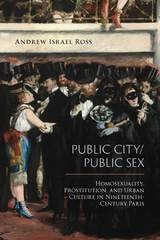
Public City/Public Sex
Homosexuality, Prostitution, and Urban Culture in Nineteenth-Century ParisAndrew Israel Ross
Temple University Press, 2019
In the 1800s, urban development efforts modernized Paris and encouraged the creation of brothels, boulevards, cafés, dancehalls, and even public urinals. However, complaints also arose regarding an apparent increase in public sexual activity, and the appearance of “individuals of both sexes with depraved morals” in these spaces. Andrew Israel Ross’s illuminating study, Public City/Public Sex, chronicles the tension between the embourgeoisement and democratization of urban culture in nineteenth-century Paris and the commercialization and commodification of a public sexual culture, the emergence of new sex districts, as well as the development of gay and lesbian subcultures.
Public City/Public Sex examines how the notion that male sexual desire required suitable outlets shaped urban policing and development. Ross traces the struggle to control sex in public and argues that it was the very effort to police the city that created new opportunities for women who sold sex and men who sought sex with other men. Placing public sex at the center of urban history, Ross shows how those who used public spaces played a central role in defining the way the city was understood.

Public Libraries in Nazi Germany
Margaret F. Stieg
University of Alabama Press, 1992
"Margaret F. Stieg's thoroughly researched study, the first comprehensive examination of public libraries in Nazi Germany, reveals that library policy in the Third Reich was far more complex than we might assume, with the positive and the negative hopelessly entangled. . . . A solid and welcome contribution."
—American Historical Review

Publishing The Prince
History, Reading, and the Birth of Political CriticismJacob Soll
University of Michigan Press, 2010
As new ideas arose during the Enlightenment, many political thinkers published their own versions of popular early modern "absolutist" texts and transformed them into manuals of political resistance. As a result, these works never achieved a fixed and stable edition. Publishing The Prince illustrates how Abraham-Nicolas Amelot de La Houssaye created the most popular late seventeenth- and eighteenth-century version of Machiavelli's masterpiece. In the process of translating, Amelot also transformed the work, altering its form and meaning, and his ideas spread through later editions.
Revising the orthodox schema of the public sphere in which political authority shifted away from the crown with the rise of bourgeois civil society in the eighteenth century, Soll uses the example of Amelot to show for the first time how the public sphere in fact grew out of the learned and even royal libraries of erudite scholars and the bookshops of subversive, not-so-polite publicists of the republic of letters.
Jacob Soll is Associate Professor of History at Rutgers University.
Cover art courtesy of Annenberg Rare Book Room and Manuscript Library, University of Pennsylvania
Jacket Design: Stephanie Milanowski
"Jacob Soll traces the origins of Enlightenment criticism to the practices of learned humanists and hard-pressed literary entrepreneurs. This learned and lively book is also a tour de force of historical research and interpretation."
---Anthony Grafton, author of Cardano's Cosmos and Bring Out Your Dead
"Brilliant. How the printed page changed political philosophy into investigative reporting, and reason of state into the unmasking of power."
---J. G. A. Pocock, author of The Machiavellian Moment
"Soll's path-breaking study is a 'must read' for all those interested in the history of political thought and early modern intellectual history."
---Barbara Shapiro, University of California Berkeley
"Soll has done [Amelot] and his context justice, writing as he does with a clear, singular, and welcome voice."
---Margaret C. Jacobs, American Historical Review
Publishing Women
Salons, the Presses, and the Counter-Reformation in Sixteenth-Century ItalyDiana Robin
University of Chicago Press, 2007
Even the most comprehensive Renaissance histories have neglected the vibrant groups of women writers that emerged in cities across Italy during the mid-1500s—and the thriving network of printers, publishers, and agents that specialized in producing and selling their books. In Publishing Women, Diana Robin finally brings to life this story of women’s cultural and intellectual leadership in early modern Italy, illuminating the factors behind—and the significance of—their sudden dominance.
Focusing on the collective publication process, Robin portrays communities in Naples, Venice, Rome, Siena, and Florence, where women engaged in activities that ranged from establishing literary salons to promoting religious reform. Her innovative cultural history considers the significant roles these women played in tandem with men, rather than separated from them. In doing so, it collapses the borders between women’s history, Renaissance and Reformation studies, and book history to evoke a historical moment that catapulted women’s writings and women-sponsored books into the public sphere for the first time anywhere in Europe.

Pure Intelligence
The Life of William Hyde WollastonMelvyn C. Usselman
University of Chicago Press, 2015
Pure Intelligence is the first book-length study of Wollaston, his science, and the environment in which he thrived. Drawing on previously-unstudied laboratory records as well as historical reconstructions of chemical experiments and discoveries, and written in a highly accessible style, Pure Intelligence will help to reinstate Wollaston in the history of science, and the pantheon of its great innovators.